

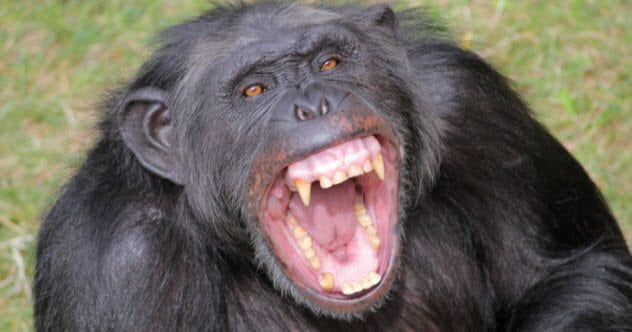
Chimpanzees are not simply “cute monkeys with better cheekbones.” First, they are apes, not monkeys. Second, they are among humanity’s closest living relatives. Third, if you spend enough time learning about them, you may begin to feel as though someone has placed a slightly hairier version of civilization in front of a funhouse mirror.
Chimpanzee facts are fascinating because they do not just tell us about wildlife. They tell us about power, friendship, conflict, innovation, parenting, politics, grief, greed, cooperation, and the occasional terrible group decision. In other words: Tuesday on the internet, but with more tree climbing.
This article explores ten chimpanzee facts that reveal why these great apes remain so important to science, conservation, and our understanding of human nature. Some facts are charming. Some are unsettling. All of them remind us that the line between “animal behavior” and “human behavior” is sometimes thinner than we would like to admit.
1. Chimpanzees Are Our Close Evolutionary Relatives
One of the most widely discussed chimpanzee facts is that humans and chimpanzees share a very recent evolutionary relationship. We did not descend from modern chimpanzees, despite what every awkward middle-school debate once suggested. Instead, humans and chimpanzees share a common ancestor that lived millions of years ago.
That connection matters because it helps explain why chimpanzee behavior can feel so familiar. They form alliances, care for young, learn from one another, use tools, compete for status, and show emotional responses that look startlingly recognizable. Their bodies are different, their societies are different, and their evolutionary path is their own. Still, when a chimpanzee calculates whether to comfort a friend or challenge a rival, the scene can feel uncomfortably close to office politics with fur.
2. Chimpanzees Live In Complex Social Communities
Chimpanzee society is not a casual jungle hangout. It is a layered, changing social network filled with friendships, rivalries, family bonds, temporary teams, and long-term grudges. Wild chimpanzees typically live in communities that split into smaller parties during the day and come back together over time. This system is known as fission-fusion society.
That means a chimpanzee must constantly read the room, even when the room is a rainforest. Who is nearby? Who is angry? Who has food? Who is grooming whom? Who just became too popular? Social awareness is not optional; it is survival equipment.
Why This Mirrors Humanity
Humans also live inside shifting networks. We move among family, coworkers, friends, strangers, and digital tribes. Like chimpanzees, we often succeed not only by being strong or smart, but by knowing when to cooperate, when to compete, and when to quietly step away before someone starts throwing metaphorical branches.
3. Their Politics Can Be Ruthless
In chimpanzee groups, power is rarely just about size. A physically impressive male may rise in rank, but dominance often depends on coalition-building. An alpha male may need supporters, loyal grooming partners, and strategic allies to stay on top. Strength helps, but social intelligence keeps the crown polished.
Chimpanzees use displays to intimidate rivals: charging, drumming on tree buttresses, screaming, dragging branches, or making themselves look larger than life. It is dramatic, noisy, and oddly familiar to anyone who has ever sat through a meeting where someone clearly wanted everyone to know they owned a standing desk.
The darker lesson is simple: power often depends on performance. Chimpanzees understand that status must be seen, reinforced, and defended. Humans simply added suits, microphones, and press releases.
4. Chimpanzees Use Tools Like Tiny Forest Engineers
For a long time, humans proudly described themselves as “the toolmakers.” Then chimpanzees rudely interrupted the branding campaign. Researchers have observed chimpanzees using sticks to fish termites from mounds, stones to crack nuts, leaves as sponges for drinking water, and tool sets for complex foraging tasks.
Tool use varies among chimpanzee populations, which makes it even more interesting. One community may use a particular technique while another does not, even when both have access to similar materials. That suggests social learning and tradition, not just instinct.
Why This Mirrors Humanity
Human culture is built on tools, from stone blades to smartphones. Chimpanzee tool use gives us a living window into how practical intelligence, observation, patience, and local tradition can shape behavior across generations. Also, it humbles us. Any species that can invent termite fishing deserves respect, even if its table manners remain a work in progress.
5. They Learn From One Another
Chimpanzees are not born knowing every survival trick. Young chimps watch their mothers and other group members closely. They learn what to eat, how to process food, how to use tools, how to behave around dominant individuals, and how to navigate the social maze of chimpanzee life.
Modern research has shown that chimpanzees can acquire skills socially, especially when a task is difficult. This matters because culture is not limited to humans. Chimpanzee communities can preserve local traditions, and those traditions may disappear if a population is disrupted or destroyed.
That point is especially important for conservation. When a chimpanzee group vanishes, the world does not lose only a number on a population chart. It may lose a library of learned behaviors, practical knowledge, and social customs that took generations to develop.
6. Chimpanzees Can Be Tender, Caring, And Emotionally Sophisticated
The “dark mirror” title should not fool you into thinking chimpanzees are all violence and scheming. They also show affection, comfort, playfulness, attachment, and care. Grooming is one of the most important social behaviors in chimpanzee society. It removes parasites, yes, but it also builds trust, repairs relationships, and communicates closeness.
Chimpanzees may console distressed companions, maintain long bonds, and show strong mother-infant relationships. Young chimps depend heavily on their mothers for food, protection, transportation, and learning. Childhood is long because there is a lot to learn.
Why This Mirrors Humanity
Human tenderness also lives beside ambition and conflict. We can be generous at breakfast, competitive by lunch, and emotionally complicated by dinner. Chimpanzees remind us that social mammals are rarely simple. The same creature that competes fiercely for rank may gently groom a friend minutes later. Humanity did not invent contradiction; we merely gave it Wi-Fi.
7. They Also Wage Violent Territorial Conflict
Here is where the mirror gets darker. Wild chimpanzee communities can engage in lethal intergroup aggression. Males may patrol territorial boundaries, move silently through border areas, and attack isolated rivals from neighboring communities. Research has linked some of these attacks to territorial expansion and access to resources.
In some observed cases, chimpanzees appear to use landscape features strategically. Studies of West African chimpanzees have reported behavior that resembles reconnaissance, with individuals using hilltops in ways that may help them assess rival groups before entering contested areas.
This does not mean chimpanzees are “evil,” and it certainly does not mean human warfare is unavoidable. Nature is not a permission slip. But chimpanzee conflict does challenge the comforting idea that organized violence is purely a human invention. The roots of coalitionary aggression may run deep in our evolutionary neighborhood.
8. Chimpanzees Understand In-Groups And Out-Groups
Chimpanzees often respond differently to familiar group members than to outsiders. This distinction can shape empathy, attention, tolerance, and aggression. In-group bonds may bring grooming, support, sharing, and comfort. Outsiders may trigger suspicion or hostility.
If that sounds familiar, it should. Humans are champions of group identity. We create teams, nations, fandoms, political camps, school rivalries, and online communities devoted to arguing about pizza toppings. Chimpanzees show us a simpler but powerful version of the same tendency: who belongs, who does not, and what we think they deserve.
The Uncomfortable Lesson
Our moral circle is one of the most important things we can expand. Chimpanzees remind us that loyalty to “us” can be beautiful, but fear of “them” can become dangerous very quickly.
9. Chimpanzees Have Big Personalities
Anyone who has observed chimpanzees closely will tell you they are not interchangeable forest units. Some are bold. Some are cautious. Some are playful. Some are socially skilled. Some seem to enjoy drama a little too much, which proves they would do extremely well on reality television, though hopefully no producer gets ideas.
Personality affects how chimpanzees interact, learn, compete, and bond. A confident chimp may take risks that a shy chimp avoids. A socially clever chimp may gain influence without being the strongest. A patient chimp may become better at difficult feeding techniques. Individual differences matter.
This is another reason conservation and sanctuary care require careful attention. A chimpanzee is not just a representative of a species. It is an individual with memories, preferences, relationships, fears, and habits. Protecting chimpanzees means protecting lives, not just protecting biodiversity in the abstract.
10. Humans Are Their Greatest Threat
The darkest chimpanzee fact is not about chimpanzees at all. It is about us. Chimpanzees are endangered, and their survival is threatened by habitat loss, hunting, disease, illegal wildlife trade, and conflict with expanding human activity. Forests are cleared for agriculture, roads open access to remote areas, and infant chimpanzees may be captured after adults are killed.
Disease is another serious danger because chimpanzees are biologically close enough to humans to be vulnerable to some of the same pathogens. Even well-meaning tourism or research must be managed carefully to reduce the risk of transmitting illness.
In the United States, the ethical view of chimpanzees has shifted significantly. Federal agencies moved toward ending invasive biomedical research on chimpanzees, and all chimpanzees, captive and wild, are treated as endangered under U.S. law. That shift reflects a growing recognition that intelligence and emotional complexity create responsibility.
What Chimpanzees Reveal About Human Nature
The phrase “dark mirror” works because chimpanzees do not simply resemble us in flattering ways. Yes, they can be clever, affectionate, funny, loyal, and inventive. But they can also be political, suspicious, aggressive, status-hungry, and tribal. The reflection is not always Instagram-ready.
Yet the point is not to insult chimpanzees or excuse humans. The point is to understand continuity. Human beings are animals with culture, language, laws, religion, art, science, and moral imagination. Those things matter enormously. But we did not evolve from nowhere. Some of our impulses have ancient roots, and chimpanzees help scientists explore those roots with care.
Where humans differ most powerfully is in our ability to reflect on our instincts. A chimpanzee may defend territory because that is how its social world works. A human can study that impulse, name it, question it, regulate it, and build institutions to reduce harm. We are not doomed by biology. But we are foolish if we pretend biology has no voice in the room.
Experience: Standing In Front Of The Chimpanzee Mirror
There is a particular feeling people often describe after watching chimpanzees at a reputable zoo, sanctuary, documentary, or research center. At first, the experience is entertaining. A chimp lounges like a retired celebrity. Another picks through straw with the seriousness of a detective searching for tax documents. A youngster tumbles, climbs, annoys an adult, and then escapes consequences through sheer cuteness. It is easy to laugh.
Then the mood changes. You notice the eyes. Chimpanzee eyes do not feel empty or decorative. They look back. Not in a magical, cartoonish way, but in a grounded, assessing, deeply alive way. The chimpanzee is not performing “wild animal” for your benefit. It is thinking its own thoughts, tracking its own relationships, and deciding whether the creature staring from the other side of the glass is interesting, irrelevant, or possibly carrying snacks.
That moment can be oddly humbling. Humans are used to being the narrators of the planet. We name the species, build the exhibits, write the signs, fund the research, destroy the forests, pass the laws, and then congratulate ourselves for noticing the consequences. Chimpanzees complicate that story. They are not human, but they are close enough to make indifference feel lazy.
People who learn about chimpanzee sanctuaries often report a second wave of discomfort. Many rescued chimpanzees came from laboratories, entertainment, roadside attractions, or the exotic pet trade. A baby chimp in a diaper may look adorable on television, but that image hides a brutal truth: young chimpanzees grow into powerful, intelligent adults with complex social needs. They do not belong in living rooms, photo shoots, or novelty acts. When humans turn them into props, the damage can last for decades.
The most memorable experience is not simply seeing how similar chimpanzees are to us. It is realizing that similarity does not make them ours. Their intelligence should not be a reason to exploit them more cleverly. Their emotional depth should not be a marketing tool. Their resemblance to humanity should widen our sense of duty.
Watching chimpanzees can also make ordinary human behavior look newly strange. A dominance display in a chimp group may bring to mind a shouting match on cable news. Grooming alliances may resemble networking. Boundary patrols may echo nationalism. Play among young chimps may look like children testing rules on a playground. The comparison is imperfect, of course, but it sticks because it reveals patterns we recognize.
The best experience to take away is not shame, but perspective. Chimpanzees show us that intelligence without wisdom can be dangerous, that loyalty without empathy can become cruelty, and that power without restraint can destabilize the whole group. They also show us that care, learning, friendship, and resilience are ancient strengths. In their world, as in ours, survival depends not only on muscle, but on relationships.
Conclusion: The Ape In The Mirror Is Asking Better Questions Than We Think
Chimpanzees are extraordinary because they force us to hold two truths at once. They are wild animals with their own evolutionary story, not miniature humans. At the same time, their behavior reveals echoes of our own social lives: ambition, tenderness, conflict, culture, learning, fear, loyalty, and the constant negotiation between self-interest and community.
Learning these chimpanzee facts should do more than make us clever at trivia night. It should make us more thoughtful about conservation, more skeptical of human superiority, and more alert to the instincts we carry inside ourselves. The mirror is dark in places, yes. But if we are willing to look carefully, it can also be useful.