

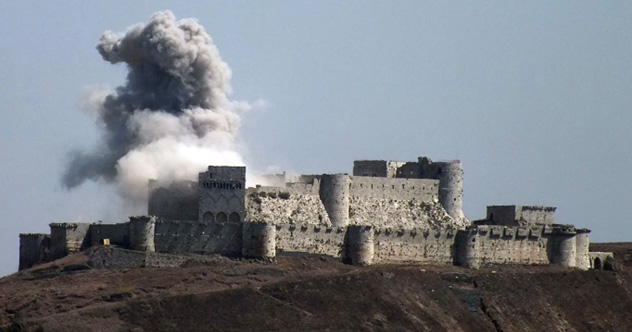
Note: “Stupidity” here means the very human blend of greed, extremism, neglect, bad planning, political ego, and short-term thinking that turns irreplaceable history into dust. Some places have been partially restored or rebuilt, but the original fabricthe stones, carvings, murals, manuscripts, and meaning touched by past civilizationsis gone forever.
When History Meets Human Nonsense
Humanity has built pyramids, temples, libraries, palaces, mosques, stations, and sacred monuments so beautiful that they make modern shopping malls look like beige panic attacks. Unfortunately, humanity has also invented bulldozers, explosives, bad urban planning meetings, ideological rage, and the phrase “it’ll be fine.” The result? Some of the world’s greatest historic sites were not lost to earthquakes, volcanoes, or time. They were lost because people made choices so shortsighted that future generations can only stare into the rubble and whisper, “Seriously?”
This article explores 10 incredible historic sites we lost forever because of preventable human decisions. These lost historical landmarks include ancient monuments, religious buildings, archaeological treasures, and architectural icons destroyed by war, greed, fanaticism, development, or plain negligence. They are reminders that cultural heritage is not just old stone. It is memory with a roof, identity with columns, and knowledge carved into the landscape.
1. The Library of Alexandria The World’s Most Famous Lost Brain
What made it incredible?
The Library of Alexandria in Egypt was the superstar knowledge center of the ancient Mediterranean. Founded under the Ptolemies, it was connected to the Mouseion, a research institution that gathered scholars, manuscripts, scientific works, poetry, philosophy, mathematics, astronomy, and medical writings. Imagine a university, national archive, think tank, and very serious book club rolled into oneminus the Wi-Fi, but with better robes.
How did we lose it?
The popular story says the library burned in one dramatic disaster, but the truth is messier and more painfully human. Fires, civil wars, political instability, declining funding, religious conflict, and neglect all likely contributed to its disappearance over time. Julius Caesar’s campaign in 48 B.C. may have damaged collections near the harbor. Later conflicts and the destruction of scholarly institutions in Alexandria likely finished what earlier disasters began.
Why was it stupid?
Because losing knowledge is a special kind of self-own. The Library of Alexandria represents what happens when societies stop protecting intellectual infrastructure. Books do not scream when they burn. Manuscripts do not hold press conferences. But when they vanish, entire branches of ancient science, literature, and history may vanish with them.
2. The Bamiyan Buddhas Giants Silenced by Extremism
What made them incredible?
For roughly 1,500 years, two enormous Buddha statues stood carved into sandstone cliffs in Afghanistan’s Bamiyan Valley. The larger figure rose about 180 feet, while the smaller one stood about 125 feet. They were not just sculptures; they were Silk Road witnesses, blending Indian, Central Asian, Greek-influenced, and Buddhist artistic traditions. Travelers once looked up at them and saw a cultural crossroads in stone.
How did we lose them?
In March 2001, the Taliban destroyed the statues using explosives, artillery, and sustained attacks. International appeals failed. Offers to buy, move, or protect the statues were rejected. The empty niches still remain, but the original figures are gone.
Why was it stupid?
Because destroying art does not erase history; it simply proves the destroyer was terrified of it. The Bamiyan Buddhas had survived weather, empires, invasions, and centuries of change. They could not survive modern fanaticism armed with dynamite. Their loss became a global symbol of cultural vandalism and the need to protect endangered heritage sites before the fuse is lit.
3. Nimrud An Assyrian Capital Blown Apart
What made it incredible?
Nimrud, in modern Iraq, was one of the great cities of the ancient Assyrian Empire. Founded as Kalhu, it became a powerful capital under Ashurnasirpal II in the 9th century B.C. Its palaces, reliefs, inscriptions, and colossal winged guardian figures known as lamassu revealed the scale, artistry, and authority of Assyrian civilization.
How did we lose it?
In 2015, ISIS militants attacked the archaeological site with bulldozers, sledgehammers, and explosives. Palaces and sculptures that had survived nearly 3,000 years were smashed in a staged act of propaganda. Some fragments remain, and conservation teams have worked to document and recover what they can, but much of the original site was devastated.
Why was it stupid?
Because Nimrud was not just “old stuff.” It was a readable archive of one of history’s most important empires. To destroy it was to rip pages from humanity’s shared biography. Also, if your grand plan requires smashing 3,000-year-old sculpture for a camera, history will not be kind to your résumé.
4. The Temple of Bel in Palmyra Desert Grandeur Reduced to Rubble
What made it incredible?
Palmyra, in Syria, was a legendary oasis city where Greco-Roman, Persian, Arab, and local traditions met along ancient trade routes. The Temple of Bel, dedicated to a major Palmyrene deity, was one of its most important monuments. Completed in stages beginning in the 1st century A.D., it stood as a masterpiece of cultural fusion: Roman-style architecture wearing a distinctly Near Eastern soul.
How did we lose it?
In 2015, ISIS detonated explosives inside the temple sanctuary. Satellite images and later reports confirmed catastrophic damage to the main structure. Palmyra also lost other monuments, including the Temple of Baalshamin and the Arch of Triumph.
Why was it stupid?
Because Palmyra was proof that civilizations have always been connected. Its destruction was an attack on the idea that cultures can mix, borrow, trade, and create beauty together. The Temple of Bel’s ruins still speak, but they now speak with a missing voice.
5. Old Pennsylvania Station New York’s Beaux-Arts Masterpiece Bulldozed for “Progress”
What made it incredible?
The original Pennsylvania Station in New York City opened in 1910 and was designed by McKim, Mead & White. Inspired by Roman baths and classical architecture, it featured vast waiting rooms, soaring steel-and-glass spaces, monumental columns, and a sense of arrival that made train travel feel almost heroic. You did not simply catch a train there; you entered New York with drama.
How did we lose it?
In the 1960s, the above-ground station was demolished to make way for Madison Square Garden and office development. The tracks remained underground, but the public masterpiece disappeared. Its demolition caused outrage and helped inspire New York City’s modern landmarks preservation movement.
Why was it stupid?
Because “let’s replace this civic palace with a basement maze” is not urban planning; it is an architectural cry for help. Old Penn Station’s destruction became one of America’s classic cautionary tales about sacrificing beauty, memory, and public dignity for short-term real estate profit.
6. The Old Summer Palace Imperial Gardens Burned in Revenge
What made it incredible?
The Old Summer Palace, or Yuanmingyuan, near Beijing, was not a single building but a vast imperial complex of gardens, lakes, palaces, pavilions, libraries, artworks, and European-style structures. Built and expanded under Qing emperors, it was often described as a wonder of garden design and imperial luxury.
How did we lose it?
In 1860, during the Second Opium War, British and French troops looted and burned the complex. The destruction was ordered as retaliation after prisoners were tortured and killed. Whatever the military explanation, the cultural result was disastrous: one of China’s greatest palace-garden complexes was reduced to ruins.
Why was it stupid?
Because revenge is a terrible preservation strategy. The Old Summer Palace was a cultural treasure far larger than the politics of a single war. Its ruins remain a powerful symbol of humiliation, imperial violence, and the way conflict can turn art into ash.
7. Nohmul Maya Pyramid Bulldozed for Road Fill
What made it incredible?
Nohmul, in northern Belize, was an important ancient Maya site. Its name means “great mound,” and the complex included a large pyramid that stood roughly 55 feet tall. It had survived for more than two millennia, quietly holding evidence of Maya settlement, construction, and ceremonial life.
How did we lose it?
In 2013, construction workers used heavy machinery to tear down most of the pyramid for limestone gravel to use in road building. Yes, you read that correctly: an ancient Maya monument was treated like a free pile of driveway material.
Why was it stupid?
Because few phrases in heritage destruction are more painfully absurd than “ancient pyramid bulldozed for road fill.” The landscape around Nohmul is relatively flat, and the mound was well known, making the “oops, we thought it was a hill” defense about as convincing as a raccoon wearing sunglasses at a bank.
8. El Paraíso Pyramid A 4,000-Year-Old Site Crushed by Developers
What made it incredible?
El Paraíso, near Lima, Peru, is one of the oldest archaeological sites in the Americas. The complex dates back thousands of years and includes monumental architecture from a very early period of Andean civilization. Sites like El Paraíso help researchers understand how organized communities, ceremonial spaces, and early construction traditions developed in ancient Peru.
How did we lose it?
In 2013, real estate developers used heavy machinery to destroy a pyramid at the site. Reports said the structure was knocked down and burned, and authorities intervened before additional pyramids could be destroyed.
Why was it stupid?
Because destroying a 4,000-year-old pyramid for development is like deleting the first chapter of a continent’s autobiography because you want a parking lot. Economic growth matters, but when profit treats archaeology as an inconvenience, the loss is permanent.
9. Babri Masjid A Mosque Destroyed by Mob Violence
What made it incredible?
The Babri Masjid in Ayodhya, India, was a 16th-century mosque traditionally attributed to the Mughal period. For centuries, it stood at the center of a deeply contested religious and political landscape. Whatever one’s view of the dispute, the building itself was a historic structure with architectural, religious, and cultural significance.
How did we lose it?
On December 6, 1992, a large crowd of activists demolished the mosque. The event triggered widespread violence and became one of the most consequential episodes in modern Indian political and religious history.
Why was it stupid?
Because when crowds destroy heritage, the rubble does not settle the argument. It multiplies it. Historic sites tied to living communities require law, scholarship, dialogue, and restraint. Mob demolition replaces all four with dust and trauma.
10. The Great Mosque of al-Nuri and al-Hadba Minaret Mosul’s Leaning Landmark Destroyed
What made it incredible?
The Great Mosque of al-Nuri in Mosul, Iraq, was originally founded in the 12th century. Its famous leaning minaret, al-Hadba, became one of the city’s defining symbols. For generations, it watched over Mosul like a slightly tilted elder who knew everyone’s business and judged them kindly.
How did we lose it?
In 2017, during the battle for Mosul, ISIS detonated explosives that destroyed the mosque and its iconic minaret. Reconstruction projects have since worked to revive the site, but the historic original fabric was shattered.
Why was it stupid?
Because destroying a city’s symbol while losing control of that city is not strength; it is spite with explosives. The loss of al-Nuri and al-Hadba showed how cultural heritage can become a final target when violent movements realize they cannot control the future.
What These Lost Historic Sites Have in Common
At first glance, these destroyed historic sites seem very different. One was a library in ancient Egypt. Another was a train station in Manhattan. One was a Maya pyramid in Belize. Another was a mosque in Mosul. Yet their stories share a pattern: the site existed for centuries, sometimes millennia, and then a modern human decision erased it in days, hours, or minutes.
The causes vary. Some losses came from extremist ideology. Some came from war. Others came from real estate pressure, urban development, revenge, looting, or negligence. But behind each case is a failure of imagination. Someone could not imagine that future generations might value what stood in front of them. Someone saw stone where there was memory. Someone saw land where there was identity. Someone saw an obstacle where there was a masterpiece.
That is why cultural heritage preservation matters. Historic monuments are not luxuries for postcard collectors. They help communities understand who they are, where they came from, and how human creativity changes across time. Once original heritage is destroyed, reconstruction can help, but it cannot fully replace the lost material. A rebuilt monument may restore a skyline, but it cannot restore the hands that carved the first stone.
Experiences and Lessons From the World’s Lost Heritage
Reading about these places can feel strangely personal, even if you have never visited them. Maybe that is because lost historic sites remind us of something we all experience in smaller ways: the old theater torn down for a bland retail box, the family home replaced by condos, the handwritten letters thrown away during a hurried move, the neighborhood café that becomes a bank branch with all the warmth of a printer error. Loss is part of life, but preventable loss has a special sting. It comes with the tiny, furious question: “Why didn’t anyone stop this?”
The first experience these stories teach is humility. Every generation thinks it is modern, efficient, and unusually clever. Then time passes, and people look back at its decisions with raised eyebrows. The officials who allowed Old Penn Station to be demolished probably saw themselves as practical. The contractors who tore into Nohmul may have seen only material. The developers near El Paraíso may have seen profit. But history has a long memory and a brutal sense of irony. What looked convenient in the moment now looks like cultural malpractice.
The second lesson is that heritage protection cannot wait until a site becomes famous. Many monuments are safest after the world knows their name. The danger often comes before thatwhen a site is local, poorly marked, underfunded, or sitting on land someone wants to monetize. Archaeological sites need laws, enforcement, public education, and clear documentation. A pyramid should not have to become viral news after a bulldozer eats it.
The third lesson is that reconstruction is valuable but not magical. Rebuilding can restore dignity, revive community life, and teach new generations. Mosul’s restoration efforts, for example, are deeply meaningful. But original materials carry historical information: tool marks, pigments, repairs, inscriptions, weathering, and context. Once blown apart or burned, much of that evidence disappears. A replica can be beautiful, but it is still a conversation with absence.
The fourth lesson is that people protect what they feel connected to. Museums, schools, travel writers, local guides, historians, and community leaders all play a role in making heritage emotionally real. When people understand that an old structure is not “just ruins” but a chapter of human experience, they are more likely to defend it. The best preservation tool is not only a law book. It is a public that cares before the emergency.
Finally, these lost places teach us to slow down. Not every shiny new project is progress. Not every angry crowd is justice. Not every military victory is worth a burned palace. Not every road needs ancient limestone in its foundation. The world is already full of forgetfulness; we do not need to help it with explosives and excavators. Historic sites are nonrenewable resources. Once they are gone, all we can build is regret with a visitor center.
Conclusion: The Past Cannot Defend Itself
The story of 10 incredible historic sites we lost forever is not just a catalog of ruins. It is a warning. Civilizations are judged not only by what they build, but by what they choose to protect. The Library of Alexandria, the Bamiyan Buddhas, Nimrud, Palmyra’s Temple of Bel, Old Penn Station, the Old Summer Palace, Nohmul, El Paraíso, Babri Masjid, and Mosul’s al-Nuri Mosque all prove that cultural heritage can survive centuries of weather and war, only to fall when human judgment takes a coffee break.
Preservation is not about freezing the world in amber. Cities must grow. Communities must change. But change without memory becomes amnesia with a construction permit. The smartest societies make room for both the future and the past. The foolish ones discover too late that rubble is a very poor teacher.