

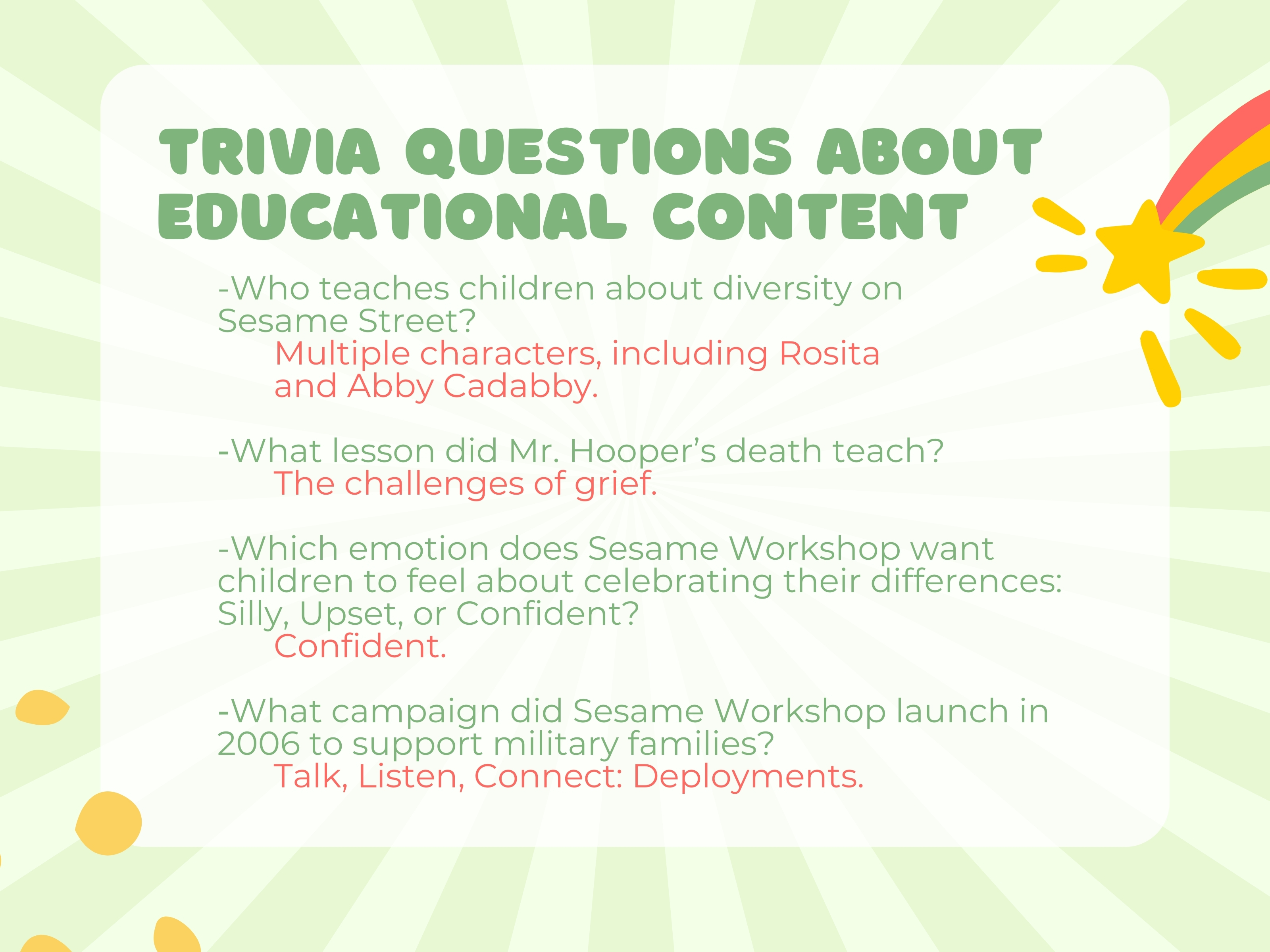
Sunny day? Sweeping the clouds away? Goodbecause we are heading straight to the friendliest block on television. This collection of Sesame Street trivia questions and answers is built for family game nights, classroom brain breaks, birthday parties, nostalgic adults, and kids who know exactly how serious Cookie Monster is about dessert.
Since its debut in 1969, Sesame Street has mixed Muppets, music, humor, early learning, kindness, and wonderfully fuzzy chaos into one of the most recognizable educational shows in American television history. These questions cover classic characters, famous places, songs, learning moments, behind-the-scenes facts, and just enough “Wait, I knew that!” energy to keep everyone playing.
Use this list as a full quiz, split it into rounds, or let each player choose a category. No trash can requiredalthough Oscar would absolutely improve the atmosphere.
How to Play Sesame Street Trivia
For younger kids, read the question aloud and offer two or three answer choices. For older players, make it a lightning round. For grown-ups, add a “nostalgia bonus” point if they can remember a scene, song, or character moment connected to the answer. The goal is not to stump everyone into silence; it is to create a cheerful quiz where learning sneaks in wearing furry slippers.
Easy Sesame Street Trivia Questions
- Question: What famous children’s TV show takes place on a friendly city block?
Answer: Sesame Street. - Question: What color is Elmo?
Answer: Red. - Question: Who loves cookies more than almost anything?
Answer: Cookie Monster. - Question: What kind of bird is Big Bird?
Answer: A giant yellow bird. - Question: Who lives in a trash can?
Answer: Oscar the Grouch. - Question: What does Count von Count love to do?
Answer: Count numbers. - Question: What is the name of Elmo’s goldfish?
Answer: Dorothy. - Question: Which character often says “Me want cookie”?
Answer: Cookie Monster. - Question: What is the name of Big Bird’s best woolly mammoth-like friend?
Answer: Mr. Snuffleupagus, often called Snuffy. - Question: What color is Oscar the Grouch?
Answer: Green. - Question: What street number is strongly associated with Sesame Street?
Answer: 123. - Question: Which character is known for a cheerful giggle and speaking in the third person?
Answer: Elmo. - Question: What shape is a classic cookie?
Answer: Usually round. - Question: Which Sesame Street character is a fairy-in-training?
Answer: Abby Cadabby. - Question: What does Sesame Street help children learn?
Answer: Letters, numbers, emotions, kindness, and everyday problem-solving.
Character Trivia: Elmo, Big Bird, Cookie Monster & Friends
- Question: How old is Elmo usually described as being?
Answer: Three and a half years old. - Question: How old is Big Bird usually described as being?
Answer: Six years old. - Question: What is Abby Cadabby’s signature magical tool?
Answer: A wand. - Question: What is Grover’s superhero identity?
Answer: Super Grover. - Question: Which two roommates are famous for their opposite personalities?
Answer: Bert and Ernie. - Question: Who is Ernie’s serious, pigeon-loving roommate?
Answer: Bert. - Question: What bath toy is Ernie famously connected with?
Answer: A rubber duckie. - Question: Which character often tries very hard, even when things go hilariously wrong?
Answer: Grover. - Question: What type of animal is Telly Monster obsessed with in many appearances?
Answer: Triangles are his big obsession, not an animal. - Question: Who is the blue monster with a huge appetite?
Answer: Cookie Monster. - Question: What is the Count’s full character name?
Answer: Count von Count. - Question: Which character is a young monster from Mexico who speaks English and Spanish?
Answer: Rosita. - Question: What is Rosita’s full name?
Answer: Rosita la Monstrua de las Cuevas. - Question: Which Sesame Street character is known for being autistic and helping teach inclusion?
Answer: Julia. - Question: What is the name of Elmo’s adopted puppy?
Answer: Tango. - Question: Which character is a small, orange fairy-in-training?
Answer: Abby Cadabby. - Question: Who is Abby Cadabby’s stepbrother?
Answer: Rudy. - Question: Which bear character often speaks in a fairy-tale style?
Answer: Baby Bear. - Question: Who is Baby Bear’s little sister?
Answer: Curly Bear. - Question: What is Oscar’s personality famous for?
Answer: Being grouchy, messy, and secretly lovable. - Question: What does Cookie Monster now often remind kids about?
Answer: Cookies are a sometimes food, and balance matters. - Question: Which character is huge, yellow, curious, and gentle?
Answer: Big Bird. - Question: Which friend is enormous, brown, and has a long snout?
Answer: Mr. Snuffleupagus. - Question: What is Zoe’s color?
Answer: Orange. - Question: What kind of toy does Zoe love?
Answer: Her pet rock, Rocco.
Sesame Street History Trivia
- Question: What year did Sesame Street first premiere?
Answer: 1969. - Question: What date did the first episode air?
Answer: November 10, 1969. - Question: Who were the two major creators behind Sesame Street?
Answer: Joan Ganz Cooney and Lloyd Morrisett. - Question: What organization produces Sesame Street?
Answer: Sesame Workshop. - Question: What was Sesame Workshop originally called?
Answer: Children’s Television Workshop. - Question: In what year was Children’s Television Workshop renamed Sesame Workshop?
Answer: 2000. - Question: What puppeteer created the Muppets used on the show?
Answer: Jim Henson. - Question: What was the title of the first Sesame Street episode?
Answer: “Gordon Introduces Sally to Sesame Street.” - Question: What was unusual about Sesame Street’s educational method when it began?
Answer: It used research to shape its lessons and production. - Question: What network family was Sesame Street long associated with in the United States?
Answer: Public television and PBS. - Question: What kind of audience was the show originally designed to help prepare for school?
Answer: Preschool children. - Question: Which famous magazine put Big Bird on its cover in 1970?
Answer: Time magazine. - Question: What major award organization has repeatedly honored Sesame Street?
Answer: The Emmy Awards. - Question: What record-keeping group has recognized Sesame Street’s worldwide popularity?
Answer: Guinness World Records. - Question: What does the phrase “Open Sesame” help explain about the show’s title?
Answer: It suggests opening the door to discovery and wonder. - Question: What city is Sesame Workshop based in?
Answer: New York City. - Question: What famous street set location includes Hooper’s Store?
Answer: 123 Sesame Street. - Question: Which long-running cast member played Maria?
Answer: Sonia Manzano. - Question: Which original adult characters were played by Matt Robinson and Loretta Long?
Answer: Gordon and Susan. - Question: What made Sesame Street different from many early children’s shows?
Answer: It blended entertainment, comedy, music, diversity, and measurable educational goals.
Place, Props & Neighborhood Trivia
- Question: What is the name of the neighborhood store on Sesame Street?
Answer: Hooper’s Store. - Question: Who currently owns Hooper’s Store in many modern episodes?
Answer: Alan. - Question: What kind of home does Oscar prefer?
Answer: A trash can. - Question: What object is often seen on the street sign?
Answer: The words “Sesame Street.” - Question: What is the famous apartment building number on the street?
Answer: 123. - Question: What kind of setting is Sesame Street?
Answer: A friendly urban neighborhood. - Question: What place on the block is connected with snacks and community?
Answer: Hooper’s Store. - Question: What does Oscar keep inside his trash can?
Answer: Many surprising things, depending on the episode. - Question: What pet lives with Elmo in many stories?
Answer: Dorothy the goldfish. - Question: What kind of pet is Tango?
Answer: A puppy. - Question: What is Rocco?
Answer: Zoe’s pet rock. - Question: What is the Count’s favorite place to show up?
Answer: Anywhere numbers can be counted. - Question: What does Big Bird’s nest represent in the show?
Answer: A cozy home base for curiosity and friendship. - Question: What is one thing you can almost always expect on Sesame Street?
Answer: Neighbors helping neighbors. - Question: What makes Hooper’s Store important?
Answer: It is a gathering place for characters and conversations.
Music, Learning & Lesson Trivia
- Question: What subject does Count von Count make funny?
Answer: Math. - Question: What subject does the Letter of the Day help teach?
Answer: The alphabet. - Question: What subject does the Number of the Day help teach?
Answer: Counting and number recognition. - Question: What does Sesame Street often teach besides letters and numbers?
Answer: Feelings, friendship, health, inclusion, and problem-solving. - Question: What song is strongly associated with Ernie and bath time?
Answer: “Rubber Duckie.” - Question: What is the famous opening theme song commonly known as?
Answer: “Can You Tell Me How to Get to Sesame Street?” - Question: What does Cookie Monster’s humor often teach children?
Answer: Self-control, patience, and vocabulary through silliness. - Question: What kind of learning is Sesame Street famous for?
Answer: Playful learning. - Question: What does Big Bird often help children understand?
Answer: Curiosity, questions, friendship, and big feelings. - Question: What does Julia help teach viewers?
Answer: Acceptance, inclusion, and understanding differences. - Question: What does Rosita help bring to the show?
Answer: Bilingual learning and cultural representation. - Question: What kind of jokes does Grover often create?
Answer: Physical comedy and misunderstandings. - Question: Why do songs work well on Sesame Street?
Answer: Music makes lessons easier to remember. - Question: What do celebrity guests often help do?
Answer: Explain ideas, sing songs, and make lessons memorable. - Question: What does Sesame Street often model during conflicts?
Answer: Talking, listening, apologizing, and trying again.
Medium Sesame Street Trivia Questions
- Question: Which character was originally performed by Caroll Spinney along with Oscar?
Answer: Big Bird. - Question: Which actor played Alan, the proprietor of Hooper’s Store?
Answer: Alan Muraoka. - Question: Which character is famous for counting and then laughing dramatically?
Answer: Count von Count. - Question: What does Abby Cadabby’s last name playfully suggest?
Answer: The magic phrase “abracadabra.” - Question: What color is Grover?
Answer: Blue. - Question: What color is Cookie Monster?
Answer: Blue. - Question: Which Sesame Street friend has one eyebrow and a serious attitude?
Answer: Bert. - Question: Which roommate is more playful and mischievous, Bert or Ernie?
Answer: Ernie. - Question: What does Oscar often call nice things?
Answer: Yucky, rotten, or grouchydepending on his mood. - Question: What is the name of the blue, furry, food-loving character’s favorite treat?
Answer: Cookies. - Question: Which character often introduces kids to imaginative fairy magic?
Answer: Abby Cadabby. - Question: Which character’s name includes “von,” giving him a spooky noble style?
Answer: Count von Count. - Question: What kind of creature is Snuffy usually described as?
Answer: A Snuffleupagus. - Question: Who is known for saying things are “near” and “far” in classic sketches?
Answer: Grover. - Question: Which character’s favorite number-related activity can happen with bats, blocks, or anything else?
Answer: The Count’s counting. - Question: Which character helps kids see that different communication styles are okay?
Answer: Julia. - Question: What kind of show is Sesame Street at its core?
Answer: An educational children’s television series. - Question: Which character is a little red monster with a huge fan base?
Answer: Elmo. - Question: Which segment became closely connected with Elmo in later decades?
Answer: “Elmo’s World.” - Question: What makes Sesame Street trivia fun for adults too?
Answer: It mixes childhood memories with real pop-culture history.
Hard Sesame Street Trivia Questions
- Question: Which Harvard developmental psychologist helped shape the educational approach of early Sesame Street?
Answer: Gerald S. Lesser. - Question: What was the original organization behind Sesame Street abbreviated as?
Answer: CTW. - Question: What did CTW stand for?
Answer: Children’s Television Workshop. - Question: Which original Sesame Street performer helped define both Big Bird and Oscar for decades?
Answer: Caroll Spinney. - Question: What year did Caroll Spinney retire from Sesame Street performing?
Answer: 2018. - Question: Which Smithsonian museum has preserved Sesame Street and Muppet-related objects?
Answer: The National Museum of American History. - Question: What did educational studies find about frequent early viewers of Sesame Street?
Answer: They often showed stronger school-readiness and learning gains. - Question: What kind of global versions has Sesame Street inspired?
Answer: International co-productions adapted for local children and cultures. - Question: What important idea did Sesame Street prove about television?
Answer: TV could educate young children while entertaining them. - Question: Which character became visible to adults after years of being seen mainly by Big Bird?
Answer: Mr. Snuffleupagus. - Question: Which Sesame Street character was introduced as part of autism-related inclusion efforts?
Answer: Julia. - Question: What special premiered to introduce Tango’s origin story?
Answer: Furry Friends Forever: Elmo Gets a Puppy. - Question: Which character’s full name means “The Monster of the Caves”?
Answer: Rosita la Monstrua de las Cuevas. - Question: What does Alan’s role at Hooper’s Store add to Sesame Street?
Answer: A warm community center and everyday adult guidance. - Question: Which character is both grouchy and still accepted by his neighbors?
Answer: Oscar the Grouch. - Question: Why is Oscar important beyond being funny?
Answer: He shows that communities can include people with different moods and personalities. - Question: What makes Big Bird such a strong character for preschool viewers?
Answer: He asks childlike questions and learns openly. - Question: Why does Cookie Monster work well as a comedy character?
Answer: His huge enthusiasm turns small choices into big, funny moments. - Question: Why is Sesame Street often considered a cultural landmark?
Answer: It changed children’s media, education, representation, and family television. - Question: What is the best strategy for winning Sesame Street trivia?
Answer: Know the characters, remember the history, and never underestimate a Muppet with snacks.
Bonus: 10 Lightning-Round Sesame Street Questions
- Question: Red monster?
Answer: Elmo. - Question: Yellow bird?
Answer: Big Bird. - Question: Trash-can resident?
Answer: Oscar. - Question: Cookie fan?
Answer: Cookie Monster. - Question: Counting vampire?
Answer: The Count. - Question: Fairy-in-training?
Answer: Abby Cadabby. - Question: Bilingual monster from Mexico?
Answer: Rosita. - Question: Elmo’s puppy?
Answer: Tango. - Question: Ernie’s favorite bath buddy?
Answer: Rubber Duckie. - Question: Famous neighborhood store?
Answer: Hooper’s Store.
Note: The title promises 130 Sesame Street trivia questions and answers, and the main quiz delivers 130. The 10 lightning-round questions above are extra party fuel, because no one has ever complained about bonus Elmo energy.
Why Sesame Street Trivia Works for All Ages
Sesame Street trivia is unusually flexible because the show itself has always worked on more than one level. Children recognize colors, animals, letters, numbers, and friendly characters. Parents remember classic songs, celebrity cameos, and emotional lessons. Grandparents may remember when the show felt like a bold new idea in educational television. Put everyone at one table, ask “Who lives in a trash can?” and suddenly three generations are competing like the final round of a game show hosted by a very demanding rubber duck.
The best part is that the answers are not just random facts. They open doors to conversations. A question about Julia can become a gentle talk about inclusion. A question about Rosita can celebrate bilingual families. A question about Cookie Monster can become a funny reminder that self-control is hard, especially when dessert is staring at you from a plate. A question about Big Bird can help kids understand that asking questions is not a weaknessit is how learning begins.
Real-Life Experience: Playing 130 Sesame Street Trivia Questions With Family
One of the easiest ways to use these Sesame Street trivia questions and answers is to turn them into a relaxed family game night. The mood should feel less like a school test and more like a cozy living-room party where the snacks are safe from Cookie Monster only if you hide them very, very well. Print the questions, cut them into strips, place them in a bowl, and let each player draw one. Kids love the randomness, adults love the nostalgia, and everyone loves the moment when a six-year-old confidently beats an uncle who “definitely watched this show all the time.”
In a classroom or homeschool setting, the quiz can work as a warm-up before lessons on letters, numbers, feelings, community helpers, or media history. For example, ask a simple character question first, then connect it to a learning moment. If the answer is Count von Count, invite children to count objects in the room. If the answer is Rosita, ask whether anyone knows words in more than one language. If the answer is Oscar, talk about moods and how people can be grumpy without being left out. Suddenly trivia becomes discussion, and discussion becomes learning without the heavy “now we are doing curriculum” drumroll.
For birthday parties, divide players into teams named after characters: Team Elmo, Team Big Bird, Team Abby, and Team Grouch. Team Grouch should, of course, be allowed to complain dramatically after every round. Keep score with stickers, blocks, or paper cookies. Younger children can answer easy questions, while older kids and adults take the medium and hard rounds. This keeps the game fair and avoids the classic party problem where one trivia-loving adult accidentally turns a children’s game into a televised championship.
Another fun experience is a “memory round.” After someone answers a question, ask them to share a favorite Sesame Street moment. Adults may remember singing along with Ernie, watching Maria and Luis, laughing at Grover’s dramatic disasters, or seeing Big Bird handle big feelings with honesty. Children may talk about Elmo, Abby, Tango, or Cookie Monster. These little stories create the real magic of the game: people are not only proving what they know, they are sharing why the show mattered to them.
Sesame Street trivia also works beautifully for intergenerational bonding because the show has evolved while keeping its heart. Newer characters like Abby, Julia, and Tango can stand beside classics like Big Bird, Bert, Ernie, Oscar, and Cookie Monster. That mix lets families compare “my Sesame Street” with “your Sesame Street” without anyone needing to be right. The block has always had room for new neighbors.
To make the experience even better, add themed snacks and activities. Serve round cookies, fruit, alphabet crackers, or colorful veggie sticks. Let kids draw their own Muppet-style monster after the quiz. Ask each person to invent a new Sesame Street character with a name, color, favorite food, and special lesson to teach. The answers can be hilarious: a purple monster who teaches shoe tying, a sleepy dragon who explains nap time, or a tiny robot who only counts broccoli.
In the end, a Sesame Street trivia night is not just about remembering who loves cookies or who lives in a trash can. It is about celebrating a show that made learning feel friendly. It reminds kids that curiosity is powerful, reminds adults that kindness never goes out of style, and reminds everyone that the best neighborhoods are built with patience, humor, music, and neighbors who keep showing up for one anothereven the grouchy ones.
Conclusion
Whether you are planning a family game night, building a classroom activity, or writing a nostalgia-packed quiz for adults who still know their way to Sesame Street, these 130 Sesame Street trivia questions and answers offer a playful mix of easy facts, character knowledge, educational history, and fuzzy fun. The show’s lasting charm comes from its rare ability to teach without lecturing, entertain without empty noise, and make every child feel like there is a place for them on the block.
So gather your players, choose your rounds, protect the cookies, and start counting points. Just remember: if someone on Team Grouch complains, that may actually mean they are having a wonderful time.