

Note: This article is written in original, web-publishable American English and synthesizes real background information from reputable film, animation, music, awards, and fairy-tale history sources.
Few stories have the staying power of Beauty and the Beast. It has castles, curses, roses, books, enchanted furniture, dramatic entrances, and one villain whose ego appears to have its own personal trainer. But beneath the glittering ballroom and talking candlestick comedy, this classic is much richer than a simple “don’t judge by appearances” lesson.
Disney’s 1991 animated Beauty and the Beast became one of the defining films of the Disney Renaissance, reshaping what audiences expected from animated movies. It proved that animation could be funny, elegant, emotionally layered, musically sophisticated, and award-worthy on the biggest Hollywood stage. At the same time, the story itself reaches back centuries, long before Belle ever opened a book in a provincial town or Lumière turned dinner service into a full-contact sport.
Below are 15 enchanting facts about Beauty and the Beastfrom its literary origins to its Oscar history, Broadway afterlife, hidden creative choices, and the reasons this tale still feels magical today.
1. The Story Is Much Older Than Disney
Although many people associate Beauty and the Beast with Disney, the tale began long before animated castles and Broadway-style musical numbers. The literary version is commonly traced to Gabrielle-Suzanne Barbot de Villeneuve, who published a long French version in 1740. Later, Jeanne-Marie Leprince de Beaumont adapted and shortened the story into a more familiar version in the 1750s.
That means the story had already been charming readers for more than two centuries before Disney’s animated film arrived in 1991. Disney did not invent the core idea, but it did repackage it for modern audiences with music, comedy, sharper character arcs, and a heroine who wanted more than a quiet life and a wedding registry.
2. Disney Had Considered the Story Decades Earlier
The 1991 version did not appear from nowhere like a mysterious rose under glass. Walt Disney’s studio had considered adapting Beauty and the Beast as early as the 1940s, but earlier attempts struggled to solve the story dramatically. The basic concept was powerful, but the question was tricky: how do you make a romance between a young woman and a frightening Beast emotionally believable, family-friendly, and cinematic?
The answer finally came when the studio leaned into musical theater structure. Instead of treating the fairy tale as a quiet romance, the creative team built it like a stage musical with character songs, big emotional turning points, and comic supporting roles that helped soften the darker parts of the story.
3. It Became the 30th Walt Disney Animated Feature
Beauty and the Beast holds a special place in Disney animation history as the studio’s 30th full-length animated feature. It arrived during the Disney Renaissance, the period when films like The Little Mermaid, Aladdin, and The Lion King revived Disney’s reputation for musical animated storytelling.
What made Beauty and the Beast stand out was its balance. It had the humor of classic Disney sidekicks, the emotional sweep of a romance, and the polish of a Broadway production. In other words, it was not just a cartoon with songs. It was a full musical movie that happened to be animatedand it knew exactly how fabulous that was.
4. Belle Was Designed as a Different Kind of Disney Heroine
Belle is not waiting around for adventure to knock politely on the door. She reads, questions, dreams, argues, and refuses to shrink herself to fit the expectations of her village. Her love of books is not just a cute character detail; it is the foundation of her personality. Belle wants a bigger life because she has already imagined one.
This made her feel fresh in 1991. She is compassionate, but not passive. She sacrifices herself to save her father, but she also stands up to the Beast, rejects Gaston, and demands respect. Belle’s strength is not shown through sword fights or loud speeches. It is shown through curiosity, courage, and the ability to say “absolutely not” to a man who decorates his house with antlers and confidence issues.
5. Gaston Is Funny Because He Is Terrifyingly Sure of Himself
Gaston is one of Disney’s most memorable villains because he is not a sorcerer, a sea witch, or an evil queen. He is a handsome local celebrity with a fan club, a hunting hobby, and the emotional range of a decorative boot. His danger comes from entitlement. He believes popularity makes him right, strength makes him superior, and Belle’s refusal is simply a problem waiting to be corrected.
That makes him more than comic relief. Gaston represents the narrow-minded world Belle wants to escape. The Beast looks frightening but learns humility. Gaston looks heroic but becomes monstrous. That mirror-image structure is one reason the story works so well.
6. Howard Ashman Helped Shape the Film’s Musical Soul
Lyricist Howard Ashman and composer Alan Menken were central to the film’s identity. Their work helped transform Beauty and the Beast from a fairy-tale adaptation into a true animated musical. The songs do not merely pause the story; they explain character, build the world, and move the plot forward.
The opening number introduces Belle, the village, Gaston, and the social pressure surrounding her in one energetic sequence. “Be Our Guest” turns hospitality into a full-blown kitchen revolution. The title song gives the central relationship its emotional heartbeat. Without Ashman and Menken’s musical structure, the film would still have had magic. With them, it had wingsand a very busy candelabra.
7. The Ballroom Scene Was a Technical Breakthrough
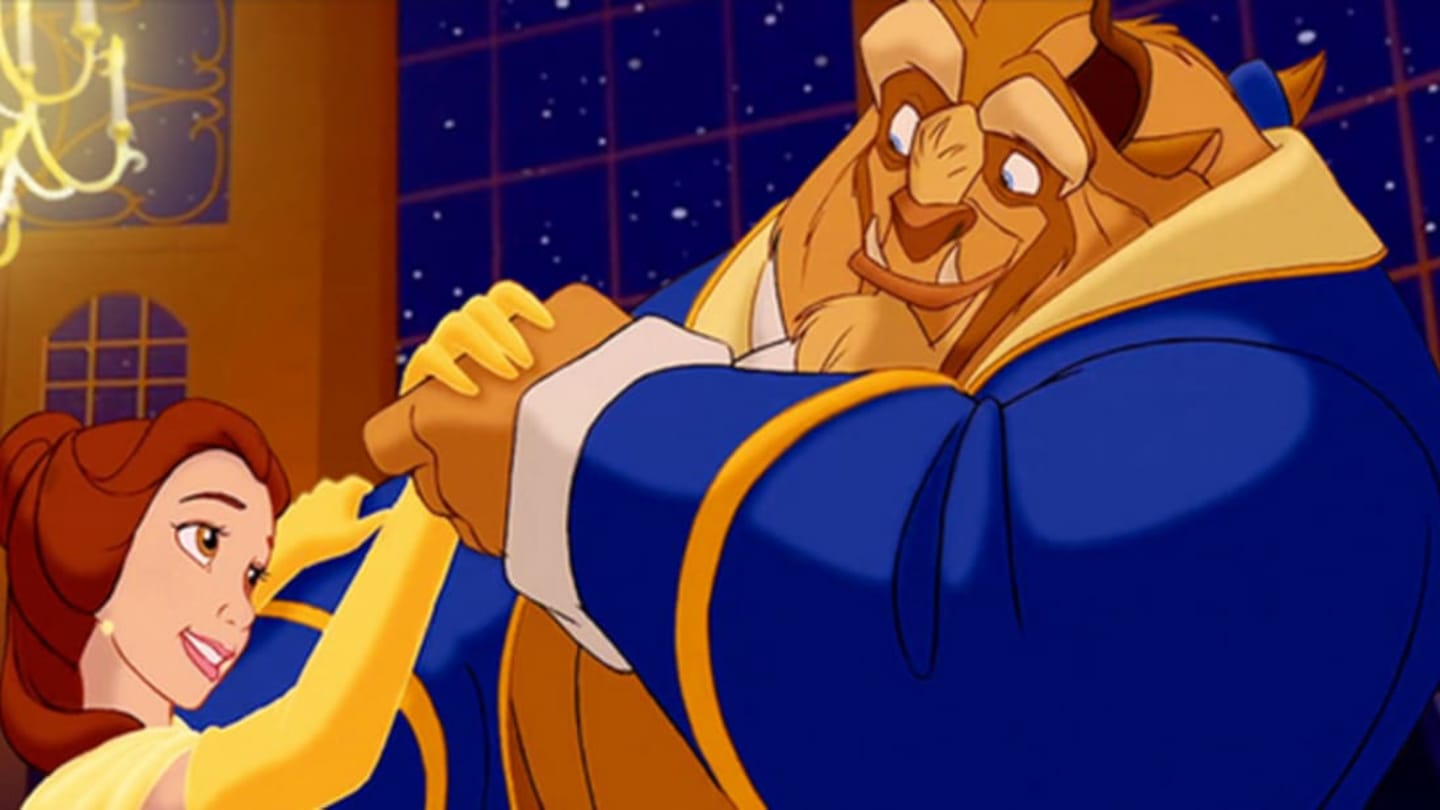
The ballroom dance remains one of the most famous scenes in animation history. What feels like a graceful, old-fashioned romantic moment was also a major technical achievement. Disney used computer-generated imagery to create the ballroom environment, allowing the “camera” to move around Belle and the Beast as they danced.
The characters were still hand-drawn, which gave the scene warmth and personality. The computer-generated background gave it sweeping movement and depth. The result was a moment that felt grander than traditional flat backgrounds could easily allow. It was not technology showing off for the sake of showing off; it served the emotion of the story. The castle finally feels alive, and the audience gets invited to the dance without needing formal shoes.
8. Angela Lansbury’s Mrs. Potts Became the Film’s Gentle Heart
Angela Lansbury’s performance as Mrs. Potts gives the movie one of its warmest emotional anchors. Mrs. Potts is nurturing without being dull, wise without being stiff, and sweet without turning into a sugar bowl with opinions. Her voice brings comfort to a castle full of anxious enchanted objects waiting for the curse to end.
The title song works so beautifully because it does not sound like a pop performance inside the story. It sounds like a lullaby from someone who understands what is happening before the characters fully admit it themselves. Mrs. Potts gives the audience permission to believe that love is growing quietly, awkwardly, and sincerely.
9. The Movie Made Oscar History
One of the most famous facts about Beauty and the Beast is that it became the first full-length animated feature nominated for the Academy Award for Best Picture. This was a historic moment because animation was often treated as entertainment for children rather than as serious filmmaking.
The nomination changed the conversation. It showed that animated storytelling could compete with live-action dramas at the highest level. The film did not win Best Picture, but the nomination itself became a landmark. In a way, Beauty and the Beast walked into the Oscar ballroom, bowed politely, and reminded Hollywood that drawings could have dramatic power too.
10. It Won Academy Awards for Music
Although the film did not win Best Picture, it did win Academy Awards for Best Original Score and Best Original Song. That recognition makes sense because the music is not just decorative. It is the engine of the film.
The score moves between comedy, danger, tenderness, and wonder with theatrical confidence. The songs reveal what characters want and fear. Belle’s longing, Gaston’s swagger, the servants’ desperation, and the Beast’s emotional growth all become clearer through music. The soundtrack helped prove that animated musicals could be crafted with the sophistication of stage productions and the accessibility of family films.
11. Its Soundtrack Also Made Grammy History
The music of Beauty and the Beast continued its awards success beyond the Oscars. The soundtrack earned major recognition at the Grammy Awards, including honors connected to the title song and the film’s musical composition.
This matters because the soundtrack helped the film live outside the theater. People could replay the emotion at home, in the car, or while dramatically cleaning a room and pretending the furniture might join in. The songs became cultural memory, not just movie moments. Even people who have not watched the film recently often remember the melody, the mood, and the sense of wonder attached to it.
12. It Was Shown at the New York Film Festival Before It Was Finished
In a bold move, an unfinished version of Beauty and the Beast was shown at the New York Film Festival in 1991. Parts of the film were still incomplete, with pencil tests and unfinished animation appearing alongside polished scenes.
That could have been risky. Audiences might have focused on what was missing. Instead, the screening helped build excitement because viewers could see the strength of the storytelling even before the final layer of animation polish had arrived. It was like seeing a castle before the last chandelier was hung and still saying, “Yes, I would absolutely attend this cursed dinner party.”
13. The Enchanted Objects Are More Than Comic Sidekicks
Lumière, Cogsworth, Mrs. Potts, Chip, and the rest of the castle staff are funny, but they are not random decorations with dialogue. They raise the stakes. If Belle and the Beast cannot break the spell, these characters may lose the last traces of their humanity.
That gives the comedy urgency. Lumière’s charm, Cogsworth’s nervous rule-following, and Chip’s innocence all make the castle feel like a community under pressure. They want romance to bloom not because they enjoy meddling, although they certainly do, but because their futures depend on it. Every joke carries a tiny ticking clock.
14. The Broadway Adaptation Expanded the Film’s Legacy
Beauty and the Beast became Disney’s first major Broadway adaptation, opening in the 1990s and helping launch Disney as a serious theatrical force. The stage version expanded the world of the movie with additional songs, larger production numbers, and physical stage magic designed to bring enchanted objects to life in front of a live audience.
This was a major step for Disney storytelling. The movie already felt theatrical, so Broadway was a natural next home. On stage, the transformation scenes, costumes, and musical numbers gave audiences a different kind of magic: the kind where everyone knows real people are operating the illusion, yet the spell still works.
15. The Message Still Works Because It Is Not Only About Looks
The simplest lesson of Beauty and the Beast is that appearances can be misleading. But the deeper message is about growth. The Beast does not earn love by secretly being handsome. He earns trust by changing how he treats others. Belle does not fall for him because she ignores his flaws. She responds to his effort, vulnerability, and kindness as he slowly becomes better.
That is why the story remains powerful. It is not saying that love magically fixes bad behavior. It is saying that real transformation requires humility, patience, and action. The enchanted rose is beautiful, but the real magic is character development. Admittedly, character development looks slightly cooler when surrounded by snow, wolves, and a castle library.
Why Beauty and the Beast Still Enchants Modern Audiences
Beauty and the Beast continues to appeal because it blends opposites: fear and tenderness, comedy and sadness, fantasy and emotional realism. The castle is magical, but the feelings are recognizable. Everyone knows what it is like to feel misunderstood, trapped, judged, or desperate for a life that feels bigger than the one currently available.
Belle’s story speaks to anyone who has ever felt out of place. The Beast’s arc speaks to anyone who has had to confront their own flaws. Even the enchanted servants speak to the very human fear of running out of time. The film wraps these ideas in music and visual beauty, which makes the lessons easier to feel than to lecture about.
It also helps that the movie is extremely rewatchable. Children enjoy the humor and songs. Adults notice the craft, the pacing, the emotional structure, and the surprisingly sharp social commentary. Gaston becomes funnier and scarier with age. Belle becomes more impressive. The Beast becomes less of a monster story and more of a study in learning how not to be emotionally furniture-shaped.
Personal Experiences and Reflections Inspired by Beauty and the Beast
One of the most interesting experiences connected to Beauty and the Beast is how differently the story feels depending on when you watch it. As a child, the enchanted castle may be the main attraction. Talking teacups, singing dishes, and a dramatic rose in a glass case are exactly the kind of things that make a young imagination sit up straight and cancel all other plans. The Beast may seem scary, Gaston may seem silly, and Belle’s library may simply look like the greatest room ever built by fictional real estate.
Watching it later, the emotional details become clearer. Belle is not just “the girl who likes books.” She is someone trying to protect her inner life from a community that keeps misunderstanding it. Her village is bright and musical, but it is also repetitive and narrow. Everyone knows everyone, and everyone has an opinion. That makes Belle’s desire for adventure feel less like daydreaming and more like self-preservation. She wants space to become herself.
The Beast also changes on repeat viewing. At first, he may look like the center of the story because the curse is visually dramatic. But his real journey is not about becoming handsome again. It is about becoming considerate. He has to learn to listen, apologize, control his temper, and care about someone else’s freedom more than his own desperation. That is a much harder transformation than getting a new haircut from magic sparkles.
Many viewers also connect with the film through its music. The songs have a way of attaching themselves to memory. Maybe someone first heard them in a childhood living room, during a school performance, on a family movie night, or in a theater where the opening notes made the whole audience go quiet. Music turns the story into something personal. It becomes less about “a famous Disney film” and more about a moment in someone’s life.
The ballroom scene is another common emotional checkpoint. It is elegant, but not because everything is perfect. In fact, part of its charm is that Belle and the Beast are still uncertain. The dance is not a final victory; it is a fragile moment of possibility. That is why it feels romantic without needing to be exaggerated. The scene understands that sometimes the most magical thing is not a grand declaration. Sometimes it is two people realizing they feel safe enough to be gentle.
For writers, filmmakers, artists, and fans of storytelling, Beauty and the Beast is also a useful lesson in structure. Every major character has a purpose. Every song changes the energy of the plot. Every comic scene relieves tension while still supporting the stakes. Even the enchanted objects are not just there to sell teapot merchandise, although let us be honest, they are very good at that too.
The biggest takeaway from the story may be this: enchantment is not only about magic. It is about attention. Belle pays attention to what others ignore. The Beast learns to pay attention to someone else’s needs. The audience pays attention to small changesa softened expression, a shared book, a dance, a choice to let someone go. That is why the tale lasts. The spell is dramatic, but the real wonder is watching people become kinder, braver, and more honest.
Conclusion
Beauty and the Beast remains enchanting because it is more than a beautiful animated film. It is a centuries-old story reshaped by music, character, technology, and emotional intelligence. Disney’s 1991 version made history at the Oscars, influenced Broadway, elevated animated musicals, and gave audiences one of cinema’s most beloved heroines. Its magic still works because the film understands something timeless: love is not about ignoring flaws, but about recognizing growth, courage, and the humanity hidden beneath the surface.