

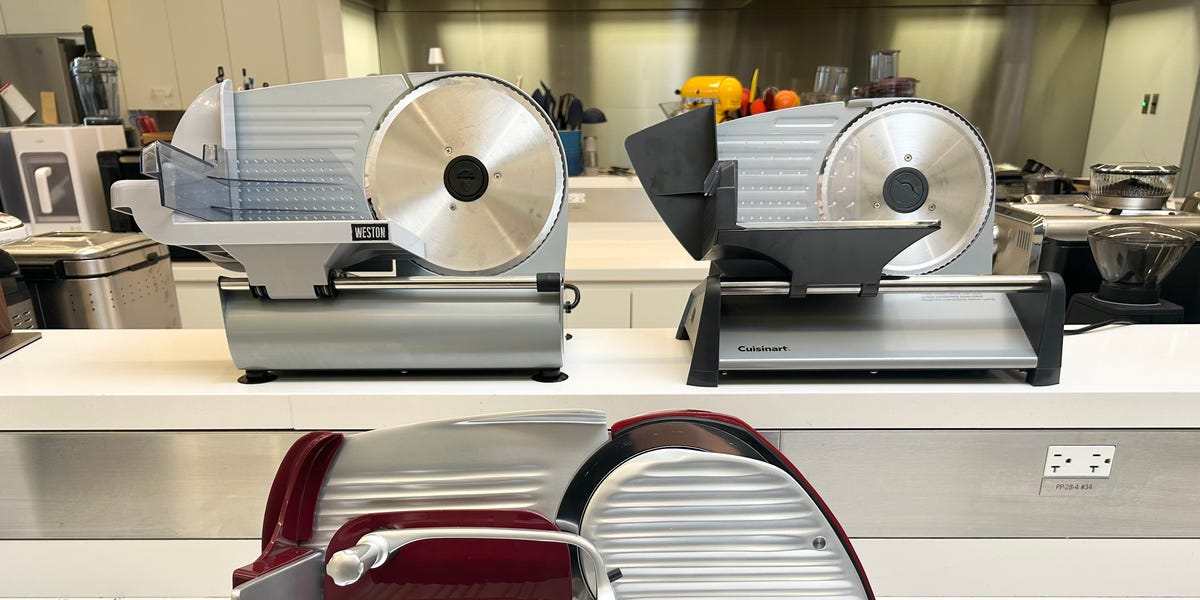
Want deli-thin turkey, tidy tomato slices, and cheese that does not look like it lost a fight with a butter knife? A good home meat slicer can turn bulk roasts, homemade sandwich meat, brisket, ham, bread, vegetables, and even semi-firm cheese into clean, even slices. The catch is that meat slicers are not tiny, quiet little angels. They have serious blades, they demand cleaning, and the best one for you depends on whether you want deli-counter precision or a budget-friendly machine that earns its cabinet space.
For 2025, the two best meat slicers are easy to separate by personality: the Berkel Home Line Plus 200 Electric Food Slicer is the premium pick for people who want the smoothest, thinnest, most deli-like slices, while the Weston 9-Inch Electric Meat/Food Slicer is the best value for home cooks who want strong performance without spending “new small appliance plus emotional support warranty” money.
Quick Answer: The 2 Best Meat Slicers of 2025
Best Overall: Berkel Home Line Plus 200 Electric Food Slicer
The Berkel Home Line Plus 200 is the slicer to buy when thin, clean, consistent slices matter most. It is sturdy, sleek, surprisingly quiet for its category, and built with a professional-style chromed steel blade. It costs more than most home slicers, but it behaves more like a compact deli machine than a gadget you bought during a 2 a.m. snack-fueled shopping spiral.
Best Value: Weston 9-Inch Electric Meat/Food Slicer
The Weston 9-inch slicer is the practical pick. It is lighter, easier to store, simpler to clean, and affordable enough for people who slice roast beef on Sunday but still need counter space for, you know, normal life. It will not match the Berkel for ultra-thin prosciutto-style slices, but for sandwiches, vegetables, bread, cooked turkey, ham, and meal prep, it delivers impressive everyday usefulness.
How We Evaluated These Meat Slicers
A meat slicer should do more than spin a sharp blade and make your kitchen feel like a tiny grocery deli. The best home meat slicer should cut cleanly, hold food securely, adjust thickness accurately, remain stable on the counter, and clean up without making you question your life choices.
To identify the top picks, this review synthesizes current testing notes, manufacturer specifications, retailer data, safety recommendations, and real-world usability factors. The most important test categories were:
- Slice quality: How cleanly the slicer handles turkey, ham, roast beef, tomatoes, lettuce, bread, and cheese.
- Thin-slice ability: Whether it can produce deli-style slices instead of thick lunch-meat shingles.
- Stability: Whether the machine stays planted or performs an alarming countertop shuffle.
- Ease of use: Controls, pusher design, tray glide, and thickness adjustment.
- Cleaning: How easy it is to remove residue from the blade, tray, guard, and hidden corners.
- Value: Whether the performance justifies the size, price, storage needs, and maintenance.
The final two recommendations are not the only slicers worth considering, but they represent the clearest choices for most home cooks: one premium machine for maximum precision and one wallet-friendlier model that still gets the sandwich job done.
Best Overall: Berkel Home Line Plus 200 Electric Food Slicer
Best for: deli-style slicing, serious sandwich makers, cured meats, thin turkey, roast beef, tomatoes, and anyone who wants a slicer attractive enough to leave on the counter.
Why It Stands Out
The Berkel Home Line Plus 200 feels like the grown-up in the room. It has a 195 mm blade, a professional-style motor, and a design that looks less like a garage appliance and more like something a stylish Italian nonna would casually own while judging your uneven salami slices.
Its biggest strength is precision. The slicer is built with millimeter-style thickness adjustment, which makes repeatable slicing easier. That matters if you want paper-thin turkey for sandwiches, delicate tomato slices for burgers, or smooth cuts of cured meat that do not tear apart before they reach the plate.
The Berkel also has excellent stability. At about 26 to 27 pounds depending on listing and configuration, it is not the kind of appliance you casually move with one hand while holding coffee in the other. That weight is annoying when storage is involved, but wonderful when slicing. A stable slicer produces better cuts and feels safer because the machine is not scooting across the counter like it has weekend plans.
Performance Notes
In kitchen testing reports, the Berkel produced some of the thinnest, cleanest slices among home models. It handled roasted turkey, tomatoes, lettuce, and similar foods with excellent consistency. The tray glide is smooth, the controls are easy to reach, and the machine is quieter than many lower-priced slicers. That last point is underrated. Nobody wants lunch prep to sound like a leaf blower joined a jazz band.
The plain-edge blade is especially useful for foods that show every mistake. Serrated blades can be helpful for bread, but a sharp plain blade often does better with delicate proteins and produce. The Berkel’s blade helps reduce tearing, drag, and ragged edges.
What Could Be Better
The Berkel is expensive. It is also large enough that you should measure your counter and cabinet space before buying. Large pieces of meat may need trimming to fit comfortably between the pusher and blade. Cleaning is manageable, but it takes longer than cleaning simpler budget slicers. The blade extractor is helpful, but reassembly requires patience and attention.
In other words, the Berkel is not for someone who slices ham twice a year and stores appliances in a mystery cabinet behind the holiday punch bowl. It is for people who regularly buy in bulk, prep sandwiches, slice cooked roasts, or care deeply about presentation.
Bottom Line
If you want the best meat slicer for home use in 2025 and are comfortable paying for premium build quality, the Berkel Home Line Plus 200 is the top pick. It is precise, sturdy, attractive, and capable of producing slices that look like they came from a real deli counter instead of a rushed Tuesday lunch assembly line.
Best Value: Weston 9-Inch Electric Meat/Food Slicer
Best for: budget-conscious home cooks, meal preppers, sandwich families, occasional slicer users, bread, vegetables, cooked meats, and thicker deli-style slices.
Why It Stands Out
The Weston 9-inch electric slicer is the “sensible shoes” pick, and that is a compliment. It does not have the luxury finish of the Berkel, but it has a useful 9-inch serrated stainless steel blade, adjustable thickness control, a food pusher, suction feet, and a body that is far easier to move and store.
For many households, that balance matters more than luxury. A slicer that performs well but lives permanently in the garage because it is too heavy to move is not a slicer; it is a countertop guilt monument. The Weston is lighter, more compact, and more realistic for the average home kitchen.
Performance Notes
The Weston performs well with bread, cooked meats, vegetables, and many sandwich ingredients. It can cut clean slices and is especially useful for people who buy whole turkey breast, ham, roast beef, or bulk cheese and want to control thickness at home. It is also handy for slicing tomatoes, cucumbers, potatoes, and bread when you need consistent pieces for a platter, casserole, or party tray.
The serrated blade gives it versatility, especially with crusty bread and firmer foods. However, serrated blades can leave slightly less polished edges on delicate items compared with a high-quality plain-edge blade. If your goal is whisper-thin prosciutto or translucent roast beef, the Weston will not beat the Berkel. If your goal is saving money on lunch meat while building very respectable sandwiches, it is absolutely in the conversation.
What Could Be Better
The Weston is louder than the Berkel and requires a bit more effort when pushing food through the carriage. Its slices may not get as thin or as consistently delicate as the premium pick. Budget slicers also tend to have more plastic components, lighter frames, and more vibration than heavy-duty models.
Still, the Weston’s easy cleaning is a major advantage. The removable blade and tilt-out food tray help you reach trapped bits of meat, cheese, and bread crumbs. That matters because slicer cleanup is not optional. Meat slicers touch ready-to-eat foods, and any machine with a spinning blade and food residue deserves serious cleaning attention.
Bottom Line
The Weston 9-inch electric slicer is the best meat slicer for shoppers who want strong home performance at a more approachable price. It is not a luxury deli machine, but it is practical, capable, and easy to recommend for regular sandwich prep, small parties, and bulk-food savings.
Berkel vs. Weston: Which Meat Slicer Should You Buy?
| Category | Berkel Home Line Plus 200 | Weston 9-Inch Electric Slicer |
|---|---|---|
| Best For | Premium, deli-style slicing | Everyday value and storage-friendly use |
| Blade | Professional-style chromed steel blade | 9-inch serrated stainless steel blade |
| Slice Quality | Excellent for very thin, clean slices | Good for sandwiches, bread, vegetables, and thicker cuts |
| Stability | Very sturdy and heavy | Lighter with suction feet |
| Cleaning | Thorough but more involved | Generally easier and quicker |
| Price Level | Premium | Budget-friendly |
Choose the Berkel if slice quality is your top priority and you have the space and budget. Choose the Weston if you want a dependable home slicer for regular use without turning lunch meat into a luxury hobby.
What to Look for in a Home Meat Slicer
Blade Type
Plain-edge blades are usually better for ultra-thin, smooth slices of meat and delicate foods. Serrated blades are more forgiving with bread, firm vegetables, and general-purpose slicing. Some machines include both, but many budget models rely on serrated blades for versatility.
Thickness Control
The best meat slicers let you move from thin deli cuts to thicker slices for steaks, chops, vegetables, and bread. Look for clear markings and a dial or lever that does not feel vague. If the thickness control feels like guessing, your sandwich stack will look like an architectural experiment.
Motor Power
A stronger motor helps the blade maintain speed through dense foods. However, wattage is not everything. Blade sharpness, food carriage stability, and overall construction also affect performance. A well-built 170-watt slicer may outperform a louder, rougher budget model with higher advertised power.
Size and Weight
Heavy slicers feel safer and more stable, but they are harder to store. Compact slicers are easier to move but may vibrate more. Before buying, decide where the slicer will live. If the answer is “somewhere,” pause. “Somewhere” is where small appliances go to become expensive dust sculptures.
Cleaning Design
Choose a slicer with removable or accessible parts. Food residue can hide behind the blade guard, under the tray, around the pusher, and near the thickness plate. A slicer that is hard to clean is a slicer you will use less often, and possibly resent more often.
Safety Features
Look for a sturdy food pusher, hand guard, stable feet, easy-to-reach power buttons, and clear instructions. Meat slicers are powerful tools with extremely sharp blades. They deserve the same respect you would give a mandoline, except with a motor and much more attitude.
How to Use a Meat Slicer Safely
Set the slicer on a flat, dry, stable surface. Keep it away from sink spray, clutter, children, pets, and anyone who says, “Let me just try one thing real quick.” Adjust the thickness before turning the machine on. Use the pusher every time. Never guide food with your bare hand near the blade.
For cleaner slices, chill cooked meats before slicing. A cold roast, turkey breast, or ham holds its shape better than warm meat. Do not force food through the blade. Let the carriage glide and use steady pressure. If the machine struggles, stop and check whether the food is too large, too hard, or poorly positioned.
After slicing, turn the machine off, unplug it, and close the thickness plate before cleaning. Remove parts according to the manual. Wash food-contact surfaces with hot, soapy water, then sanitize when appropriate. Dry all parts completely before reassembling. Moisture plus food residue is not a flavor profile; it is a problem.
What Can You Slice With a Meat Slicer?
Despite the name, meat slicers are not limited to meat. They can slice cooked turkey breast, ham, roast beef, salami, chicken breast, brisket, and certain cured meats. Many can also handle cheese, though hard cheeses may strain smaller motors. You can slice tomatoes, cucumbers, eggplant, zucchini, potatoes, apples, pears, and bread.
The key is texture. Very soft, crumbly, sticky, or irregular foods can smear, tear, or jam. For best results, chill soft foods and trim large pieces to fit the carriage. If slicing cheese, avoid forcing thick blocks through quickly. Slow, steady movement gives better results and reduces stress on the motor.
Are Meat Slicers Worth It?
A meat slicer is worth it if you regularly buy meat in bulk, cook roasts for sandwiches, smoke brisket, make charcuterie boards, meal prep lunches, or want consistent slices for entertaining. It can also reduce food waste because you control portion size and thickness.
However, it is not worth it for everyone. If you only eat deli meat occasionally, a sharp carving knife may be enough. Meat slicers require storage, cleaning, and careful handling. The best way to decide is to count how often you buy pre-sliced foods. If your grocery cart regularly contains sliced turkey, roast beef, ham, cheese, and sandwich bread, a slicer may eventually pay for itself in convenience and control.
Extra Experience Notes: Living With a Meat Slicer at Home
The first thing you learn after using a meat slicer at home is that it makes you wildly ambitious. Suddenly, every roast looks like lunch meat waiting to happen. Leftover turkey becomes a sandwich plan. A loaf of sourdough becomes perfectly even toast slices. A tomato becomes a little red wheel of confidence. You may begin saying things like “I’ll just slice this myself,” which is how many kitchen hobbies begin and several storage problems are born.
In everyday use, the most important habit is preparation. A slicer performs best when the food is firm, cold, and trimmed to fit the carriage. Warm roast beef can sag and shred. Soft cheese can drag. Tomatoes need a sharp blade and gentle pressure. Bread needs support so the loaf does not collapse like it heard bad news. Chilling food for 20 to 30 minutes before slicing often makes the difference between neat deli-style slices and a pile of edible confetti.
The second lesson is that cleanup determines how often you use the machine. When a slicer is easy to wipe down and reassemble, you are more likely to reach for it on a normal weekday. When cleaning feels like dismantling a spaceship with greasy fingerprints, the slicer slowly migrates to the back of the pantry. That is why the Weston is so appealing for casual users. It is not the most elegant slicer, but it respects the fact that most people want lunch, not a maintenance seminar.
The Berkel, on the other hand, rewards people who enjoy precision. It feels smoother, cuts cleaner, and looks like it belongs in a kitchen where someone owns special olive oil and knows exactly where it came from. It is especially satisfying when slicing roasted turkey breast or cured meat thin enough to fold gently on a sandwich. The results look polished, and yes, that does make lunch feel fancier. A turkey sandwich with even slices simply tastes more intentional, as if you planned your life correctly for once.
One practical tip: portion before slicing. If you cook a large roast, cut it into smaller sections that fit your slicer comfortably. This reduces awkward pushing and improves consistency. Another tip: rotate tasks from dry to wet when possible. Slice bread first, then cheese, then meat, then juicy vegetables last. This keeps crumbs and moisture from turning the carriage into a tiny food scrapbook.
For families, a slicer can be surprisingly useful. You can cook a turkey breast on Sunday, chill it, slice it thin, and store portions for school lunches or work sandwiches. You can slice cheese to the thickness your household actually likes instead of accepting whatever the grocery deli machine decided that day. You can prepare party trays without paying party-tray prices. The slicer becomes less of a novelty and more of a quiet meal-prep assistant with a very sharp personality.
Still, respect the blade. Never rush. Never clean while plugged in. Never use fingers where the pusher belongs. A meat slicer is one of those appliances that works beautifully when treated properly and becomes terrifying the moment someone gets casual. Give it space, clean it thoroughly, and store it safely. Do that, and it can turn bulk cooking into neater meals, better sandwiches, and fewer uneven slices that look like they were cut during an earthquake.
Final Verdict
The Berkel Home Line Plus 200 Electric Food Slicer is the best overall meat slicer in 2025 because it delivers the cleanest, thinnest, most professional-looking results. It is expensive and requires more counter space, but it is the slicer to buy if performance matters most.
The Weston 9-Inch Electric Meat/Food Slicer is the best value because it offers practical slicing power, easier storage, and approachable pricing. It is ideal for home cooks who want better sandwiches, cleaner meal prep, and more control over bulk foods without investing in a premium machine.
Research note: This article synthesizes current product specifications, independent kitchen-testing observations, manufacturer details, retailer listings, and U.S. food-safety guidance. Prices, availability, and model details can change, so verify the latest information before purchasing.