

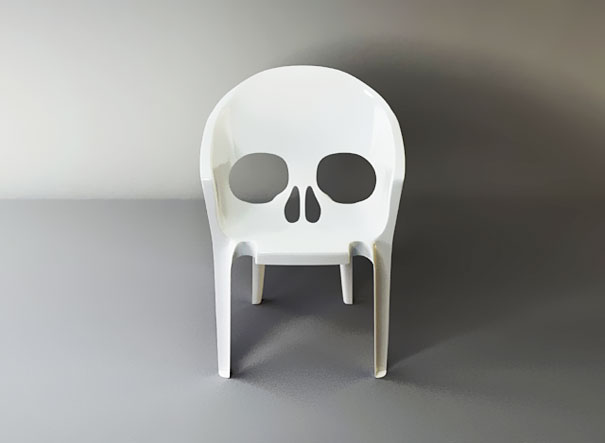
Some chairs politely do their job: four legs, flat seat, dependable backrest, end of story. Then there are the rebelsthe chairs that look like spaceships, folded cardboard, transparent ghosts, soft sculptures, geometric puzzles, or something your cat would judge from across the room. These creative and unusual chair designs prove that seating is not just about sitting. It is about engineering, culture, comfort, status, humor, technology, and occasionally asking, “Wait…is that actually a chair?”
The best unusual chair designs are not weird for the sake of being weird. They solve problems, challenge habits, introduce new materials, or turn a room into a conversation starter before anyone has even found the snacks. From mid-century icons to experimental contemporary furniture, these chairs show how designers have stretched one of the oldest household objects into sculpture, architecture, and personality.
Below are 20 creative and unusual chair designs that changed furniture history, influenced modern interiors, and proved that a chair can be much more than a place to park your tired human frame.
Why Creative Chair Design Matters
A chair is one of the most difficult objects to design well because everyone understands it instantly. If a lamp looks strange, people may call it art. If a chair looks strange, people still expect it to support an actual body without causing regret. That tension makes chair design fascinating. Designers must balance ergonomics, materials, manufacturing, durability, visual drama, and human behavior.
Unusual chair designs often become milestones because they capture the spirit of their era. Tubular steel chairs spoke to the machine age. Molded plywood reflected wartime experimentation and postwar optimism. Plastic chairs celebrated industrial possibility. Cardboard, rope, reclaimed wood, and recycled materials later pushed the conversation toward sustainability and craft. In other words, chairs are tiny time capsules with legsor sometimes with no legs at all.
20 Creative And Unusual Chair Designs Worth Knowing
1. Panton Chair: The S-Curve That Refused to Behave
Verner Panton’s Panton Chair is one of the most famous examples of futuristic chair design. Its flowing S-shaped profile looks as if someone took a normal chair, melted it, and gave it confidence. What made it revolutionary was its ambition: a cantilevered chair made from a single continuous plastic form. It became a symbol of 1960s experimentation, when designers were eager to trade wooden legs and polite upholstery for bold color, synthetic materials, and space-age swagger.
2. Ball Chair: A Room Inside a Chair
Eero Aarnio’s Ball Chair looks less like furniture and more like a private moon pod. Designed in the 1960s, it surrounds the sitter with a spherical shell, creating a cozy acoustic nook. It is dramatic, playful, and surprisingly practical for anyone who has ever wanted to hide from an open-plan living room. The Ball Chair remains one of the most creative modern chair designs because it changes not only how a person sits, but how they experience the room around them.
3. Bubble Chair: Floating Furniture With Main Character Energy
The Bubble Chair, also by Eero Aarnio, takes the idea of the Ball Chair and suspends it in the air. Transparent, rounded, and usually hung from the ceiling, it gives the sitter the sensation of floating inside a stylish soap bubble. Its clear shell keeps it visually light, while its hanging form makes it feel delightfully theatrical. It is the kind of chair that makes guests ask questions before they take off their shoes.
4. Egg Chair: Privacy, But Make It Sculptural
Arne Jacobsen designed the Egg Chair for the SAS Royal Hotel in Copenhagen, and it still feels like a perfect hotel lobby chair: glamorous, protective, and slightly mysterious. Its high curved shell creates a sense of privacy without needing walls. That makes it ideal for reading, lounging, or pretending to be an international spy waiting for a coded message at the bar. The Egg Chair’s unusual shape proved that modern furniture could be soft, sculptural, and emotionally comforting.
5. Up5_6 Chair: A Feminist Statement in Foam
Gaetano Pesce’s Up5_6 chair is unforgettable. The rounded armchair is paired with a ball-shaped ottoman attached by a cord, a visual metaphor often interpreted as a ball and chain. Originally developed with vacuum-packed foam technology, the chair expanded after being released from its compressed package. Its exaggerated form looks playful at first glance, but the concept carries a serious message about constraint and social pressure. Few chairs manage to be this squishy and this political at the same time.
6. Wiggle Side Chair: Cardboard Gets a Promotion
Frank Gehry’s Wiggle Side Chair is made from layers of corrugated cardboard, which sounds like a terrible idea until you see how elegant it is. Part of Gehry’s Easy Edges furniture, it transforms an everyday packing material into a strong, rhythmic, sculptural seat. The chair’s wavy profile gives it movement even when nobody is sitting in it. It is proof that humble materials can become high design when handled with enough curiosity and structural intelligence.
7. Louis Ghost Chair: The Invisible Classic
Philippe Starck’s Louis Ghost Chair for Kartell is both old-fashioned and futuristic. Its silhouette borrows from Louis XVI-style furniture, but its transparent polycarbonate body makes it look like the ghost of a royal dining chair wandered into a modern apartment. The result is witty, durable, stackable, and surprisingly versatile. It can sit at a farmhouse table, a glam vanity, or a minimalist desk without visually crowding the space. That is a neat trick for a chair with aristocratic bones.
8. Red and Blue Chair: De Stijl You Can Sit On
Gerrit Rietveld’s Red and Blue Chair looks like a painting by Piet Mondrian escaped the wall and became furniture. Built from rectilinear planes and lines, it uses primary colors and black to turn structure into visual rhythm. It is not the chair most people would choose for a three-hour movie marathon, but comfort was not its only mission. It explored space, geometry, and abstraction, making it one of the most iconic unusual chair designs of the modern movement.
9. Zig-Zag Chair: Four Boards, No Apologies
Also by Rietveld, the Zig-Zag Chair is a master class in reduction. It appears to be made from a single lightning-bolt gesture: seat, back, support, floor. There are no traditional legs, no arms, and no decorative extras. It is so minimal that it almost seems like a diagram of a chair rather than a chair itself. Yet that radical simplicity is exactly why it still fascinates designers and collectors.
10. Wassily Chair: The Bicycle-Inspired Breakthrough
Marcel Breuer’s Wassily Chair replaced the heavy club chair with a floating arrangement of tubular steel and stretched fabric or leather. Inspired in part by the possibilities of bent metal tubing, it captured the Bauhaus belief that modern materials could reshape daily life. The chair keeps the outline of traditional seating but removes nearly everything bulky. The result feels mechanical, elegant, and daringlike a chair wearing a very sharp architectural suit.
11. Eames Molded Plywood Lounge Chair: The Friendly Curve
Charles and Ray Eames helped make molded plywood feel warm, human, and democratic. Their LCW, or Lounge Chair Wood, uses curved plywood components to cradle the body in a relaxed posture. Compared with more flamboyant unusual chairs, it may seem quiet, but its innovation was enormous. It showed how industrial experimentation could produce affordable beauty, ergonomic comfort, and a shape that still looks fresh decades later.
12. Eames Lounge Chair: The Baseball Mitt of Luxury
The Eames Lounge Chair and Ottoman turned molded plywood and leather into one of the most recognizable lounge setups in the world. It was designed to feel inviting rather than stiff, combining craftsmanship, comfort, and modern manufacturing. Its unusual achievement is emotional: it looks sophisticated without looking cold. Many luxury chairs try to impress you; the Eames Lounge looks like it wants to hand you a book and cancel your meetings.
13. Barcelona Chair: Royal Minimalism
Ludwig Mies van der Rohe’s Barcelona Chair was created for the German Pavilion at the 1929 International Exposition in Barcelona. Its X-shaped frame and leather cushions borrow from ancient folding-seat forms while expressing modernist restraint. It is unusual because it manages to feel ceremonial and minimal at once. The chair does not shout, but it has the quiet authority of someone who never needs to raise their voice.
14. Tulip Chair: Goodbye, Forest of Legs
Eero Saarinen wanted to clean up what he called the messy “slum of legs” under tables and chairs. His Tulip Chair answered with a single pedestal base, replacing the usual four-legged structure with a sculptural stem. The result looks organic, futuristic, and clean. It remains a favorite in dining rooms because it gives visual order to a space that can easily become cluttered with chair legs, table legs, human legs, and the occasional dog tail.
15. Womb Chair: Comfort as Architecture
Saarinen’s Womb Chair was designed to be deeply comfortable in multiple sitting positions. Its enveloping shell and loose cushions make it feel less like a formal chair and more like a soft personal landscape. The shape is unusual because it rejects stiff posture in favor of lounging, curling, and relaxing. It helped redefine modern comfort, proving that a chair could be sculptural without punishing the person brave enough to sit in it.
16. Coconut Chair: A Slice of Tropical Modernism
George Nelson’s Coconut Chair takes inspiration from a piece of coconut shell, but thankfully without the sticky hands. Its triangular, open form offers a generous lounge posture while keeping a light visual footprint. The chair is unusual because it feels casual and architectural at the same time. It has the optimism of mid-century design, when furniture often looked ready for a cocktail party, a magazine spread, or a very stylish nap.
17. Vermelha Chair: Organized Chaos in Rope
Fernando and Humberto Campana’s Vermelha Chair looks like a beautiful explosion of red cord. Built around a metal frame, it uses hundreds of meters of rope-like material woven into a dense, energetic surface. The chair draws from Brazilian craft traditions while rejecting polished predictability. It is messy, tactile, expressive, and sophisticated all at once. If most chairs are sentences, Vermelha is an exclamation point with upholstery.
18. Favela Chair: Reclaimed Wood With Raw Poetry
The Campana Brothers’ Favela Chair uses many strips of natural wood assembled in an intentionally irregular pattern. Its rough, handmade look reflects the brothers’ fascination with improvisation, resourcefulness, and materials that carry social meaning. Every chair feels slightly different because the arrangement is not mechanically uniform. That uniqueness is the point. Favela turns fragments into structure and reminds us that beauty does not always arrive sanded smooth.
19. Knotted Chair: Macramé Meets High Tech
Marcel Wanders’ Knotted Chair blends a craft technique associated with hand-knotting and a high-tech resin process that makes the structure rigid. It looks delicate, almost impossible, as if a lace chair somehow decided to obey gravity. The design is unusual because it bridges two worlds that usually sit at separate tables: old-world craft and industrial experimentation. It is poetic, clever, and a little magical.
20. Chair One: Geometry With Muscles
Konstantin Grcic’s Chair One for Magis is made from die-cast aluminum and shaped like a three-dimensional geometric net. It looks angular, digital, and almost skeletal, yet it is designed for real use, including outdoor settings. Chair One feels like the furniture equivalent of a low-poly sculpture from a video game that got a design degree. Its strength comes from turning emptiness into structure.
What These Unusual Chair Designs Teach Us
Creative chair designs succeed when they combine imagination with purpose. The Panton Chair explored plastic manufacturing. The Wassily Chair challenged the club chair with tubular steel. The Wiggle Chair elevated cardboard. The Louis Ghost Chair made historical style nearly disappear. The Campana Brothers transformed humble materials into collectible design. These chairs are not simply odd objects; they are arguments about how we live.
They also show that comfort is not one fixed idea. Some chairs support privacy. Some encourage lounging. Some prioritize visual experimentation. Some are more sculptural than practical, and that is acceptable when the intent is clear. A museum-worthy chair may not be the best choice for eating cereal at 7 a.m., but it may permanently change how designers think about materials and form.
How to Use Statement Chairs in Real Homes
Bringing an unusual chair into a home requires balance. A dramatic chair needs space to breathe, much like a diva needs good lighting. Place one sculptural chair in a reading corner, entryway, bedroom, or living room where it can act as a focal point. Avoid surrounding it with too many competing shapes. If the chair is colorful, keep nearby pieces calmer. If the chair is transparent or minimal, let texture do the supporting work through rugs, curtains, or warm wood tones.
Scale matters too. A Ball Chair may overwhelm a tiny room, while a Louis Ghost Chair can work beautifully in compact spaces because it visually disappears. A Womb Chair needs room for its generous shape, while Chair One can add edge to a patio, studio, or modern dining setup. The best strategy is to treat an unusual chair like art that also has a job description.
Experience Notes: Living With Creative And Unusual Chair Designs
Spending time around unusual chairs teaches you something that product photos rarely reveal: a chair has a personality. Some chairs invite you in immediately. Others make you negotiate. A big, cushioned lounge chair says, “Stay awhile.” A sharp geometric chair says, “You may sit, but please respect the architecture.” A transparent chair says, “I am barely here, but I still expect compliments.”
In real interiors, creative and unusual chair designs often work best when they are allowed to be the memorable guest at the party. One statement chair can transform a room faster than a full redesign. Put a sculptural lounge chair beside a simple floor lamp, and suddenly the corner has purpose. Add a bright molded chair to a neutral office, and the workspace feels more intentional. Place a clear Ghost-style chair near a vintage desk, and the mix of old and new creates instant tension in the best way.
The experience is not only visual. Materials change how people behave. A rope chair makes guests want to touch it. A molded plastic chair feels casual and easy to clean. A leather lounge chair creates a slower mood. A cardboard chair surprises people because they expect weakness and discover structure. A hanging bubble chair can make adults behave like delighted children, which is honestly one of design’s noblest achievements.
There are practical lessons, too. Not every unusual chair is comfortable for every body. Before buying a statement chair, consider seat height, back support, arm position, and how long someone will actually sit there. A dramatic chair for a hallway can prioritize looks. A reading chair needs comfort. A dining chair needs repeatable usability, because no one wants to admire design history while secretly losing circulation in one leg.
Maintenance is another reality check. Transparent chairs show fingerprints. Upholstered icons need care. Woven or knotted designs may collect dust. Outdoor sculptural chairs must handle weather, not just compliments. The more unusual the chair, the more important it is to understand the material. Great design should make life richer, not turn cleaning day into a graduate seminar.
Still, the reward is real. Creative chair designs make rooms feel less generic. They reveal taste, humor, curiosity, and sometimes courage. They can soften a modern space, energize a traditional one, or give a simple apartment a gallery-like moment. Even when a chair is not the most practical seat in the house, it can become the one everyone remembers.
The secret is not to chase weirdness. Chase character. The best unusual chairs have a reason for their shape. They come from a material experiment, a cultural idea, an ergonomic goal, a manufacturing breakthrough, or a designer asking a question that had not been asked before. That is why these 20 creative and unusual chair designs still matter. They do not merely hold people up. They hold ideas.
Conclusion
Creative and unusual chair designs prove that even the most familiar household object can become a playground for invention. From the plastic curves of the Panton Chair to the woven complexity of the Vermelha Chair, from the cardboard confidence of the Wiggle Chair to the transparent wit of the Louis Ghost Chair, these designs show how furniture can be practical, poetic, funny, political, and technically brilliant.
A great chair does more than fill a corner. It shapes posture, mood, conversation, and memory. Whether you prefer mid-century modern icons, sculptural statement chairs, experimental materials, or futuristic seating, the world of innovative chair design offers endless proof that sitting down does not have to be boring.