

Note: This article is written for web publication and is based on established spider-identification guidance from university extension resources, natural history databases, and North American arachnology references. No external source links are included in the article body.
Introduction: The Spider With a Built-In Daycare Plan
If you have ever spotted a long-legged brown spider resting on a leaf, lurking in tall grass, or guarding a silky tent of baby spiders, you may have met a nursery web spider. Despite the slightly dramatic name, this spider is not running a tiny preschool with snack time and finger painting. The “nursery” refers to the protective silk shelter a female builds for her egg sac and young spiderlings.
The best-known nursery web spider in much of the United States is Pisaurina mira, commonly called the American nursery web spider. It belongs to the family Pisauridae, a group of hunting spiders that includes several long-legged, athletic-looking species. These spiders are often mistaken for wolf spiders, fishing spiders, or simply “large brown spiders,” which is understandable. Nature did not give them name tags.
Fortunately, you do not need to be an arachnologist with a magnifying glass glued to your forehead to recognize one. The key is to look at three clues together: body shape and markings, behavior around egg sacs and nursery webs, and where the spider is found. One clue alone can mislead you, but the combination gives you a much stronger identification.
This guide explains three practical ways to identify a nursery web spider, how to tell it apart from similar spiders, and what to do if you find one around your home or garden. Spoiler: in most cases, the best move is to admire it from a respectful distance and let it continue its unpaid pest-control job.
Way 1: Study the Body Shape, Color, and Markings
Look for a Long, Slim, Athletic Body
A nursery web spider usually has a lean, elongated body with long legs that make it appear larger than its actual body length. The American nursery web spider is often around one-half to three-quarters of an inch in body length, though the legs can make it look more impressive. Think of it as the track runner of the spider world: slim, fast-looking, and built for sudden movement.
Its body is typically light brown, tan, grayish-brown, yellowish-brown, or sometimes slightly orange. The exact shade can vary depending on the spider’s age, sex, location, and lighting. A spider photographed on a glossy green leaf in morning sun may look warmer and brighter than the same species hiding in shaded weeds. Color is useful, but it should never be your only clue.
Many nursery web spiders have a dark stripe running down the center of the cephalothoraxthe front body section that includes the head and thoraxand continuing along the abdomen. Some individuals show a strong, clean center stripe. Others have a broken, pale, spotted, or less obvious pattern. This variation is one reason people misidentify them. A nursery web spider does not always follow the “one perfect field guide photo” rule.
Check the Legs: Long, Slender, and Often Not Boldly Banded
The legs are another helpful clue. Nursery web spiders tend to have long, thin legs that spread outward when the spider rests on leaves, stems, walls, or other surfaces. They often hold themselves fairly flat against the surface, which can make them look stretched out and calmuntil they sprint away and remind you they have eight tiny engines.
In the common American nursery web spider, the legs are often not strongly banded. That can help separate it from some fishing spiders and other patterned spiders that show more obvious rings or bands on the legs. However, lighting, shadow, and natural variation can create confusion, so treat leg markings as supporting evidence rather than the final answer.
Notice the Eye Arrangement If You Can Safely Get a Close Look
Eye arrangement is one of the more technical but reliable ways to separate nursery web spiders from wolf spiders. Nursery web spiders have eight eyes that are more similar in size than the eyes of wolf spiders. Wolf spiders usually have two noticeably large eyes that shine brightly in a flashlight beam, plus smaller eyes arranged around them.
For most homeowners, gardeners, and curious backyard explorers, getting close enough to examine spider eyes may not be practical. Also, the spider may not appreciate your sudden career as a face inspector. A good photo taken from a safe distance can help. If you zoom in and see that the eyes are relatively even in size rather than dominated by two large central eyes, nursery web spider becomes more likely.
Do Not Confuse It With a Brown Recluse
Because nursery web spiders are often brown, people sometimes worry they have found a brown recluse. In most cases, the two look quite different when you know what to check. A brown recluse has six eyes arranged in pairs, a smoother-looking body, and the famous violin-like marking on the cephalothorax, though even that mark can be misread. Nursery web spiders have eight eyes, longer legs, a more stretched hunting-spider profile, and often a central stripe or variable patterning rather than a clean violin shape.
Also, nursery web spiders are commonly seen on vegetation, in shrubs, in fields, along woodland edges, and in garden plants. Brown recluse spiders prefer more hidden, undisturbed indoor or sheltered spaces in the regions where they occur. If your “mystery spider” is sitting in a raspberry patch looking like it owns the leaf, nursery web spider is a reasonable possibility.
Way 2: Watch for the Famous Egg Sac and Nursery Web Behavior
The Egg Sac Is the Biggest Clue
If you see a female spider carrying a round egg sac under the front of her body, you may have your best clue. Female nursery web spiders carry their egg sacs with their jaws and pedipalps near the mouthparts. This is different from wolf spiders, which attach their egg sacs to the spinnerets at the rear of the abdomen.
In plain English: if the egg sac looks like it is being carried up front, under the spider’s face, nursery web spider is more likely. If the egg sac is attached behind the spider like a backpack, wolf spider is more likely. Nature apparently issued different diaper bags to different spider families.
This egg-carrying behavior is one of the most useful field marks because it connects directly to the spider’s life cycle. The female carries the egg sac until the young are close to hatching. During this period, she may be less focused on hunting and more focused on protecting the next generation. For a spider, that is a serious parenting commitment.
The “Nursery Web” Is Not a Prey-Catching Web
The name “nursery web spider” can be misleading because these spiders do not usually build the classic sticky orb web used to catch flying insects. They are wandering hunters and ambush predators. They use silk for other purposes, especially reproduction and protection.
When the eggs are nearly ready to hatch, the female builds a nursery web. This structure is often made among leaves, stems, grasses, shrubs, or low vegetation. She may fold or pull leaves together and fill the space with silk, creating a protective tent. The egg sac is placed inside or near the silk shelter, and the spiderlings remain there for a short period after hatching.
If you find a messy, tent-like silk structure in a plant with a watchful brown spider nearby, it may be a nursery. Unlike a typical prey web, this silk shelter is not designed mainly to trap lunch. It is closer to a spider nursery roomminus the alphabet posters and tiny rocking chair.
The Mother Often Guards the Web
Another strong clue is maternal guarding. Female nursery web spiders often stay near the nursery web to protect the spiderlings. This behavior is part of what makes them fascinating. Many people think of spiders as solitary creatures that simply scatter their young and move on. Nursery web spiders show a more protective strategy.
If you see a female sitting near a silk tent filled with tiny spiderlings, avoid poking, spraying, or tearing it apart. The spider is doing exactly what her species has evolved to do. She is also helping keep insect populations in balance. Unless the web is directly in a high-traffic doorway or another unavoidable spot, leaving it alone is usually the best choice.
How This Behavior Separates Nursery Web Spiders From Similar Spiders
Wolf spiders also carry egg sacs and are excellent mothers, but their egg sacs are attached to the rear of the abdomen. After hatching, wolf spiderlings often ride on the mother’s back. Nursery web spiderlings, by contrast, are protected in the silk nursery. That difference is extremely helpful when identifying a spider with eggs or young.
Fishing spiders are close relatives in the same broader nursery web spider family, and they can share some similar traits. Many fishing spiders are larger, more strongly associated with water, and may have bolder body or leg markings. If your spider is large, flattened, and sitting on a dock, pond edge, or tree trunk near water, compare it carefully with fishing spiders before calling it Pisaurina mira.
Way 3: Consider the Habitat, Season, and Hunting Style
Look in Tall Grass, Shrubs, Gardens, and Woodland Edges
Nursery web spiders are commonly found in fields, meadows, tall grasses, shrubs, garden plants, and woodland edges. They like places where vegetation gives them cover and hunting opportunities. In the eastern and central United States, the American nursery web spider is a familiar outdoor species, especially in areas where open fields meet woods or where gardens have dense plant growth.
You may spot one resting on broad leaves, stretched along a stem, sitting on a fence near vegetation, or hiding in low plants. They may occasionally wander onto porches, garages, sheds, or even indoors, but they are not house pests in the way ants, roaches, or pantry moths can be. If one ends up inside, it probably made a wrong turn during its eight-legged commute.
Know When They Are Most Noticeable
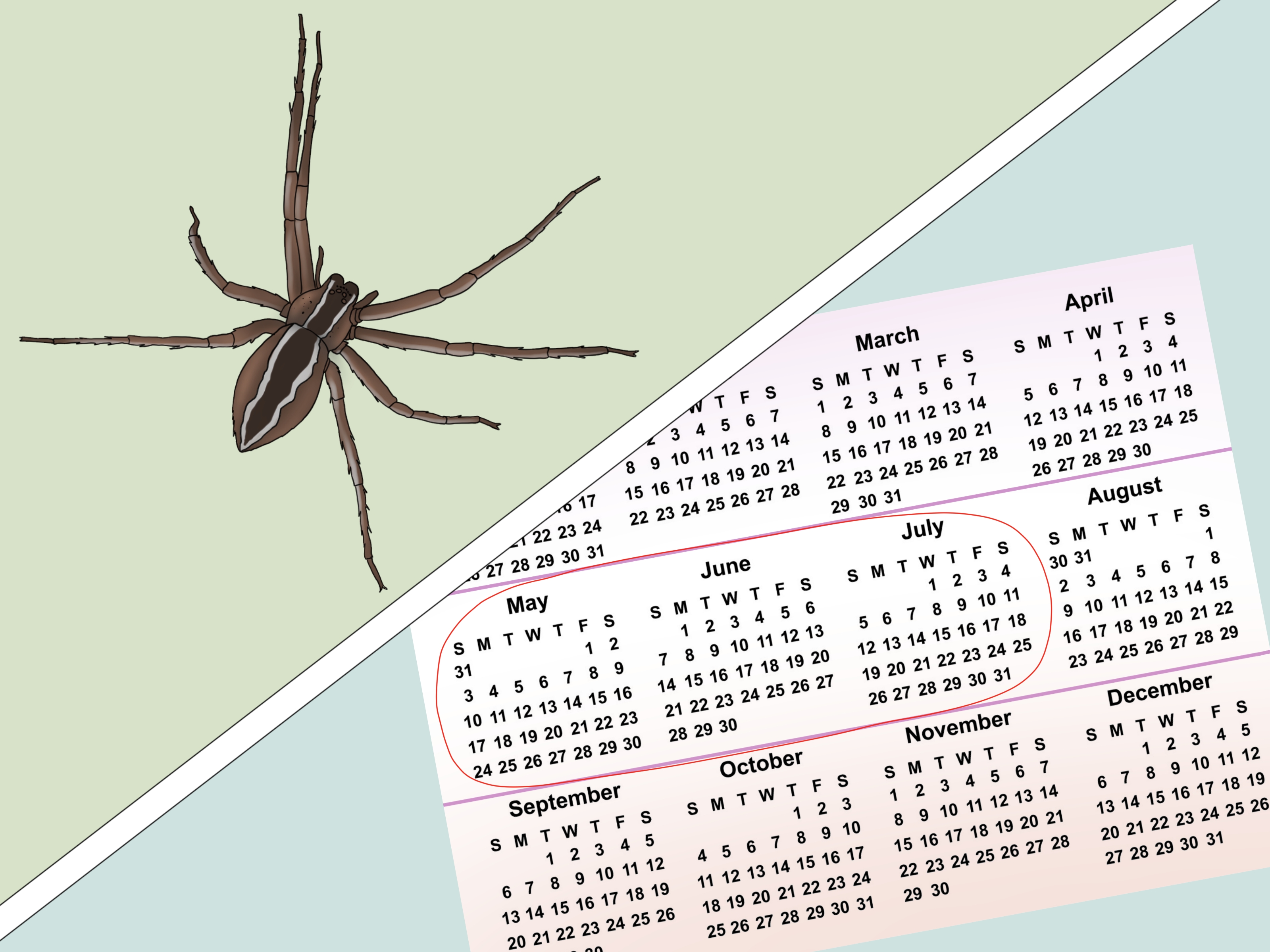
Nursery web spiders can be noticed during warmer months when insects are active and vegetation is full. Females with egg sacs and nursery webs are especially noticeable in late spring and summer, depending on local climate. In many regions, people report seeing them in gardens, fields, and natural areas during the growing season.
Season alone will not identify the spider, but it adds context. A long-legged brown spider guarding silk in a leafy shrub in early summer fits nursery web spider behavior much better than a random indoor spider found in a basement in midwinter.
Observe How It Hunts
Nursery web spiders are not passive web trappers. They hunt by wandering, waiting, and ambushing prey. They may sit still on vegetation and grab insects that come within reach. Their venom helps subdue prey, but these spiders are not considered medically important to people in typical situations.
That does not mean you should handle them. Any spider can bite if squeezed, trapped against skin, or threatened. A nursery web spider bite may be uncomfortable, but serious problems are not expected for most people. If a bite causes severe pain, spreading redness, allergic symptoms, or signs of infection, it is wise to contact a medical professional. The better plan is simple: look, photograph, appreciate, and do not pick up the spider like it is a fuzzy coin.
Use a Three-Clue Identification Method
The most reliable way to identify a nursery web spider is to combine clues. Ask yourself three questions:
- Does the spider have a long, slim brown body with long legs and a central stripe or variable pattern?
- Is it carrying an egg sac near the mouthparts or guarding a silk nursery in vegetation?
- Was it found in tall grass, shrubs, fields, gardens, or woodland edges during warm months?
If the answer to all three is yes, you are likely looking at a nursery web spider. If only one clue matches, keep comparing. Spider identification works best when you resist the urge to name the first brown spider you see. Brown spiders are like mystery novels: the obvious suspect is not always the culprit.
Nursery Web Spider vs. Wolf Spider: Quick Comparison
| Feature | Nursery Web Spider | Wolf Spider |
|---|---|---|
| Egg sac position | Carried near the mouthparts with jaws and pedipalps | Attached to spinnerets at the rear of the abdomen |
| Young spiderlings | Protected in a silk nursery web | Often ride on the mother’s back after hatching |
| Eyes | Eight eyes more similar in size | Two larger eyes are especially noticeable |
| Common location | Vegetation, shrubs, tall grass, woodland edges | Often seen running on the ground |
| Web use | Builds nursery silk for young, not a prey-catching orb web | Does not build a prey-catching web; hunts actively |
Are Nursery Web Spiders Dangerous?
For most people, nursery web spiders are not a cause for alarm. They are beneficial predators that feed on insects and other small arthropods. They would much rather avoid a giant human than start a dramatic living-room showdown. In fact, most “scary spider encounters” are just accidental meetings between two nervous creatures, one of whom has shoes and Wi-Fi.
Nursery web spiders are venomous in the basic biological sense that they use venom to subdue prey. That does not make them dangerous to humans in the way people often imagine. Many spiders have venom, but only a small number are considered medically significant. Nursery web spiders are generally not in that category.
If you find one indoors, use a cup-and-card method to relocate it outside. Place a clear cup over the spider, slide a stiff piece of paper underneath, and release it near shrubs or garden vegetation. Do not crush it with your hand, and do not handle it directly. Relocation is safer for you and much nicer for the spider, who was probably not trying to become a household celebrity.
Common Mistakes When Identifying a Nursery Web Spider
Mistake 1: Relying Only on Color
Many spiders are brown. Some are tan, grayish, reddish, or patterned in ways that change with lighting. A nursery web spider can be pale, striped, dark-centered, or subtly marked. Color helps, but it is not enough.
Mistake 2: Assuming Every Large Brown Spider Is a Wolf Spider
Wolf spiders are common, but they are not the only large brown hunting spiders. Nursery web spiders, fishing spiders, grass spiders, and other species can create confusion. Egg sac position, eye arrangement, and habitat are better clues than general size.
Mistake 3: Thinking the Nursery Web Is a Trap
The nursery web is for young spiderlings, not for catching dinner. If the silk looks like a protective tent around leaves or stems, especially with a female nearby, it may be a nursery structure.
Mistake 4: Destroying the Web Too Quickly
Unless the nursery is in a place where people will brush against it constantly, consider leaving it alone. The spiderlings will disperse, and the web will not last forever. Your garden may benefit from having more tiny predators around.
Practical Field Tips for Better Identification
If you want to identify a nursery web spider confidently, take a clear photo from above and another from the front if you can do so safely. Include the surrounding habitat in at least one picture. A close-up of the body is useful, but a wider shot showing the spider on a shrub, grass stem, or nursery web adds important context.
Avoid using flash too aggressively at close range, especially at night. A flashlight can help reveal eye shine in wolf spiders, but it can also startle the spider or create glare. Natural light usually produces better color and pattern detail. If the spider is guarding a nursery web, give it space and avoid shaking the plant.
When comparing photos online, look at several examples rather than one perfect image. Nursery web spiders show natural variation. Some individuals have a bold center stripe; others look paler or more broken in pattern. Identification improves when you compare body shape, posture, habitat, and behavior together.
Field Experience: What It Is Like to Identify a Nursery Web Spider in Real Life
The first time many people notice a nursery web spider, they are not calmly holding a field guide and sipping lemonade. More often, they are weeding a garden, reaching into a tomato plant, or trimming shrubs when a long-legged spider appears on a leaf and freezes. The human freezes too. For one quiet second, both species question the life choices that brought them to this meeting.
In real-life identification, the spider’s posture is often the first thing that stands out. A nursery web spider may rest with its legs extended along the surface of a leaf or stem. It can look flat, stretched, and ready to sprint. Unlike a spider sitting in the center of a neat orb web, it appears more like a hunter waiting in cover. That “leaf-level ambush” look is a useful early clue.
The next experience-based clue is location. Gardeners often find these spiders in places full of layered vegetation: blackberry canes, ornamental grasses, wildflower beds, shrubs, meadow edges, and weedy fence lines. If the plant is the kind of place where flies, moths, leafhoppers, and other small insects move around all day, it is also the kind of place a nursery web spider may use as a hunting station.
The most memorable discovery is a female with an egg sac. At first glance, the pale round sac near the front of the spider can look strange, almost as if the spider is carrying a tiny cotton ball under its face. This is the moment many people realize they are not looking at a typical wolf spider. A wolf spider’s egg sac is attached behind it, while the nursery web spider carries hers up front. Once you see this difference in person, it becomes much easier to remember.
Another common field experience is finding the nursery itself. It may look like a loose silk tent tucked among leaves. The web can seem messy compared with the elegant geometry of an orb-weaver web, but it has a job: protecting spiderlings. Sometimes the young appear as a cluster of tiny dots inside the silk. The mother may sit close by, looking extremely serious for an animal smaller than a paperclip.
Photographing these spiders teaches patience. They may remain still long enough for one good photo, then suddenly dash to the underside of a leaf. A phone camera can work well if you avoid getting too close. Tap to focus on the spider’s body, keep your shadow from covering the subject, and take multiple shots. A slightly blurry spider photo is the official currency of backyard naturalists everywhere, so do not feel bad if your first attempt looks like a brown comma with legs.
Experience also teaches humility. Some nursery web spiders look textbook-perfect, with a clean center stripe and classic shape. Others are pale, spotted, or oddly patterned. Young spiders can look different from adults. Males may appear leggier and slimmer than females. Because of this variation, the best habit is to identify by a cluster of clues: body shape, habitat, egg-sac behavior, nursery web, and comparison with wolf spiders and fishing spiders.
Finally, real encounters make one thing clear: nursery web spiders are more interesting than frightening. They are part of the garden’s small predator network, helping reduce insects while creating one of the more recognizable parenting displays in the spider world. Once you learn what to look for, spotting one feels less like a jump scare and more like finding a tiny wildlife documentary happening on a leaf.
Conclusion: Identify the Spider by the Whole Story
To identify a nursery web spider, do not rely on a single detail. Look for the whole story: a long-legged brown hunting spider, often with a central stripe or variable body pattern, found in vegetation, sometimes carrying an egg sac near the mouthparts, and later guarding a silk nursery for spiderlings. That combination is far more reliable than color alone.
The three best identification methods are simple: study the body, watch the behavior, and consider the habitat. A nursery web spider is not trying to invade your home, ruin your garden, or star in your nightmares. It is usually hunting insects, protecting young, or trying very hard not to be noticed by large mammals with cameras.
If you find one, take a photo, compare the clues, and give it space. In many cases, the spider is a beneficial neighbor. It may not pay rent, but it does help with pest controland honestly, that is more than some roommates offer.