

Converting meters to feet sounds like the kind of math problem that sneaks into your day wearing tiny glasses and holding a clipboard. One minute you are reading a room dimension, sports statistic, product description, hiking trail sign, or construction plan. The next minute, you are staring at “2.4 meters” and wondering whether that means “about as tall as a basketball player” or “call a ladder company immediately.”
The good news is that converting meters to feet is not difficult. The even better news is that you do not need to become a human spreadsheet to do it. Once you know the main conversion factor, you can switch between metric measurements and U.S. customary units quickly, accurately, and without making your calculator beg for mercy.
The essential fact is simple: 1 meter equals approximately 3.28084 feet. For most everyday conversions, that number is your golden ticket. Multiply meters by 3.28084, and you get feet. That is the core formula. Everything else is just a different way to make the same math easier, faster, or more useful in real life.
In this guide, we will cover four practical ways to convert meters to feet: using the exact formula, using a quick mental estimate, converting through inches, and using a calculator or conversion table. Along the way, you will see examples, common mistakes, rounding tips, and real-world situations where this tiny piece of math can save you from buying the wrong rug, misreading a building plan, or confidently announcing that your ceiling is “basically a giraffe.”
Understanding Meters and Feet Before You Convert
Before we start multiplying numbers like responsible adults, it helps to understand what we are converting. A meter is the base unit of length in the metric system, which is used widely around the world in science, engineering, medicine, education, international trade, and everyday measurements. In American English, we spell it “meter,” while many other English-speaking countries spell it “metre.” Same unit, different wardrobe.
A foot, abbreviated as ft, is a unit of length in the U.S. customary system. One foot equals 12 inches. In the United States, feet are commonly used for human height, room dimensions, building materials, real estate listings, sports fields, ladders, and many home improvement projects.
Because meters and feet belong to different measurement systems, you need a conversion factor. The standard relationship is:
1 foot = 0.3048 meters
Flip that around, and you get:
1 meter = 3.280839895 feet
Most people round that to 3.28084 feet. For everyday use, this is accurate enough. If you are measuring your living room, planning a garden bed, comparing a person’s height, or reading a travel guide, 3.28084 will do the job beautifully. If you are launching spacecraft, surveying state boundaries, or building something that absolutely cannot wobble, you should use professional standards and exact measurement procedures. For everyone else, welcome to the land of practical math.
Way 1: Convert Meters to Feet With the Standard Formula
The most reliable way to convert meters to feet is to multiply the number of meters by 3.28084.
The Formula
Feet = Meters × 3.28084
This is the method you should use when accuracy matters. It works for small measurements, large distances, home projects, academic assignments, sports records, and general conversions.
Example 1: Convert 2 Meters to Feet
Use the formula:
2 × 3.28084 = 6.56168
So, 2 meters equals about 6.56 feet.
This is useful when comparing human height. A person who is 2 meters tall is about 6 feet 6.7 inches tall. In other words, that person probably does not enjoy economy airplane seating.
Example 2: Convert 5 Meters to Feet
5 × 3.28084 = 16.4042
So, 5 meters equals about 16.40 feet.
This might apply to a room length, a small boat, a banner, or a driveway section. If a product description says something is 5 meters long, you now know it is a little over 16 feet.
Example 3: Convert 10 Meters to Feet
10 × 3.28084 = 32.8084
So, 10 meters equals about 32.81 feet.
A 10-meter measurement often appears in sports, swimming pools, construction, and outdoor spaces. Multiplying by 3.28084 gives you a precise feet measurement without guesswork.
When to Use This Method
Use the standard formula when you need a dependable answer. It is best for schoolwork, technical writing, construction estimates, international product dimensions, real estate measurements, and anything involving money. Because, as history has repeatedly shown, “close enough” can become expensive very quickly.
Way 2: Use a Quick Mental Conversion
Sometimes you do not need a highly precise answer. You just need to know whether 3 meters is closer to a coffee table, a garage door, or a suspiciously tall inflatable dinosaur. In those cases, mental math is your friend.
The fastest estimate is:
1 meter ≈ 3.3 feet
Instead of multiplying by 3.28084, multiply by 3.3. This gives you a close approximation that is easy to do in your head.
Example: Convert 4 Meters Using Mental Math
4 × 3.3 = 13.2
So, 4 meters is approximately 13.2 feet.
The more exact answer is:
4 × 3.28084 = 13.12336 feet
The mental estimate is only about 0.08 feet higher, which is less than one inch. For casual use, that is perfectly fine.
Another Shortcut: Multiply by 3, Then Add a Little
If multiplying by 3.3 still feels annoying, use this trick:
Meters × 3, then add about 10%
For example, to estimate 8 meters:
First multiply by 3:
8 × 3 = 24
Then add about 10%:
10% of 24 = 2.4
Add them together:
24 + 2.4 = 26.4 feet
The exact conversion is:
8 × 3.28084 = 26.24672 feet
Your estimate is close enough for quick thinking, shopping, travel planning, and casual comparisons.
When to Use Mental Conversion
Use mental conversion when you are reading signs, comparing furniture sizes, watching sports, browsing international listings, or trying to understand measurements quickly. It is especially helpful when exact precision is not required.
For example, if an apartment listing says a room is 3 meters wide, you can estimate:
3 × 3.3 = 9.9 feet
That means the room is roughly 10 feet wide. Now you can imagine the space without opening three calculator apps and accidentally ordering a pizza.
Way 3: Convert Meters to Feet Through Inches
Another useful method is converting meters to inches first, then converting inches to feet. This method is especially helpful when you want the answer in feet and inches, which is common for human height, furniture, interior design, and construction.
The key facts are:
1 meter = 39.3701 inches
1 foot = 12 inches
So, to convert meters to feet through inches:
Meters × 39.3701 = Inches
Then:
Inches ÷ 12 = Feet
Example: Convert 1.75 Meters to Feet and Inches
First, convert meters to inches:
1.75 × 39.3701 = 68.897675 inches
Now divide by 12:
68.897675 ÷ 12 = 5.74147 feet
That decimal answer is accurate, but people do not usually say, “I am 5.74147 feet tall,” unless they are trying to make a date leave early.
To express this as feet and inches, take the whole number of feet first:
5 feet
Then calculate the leftover inches:
68.897675 inches – 60 inches = 8.897675 inches
So, 1.75 meters is about 5 feet 9 inches.
Example: Convert 1.83 Meters to Feet and Inches
First, multiply by 39.3701:
1.83 × 39.3701 = 72.047283 inches
Since 6 feet equals 72 inches, the result is about:
6 feet 0 inches
More precisely, 1.83 meters is just a tiny bit over 6 feet.
Why This Method Is Useful
Feet-and-inches format is more natural in many American contexts. Product dimensions, doorway heights, ceiling clearances, clothing sizes, body height, and home improvement measurements often make more sense when expressed this way.
For instance, “1.8 meters” may not immediately tell you whether a shelf fits under a ceiling. But “about 5 feet 11 inches” gives many U.S. readers a faster mental picture.
Way 4: Use a Calculator, Conversion Tool, or Table
The fourth way to convert meters to feet is to use a calculator, online converter, spreadsheet, phone app, or printed conversion table. This may sound less heroic than doing math by hand, but heroism is overrated when you have 47 measurements to convert before lunch.
Use a Basic Calculator
Any calculator can convert meters to feet. Enter the number of meters, multiply by 3.28084, and read the result.
For example:
12.5 × 3.28084 = 41.0105
So, 12.5 meters equals about 41.01 feet.
Use a Search Engine or Online Converter
You can also type a phrase like “12.5 meters to feet” into a search engine or conversion website. This is fast and convenient, especially when you need a single answer. Just make sure the tool is converting meters to feet, not square meters to square feet or cubic meters to cubic feet. Those are different conversions, and confusing them can turn a flooring estimate into a mathematical haunted house.
Use a Spreadsheet Formula
If you have many values to convert, a spreadsheet is excellent. Suppose your meter value is in cell A2. Use this formula:
=A2*3.28084
Then copy the formula down the column. This is useful for architects, students, engineers, real estate professionals, sports analysts, logistics teams, and anyone working with international product specifications.
Use a Simple Conversion Table
| Meters | Feet |
|---|---|
| 1 m | 3.28 ft |
| 2 m | 6.56 ft |
| 3 m | 9.84 ft |
| 4 m | 13.12 ft |
| 5 m | 16.40 ft |
| 10 m | 32.81 ft |
| 25 m | 82.02 ft |
| 50 m | 164.04 ft |
| 100 m | 328.08 ft |
A conversion table is handy when you keep seeing the same values again and again. Teachers, coaches, DIYers, and travelers can save time by keeping common meter-to-foot conversions nearby.
Common Mistakes When Converting Meters to Feet
Mistake 1: Dividing Instead of Multiplying
When converting meters to feet, you multiply by 3.28084. Do not divide by 3.28084 unless you are converting feet back to meters.
Correct:
5 meters × 3.28084 = 16.4042 feet
Incorrect:
5 meters ÷ 3.28084 = 1.524 feet
That wrong answer would make a 5-meter object seem shorter than a refrigerator. Your measuring tape deserves better.
Mistake 2: Rounding Too Early
Rounding is useful, but rounding too early can create errors. If you are doing several steps, keep extra digits until the end. For example, use 3.28084 during the calculation, then round your final answer to two decimal places if needed.
Mistake 3: Confusing Feet With Feet and Inches
A decimal foot is not the same thing as inches. For example, 5.5 feet means 5 feet plus half a foot. Half a foot is 6 inches, so 5.5 feet equals 5 feet 6 inches.
But 5.9 feet does not mean 5 feet 9 inches. The decimal part must be multiplied by 12 to get inches. This is a classic measurement trap, and it catches people all the time.
Mistake 4: Mixing Linear, Square, and Cubic Units
Meters to feet is a linear conversion. It measures length. But square meters to square feet measures area, and cubic meters to cubic feet measures volume. The conversion factors are different.
For length:
1 meter = 3.28084 feet
For area:
1 square meter ≈ 10.7639 square feet
For volume:
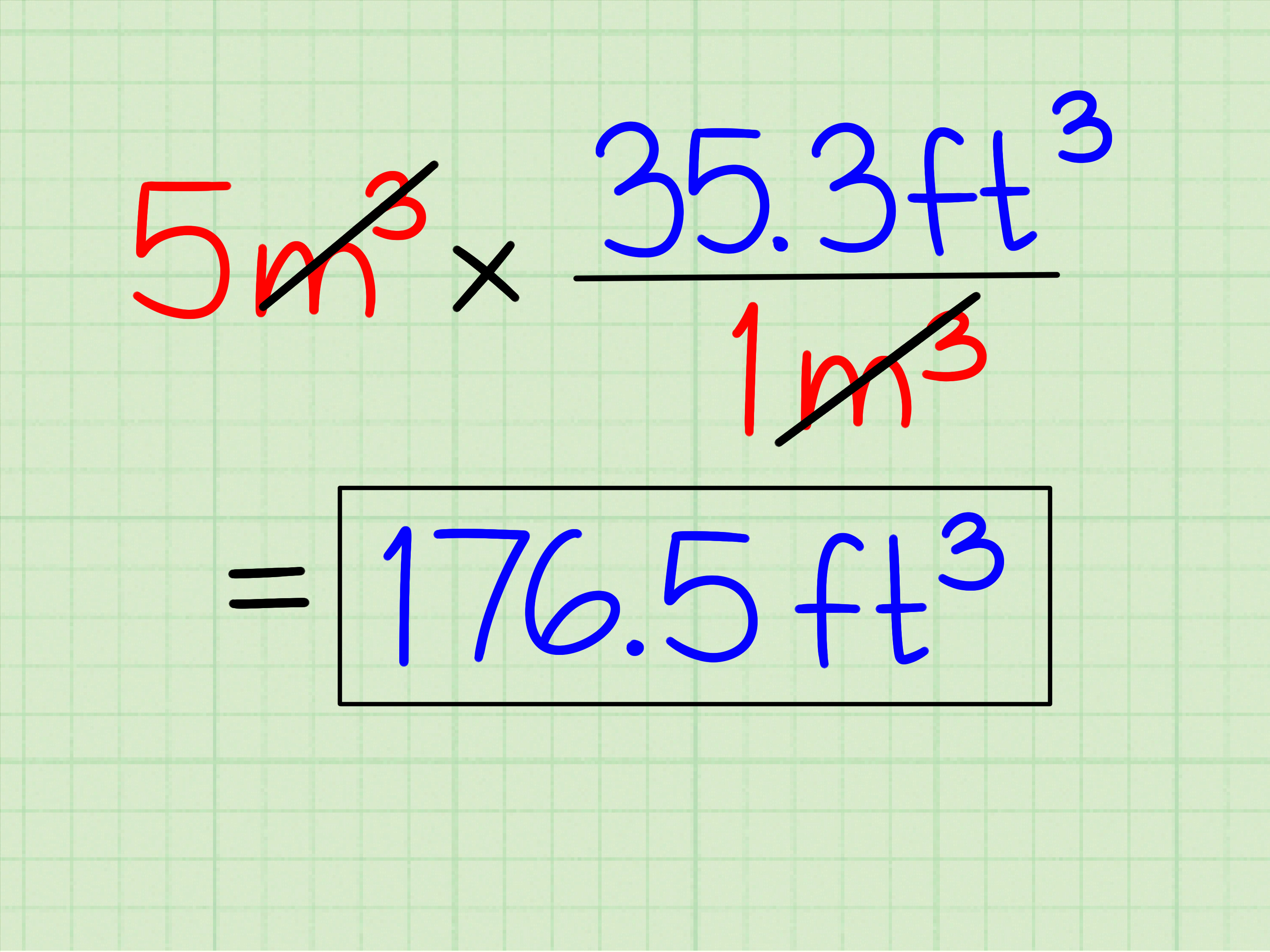
1 cubic meter ≈ 35.3147 cubic feet
Use the right conversion for the right type of measurement. Otherwise, your flooring, storage, or shipping calculations may go from “reasonable” to “why is there a forklift in my driveway?”
How Many Decimal Places Should You Use?
The right amount of rounding depends on the purpose.
For Everyday Use
Round to one or two decimal places. For example:
3 meters = 9.84 feet
This is accurate enough for most casual and home-use situations.
For Human Height
Convert to feet and inches. For example:
1.70 meters ≈ 5 feet 7 inches
This format is easier for most American readers to understand.
For Construction and Engineering
Use more precision and follow the standards required for the project. Depending on the job, you may need decimal feet, feet and inches, fractions of an inch, or millimeter-level accuracy. When exactness matters, never rely only on casual rounding.
Real-Life Uses for Meter-to-Foot Conversion
Home Improvement
Many products sold online list dimensions in meters or centimeters, especially furniture, rugs, curtains, lighting, and storage systems. Knowing how to convert meters to feet helps you avoid buying a sofa that looks elegant online but arrives with the spatial confidence of a small yacht.
Travel
Outside the United States, road signs, trail distances, room sizes, mountain elevations, and public transportation measurements often use metric units. Converting meters to feet helps American travelers understand scale quickly.
Sports and Fitness
Track and field events, swimming pools, climbing walls, ski jumps, and international sports statistics often use meters. Converting to feet can make those measurements easier to visualize for U.S. audiences.
Education
Students often learn both metric and U.S. customary units. Mastering meters to feet builds confidence with unit conversion, dimensional analysis, multiplication, rounding, and practical math.
Real Estate and Architecture
International property listings may describe room dimensions in meters. Architects, designers, and buyers often need to convert those values into feet to compare layouts, furniture placement, and usable space.
Quick Reference: 4 Ways to Convert Meters to Feet
1. Use the Exact Formula
Feet = Meters × 3.28084
Best for accuracy and formal calculations.
2. Use Mental Math
1 meter ≈ 3.3 feet
Best for quick estimates.
3. Convert Through Inches
Meters × 39.3701 = Inches
Then convert inches into feet and inches. Best for height, furniture, and practical measurements.
4. Use a Calculator or Table
Best for speed, repeated conversions, spreadsheets, and avoiding math fatigue.
Experience-Based Tips for Converting Meters to Feet
After dealing with meter-to-foot conversions in everyday situations, one thing becomes clear: the math is simple, but the context matters. A number is not just a number when it decides whether your bookshelf fits, your suitcase clears airline limits, or your new curtain rod turns into an accidental jousting pole.
One practical habit is to memorize a few common conversions. You do not need to remember every value from 1 to 100 meters. Just knowing that 1 meter is about 3.3 feet, 2 meters is about 6.6 feet, 3 meters is about 9.8 feet, and 10 meters is about 32.8 feet gives you a strong mental framework. Once those anchor points are in your head, most everyday estimates become easier.
For shopping, especially online shopping, always convert before buying. Product photos can be wildly misleading. A table may look perfectly normal in a carefully staged image, then arrive at your door sized for either a dollhouse or a royal banquet. If a desk is listed as 1.2 meters wide, multiply 1.2 by 3.28084. The answer is about 3.94 feet, or roughly 47 inches. That gives you a much better idea of whether it fits your office, bedroom, or “temporary work corner” that has somehow become permanent.
For home projects, use a calculator and write the converted value down. Do not trust memory when measuring for flooring, lumber, curtains, fencing, or shelves. Memory is great for birthdays and song lyrics from 2009; it is less reliable when you are holding a saw. A small conversion mistake can create wasted materials, extra trips to the hardware store, and dramatic sighing.
For human height, feet and inches are usually better than decimal feet. If someone is 1.80 meters tall, the decimal conversion is about 5.91 feet. But saying “5.91 feet” sounds awkward. Convert the decimal part into inches, and you get about 5 feet 11 inches. That is the version most Americans understand immediately.
For travel, mental estimates are often enough. If a sign says a viewpoint is 500 meters away, multiply by about 3.3 and you get 1,650 feet. You do not need the exact number to decide whether to keep walking. You just need to know whether it is “right there,” “a bit of a stroll,” or “why did I wear these shoes?”
For students, the best learning trick is to include the units in the calculation. Write it as meters multiplied by feet per meter. This helps you see that meters cancel out and feet remain. That is dimensional analysis, which sounds intimidating but is really just the math version of making sure your socks match.
Finally, remember that conversion is not about memorizing a magic number for trivia night. It is about understanding scale. Meters and feet describe the same physical world from two different measurement traditions. Once you can move between them comfortably, international measurements become less confusing, online specifications become more useful, and everyday decisions become easier. That is a lot of power from one little formula.
Conclusion
Converting meters to feet is one of those practical skills that quietly makes life easier. Whether you are measuring a room, reading an international product listing, checking a sports record, comparing heights, planning a trip, or helping with homework, the basic rule is simple: multiply meters by 3.28084.
For quick estimates, use 3.3 feet per meter. For feet-and-inches answers, convert meters to inches first, then divide by 12. For repeated or high-stakes conversions, use a calculator, spreadsheet, or reliable conversion table. The right method depends on how precise you need to be and how much math you want to do before your coffee has started working.
The next time you see a measurement in meters, you do not have to squint at it like it is a secret code. You have four clear ways to convert it into feet, plus enough examples to keep your measurements accurate and your furniture purchases slightly less adventurous.
Note: This article is written in standard American English and is based on established measurement standards, including the commonly used conversion that 1 meter equals approximately 3.28084 feet.