

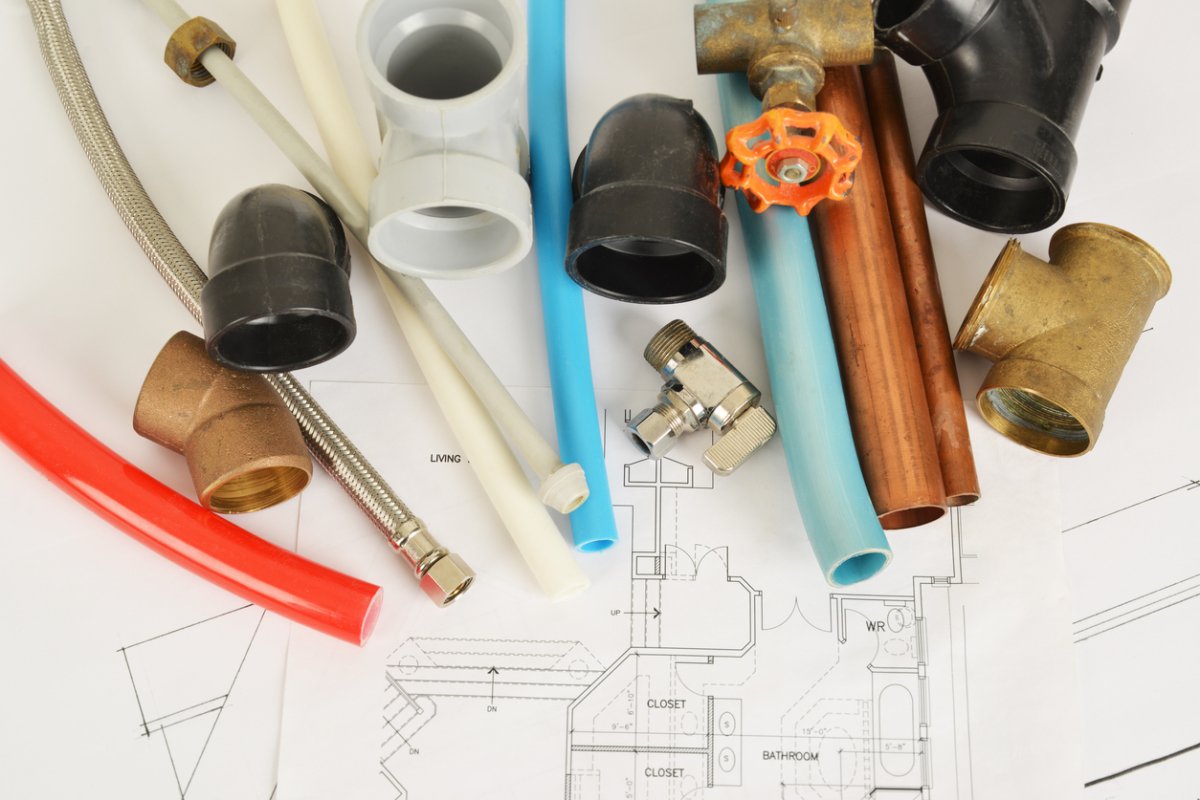
If you’ve ever crawled under a sink and thought, “Wow, my house is basically a spaghetti bowl,” congratulationsyou’ve met your plumbing. The good news: most homes in the U.S. rely on a handful of pipe materials, and each one has a “personality.” Some are flexible and forgiving, some are tough but pricey, and some are… well, let’s just say they belong in a museum with a “Do Not Touch” sign.
In this guide, we’ll break down five common plumbing pipe types found in old and new homeswhat they look like, where they’re used (water supply vs. drain/waste/vent), why people choose them, and what to watch out for when you’re repairing, remodeling, or buying a house. Expect practical tips, a few clear examples, and minimal dramaunless your galvanized pipe has already chosen chaos.
First: Two Plumbing “Systems” You Should Know
Before we talk materials, it helps to know what job the pipe is doing. Most residential plumbing falls into two big categories:
- Water supply lines: These deliver pressurized hot and cold water to fixtures (sinks, showers, toilets, washers, water heaters). These pipes must handle pressure and temperature.
- Drain, Waste, and Vent (DWV): These move wastewater away and vent sewer gases. They’re typically not pressurized, but they must handle heat, chemicals, and constant flow.
The same home often uses multiple pipe typesespecially if it’s been renovated over decades. That’s normal. The key is knowing what you have and using the right repair approach.
At-a-Glance: The 5 Common Pipe Types
- PEX (flexible plastic tubing) mainly water supply
- PVC (white plastic) mainly DWV (and some cold-water uses where allowed)
- ABS (black plastic) mainly DWV
- Copper (metal, reddish) water supply (and sometimes older systems)
- Galvanized steel (silver-gray metal) older water supply, now often replaced
1) PEX Pipe: The Flexible MVP of Modern Plumbing
PEX (cross-linked polyethylene) is the flexible tubing you’ll often find in newer homes and remodels. It comes in coils or straight lengths and is commonly color-coded (red for hot, blue for coldthough color is not a guarantee, just a helpful hint).
Where it’s used
- Water supply lines throughout the home
- Manifold systems (a “home-run” setup where each fixture gets its own line)
- Retrofits where snaking pipe through walls is needed
Why homeowners and plumbers like it
- Flexible: Can curve around corners, reducing fittings and leak points
- Faster installs: Often quicker than rigid pipe in remodels
- Freeze-friendlier: It can expand somewhat (still not a magic shieldice can still cause damage)
- Corrosion resistant: No rust like older metals
Common drawbacks
- UV sensitivity: Prolonged sunlight exposure can damage it (don’t store coils in direct sun)
- Rodent risk: In some areas, pests may chew plastic lines
- Fittings matter: The system is only as good as the correct fittings and installation
Real-world example
A 1990s home gets a bathroom renovation. The contractor opens one wall and discovers the original copper lines were patched repeatedly. Switching to a PEX manifold setup allows new supply lines to run cleanly, reducing joints inside walls and making future fixture upgrades easier.
How to identify PEX
- Flexible tubing, usually 3/8″ to 1″ diameter for homes
- Often red/blue/white, with printed labeling along the pipe
- Connected via crimp rings, clamp rings, expansion fittings, or push-to-connect fittings
2) PVC Pipe: The White Plastic Workhorse (Mostly for Drains)
PVC (polyvinyl chloride) is the familiar white plastic pipe many homeowners recognize. It’s lightweight, easy to cut, and widely usedespecially in DWV systems. In residential plumbing, it’s commonly seen under sinks, in basements, and in drain lines running to the main stack or sewer connection.
Where it’s used
- DWV piping (drains, waste, vents)
- Some cold-water applications in certain contexts where permitted, but it’s generally not the go-to for hot-water supply
Why it’s popular
- Affordable and widely available
- Easy to work with for repairs and remodels
- Corrosion resistant (no rust)
Common drawbacks
- Temperature limits: Not typically used for hot-water supply inside homes
- Brittleness in cold: Can be more prone to cracking in very cold conditions
- Noise: Poorly supported PVC drains can transmit “waterfall sound effects” through walls
How to identify PVC
- White (sometimes gray), rigid plastic
- Solvent-welded joints (primer + cement is common in many installs)
- Often labeled “PVC” on the pipe
Practical tip: If you’re replacing a section, match the application. DWV pipe and fittings are designed for flow and ventingnot pressure. Don’t “upgrade” the wrong way just because it looks thicker.
3) ABS Pipe: The Black Plastic Drain Specialist
ABS (acrylonitrile butadiene styrene) is the black plastic pipe you’ll commonly see in DWV systemsoften in older renovations, some regions, and many basement or utility runs. ABS is typically used for drain, waste, and vent only, not pressurized water supply.
Where it’s used
- DWV systems (toilets, sinks, tubs, vent stacks)
- Interior drains, basement runs, and venting depending on regional code preferences
Why people choose ABS
- Strong and impact-resistant: Often handles bumps better than some rigid plastics
- Cold tolerance: Often performs well in cooler environments
- Fast installation: Typically uses ABS cement without separate primer in many systems
Common drawbacks
- Not universal everywhere: Local code and regional practices vary
- UV sensitivity: Like other plastics, prolonged sun exposure is a problem
- Transitions must be correct: Connecting ABS to PVC requires the right transition method (often a listed transition cement or a mechanical coupling, depending on local rules)
How to identify ABS
- Black rigid plastic
- Solvent-welded joints with cement
- Marked “ABS” on the pipe
Homeowner note: If your house has ABS drains and you’re buying fittings at a big-box store, don’t assume “plastic is plastic.” PVC parts won’t automatically play nice with ABS unless you use the correct approved method.
4) Copper Pipe: The Classic (Durable, But Not Cheap)
Copper is the old-school star of residential water supply. It’s been used for decades because it’s durable, handles hot water well, and has a long track record when installed correctly. You’ll often see copper in homes built from the mid-1900s onward, plus many higher-end builds and renovations today.
Where it’s used
- Hot and cold water supply lines
- Water heater connections and distribution lines
- Sometimes HVAC refrigerant lines (different application, but same material family)
Types of copper you may hear about
Copper tube is commonly categorized by type (such as Type K, Type L, and Type M) which refers to wall thickness. In general: Type K is thickest, then L, then M.
Why copper is loved
- Heat tolerant: Excellent for hot water
- Longevity: Often lasts decades in good conditions
- Rigid: Feels solid, stable, and familiar to many plumbers
Common drawbacks
- Cost: Material and labor can be higher than plastic options
- Corrosion factors: Water chemistry mattersaggressive water can cause pinhole leaks over time
- Skill-dependent: Traditional soldering requires technique (though push-fit and press systems exist)
How to identify copper
- Reddish-brown metal pipe (may look darker with age)
- Soldered joints (shiny or dull solder rings at fittings)
- Sometimes greenish patina where moisture has been present
Smart upgrade move: If you’re mixing copper with older galvanized steel during partial replacements, use proper transition fittings designed to reduce corrosion risk. That little connector is not “just a connector”it’s a peace treaty between metals.
5) Galvanized Steel Pipe: The Tough Grandpa That Eventually Retired
Galvanized steel pipe is typically found in older homesoften installed decades ago for water supply lines. It’s steel pipe coated with zinc to slow rusting. The problem is that time, minerals, and water chemistry eventually win. Inside these pipes, corrosion and buildup can narrow the interior diameter, reducing flow and raising leak risk.
Where it’s used
- Older water supply lines
- Some older outdoor lines or legacy plumbing sections
Signs galvanized pipe is becoming a problem
- Low water pressure (especially noticeable at multiple fixtures)
- Rusty or discolored water after sitting
- Frequent leaks or damp spots around threaded joints
- Uneven flow (one bathroom struggles while another is fine)
Why it’s replaced so often
- Corrosion and mineral buildup over time can restrict flow
- Threaded joints can become weak points as the pipe ages
- Modern materials (PEX/copper/CPVC where allowed) are often more practical for upgrades
Important health note for older homes
Lead exposure in drinking water is commonly associated with lead service lines and certain plumbing materials and corrosion conditions. If you live in an older home or are unsure about your service line material, it’s worth understanding your risk and following local guidance for testing and replacement.
How to identify galvanized steel
- Silver-gray metal pipe, often with threaded fittings
- May show rust at joints or along pipe runs
- A magnet sticks to it (unlike copper)
How to Identify What Pipes You Have (Without a Full Demolition)
You don’t need to peel your drywall off like a banana to get clues. Start with “visible plumbing zones”:
- Under sinks: You’ll often see drain traps and transitions
- Basements/crawlspaces: Main supply lines and DWV runs are usually exposed
- Near the water heater: Supply materials and transition fittings are common here
- At the main shutoff: Great spot to identify incoming service line material
Quick ID cheat sheet
- PEX: Flexible plastic tubing, often red/blue/white, printed labeling
- PVC: White rigid plastic, glued fittings, common for drains
- ABS: Black rigid plastic, glued fittings, DWV use
- Copper: Reddish metal, soldered joints, sometimes green patina
- Galvanized: Gray metal, threaded joints, often rusty, magnetic
Choosing the Right Pipe for Repairs or Upgrades
The “best” pipe depends on what you’re fixing and what your home already uses. Here’s a practical way to think about it:
If you’re updating water supply lines
- PEX is often chosen for remodels due to flexibility and faster installation.
- Copper is a strong long-term option, especially where durability and heat tolerance are priorities.
- Galvanized steel is typically not the go-to for modern upgrades; it’s more often replaced than extended.
If you’re updating drains and vents
- PVC and ABS are both commonregional code and existing system material often guide the choice.
- Match the existing drain material where practical, and use approved transitions when you can’t.
If your house has a “pipe smoothie” (mixed materials)
Mixed systems are common in older homes that were renovated in phases. The goal is to make transitions safely and correctly. When dissimilar metals meet (like copper and galvanized steel), proper transition fittings can help reduce corrosion issues and leaks over time.
Red Flags That Signal “Call a Pro” (or at Least Get a Second Opinion)
- Recurring leaks in multiple areas, especially on older galvanized
- Major pressure drops across the whole home
- Visible corrosion at water heater connections or main shutoff
- DIY mystery transitions (wrong glue, wrong couplings, “it fit so I forced it” energy)
- Health concerns about lead exposure in older plumbing/service linestesting and local guidance matter
Extra: of Real-World “Experience” Notes Homeowners Often Share
Plumbing pipe discussions can feel theoretical until your kitchen faucet starts coughing like it’s trying to clear its throat. Here are common real-life patterns homeowners and inspectors describe when dealing with these five pipe typesthink of it as the “what actually happens in houses” section.
With galvanized steel, the biggest surprise is how sneaky the problems can be. Many people don’t notice anythinguntil they remodel a bathroom and the plumber opens a wall to find the pipe interior narrowed by mineral buildup. That’s when “my pressure is fine” turns into “why does the shower feel like it’s gently misting me with disappointment?” Another common moment: you replace one leaking joint, then another joint starts leaking soon after. It’s not bad luck so much as an aging system showing its age.
With copper, homeowners often report a love-hate relationship. They love that it’s sturdy and familiar. They hate that the cost can jump, especially during larger repipe projects. In older homes, the copper story can vary widely: some houses have copper lines that look great after decades; others develop pinhole leaksespecially where water chemistry is aggressive or where pipe sizing/installation created stress points. One very common “experience” is discovering that a prior owner did a patchwork of repairsso you’ll see a shiny new section connected to a much older section, like the pipe had a midlife crisis and bought a sports car.
With PEX, the most frequent homeowner comment is about convenience: it’s easier to reroute during renovations, and it can reduce the number of joints inside walls when installed thoughtfully. People also like that it makes fixture changes simpler in manifold setupsturn off one line without shutting down the whole house. The learning curve shows up when DIYers buy the wrong fittings or use the wrong tool for the system they have (crimp vs. clamp vs. expansion). Homeowners who’ve had trouble with PEX usually trace it back to poor installation, wrong connections, or exposure issuesnot the tubing itself.
With PVC and ABS drains, the real-world headaches are usually about transitions and technique. A lot of “mystery leaks” in under-sink areas come down to misaligned trap arms, rushed cementing, or using the wrong method to join ABS to PVC. Homeowners also learn that drain systems need proper supportbecause a long, sagging horizontal run can become a slow-motion clog factory. When done correctly, these plastic DWV systems can be reliable for a long time, which is why so many homes use them.
The most helpful takeaway homeowners share is simple: identify what you have before you buy parts. Take a photo to the store. Read the pipe markings. And if your home has older galvanized lines, treat any “simple leak fix” as a clue to check the bigger picturebecause sometimes the pipe isn’t just leaking; it’s politely requesting retirement.
Conclusion
Most homes rely on five familiar pipe materialsPEX, PVC, ABS, copper, and galvanized steeleach with strengths, weaknesses, and best-use zones. If you’re doing a repair, match the pipe to the job (supply vs. DWV), respect transitions between materials, and don’t ignore warning signs like widespread corrosion or pressure loss. A little pipe knowledge goes a long way toward smarter upgrades, fewer leaks, and a home that doesn’t audition for a water-feature exhibit.