

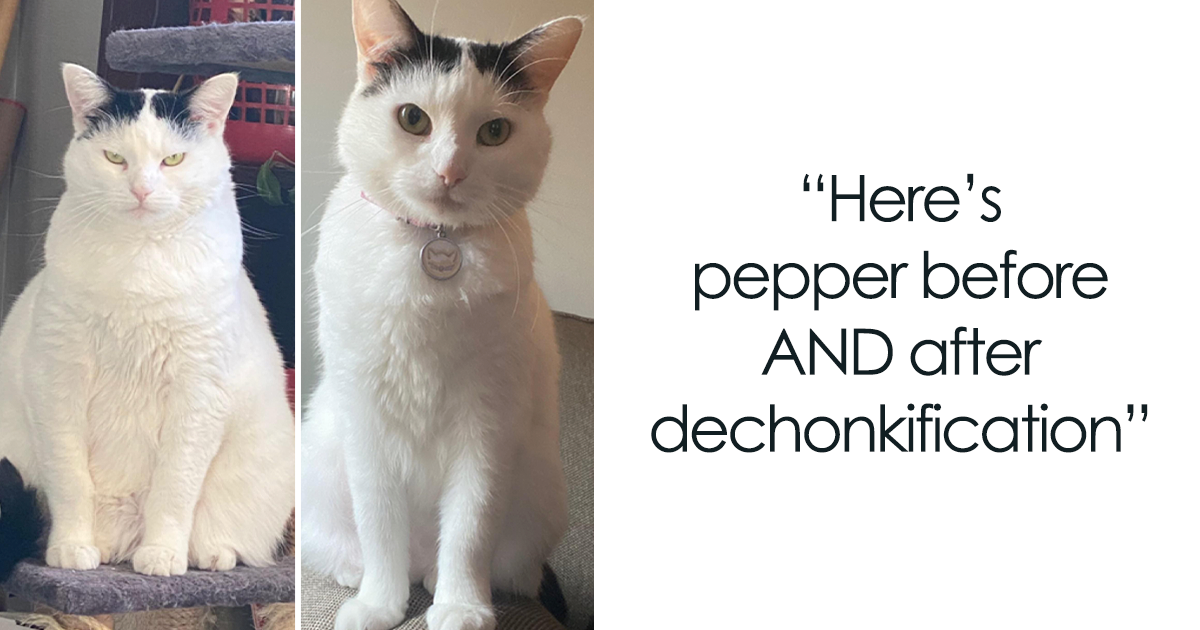
There is something undeniably aeeks, the biscuit-dough belly, the slow-motion attempt to squeeze into a box labeled “small”chonky cats know how to work a room.
Unfortunately, extra feline fluff is not always harmless. Excess body fat can make grooming, jumping, breathing, and ordinary movement more difficult. It is also associated with health concerns such as arthritis, diabetes, liver problems, and reduced quality of life. Veterinary organizations therefore recommend evaluating a cat’s body condition rather than deciding whether the animal is overweight by appearance alone. e encouraging news is that overweight cats can make remarkable progress. Their transformations may not happen overnight, and they should never involve crash diets, but gradual changes in portions, food selection, enrichment, and activity can turn a sleepy sofa ornament into a much livelier kitty.
The 50 story-style profiles below are representative snapshots inspired by common feline weight-loss experiences. They are not presented as individual medical case reports. Every cat needs an individualized plan from a veterinarian, especially when chronic illness, pain, advanced age, or severe obesity is involved.
Why Healthy Cat Weight Loss Is a Bigger Deal Than Looking Slim
A healthier cat is not simply a smaller cat. Successful feline weight management aims to reduce excess fat while preserving muscle, supporting nutrition, and keeping the cat comfortable enough to stick with the program.
Veterinary guidance commonly places a safe target at approximately 0.5% to 2% of current body weight per week, depending on the cat’s condition. Rapid food restriction can be dangerous because cats that eat far too little may develop hepatic lipidosis, a potentially life-threatening accumulation of fat in the liver. That is why “just fill the bowl halfway and hope for the best” is not a responsible weight-loss strategy. ners also need to look beyond the scale. A body condition score considers the waist, ribs, abdominal profile, and fat coverage, while a muscle condition assessment helps identify muscle loss. Long hair and a normal primordial pouch can make a cat appear larger, so hands-on evaluation is often more useful than judging from an overhead photograph. 0 Chonky Cat Transformations Worth Celebrating
From Professional Loungers to Playful Predators
- Muffin Rediscovered the Feather Wand. She began with 30-second batting sessions and eventually chased the toy through three rooms without collapsing dramatically beside the refrigerator.
- Tank Learned That Treats Could Fly. Instead of receiving snacks directly, he chased measured pieces of kibble across the kitchen and accidentally became an athlete.
- Pickles Conquered the Cat Tree. His lower platform became the starting point. Several months later, he was confidently supervising the household from the top perch.
- Beans Became a Hallway Sprinter. Two family members called him back and forth for tiny food rewards taken from his daily ration.
- Marshmallow Returned to Window Patrol. Improved mobility allowed her to climb onto her favorite sill without requesting an elevator from the nearest human.
- Waffles Mastered the Puzzle Feeder. Meals stopped arriving in an all-you-can-eat bowl and started requiring paw work, patience, and several highly judgmental stares.
- Bruce Found His Inner Kitten. Short evening play sessions awakened a cat who had previously considered rolling onto his other side a major workout.
- Luna Became a Cardboard-Box Hunter. Her family hid toys and measured food inside boxes, turning dinner into a low-budget wildlife documentary.
- Nacho Started Climbing Again. Floor-level games gradually progressed to cushions, stools, and safe platforms that encouraged controlled movement.
- Chonk Norris Beat the Red Dot. Laser play was followed by a physical toy he could catch, giving each chase a satisfying finish instead of an existential crisis.
Portion-Control Champions
- Biscuit Retired From Free Feeding. His bottomless bowl became several measured meals, making daily calorie intake easier to track.
- Olive Exposed the Treat Conspiracy. Her family discovered that four people were independently rewarding her. A shared feeding chart ended the accidental snack buffet.
- Garfield Got a Kitchen Scale. Measuring food by weight replaced the mysterious “small scoop,” which had quietly grown larger whenever he looked especially charming.
- Pumpkin Switched to Scheduled Meals. Predictable feeding times reduced grazing and helped her humans notice appetite changes more quickly.
- Moose Learned Smaller Meals Still Count. His daily portion was divided into several servings, giving him more meal events without more calories.
- Cupcake Stopped Sharing Dog Food. A pet gate and separate feeding areas closed the most calorie-dense restaurant in the house.
- Archie Beat the Automatic Feeder. A portion-controlled device delivered measured meals while preventing humans from responding to every theatrical meow.
- Peaches Traded Table Scraps for Attention. Her family replaced food-based affection with brushing, play, window time, and enthusiastic compliments.
- Smudge Outsmarted the Scoop. His owners calculated calories from the food label and veterinarian’s plan rather than relying on package estimates alone.
- Tater Tot Made Treats Tiny. Rewards became pea-sized pieces counted within his daily allowance, proving that cats care more about receiving something than receiving a cheeseburger.
Kitties Who Improved Mobility and Comfort
- Dumpling Finally Reached Her Back. As her body condition improved, grooming became easier and her coat looked noticeably cleaner.
- Walter Returned to the Couch. Pet steps helped him climb safely while weight reduction and veterinary pain management supported his stiff joints.
- Mabel Stopped Avoiding the Litter Box. A lower-sided box made entry easier while her mobility gradually improved.
- Biggie Walked Without Waddling. Slow, steady progress reduced the effort required for everyday trips between the food bowl, litter box, and sunny rug.
- Noodle Became Flexible Again. She could twist comfortably during grooming instead of outsourcing half the job to her increasingly hairy owner.
- Otis Climbed Onto the Bed. A ramp provided immediate access while his longer-term health plan improved strength and endurance.
- Rosie Reclaimed the Stairs. She began with supervised trips and rest breaks rather than being pushed into strenuous exercise.
- Franklin Became Less Winded. His family noticed quieter breathing and more willingness to move after gradual, veterinarian-monitored weight loss.
- Sushi Stopped Living Under the Table. Increased comfort encouraged her to explore more of the home and engage with family members.
- Meatball Found His Fast Walk. He was not exactly breaking land-speed records, but the purposeful trot toward dinner was a beautiful start.
Multi-Cat Household Success Stories
- Cleo Lost Access to Everyone Else’s Dinner. Microchip feeders ensured she ate only her assigned portion instead of performing quality-control inspections on three bowls.
- Jasper Stopped Stealing From the Kitten. The kitten’s food moved to a location Jasper could not reach comfortably.
- Poppy Received a Private Dining Room. Separate feeding reduced competition, stress, and hurried overeating.
- Hank’s Family Started a Meal Log. Everyone recorded feedings and treats, ending the classic “I thought you hadn’t fed him” problem.
- Socks Learned to Hunt Alone. Individual puzzle feeders prevented his faster housemate from stealing the rewards.
- Gizmo Got a Food-Free Bedroom. The overnight snack bowl disappeared, and measured meals became part of the morning routine.
- Hazel Stopped Cleaning Plates. Bowls were removed after mealtime instead of remaining available for feline dishwashing duty.
- Rufus Received a Personalized Plan. His portions differed from those of the younger, more active cat rather than following a one-scoop-fits-all system.
- Betty’s Treat Jar Gained Rules. A daily treat container showed the entire household how many rewards remained.
- Kevin Lost His Buffet Privileges. The household switched from communal grazing to controlled feeding stations, much to Kevin’s official displeasure.
Senior Cats Who Made Gentle Progress
- Millie Exercised From the Rug. Slow wand-toy movements encouraged reaching and pawing without demanding leaps from an older body.
- George Used Food Trails. Small portions placed several feet apart encouraged comfortable walking without turning dinner into boot camp.
- Pearl Protected Her Muscle. Her veterinarian monitored both body condition and muscle condition while adjusting calories carefully.
- Stanley Received an Arthritis Check. Treating pain made him more willing to move, revealing that his inactivity was not simply laziness.
- Ruby Changed Foods Slowly. Her old and new diets were offered separately during the transition, reducing stress and avoiding a sudden refusal to eat.
- Chester Started Monthly Weigh-Ins. Regular measurements caught small changes that were nearly impossible to notice beneath his magnificent fur.
- Agnes Got Better Bowl Placement. Food, water, resting spots, and litter boxes were arranged to encourage movement without causing exhaustion.
- Louie Enjoyed Chair-Level Adventures. Safe, low platforms let him climb and explore without attempting Olympic-level jumps.
- Daisy Combined Brushing With Play. Gentle grooming improved comfort, while brief toy sessions added movement to an activity she already enjoyed.
- Sir Fluffington Became Healthier, Not Skinny. His goal was appropriate body condition, preserved muscle, and improved quality of lifenot winning a feline swimsuit competition.
What These Chonky Cat Transformations Have in Common
Although every transformation looks different, the strongest programs share several habits. Food is measured accurately. Treats are counted. Progress is checked regularly. Exercise begins at a level the cat can tolerate. Environmental enrichment makes the process interesting, and adjustments are made when progress stalls.
Free-choice feeding may encourage some cats to overconsume, while scheduled portions make calorie intake easier to control. Veterinary weight-management diets may also provide more appropriate amounts of protein, vitamins, minerals, and other nutrients while calories are restricted. Simply feeding a dramatically smaller amount of an ordinary maintenance food may not provide balanced nutrition. vement does not need to resemble a formal workout. Cats are more likely to engage when activity imitates stalking, chasing, climbing, and pouncing. Feather wands, food puzzles, rolling toys, cardboard boxes, cat trees, and tossed pieces of measured kibble can all encourage activity. The Ohio State University Indoor Pet Initiative specifically recommends incorporating play into a daily routine and using food or toys to stimulate natural hunting behavior. ow to Begin a Safe Weight-Loss Plan for an Overweight Cat
Schedule a Veterinary Examination
A veterinarian can confirm whether the cat is truly overweight, estimate an appropriate target condition, check for pain or disease, and recommend a suitable feeding plan. Unexpected weight loss, appetite changes, vomiting, increased thirst, or behavioral changes should never be assumed to be successful dieting.
Record Everything the Cat Eats
Include meals, treats, table scraps, stolen pet food, supplements, and snacks delivered by well-meaning visitors. The invisible calories are often hiding in plain sight, usually next to the person insisting, “But it was only a tiny piece.”
Measure Portions Precisely
A gram scale provides more consistency than a cup or scoop. Check the calorie content of the specific food, because equal volumes of different products can contain very different numbers of calories.
Transition Food Gradually
Cats can reject sudden dietary changes. Offering the new food beside the familiar food and shifting gradually may reduce stress. Contact the veterinary team promptly if the cat stops eating or consumes much less than expected.
Use Short, Frequent Activity Sessions
Several minutes of play once or twice a day may be more realistic than one long session, particularly for an obese, senior, or arthritic cat. Stop if the cat appears distressed, painful, excessively winded, or unwilling to continue.
Track More Than Pounds
Monitor body condition, muscle condition, grooming ability, jumping, playfulness, breathing, litter-box use, and overall comfort. A cat may show meaningful health improvements before the scale produces a dramatic number.
Experiences From the Chonky-Cat Weight-Loss Journey
The first experience many caregivers encounter is denial. The cat does not look obese; the cat simply has “large bones,” “winter fur,” or “an unusually powerful aura.” Photographs can be deceptive, especially with long-haired breeds, and weight gain often occurs so gradually that the family adjusts to the new shape without noticing it.
The second experience is discovering how persuasive a hungry cat can be. The moment measured feeding begins, some cats behave as though they have been abandoned in a frozen wilderness. They sit beside an empty bowl. They stare. They meow at strangers. One may lead a visiting plumber directly to the pantry and attempt to file an official complaint.
This is where consistency matters. When begging occasionally produces food, the cat learns that persistence works. Replacing food rewards with play, brushing, conversation, or access to a favorite window can help separate affection from calories. The cat may initially consider these alternatives insulting, but routines usually become easier once everyone in the household follows the same plan.
Another common experience is the early plateau. The cat loses a small amount, then the scale refuses to move. This does not automatically mean the plan has failed. Portions may need to be rechecked, calorie density may have changed, treats may have crept upward, or activity may have decreased. Veterinary rechecks allow the plan to be adjusted without making unsafe reductions.
Caregivers are often surprised by the emotional changes that accompany physical progress. A cat who once slept almost continuously may begin following family members, initiating play, climbing onto furniture, or grooming neglected areas. These improvements can feel more rewarding than the number on the scale because they show that the cat is participating in life more comfortably.
Multi-cat households create their own comedy and complications. The dieting cat may become a food thief, while a naturally slim companion wonders why dinner is now protected like a national treasure. Separate rooms, supervised meals, elevated feeding areas, and microchip feeders can prevent one cat from consuming another cat’s ration.
Senior cats require even more patience. An older cat may be overweight while also losing muscle, experiencing arthritis, or managing another medical condition. Aggressive dieting can worsen weakness. The better experience is a carefully monitored program that improves body condition while preserving strength, comfort, and appetite.
Successful caregivers eventually stop thinking of the project as a temporary diet. They create a sustainable routine: measured meals, planned treats, regular weigh-ins, daily enrichment, and periodic veterinary reassessment. Maintenance is the less glamorous sequel to the transformation story, but it is what keeps the healthier kitty from returning to full beanbag status.
Most importantly, a chonky-cat transformation should never be driven by embarrassment. Cats do not need criticism, and owners do not need guilt. Weight gain usually develops from a combination of calorie intake, activity, environment, age, neuter status, health, and household habits. The useful question is not, “Who let this happen?” It is, “What safe change can we make next?”
Conclusion: Celebrate Healthier Habits, Not Just Smaller Cats
The best feline transformations are not dramatic crash-diet reveals. They are months of measured meals, tiny play sessions, safer movement, veterinary guidance, and consistent decisions made by the entire household.
A healthier kitty may still have round cheeks, luxurious fur, and enough personality to occupy two ZIP codes. The real victory is improved comfort, mobility, grooming, energy, and quality of life. When a former couch potato climbs a cat tree, chases a toy, or reaches a favorite windowsill again, that deserves a standing ovationeven if the cat immediately sits down.
Note: This article provides general educational information based on guidance from veterinary organizations and university animal-health resources, including Cornell University, AAHA, AAFP, AVMA, UC Davis, Texas A&M University, the Ohio State University Indoor Pet Initiative, VCA Animal Hospitals, PetMD, and the Association for Pet Obesity Prevention. It does not replace an examination or individualized advice from a licensed veterinarian. e>