

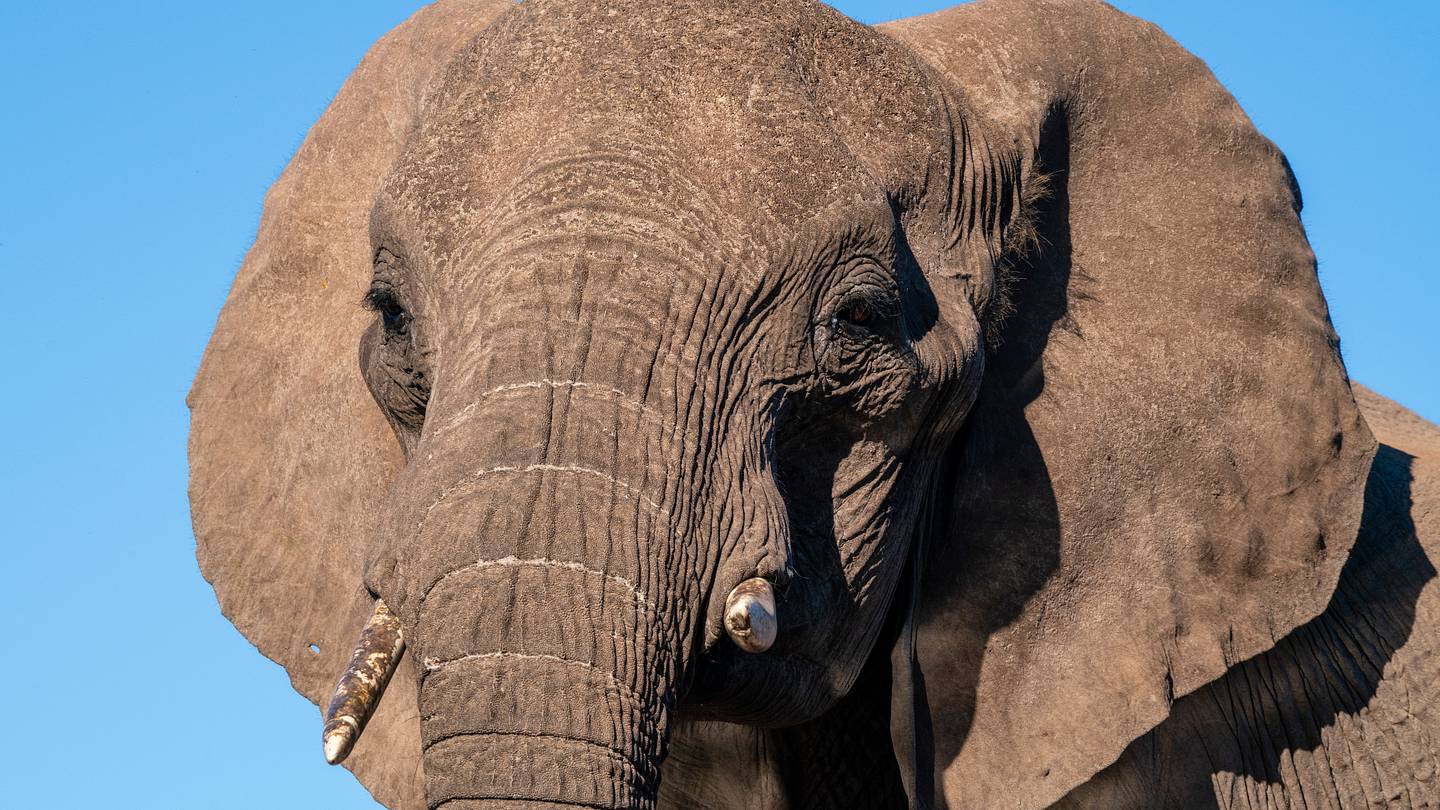
Elephants are intelligent, emotional, enormous animals with a talent for making human history look, frankly, ridiculous. We built royal menageries around them, dragged them into circuses, used them as diplomatic gifts, studied them with terrible scientific judgment, and occasionally stood around afterward asking the timeless question: “So… what do we do with a dead elephant?”
The strangest elephant deaths in history are not strange because elephants are strange. They are strange because humans kept putting elephants in strange situations: royal courts, railroad yards, Vatican courtyards, small-town parks, and laboratories where “let’s give the elephant LSD” somehow made it past the brainstorming stage.
This list explores seven real cases of bizarre deaths involving elephants, from early American circus history to medieval London and modern elephant behavior research. Some stories are funny in the dark, awkward way history can be funny. Others are tragic reminders that spectacle, profit, and curiosity often came before animal welfare. Either way, these elephant stories prove one thing: when humans meet giant animals and poor planning, history gets loud.
Why Elephant Deaths Became Historical Spectacles
Before zoos, documentaries, and ethical wildlife tourism, an elephant was not simply an animal. To many people in Europe and America, it was a walking miracle with ears. Seeing one could cost money, draw crowds, boost a king’s prestige, or help turn a traveling show into a business empire.
That fame also meant elephant deaths were rarely private. When a horse died, it was sad. When a famous elephant died, towns needed cranes, pits, taxidermists, newspaper coverage, and occasionally a moral panic. The seven stories below are not just about how elephants died. They are about how people reacted when animals too large to ignore exposed the oddities of their age.
1. Old Bet: The Circus Elephant “Assassinated” in Maine
An elephant, a musket, and America’s early circus business
Old Bet was one of the first elephants to become widely famous in the United States. In the early 1800s, Hachaliah Bailey, a New York farmer and entrepreneur, discovered that people were willing to pay simply to look at an elephant. This was the original “limited-time experience,” except instead of an online ticketing fee, you got mud, wagons, and probably the smell of hay.
Bailey toured Old Bet through towns where most residents had never seen anything like her. She became a profitable attraction and helped inspire the early American menagerie business that eventually fed into the circus industry. But fame did not protect her.
On July 24, 1816, while Old Bet was traveling through Alfred, Maine, a farmer named Daniel Davis Jr. hid near her route and shot her with a musket. The motive was never proved. Some accounts suggest resentment: farmers were struggling during the brutal “Year Without a Summer,” and Davis may have objected to people paying to see an elephant while local families were under financial pressure. Others frame it as a moral objection to showmanship. Either way, the legal system was not prepared for “elephant murder” as a category.
Davis was reportedly charged with trespassing, not with killing one of the most valuable and unusual animals in America. Bailey, with the entrepreneurial reflexes of a man who could probably monetize a rain puddle, later exhibited Old Bet’s remains. The story is bizarre because it combines economic anxiety, early entertainment culture, and a legal shrug big enough to house a circus tent.
2. Tusko: The Elephant Given a Massive Dose of LSD
When bad science met a three-ton test subject
Few historical elephant deaths sound more like a warning label than the case of Tusko. In 1962, researchers at the Oklahoma City Zoo injected Tusko, a male Asian elephant, with an enormous dose of LSD. The experiment was designed to investigate whether the drug could induce or imitate musth, a periodic state in male elephants associated with heightened hormones, secretions, and aggressive behavior.
The problem was the dose. Tusko received 297 milligrams of LSD, an amount often described as thousands of times greater than a typical human dose. The researchers scaled the drug in a way that now looks astonishingly reckless. To put it gently, “because the elephant is big” is not a complete pharmacology strategy.
Within minutes, Tusko collapsed. The team attempted to counteract the effects with additional drugs, including tranquilizers, but the elephant died soon afterward. Later debate questioned whether LSD itself killed Tusko or whether the combination of drugs and experimental handling caused the fatal outcome. Either way, the study became infamous as an example of how scientific curiosity can turn cruel when ethics lag behind ambition.
Tusko’s death remains one of the strangest animal research stories of the 20th century. It is bizarre not because the elephant behaved strangely, but because the humans did. The case is now often discussed in conversations about animal experimentation, drug research, and the importance of remembering that “technically possible” and “good idea” are not twins.
3. Hanno: The Pope’s Elephant and the Golden Laxative
A Renaissance gift with a very unfortunate treatment plan
Hanno was no ordinary elephant. He belonged to Pope Leo X, the Medici pope whose Rome was filled with art, ceremony, politics, and expensive tastes. Hanno arrived in Italy in 1514 as a diplomatic gift from King Manuel I of Portugal. For Rome, he was a sensation. People crowded to see him. Artists drew him. The pope adored him.
Hanno lived in the Vatican’s Belvedere courtyard and became a symbol of wealth, global trade, and papal glamour. In a city already fond of spectacle, an elephant in the Vatican was hard to beat. It was basically Renaissance Rome saying, “Yes, we have Michelangelo, but have you seen the elephant?”
Then Hanno became ill. Historical accounts describe breathing trouble and pain, and papal doctors diagnosed constipation. Their treatment was a laxative containing gold, delivered in the style of the era’s medical confidence and complete digestive misunderstanding. The treatment quickly killed him.
Leo X was reportedly heartbroken and buried Hanno in the Vatican. Centuries later, workers discovered elephant bones beneath the Vatican and initially did not know what they had found. The whole episode reads like a historical fever dream: global diplomacy, papal affection, Renaissance medicine, and a fatal golden enema. It is a reminder that expensive medicine is not necessarily effective medicine, especially when the patient weighs several tons and cannot leave a one-star review.
4. Norma Jean: The Circus Elephant Struck by Lightning
A small Illinois town inherits a 6,500-pound problem
On July 17, 1972, the Clark & Walters Circus came to Oquawka, Illinois. Its star was Norma Jean, a 29-year-old Asian elephant weighing roughly 6,500 pounds. The show was scheduled in the village park, and for a small town, the circus was a major event. Then the weather turned.
According to local accounts, Norma Jean’s caretaker tied her to a tree with a metal chain as a storm moved in. Lightning struck the tree, traveled through the chain, and killed her instantly. It was a horrifying accident, made stranger by what happened next: the circus left town, and Oquawka was left with an elephant-sized logistical issue.
Burying an elephant is not a casual afternoon chore. Locals dug a deep grave near the spot where she died, and Norma Jean was laid to rest in the park. Over time, her grave became part of the town’s identity. Decades later, residents commemorated her with events, stories, and local memory.
Norma Jean’s death is bizarre because of its collision of ordinary and extraordinary. A circus came to town. A storm rolled in. A chain, a tree, and lightning created a tragedy. Then a small community had to manage the practical aftermath of a giant animal’s death. History often feels grand, but sometimes it is just a village with a backhoe and a very unusual Tuesday.
5. Henry III’s Tower Elephant: The Royal Animal That Lived Too Well
Medieval London’s elephant problem
In 1255, King Louis IX of France gave King Henry III of England an elephant. It was a spectacular diplomatic gift and one of the first elephants seen in England for many centuries. Henry kept the animal at the Tower of London, where the royal menagerie housed exotic creatures such as lions, leopards, and a polar bear. Medieval Londoners flocked to see the elephant because, naturally, “large mysterious beast from far away” beats most 13th-century entertainment options.
The elephant was given a special house and a keeper, but medieval knowledge of elephant care was not exactly polished. Accounts indicate that the animal was fed inappropriate food, including meat and beer. The elephant survived only about two years.
The death is bizarre because it shows how prestige can outrun understanding. Henry III had the resources to house an elephant but not the knowledge to care for one properly. The animal became a symbol of royal grandeur, but symbolism does not provide nutrition, hydration, or the right living conditions.
After the elephant died, it was buried at the Tower. Later, its bones were reportedly moved to Westminster. Even in death, the elephant remained a status object. It had been a royal gift, a public attraction, and finally a set of remains important enough to relocate. In modern terms, this was less animal care and more luxury branding with a trunk.
6. Jumbo: The World’s Most Famous Elephant Killed by a Train
The elephant so famous his name became an adjective
Jumbo may be the most famous elephant in modern history. Born in Africa, brought to Europe, and later sold from the London Zoo to P.T. Barnum, he became a star attraction in Barnum’s circus. His name entered the English language as a word meaning huge, oversized, or impressively large. Every “jumbo soda” and “jumbo jet” owes a small linguistic debt to a real elephant with a tragic life.
Jumbo was beloved in Britain before Barnum bought him in 1882, a sale that caused public outrage. In America, Barnum promoted him relentlessly. Jumbo drew crowds, sold tickets, and became a living billboard for spectacle. But on September 15, 1885, in St. Thomas, Ontario, Jumbo was struck by a freight train after a circus performance.
Barnum later circulated a heroic version of the death, suggesting Jumbo sacrificed himself to save a smaller elephant named Tom Thumb. That version sounds great on a poster, which is probably why Barnum liked it. The more likely story is less cinematic: Jumbo was being moved near the tracks, a train came through, and the famous elephant could not get clear in time.
After Jumbo died, Barnum continued making money from him. His hide and skeleton were displayed, proving that even death did not end the career of the world’s most marketable elephant. Jumbo’s story is bizarre because it combines celebrity culture, industrial danger, mythmaking, and a showman’s refusal to let a profitable tragedy go to waste.
7. The Amboseli Mourning Case: A Dead Elephant’s Voice Played Back to Her Family
The strangest death story may be about grief
Not every bizarre elephant death involves circuses, kings, or Renaissance medicine. One of the most haunting cases comes from elephant behavior research in Kenya’s Amboseli National Park. Scientists studying elephant communication recorded calls from individual elephants and later used playback experiments to test recognition and social bonds.
In one case, after an elephant had died, researchers played a recording of her call to surviving family members. The response was intense. The elephants called back, searched, and appeared emotionally stirred by the familiar voice. Later accounts describe the reaction as powerful enough that researchers regretted the experiment and did not repeat it.
This story is bizarre in a quieter way. Nobody fired a musket. Nobody prescribed gold. Nobody brought in a railroad crane. Instead, the death became strange because of memory. The elephants seemed to recognize an absent individual through sound, turning a scientific playback into something uncomfortably close to a ghost story.
Elephants are known for complex social relationships, long memories, and strong responses to the remains of their dead. They touch bones, linger near bodies, and behave differently around dead elephants than around random objects. The Amboseli playback case matters because it reminds us that elephant history is not just about human spectacle. Elephants have their own social world, and when one dies, the loss may echo in ways humans are only beginning to understand.
What These Bizarre Elephant Deaths Reveal About Human History
Together, these seven stories form a strange parade through human behavior. Old Bet shows how early entertainment collided with resentment and hardship. Tusko exposes the dangers of unethical experimentation. Hanno reveals the absurd confidence of Renaissance medicine. Norma Jean shows how a random accident can become local memory. Henry III’s elephant illustrates the gap between royal wealth and practical animal care. Jumbo proves that celebrity branding existed long before social media. The Amboseli case, finally, pulls the focus back to elephants themselves.
The pattern is clear: elephants often became mirrors. Humans projected power, money, science, religion, grief, and curiosity onto them. When things went wrong, the results were rarely small. Elephants made human foolishness harder to hide because an elephant-sized mistake tends to leave a mark.
Experience Notes: What Elephant History Feels Like Today
Reading about bizarre elephant deaths is one thing. Standing near elephant history is another. Visit a town with an elephant monument, a museum with circus posters, or a sanctuary where retired elephants move at their own pace, and the tone changes. The odd facts become less like trivia and more like evidence. You begin to notice how often human stories about elephants are really stories about control: who owned them, who displayed them, who profited from them, who studied them, and who decided what counted as care.
A good elephant-related experience today should feel different from the old circus world. It should be slower. Quieter. Less interested in making elephants perform and more interested in letting people observe. The best modern encounters are not about riding, tricks, or photo stunts. They are about distance, respect, and learning why an elephant’s body, memory, and social life require space. Watching an elephant browse, dust itself, or communicate with another elephant may not have the fireworks of a Victorian circus poster, but it has something better: dignity.
These historical deaths also change the way you interpret museums. A taxidermied hide, a skeleton, or a vintage circus advertisement can be fascinating, but it should not be treated like harmless nostalgia. Behind every painted banner was a living animal moved by ship, train, chain, or command. Behind every “world’s largest” claim was a body under stress. Even the humorous parts of these stories carry a bruise.
For writers, travelers, teachers, and curious readers, the main experience is intellectual humility. It is easy to laugh at medieval keepers feeding beer to an elephant or at papal doctors prescribing gold. It is harder to ask what modern habits will look equally foolish in 500 years. Maybe future historians will wonder why humans ever forced elephants into small enclosures, noisy shows, or tourist rides when we already knew better.
The most meaningful takeaway is not “history is weird,” although history is absolutely weird and occasionally needs adult supervision. The deeper point is that elephants are not props in human stories. They are long-lived, socially complex animals whose lives were repeatedly bent around human ambition. Remembering these bizarre elephant deaths is a way of honoring the animals while also admitting that the strangest creature in each story may not have been the elephant at all.
Conclusion
The most bizarre deaths involving elephants are unforgettable because they mix tragedy with absurdity. A famous elephant is shot during a bad economic year. Another dies in a reckless drug experiment. A pope’s beloved pet is killed by gold-laced medicine. A circus star is electrocuted by lightning in a village park. A royal elephant is undone by medieval care. The world’s most famous elephant is hit by a train and then marketed after death. A wild elephant’s recorded voice calls grief back from the living.
These are not just oddball historical footnotes. They are cautionary tales about spectacle, science, power, and empathy. Elephants made people stare. Their deaths should make us think.
Note: This article is based on real historical accounts, museum records, journalism, and elephant behavior research, rewritten in original language for web publication.