

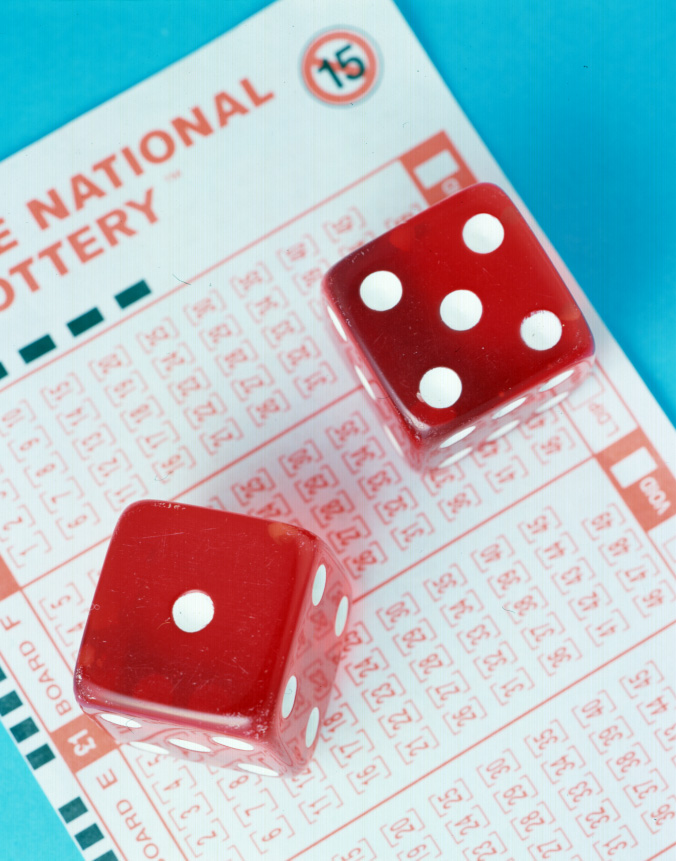
There are few emotional roller coasters stranger, funnier, and more gloriously low-stakes than checking the winning lottery numbers for a ticket you never bought and discovering, with immense satisfaction, that your imaginary numbers did not come up. Congratulations. You have just experienced one of life’s smallest, weirdest victories.
It sounds ridiculous at first. How can you feel relieved about not losing a game you never entered? Why does your brain puff up its chest like it just made a brilliant financial decision worthy of a cigar, a leather chair, and a muttered, “This is why I’m good with money”? And why is that feeling so oddly delightful?
That is exactly what makes this tiny moment worthy of the 1000 Awesome Things treatment. It takes something invisible, silly, and almost embarrassingly human and turns it into a tiny monument to everyday joy. Because this isn’t really about the lottery. It’s about imagination. It’s about regret avoidance. It’s about the comedy of fake disappointment and the deep satisfaction of realizing you are still, in fact, three dollars richer than the version of yourself who bought a ticket and lost.
And that, my friends, is kind of awesome.
The Tiny Jackpot of Not Losing
The beauty of not playing the lottery is that it lets you enjoy the fantasy without paying the cover charge. You get all the delicious nonsense of imagining what you would do with millions of dollars, plus the smug pleasure of keeping your money when reality arrives.
You know the routine. One minute you are standing in line at a convenience store buying gum, iced tea, or something objectively unnecessary like neon-orange cheese crackers. Then you see the jackpot number on a sign: $480 million. Suddenly your brain turns into a wildly overconfident financial planner. You begin allocating imaginary funds. Parents get a paid-off house. Friends get “surprise” envelopes. You buy a cabin, a beach house, and perhaps a third property that exists solely so you can say the phrase, “Let’s spend the weekend at the other place.”
Then comes the mature, disciplined part of the fantasy. You will invest wisely. You will stay humble. You will remain exactly the same person, except now with much better luggage and a dramatic opinion about sparkling water.
But if you never buy the ticket, something magical happens. The dream stays free. The fantasy remains entertainment, not risk. And when the numbers are announced and none of your imaginary picks show up, you get to feel relief instead of regret. No loss. No crumpled ticket in your pocket. No “I can’t believe I wasted money on that.” Just a tiny internal fist pump and the wonderfully unglamorous knowledge that your bank balance has not been harmed.
Why This Feeling Is So Weirdly Satisfying
Your brain loves counterfactual drama
Human beings are spectacular at inventing alternate realities. Psychologists call this counterfactual thinking, but regular people call it “lying awake at 1:14 a.m. replaying conversations from 2017.” We naturally imagine what could have happened if we had chosen differently. That is why the lottery is such fertile soil for absurd emotional theater.
If you buy a losing ticket, the story in your mind becomes, “I should not have bothered.” But if you almost bought one, or thought about buying one, your brain writes a much juicier script: “What if my numbers had come up?” Then, in a delightful reversal, when they do not come up, you get to experience relief from a disaster that never technically existed. It is like escaping a bear attack in a forest you never entered.
Loss aversion makes imaginary money feel personal
We tend to feel losses more sharply than equivalent gains. That is one reason small gambling decisions can feel bigger than they are. A couple of dollars spent on a losing ticket is not financially catastrophic, but psychologically it can feel annoyingly personal. You did not simply spend money. You paid for a dream and received a mathematical shrug.
Not playing flips that script. Now the “gain” is not winning the jackpot. The gain is keeping your cash, your dignity, and your right to say, “See? Look at me making elite financial decisions while buying a king-size candy bar.” It is not logical, exactly. But it is emotionally elegant.
Near misses are rude, but total misses are cleansing
Research on gambling psychology shows that near misses can be especially sticky. They create the illusion of closeness even when the odds do not actually improve. In plain English: the brain hates almost-winning because almost-winning feels suspiciously like progress.
That is why not playing can feel so peaceful. You are not suffering through the torture of matching one number and then staring at the others as if they have betrayed you. You are not clutching a ticket like a wounded Victorian hero. You are simply observing from a safe emotional distance. The numbers came and went. They meant nothing. Your evening remains intact.
The Secret Pleasure of Free Fantasy
Let’s be honest: a huge part of the lottery’s appeal is not the expected value. It is the daydream. It is the mental movie trailer for a shinier life.
And honestly, the daydream is terrific. It costs nothing to imagine paying off debts, taking care of family, quitting the job that requires three passwords and six forms just to request a paperclip, or tipping a waitress in a way that changes her year. Fantasy lets us rehearse generosity, freedom, and possibility. That part is not foolish. It is human.
But the dream often works best when it remains a dream. Once money is attached, the fantasy has to report for duty. Suddenly it is about odds, taxes, public attention, financial decisions, and the awkward realization that riches may solve some problems while introducing new ones. The sparkling dream turns into paperwork in an expensive coat.
That is partly why the tiny joy of not playing hits so nicely. You still got the best part: the imagination. You got to wander around your own “what if” carnival, eat the cotton candy, ride the Ferris wheel, and leave before anyone handed you the bill.
Why Ordinary Life Keeps Winning
One of the funniest truths about money is that we are convinced it will transform our emotional lives into a montage set to inspirational music. And certainly, money can reduce stress, expand choices, and make life easier in very real ways. But the deeper machinery of happiness is often less cinematic than we expect.
Again and again, research on well-being suggests that our daily experience is shaped by expectations, relationships, habits, meaning, and attention. Big external changes matter, but they do not permanently replace the small rhythms of life. People still need connection. They still get annoyed by traffic. They still forget where they put the remote. They still need lunch.
That is why the premise behind this awesome little lottery moment lands so well. It gently mocks the idea that salvation is always elsewhere. Sometimes the best emotional outcome is not a massive win. Sometimes it is a modest non-loss. Sometimes peace arrives dressed as anticlimax.
You did not become a millionaire. But you also did not pin your hopes on six bouncing balls and a televised miracle. You woke up in the same life, with the same coffee mug, the same grocery list, the same unpaid streaming subscription you keep threatening to cancel, and somehow that stability feels unexpectedly luxurious.
The Humor Hidden in Everyday Restraint
There is also something deeply funny about the victory lap we take after avoiding a mistake we barely considered making. It is the same energy as not texting your ex and then behaving like you deserve a Nobel Prize in emotional regulation. We love self-congratulation when the stakes are tiny. In fact, the smaller the stakes, the funnier the pride.
That is part of the charm here. Not playing the lottery and then checking the results anyway is a ridiculous act. It is financially responsible, yes, but also delightfully petty. It allows you to feel superior to an alternate version of yourself who exists only in theory.
And yet that private smugness can be healthy in moderation. It is a harmless little celebration of restraint. A tiny moment of, “Good call, me.” In a world packed with hard decisions, endless comparison, and giant goals, there is comfort in a microscopic win that asks nothing from you except a sense of humor.
How This Tiny Moment Connects to Gratitude
The best version of this feeling is not smugness. It is gratitude with a wink.
Gratitude does not always have to be solemn or candlelit or written in a tasteful linen journal with gold edges. Sometimes gratitude sounds like, “Well, that could have been annoying, and I’m glad it wasn’t.” Sometimes it is the joy of ordinary sufficiency. Enough money for dinner. A roof that does its job. A body that got you through the day. Friends who text back eventually. A normal Tuesday that did not unexpectedly become expensive.
When your imaginary lottery numbers fail to appear, the moment can redirect your attention to what is already working. Your life may not be private-jet fabulous, but it might still be full of deeply underrated treasures: fresh sheets, a quiet morning, a paycheck that arrived on time, a dog that loses its mind when you come home, fries that are somehow still hot after delivery.
That shift matters. Gratitude has a way of shrinking the tyranny of “more.” It reminds us that delight is often closer, cheaper, and less dramatic than our fantasies suggest.
Five Reasons This Is Absolutely an Awesome Thing
- It gives you free entertainment. You get the fantasy without buying admission.
- It saves you money. Not glamorous, but wildly effective.
- It protects you from regret. No ticket, no self-scolding.
- It turns restraint into comedy. Frugality feels much nicer when it comes with a punchline.
- It makes ordinary life sparkle. You remember that “nothing happened” can be its own kind of blessing.
The Real Awesome Thing
At its core, “When you didn’t play the lottery and your numbers didn’t come up” is not just a joke about gambling. It is a celebration of a tiny emotional loophole. It is a reminder that some of life’s best feelings come not from gaining everything, but from losing nothing. From wanting less. From laughing at your own brain. From realizing that the richest version of yourself is sometimes just the one who kept walking past the ticket machine.
It is also a small rebellion against the fantasy that happiness is always one giant event away. Maybe joy is not hiding in a jackpot. Maybe it is hiding in the freedom of not needing one. Maybe the real win is being able to enjoy the dream, enjoy the joke, and then go home with your wallet, your sanity, and your grocery money still intact.
That is not flashy. It is not cinematic. Nobody drops confetti on your head in the parking lot. But it is real, repeatable, and oddly satisfying.
And that is exactly what makes it awesome.
Extra Reflections: Experiences Related to Missing a Lottery You Never Played
Almost everyone has some version of this experience, even if they are not regular lottery players. Maybe you were standing in line at a gas station and saw the jackpot total glowing overhead like a challenge from the universe. Maybe the cashier asked, “Want a ticket?” and you said no because you were in a hurry, or because you were trying to be responsible, or because you already spent enough money on snacks that had no nutritional relationship with the human body. Then later that night, maybe out of curiosity, maybe out of boredom, maybe because your brain is a chaos goblin, you looked up the numbers anyway.
And there it was: not one match. Not even close. Suddenly your refusal to play felt like a masterstroke. You did not merely skip a purchase. You outsmarted destiny. You became the kind of person who makes prudent choices under pressure, even though the actual pressure was a fluorescent checkout lane and a display of beef jerky.
Or maybe the experience happened socially. A coworker organized an office pool and everyone threw in a few dollars. You forgot, skipped it, or quietly opted out. The next morning the whole office was buzzing. People were comparing numbers, calculating how they would have split the jackpot, and reimagining their final email to management. By lunch, the mood had cooled. Nobody won. That was when your private little glow kicked in. You were the only person at the table who had kept both your dignity and your lunch money.
There is also the family version of this moment. An uncle always plays the same numbers. A cousin swears by birthdays. Somebody’s mom has a spiritual attachment to seven. You listen to all of this as if a sacred mathematical tradition is being passed down through generations, when really it is just a group of adults assigning emotional depth to random digits. Then the drawing happens, nothing hits, and the entire mythology quietly dissolves until next week. If you did not play, you get to enjoy the show like a spectator at a very low-budget drama.
What makes these experiences memorable is that they reveal how quickly the mind turns possibility into ownership. We start acting as if money we never had was almost ours. We begin mourning the absence of an alternate life that never existed. That is why the relief of not playing can feel so grounding. It snaps us back into reality, where our actual lives are still here waiting for us, full of manageable problems, familiar comforts, and pleasures no jackpot can improve much anyway.
In the end, these little moments stick because they are funny, human, and strangely wise. They remind us that temptation is often less powerful when seen clearly. They remind us that fantasy is enjoyable precisely because it is fantasy. And they remind us that sometimes the best feeling is not winning big. It is dodging a tiny, unnecessary disappointment and getting to call it a personal triumph. That may not make headlines, but it does make an ordinary day feel unexpectedly excellent.