

Investing would be a lot easier if markets sent handwritten notes saying, “Relax, I’ve got this.” Instead, they send mixed signals, dramatic headlines, and the occasional tantrum. One day your portfolio looks like a genius; the next, it looks like it got dressed in the dark. That is exactly why investing is a balancing act.
A smart investment strategy is rarely about going all in on whatever is hot, hiding all your money in cash forever, or trying to outwit every market twitch before breakfast. It is about finding the middle ground between growth and safety, patience and action, confidence and caution. In other words, good investing is less like riding a rocket and more like walking a tightrope with a very sensible backpack.
The best investors understand that balance is not boring. It is the reason a portfolio can keep moving forward even when markets wobble, inflation bites, or fear starts shouting louder than logic. Here is how that balancing act works in real life and how ordinary investors can stay upright without turning every market dip into a personal crisis.
Why Investing Feels Like a Tug-of-War
At its core, investing asks you to manage competing priorities at the same time. You want growth, but not stomach-churning risk. You want safety, but not returns so low they get steamrolled by inflation. You want flexibility, but you also want the discipline to leave your money alone long enough for compounding to do its thing.
That tension is normal. In fact, it is the whole game. Markets reward investors who can balance short-term discomfort with long-term thinking. The problem is that humans are not always built for that. When stocks are soaring, people are tempted to chase whatever looks shiny. When markets fall, they suddenly want to turn their portfolio into a bunker stocked with canned beans and cash.
Neither extreme tends to end well. A balanced investor accepts two uncomfortable truths at once: risk is unavoidable, and recklessness is optional.
The Four Balances Every Investor Has to Manage
1. Growth vs. Stability
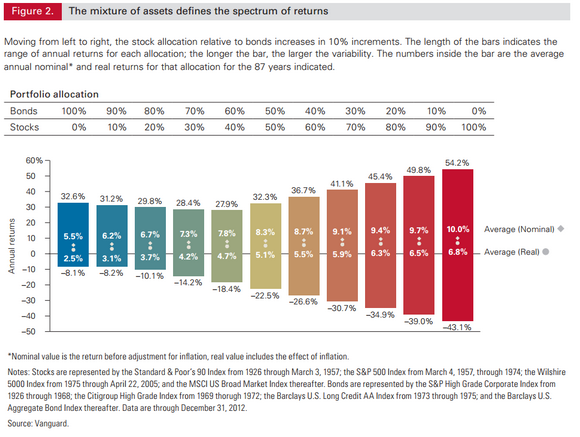
Stocks have historically offered more growth potential over the long term, but they are also more volatile. Bonds and cash-like holdings can provide more stability, but they usually will not deliver the same long-run upside. A balanced portfolio combines them in a way that makes sense for your goals.
A younger investor saving for retirement in 30 years may tilt more heavily toward stocks because time can help absorb short-term swings. Someone nearing retirement, on the other hand, may want more bonds and cash reserves because the timing of withdrawals matters more than bragging rights at a dinner party.
2. Present Needs vs. Future Goals
If you invest every dollar and have no emergency fund, life can force you to sell at the worst possible moment. That is why balance begins before the portfolio itself. You need enough liquid savings to cover surprise expenses, along with a plan for high-interest debt, before expecting your investments to solve every financial problem.
Think of it this way: your emergency fund protects your investments from your life, and your investments protect your future from inflation and stagnation. Both matter.
3. Conviction vs. Concentration
It is fine to believe in a company, a sector, or a trend. It is less fine to let one investment become the entire personality of your portfolio. Concentration can feel thrilling on the way up, but it can become painful very quickly when a single holding, theme, or industry stumbles.
That is why diversification remains one of the least glamorous and most useful ideas in finance. Spreading your money across different asset classes, sectors, company sizes, and geographies can reduce the damage when one area hits a wall. Diversification will not eliminate losses, but it can help prevent one bad bet from wrecking the whole plan.
4. Action vs. Patience
Investors often assume success comes from constant activity. In reality, too much tinkering can be as harmful as neglect. A balanced investor does not ignore the portfolio forever, but they also do not treat every news alert like a five-alarm fire.
The sweet spot is thoughtful maintenance: review the plan, rebalance when needed, keep contributing, and avoid emotional overreactions. Not exciting, perhaps. Effective, absolutely.
What a Balanced Investment Strategy Actually Looks Like
A balanced strategy starts with three simple questions:
What is this money for? Retirement, a home purchase, college, financial independence, future flexibility, or a combination of goals.
When will I need it? A five-year goal should not be invested the same way as a 30-year goal.
How much risk can I realistically handle? Not in theory. In reality. On a Tuesday. During a market selloff. While reading scary headlines.
Those answers shape asset allocation, which is the mix of stocks, bonds, cash, and possibly other assets in a portfolio. Asset allocation is where the balancing act becomes practical. It is the framework that tries to align your portfolio with your actual life instead of your fantasy self who “totally doesn’t panic.”
For many investors, broad stock funds and bond funds form the backbone of a diversified portfolio. Some may also include international exposure, real estate investment trusts, or other holdings for added diversification. The exact mix will vary, but the principle stays the same: the portfolio should be built to survive reality, not just look clever in a bull market.
Rebalancing: The Quiet Habit That Keeps Risk in Check
If investing is a balancing act, rebalancing is the little pole the tightrope walker carries. Over time, market movements can push a portfolio away from its target mix. A 60/40 stock-bond portfolio might quietly become 70/30 after a strong run in stocks. That means more risk than originally intended, whether the investor notices it or not.
Rebalancing brings the portfolio back toward its target. Sometimes that means trimming what has grown too large and adding to areas that have lagged. In plain English, it often means selling a bit of what feels exciting and buying a bit of what feels boring. Financially useful, emotionally rude.
This matters because rebalancing helps investors maintain the risk level they actually signed up for. It also creates a discipline of buying lower and trimming higher, instead of the more common hobby of doing the reverse. Some investors rebalance on a set schedule, such as once or twice a year. Others rebalance when an allocation drifts past a certain threshold. Either way, the goal is not perfection. The goal is to stop the portfolio from wandering off unsupervised.
One caution: rebalancing in a taxable account can create tax consequences and transaction costs, so it should be done thoughtfully. Using new contributions or dividends to restore balance can sometimes be a more efficient first step.
Costs, Inflation, and Taxes: The Invisible Weight in the Backpack
Investing is not only about what you own. It is also about what quietly chips away at what you keep.
Fees matter because even small percentages can compound over time. A portfolio with higher ongoing costs has a bigger hill to climb before you see real progress. That is one reason low-cost index funds and ETFs are so popular with long-term investors.
Inflation matters because money that feels safe can still lose purchasing power if it is parked too conservatively for too long. Cash is important for emergencies and short-term needs, but an all-cash strategy can be risky in its own sneaky way: it may not grow enough to support future goals.
Taxes matter because where you hold investments can be nearly as important as what you hold. Tax-advantaged accounts, taxable brokerage accounts, and retirement plans each have different trade-offs. A balanced investor pays attention not just to returns, but to after-tax returns.
These factors are not flashy, which is probably why people love to ignore them. But ignoring the quiet stuff is one of the fastest ways to make a decent portfolio underperform.
Behavior Is the Real Balancing Act
Here is the awkward truth: many portfolios do not fail because the strategy was terrible. They fail because the investor could not stick with the strategy long enough for it to work.
Behavioral mistakes are everywhere. Investors chase recent winners, abandon diversification when one sector gets hot, freeze after downturns, or decide that one scary year somehow invalidates a multi-decade plan. The market can be volatile, but investor emotions often add extra chaos for free.
A balanced approach recognizes that emotional discipline is part of portfolio design. That may mean automating contributions, limiting how often you check balances, using broad funds instead of hyper-specific bets, or choosing a target-date or managed solution if do-it-yourself oversight feels like a part-time job you never wanted.
The best investment plan is not the most sophisticated one. It is the one you can actually follow through bull markets, bear markets, election cycles, interest-rate changes, and the occasional economic headline written like a disaster movie trailer.
Common Ways Investors Lose Their Balance
Chasing Performance
Buying whatever just had a great year can load a portfolio with yesterday’s winners at today’s inflated prices.
Ignoring Risk Tolerance
It is easy to think you can handle volatility until your portfolio drops and your confidence goes missing.
Overcomplicating the Plan
A portfolio with too many moving parts can be hard to manage and easier to abandon.
Staying Too Conservative for Too Long
Playing it too safe can be its own risk if your money does not grow enough to outpace inflation or meet long-term goals.
Letting One Position Get Too Big
A concentrated bet can quietly turn into a portfolio-level problem if left unchecked.
How to Stay Balanced Over Time
For most people, the most durable investing habits are surprisingly plain:
Set clear goals. Match your asset allocation to your timeline and tolerance for risk. Keep emergency savings separate from long-term investments. Diversify broadly. Contribute consistently. Rebalance periodically. Watch fees. Keep taxes in mind. Do fewer dramatic things.
That may not sound like the plot of a blockbuster, but it is how many successful long-term investors operate. They build a system that can handle uncertainty instead of pretending uncertainty can be avoided.
In that sense, balance is not a compromise. It is a strategy. It is the decision to pursue growth without becoming reckless, to respect risk without becoming paralyzed, and to let time do the heavy lifting instead of demanding instant perfection from every market cycle.
Real-World Experiences: What “Investing Is a Balancing Act” Feels Like
Anyone who has invested for more than about seven minutes learns that the balancing act is not just a theory. It is an experience. A very human one.
Take the young professional who starts investing with huge enthusiasm and a modest paycheck. At first, the challenge is not picking the perfect fund. It is balancing ambition with reality. There is rent, student loans, groceries, and the deeply important matter of occasionally doing something fun. The breakthrough often comes when investing stops being treated like a heroic monthly event and becomes automatic. A small, steady contribution does not feel dramatic, but over time it becomes proof that consistency beats intensity.
Then there is the mid-career investor who has more responsibilities and more financial goals piled onto the same plate. Retirement savings, a child’s future, a mortgage, home repairs, aging parents, and a market that never seems to stop making noise. This is where investing can feel less like a spreadsheet and more like air-traffic control. The experience many people describe is not a lack of knowledge, but a lack of calm. What helps is separating money by purpose. Long-term goals stay invested for growth, short-term obligations stay more conservative, and emergency cash remains boring on purpose. Suddenly the plan feels less like chaos and more like structure.
Near retirement, the balancing act changes again. Investors often discover that protecting what they have built becomes just as important as growing it. But here is the tricky part: becoming too conservative too quickly can create a new problem. People may live decades in retirement, which means the portfolio still needs growth. Many investors describe this stage as learning to replace the question “How much can I make?” with “How much risk makes sense now?” That shift is not defeat. It is maturity.
Perhaps the most universal experience, though, happens during market drops. Even investors with a perfectly sensible plan can feel their confidence evaporate when balances fall. Logic says, “Stay diversified, rebalance, keep perspective.” Emotion says, “What if this time is different and I should hide under the bed?” The investors who come through those periods best are usually not the ones with nerves of steel. They are the ones with systems. Automatic investing, written rules, broad diversification, and scheduled portfolio reviews can do a lot of emotional heavy lifting.
On the upside, strong markets create their own version of imbalance. People begin to think they are brilliant when they may simply be overexposed to whatever has been leading lately. A concentrated position starts looking like a smart conviction rather than creeping risk. Rebalancing in those moments can feel annoying because it requires trimming what seems unstoppable. Yet later, many investors look back and realize that the “annoying” discipline was exactly what kept success from turning into overconfidence.
In everyday life, that is what the balancing act really means. It means building a plan you can live with, not just one that looks good in theory. It means accepting that discomfort is part of investing, but chaos does not have to be. It means knowing that progress often looks ordinary while mistakes tend to arrive wearing sequins. And it means understanding that good investing is rarely about one brilliant move. More often, it is about making a thousand calm, reasonable decisions while the world begs you to do something louder.
Conclusion
Investing is a balancing act because every choice involves trade-offs. Growth comes with volatility. Safety can come with lower returns. Flexibility can clash with discipline. The goal is not to eliminate those tensions, but to manage them intelligently.
A balanced investor understands that success usually comes from alignment rather than prediction. When your portfolio matches your goals, timeline, cash needs, and risk tolerance, you are far less likely to make destructive decisions when markets swing. Add diversification, periodic rebalancing, cost awareness, and emotional discipline, and you have the kind of strategy that can hold up in the real world.
No portfolio can remove uncertainty completely. But balance can make uncertainty more survivable. And in investing, staying in the game with a sound plan is often far more powerful than trying to look like a genius every quarter.