

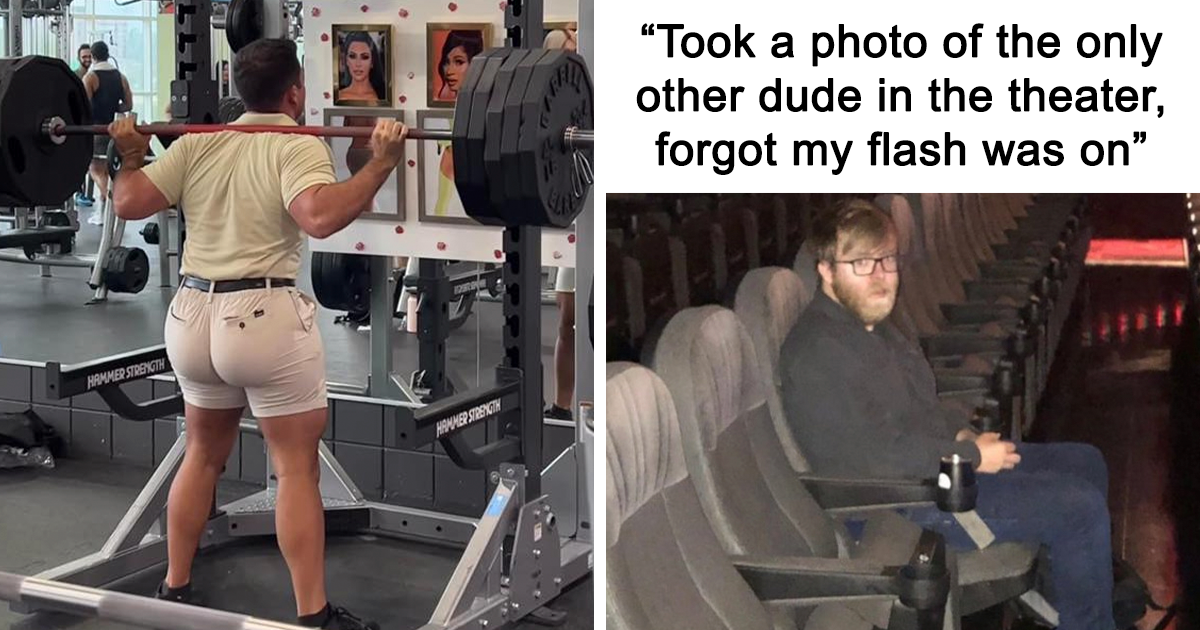
Humanity is a majestic species. We built pyramids, landed robots on Mars, invented vaccines, painted ceilings so beautiful people still stare at them with their mouths slightly openand then we also decided that a plastic chair balanced on a shopping cart looked like a “perfectly fine vehicle.” That, dear reader, is the full human experience.
The phrase “humans doing human things” has become a delicious little corner of internet culture because it captures what words often cannot: the bizarre, funny, oddly touching chaos of everyday people being themselves in public. These are the moments when logic goes on vacation, creativity grabs a traffic cone, and someone somewhere says, “Actually, this might work.” Sometimes it does. Usually, it becomes a photo.
This article explores why weird human behavior is so fascinating, why chaotic pictures spread online, and what these snapshots reveal about social norms, humor, creativity, group behavior, and our shared need to laugh at ourselves. Think of it as a guided tour through the museum of humanitywhere half the exhibits are brilliant and the other half are wearing flip-flops in a snowstorm.
Why Weird Human Photos Are So Addictive
Pictures of strange human behavior work because they hit several emotional buttons at once. They surprise us, confuse us, amuse us, and occasionally make us whisper, “I have questions.” A man pushing a couch down the sidewalk on roller skates is not just an image; it is a tiny mystery novel with no final chapter.
Our brains love patterns. We expect people to behave according to certain social rules: walk on sidewalks, sit on chairs, use doors as doors, and avoid wearing inflatable dinosaur costumes in formal settings unless explicitly requested. When someone breaks those expectations in a harmless or funny way, the result is instant attention. That is the magic of incongruity: the gap between what we expect and what we actually see.
Humor researchers often describe laughter as a social tool, not just a reaction. Laughter helps people bond, signal friendliness, and handle awkwardness. That is why a photo of someone using a leaf blower to “help” cool down soup can travel farther online than a perfectly normal picture of soup doing soup things.
The Internet Turned Everyday Weirdness Into Social Currency
Before smartphones, most strange public moments vanished into local legend. Someone would tell the story at dinner: “I saw a guy walking a goat in a baby stroller,” and everyone would have to decide whether to believe it. Today, the phone comes out, the moment is captured, and suddenly a goat in a stroller becomes part of the global conversation before the goat has even finished judging us.
Online photo sharing transformed everyday life into a constantly updating gallery. People post original photos, curate funny images, and share visual oddities because images are fast, emotional, and easy to understand across language barriers. A picture of a person trying to carry twelve grocery bags in one hand needs no translation. We all know the struggle. We all know the pride. We all know the bag handles are plotting betrayal.
These images also feel communal. When people comment, tag friends, or say “this is literally you,” they turn a single moment into a shared joke. The photo becomes less about one stranger’s weird choice and more about a collective recognition: yes, humans are strange, and yes, we are all implicated.
50 Types of Pics That Showcase the Weird and Chaotic Side of Humanity
Instead of copying any existing photo collection, here is an original breakdown of the kinds of images that make “humans doing human things” galleries so endlessly entertaining. These are the moments that remind us that civilization is held together with duct tape, social agreements, and someone’s uncle saying, “I got this.”
- The improvised repair: A car mirror replaced with a bathroom mirror, proving that engineering sometimes begins with panic.
- The overconfident mover: One person transporting a mattress on a tiny car as if physics signed a permission slip.
- The public costume legend: Someone dressed like a banana at the bank, conducting serious business with potassium dignity.
- The shopping cart philosopher: A person riding in a cart while another adult pushes them like royalty at a discount kingdom.
- The sign that gave up: A handwritten notice saying “Please stop doing the thing,” without explaining the thing, which makes everyone imagine worse things.
- The emotional support object: A person carrying a giant stuffed animal through an airport with the confidence of a celebrity bodyguard.
- The lawn chair strategist: Someone sitting in a parking lot with sunglasses, snacks, and the energy of a man who has declared peace with the universe.
- The unnecessary ladder: A person standing on a chair that is standing on another chair, while a perfectly good ladder watches from ten feet away.
- The grocery bag maximalist: One human attempting to carry every bag in one trip because multiple trips are apparently a moral failure.
- The pet with a job: A dog wearing a tiny backpack, looking more employed than most people on a Monday morning.
- The dramatic commuter: Someone sleeping on public transportation in a position that looks like modern dance.
- The “close enough” parking job: A vehicle placed diagonally across two spaces like it is composing jazz.
- The overly specific warning sign: “Do not lick the freezer door,” which confirms that someone absolutely licked the freezer door.
- The accidental fashion statement: Socks with sandals, pajama pants, and a formal blazer creating a look best described as “courtroom nap.”
- The mysterious object carrier: Someone walking down the street with a mannequin head, acting as if everyone else is being weird for noticing.
- The office survival hack: A desk fan, coffee mug, snack drawer, and tiny plant arranged like a command center.
- The festival improviser: Rain poncho made from a trash bag, worn with the elegance of a designer runway piece.
- The fearless parent: A parent using one hand to hold groceries, one elbow to close the car door, and one eyebrow to discipline a child.
- The strange celebration: A birthday cake shaped like a household appliance because love has many forms.
- The public nap champion: Someone asleep in a mall chair with the stillness of ancient sculpture.
- The misplaced confidence project: A DIY shelf leaning like it has emotional problems.
- The tiny rebellion: A person walking on the grass directly beside a “Keep Off Grass” sign, silently challenging society.
- The food experiment: A sandwich so tall it needs structural support and maybe a city permit.
- The personal weather system: Someone using an umbrella indoors because the ceiling has joined the enemy.
- The chaotic group photo: Half the people smiling, one person blinking, one child escaping, and one uncle pointing at nothing.
- The suitcase overpacker: A traveler sitting on luggage to close it, negotiating with zippers like a hostage mediator.
- The public performance nobody requested: A person dancing in line because music exists somewhere in their soul.
- The backyard inventor: A homemade sprinkler system made from bottles, tape, and ambition.
- The intensely normal weirdness: Someone eating cereal from a mug because bowls were apparently unavailable to civilization.
- The pet stroller moment: A cat rolling through the park like a retired billionaire.
- The broken escalator confusion: People staring at a stopped escalator as if stairs have become advanced technology.
- The chair collector: Someone transporting six chairs on a bicycle, which is either genius or the beginning of a physics lecture.
- The snack emergency: A purse filled with crackers, candy, and one suspiciously warm cheese stick.
- The dramatic sign spinner: A roadside advertiser treating the job like an Olympic event.
- The sidewalk musician: Someone playing an instrument badly but joyfully, which is still better than silence with attitude.
- The holiday overdecorator: A yard so full of lights it can probably be seen by passing satellites.
- The strange line behavior: People forming a line behind no one because humans trust lines more than evidence.
- The airport floor sleeper: A traveler curled around a backpack like a dragon guarding treasure.
- The extreme coupon warrior: A shopper with a binder, calculator, and the tactical focus of a chess grandmaster.
- The lunchroom scientist: Someone mixing five sauces together and calling it “my special recipe.”
- The misplaced animal confidence: A pigeon walking into a store like it owns the franchise.
- The tiny convenience hack: A phone balanced against a water bottle to create a luxury entertainment system.
- The human traffic jam: People all trying to pass through the same doorway at once, forgetting that patience was invented.
- The confusing public sculpture interaction: Someone posing with art in a way the artist definitely did not plan but might secretly admire.
- The gym improvisor: A person using household objects as workout equipment, hopefully safely and definitely enthusiastically.
- The parking lot picnic: Fast food spread across a car hood like a five-star outdoor tasting menu.
- The “it still works” appliance: A fan held together with tape, hope, and possibly family history.
- The formal event wildcard: One guest wearing sneakers with a suit and somehow becoming the most comfortable genius in the room.
- The overcommitted selfie: A group trying to fit ten faces into one frame while one person’s forehead becomes the main character.
- The oddly beautiful chaos: A crowd laughing together at something small, proving that weirdness is often just joy wearing a funny hat.
What These Chaotic Human Moments Reveal About Us
We Are Creative Under Pressure
Many weird human photos are really proof of creative problem-solving. The solution may not be elegant. It may involve tape. It may make a professional engineer close their laptop and walk silently into the woods. But it still shows a basic human instinct: when faced with a problem, we try something.
Improvisation is part of human survival. People have always adapted tools, spaces, clothing, and habits to fit immediate needs. A person using a laundry basket as a snow sled may look ridiculous, but the thought process is familiar: “I have a slope, I have an object, and I have too much confidence.” That is not just chaos. That is creativity with questionable risk assessment.
We Live Inside Social Norms
We call something “weird” because it breaks a rule we did not realize we were following. Nobody hands us a manual that says, “Do not wear a scuba mask while buying cereal,” yet if someone does it, everyone notices. Social norms are the invisible lines that organize everyday life. They help us understand what is expected in public spaces, workplaces, schools, stores, and family gatherings.
Funny public photos reveal these rules by breaking them. A person in a dinosaur costume waiting for the bus is funny because the bus stop is supposed to be ordinary. A man eating spaghetti from a plastic bag is funny because we collectively agreed that plates exist for a reason. The humor comes from seeing the rule, seeing the break, and realizing that no serious harm has occurredonly confusion, which is basically comedy’s favorite snack.
We Are Social Copycats
Human beings copy one another constantly. We copy gestures, trends, slang, fashion, jokes, dances, food habits, and even the way people stand in lines. That is why one odd behavior can become a group event. One person starts doing something silly, another joins in, and suddenly strangers are participating in a public ritual that did not exist five minutes earlier.
This is one reason memes spread so quickly. A photo becomes a template. A pose becomes a challenge. A facial expression becomes shorthand for an entire mood. The internet does not just show human behavior; it accelerates it. What used to be one person’s strange Tuesday can now become a global inside joke by Thursday.
Why We Should Laugh Without Being Cruel
There is an important difference between laughing with humanity and laughing at someone’s pain, embarrassment, or vulnerability. The best “humans doing human things” photos are not mean-spirited. They celebrate harmless absurdity: awkward choices, silly coincidences, practical creativity, odd fashion, dramatic pets, or public moments where everyone involved is fine.
Good humor has warmth. It says, “People are strange, and that includes me.” Bad humor says, “Look at that person; I am better.” The first builds connection. The second just makes the internet smell like burnt toast.
When sharing funny photos, context matters. Did the person consent? Is the image humiliating? Does it target someone for something they cannot control? Is it putting a minor, vulnerable person, or private situation on display? A little digital kindness goes a long way. The internet is already chaotic enough without adding unnecessary cruelty to the soup.
The Beauty of Everyday Absurdity
One of the best things about weird human pictures is that they remind us life is not as polished as social media often pretends. For every perfect vacation photo, there is someone behind the camera tripping over a beach towel. For every flawless outfit post, there is a laundry chair at home piled with clothes in a formation archaeologists will one day study.
These chaotic images are comforting because they make imperfection visible. They say: nobody really has the whole thing figured out. We are all just walking around with snacks, opinions, and phones at 12 percent battery, trying to make sense of the day.
In a world full of curated feeds and filtered lifestyles, pictures of weird humanity feel refreshingly honest. They show people solving small problems badly, enjoying themselves loudly, misunderstanding signs, inventing new uses for old objects, and treating public spaces like stages for unplanned comedy.
Experience: What “Humans Doing Human Things” Looks Like in Real Life
The funniest human moments are often the ones that happen when nobody is trying to be funny. I once watched a man at a grocery store hold two avocados up to his ears like headphones while his friend seriously compared prices. It lasted maybe three seconds, but it had the energy of a complete theatrical performance. No announcement. No audience request. Just a man, two avocados, and a private commitment to produce.
That is the charm of these chaotic humanity pictures. They capture the tiny sparks of personality that escape from ordinary life. Waiting in line is boring until someone starts balancing a bottle on their head. A commute is routine until a dog in a sweater makes eye contact with every passenger like it is running for office. A parking lot is just asphalt until three people gather around a trunk, trying to fit an object that is clearly too large, while each person believes the solution is “rotate it one more time.”
These moments also make people feel less alone. Everyone has made a strange decision in public. Maybe you waved back at someone who was waving to the person behind you. Maybe you pushed a door clearly labeled “pull” and then looked at the handle like it betrayed you personally. Maybe you tried to carry too many things at once and performed a small, silent circus act in your driveway. That is not failure. That is membership in the human club.
There is also something deeply democratic about everyday weirdness. It belongs to everyone. You do not need fame, money, or professional lighting to become the main character of a funny moment. You only need a situation, an impulse, and perhaps a slightly questionable idea. A person eating fries with chopsticks in a parking lot is just as worthy of comic study as a celebrity red-carpet moment. Maybe more so, because fries with chopsticks show commitment.
The best human chaos is harmless, inventive, and oddly sincere. It is the grandparent who learns video calls by showing only their forehead. It is the student who brings a full blanket to class because comfort is a strategy. It is the office worker who labels their lunch “Definitely Not Brian’s” because Brian has apparently become a workplace legend. These small acts reveal personality in a world that often pressures people to behave like polished copies of one another.
And maybe that is why these photos keep spreading. They are not just visual jokes. They are evidence that the world still contains surprise. The same species that schedules dentist appointments and files tax forms also builds snowmen on car roofs, dresses pets for holidays, and turns cardboard boxes into castles for cats that prefer the receipt. We are practical and ridiculous, social and stubborn, clever and completely unserious at the worst possible times.
So when you see a gallery called “Humans Doing Human Things,” do not think of it as merely a collection of odd photos. Think of it as a mirror, slightly warped but honest. It reflects our creativity, our need to connect, our talent for improvisation, and our lifelong habit of making ordinary situations memorable by being just a little bit strange.
Conclusion
“Humans Doing Human Things” works because it celebrates the messy middle of lifethe place between genius and nonsense, between social rules and harmless rebellion, between “that makes sense” and “why is there a traffic cone in the living room?” Weird and chaotic photos of humanity remind us that people are not machines. We are emotional, creative, social, impulsive, funny, tired, hungry, inventive, and occasionally dressed like fruit in public.
These images spread online because they are easy to understand and hard to forget. They give us a safe way to laugh at surprise, recognize shared awkwardness, and feel connected through small moments of absurdity. In the end, the weird side of humanity is not a flaw in the system. It may be one of the best features.
Note: This article is original, written for web publication, and informed by reputable research and reporting on social norms, laughter, online photo sharing, memes, internet culture, conformity, and human social behavior. It does not reproduce captions or content from any existing copyrighted gallery.