

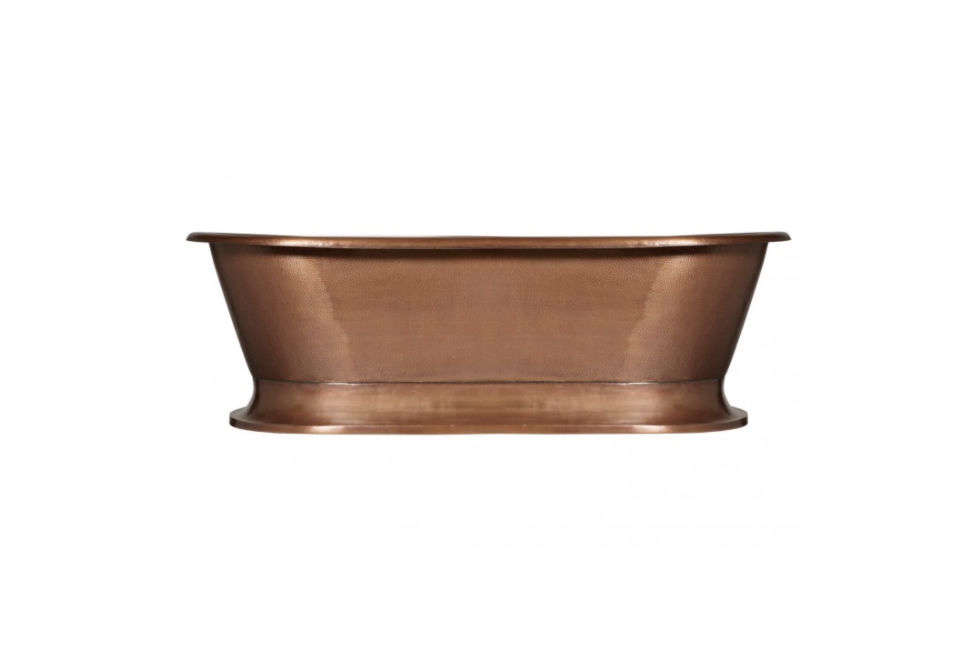
Some bathtubs are there to do a job. The Kelsey Copper Pedestal Tub is there to do a job and make the whole bathroom feel like it suddenly acquired better taste, a larger budget, and a candle collection with suspiciously elegant labels. If you are looking for a tub that quietly blends into the background, this is not your match. If you want a freestanding centerpiece with warmth, character, and just enough drama to make your bathroom feel like a boutique hotel suite, now we are talking.
The appeal of the Kelsey Copper Pedestal Tub goes well beyond looks. Copper tubs have long been prized for their warmth, texture, and evolving patina, but the pedestal profile adds something extra: architectural presence. Instead of reading like a basic plumbing fixture, it behaves like furniture. That distinction matters. In a well-designed bathroom, a statement tub can define the room’s mood, influence the metal finishes you choose, and even determine whether the whole space feels rustic, refined, industrial, romantic, or gloriously in-between.
This guide takes a close look at the Kelsey Copper Pedestal Tub from both a design and practical standpoint. We will cover what makes it special, how it fits into a real bathroom remodel, what kind of maintenance it asks for, and what living with a tub like this actually feels like. Because yes, copper is beautiful. But beauty is easier to enjoy when you also understand the plumbing, the cleaning routine, and the possibility that your “quick bathroom refresh” has now become a full-blown personality trait.
What Is the Kelsey Copper Pedestal Tub?
Historically, the Kelsey has been described as a large handcrafted copper pedestal tub with a hand-polished finish, a patina applied through a French hot process, and a freestanding silhouette designed to stand out. It has also been associated with no faucet holes, handmade variation from piece to piece, and optional upgrades like an overflow and air system. In plain English, that means this is not a mass-produced tub trying to impersonate luxury. It is a decorative, artisan-style bath piece meant to be seen.
The pedestal base is the first clue that the tub is aiming higher than ordinary. Unlike a built-in tub that disappears into an alcove or platform, a pedestal tub puts the body of the fixture on display. That gives the bathroom a more curated, collected look. The metal surface catches light differently throughout the day, the base creates visual weight, and the whole setup feels intentional rather than purely functional.
The copper itself is what gives the Kelsey its personality. Copper is a living material, which means it changes over time. Instead of staying frozen in one exact shade forever, it gradually develops more depth and variation. For some homeowners, that evolving finish is the entire point. It keeps the tub from feeling static or sterile. The piece ages with the room, and in a world full of flat, factory-perfect surfaces, that is honestly pretty refreshing.
Why the Kelsey Copper Pedestal Tub Stands Out
It acts like a focal point, not an afterthought
A lot of bathroom fixtures are visually polite. The Kelsey is not rude, exactly, but it definitely enters the room like it knows it looks good. That is one reason copper pedestal tubs work so well in primary bathrooms and statement remodels. The tub becomes the anchor. Vanities, tile, mirrors, lighting, and faucets all play supporting roles around it.
If your design goal is to make the bathroom feel layered and memorable, a tub like this does a lot of the heavy lifting. Better Homes & Gardens and other design-focused publications consistently treat freestanding tubs as strong focal points, especially when they are centered in the layout or supported by symmetry, windows, or dramatic lighting. The Kelsey naturally fits that playbook.
Copper adds warmth that white tubs often cannot
White acrylic has its place. It is clean, bright, and easy to pair with almost anything. Copper, however, brings instant warmth. It softens stone, balances cool tile, and makes a large bathroom feel less clinical. In farmhouse, rustic, old-world, industrial, and even some modern organic interiors, copper gives the room a sense of soul.
This is especially helpful in bathrooms that use a lot of hard finishes such as marble, concrete-look porcelain, black metal frames, or oversized glass. A copper tub prevents the space from becoming too chilly or showroom-like. It introduces depth, variation, and a touch of old-world craftsmanship that makes the room feel lived in, not staged within an inch of its life.
The finish gets better with age
One of the nicest things about copper is that it does not ask you to obsess over keeping it perfectly frozen in time. In fact, trying to keep it eternally identical is missing the fun part. Patina is not damage. It is character. With normal use, the finish deepens, softens, and becomes more nuanced. Minor marks tend to blend into that evolving surface instead of screaming for attention the way they might on glossy white materials.
That makes a copper tub feel more forgiving in everyday life. You use it. You wipe it down. It changes. It becomes yours. It is basically the opposite of high-maintenance perfectionism, which is a nice energy for a room that is supposed to help you relax.
It can feel warmer during a soak
Copper is also popular because it conducts and retains heat efficiently. That means the bathing experience can feel more luxurious, especially for people who like long, lingering soaks and resent the emotional betrayal of cooling bathwater. A copper tub tends to support a longer warm soak without demanding constant hot-water top-offs, which is one of those little details that sounds minor until you experience the difference.
How to Style a Bathroom Around the Kelsey Copper Pedestal Tub
Give it breathing room
This is not the sort of tub you cram next to a toilet and hope nobody notices. A piece like the Kelsey works best when it has visual breathing room. If the bathroom is large enough, place the tub where it can be appreciated from the doorway. Centering it beneath a window is a classic move. Positioning it between matching vanities or near a feature wall also works beautifully.
Even in a smaller room, thoughtful spacing matters. You want enough clearance that the tub still reads as a statement instead of a very attractive traffic obstacle. Measure the surrounding floor area, the door swing, and how people will move through the room. Design dreams are wonderful, but not if they require sideways shuffling every morning.
Choose the right tub filler
Because the Kelsey has historically been associated with no faucet holes, the faucet strategy is important. In most cases, a tub like this is best paired with a separate wall-mount or floor-mount tub filler. That gives the installation a cleaner look and preserves the sculptural quality of the tub itself.
If you are going for a more classic look, a floor-mounted filler in polished brass or brushed nickel can feel appropriately grand. If your space leans modern, a streamlined wall-mount option may keep the overall design from tipping too ornate. Either way, the filler should look intentional next to the tub, not like an afterthought chosen in the final ten minutes of the remodel.
Build a finish palette that makes sense
Copper plays well with several finishes, but the best pairings depend on the mood you want. Matte black gives it edge. Brushed nickel cools it down slightly and keeps the room tailored. Polished brass warms it even further for a more luxurious, layered look. Natural wood, limestone tones, creamy paint colors, charcoal accents, and handmade tile all tend to flatter copper nicely.
One smart approach is to let the tub be the warmest visual note in the room and then repeat that warmth in smaller ways, maybe through wood cabinetry, woven lighting, brass accents, or warm-neutral wall color. That keeps the tub from feeling lonely, which sounds dramatic for plumbing but is, sadly, a real design issue.
Practical Buying Considerations Before You Commit
Size matters more than your inspiration board admits
The Kelsey has historically been presented as a 78-inch tub, which puts it firmly in statement territory. That length can look spectacular, but it also means you need to be honest about your space. Measure the installation area, of course, but also measure the delivery path into the bathroom. Hallways, stairwells, door openings, and tight corners have ruined many perfectly good renovation fantasies.
Also pay attention to interior comfort, not just exterior dimensions. A tub can look enormous and still feel less roomy inside depending on wall thickness and shape. Freestanding and slipper-style tubs often trade some interior sprawl for visual presence, so it is worth reviewing usable bathing space, not just showroom glamor.
Plan for plumbing and floor support
Large freestanding tubs require planning. Drain placement, overflow decisions, and filler location all matter. If you are replacing a standard tub, chances are at least some plumbing adjustment will be involved. That is not a reason to panic, but it is a reason to talk to the right contractor before the tub arrives and everyone starts pretending surprises are “part of the process.”
You also need to think about load. A freestanding tub is not just the weight of the fixture. It is the fixture, plus water, plus the person using it, plus the reality that relaxing baths and structural math are strangely connected. The larger and more luxurious the tub, the more important it is to confirm that the floor system is appropriate for the installation.
Budget beyond the tub itself
A copper pedestal tub is a premium purchase, and the spending usually does not stop with the tub. You may need a freestanding or wall-mounted filler, a compatible drain, possible plumbing relocation, and maybe some finish upgrades around the room so the tub does not outdress everything else. Current Signature Hardware copper pedestal tubs in comparable styles still sit in premium pricing territory, which tells you this category remains a design investment rather than an impulse buy.
Copper Tub Care: What You Actually Need to Do
The good news is that copper care is not difficult. The better news is that it is mostly common sense. For everyday cleaning, mild soap, warm water, and a soft cloth are usually enough. Drying the surface after use helps reduce water spotting and encourages a more even patina. If you are the sort of person who can remember to fluff pillows every day, you will be excellent at this. If not, do not worry; copper is more forgiving than perfectionist bathroom materials.
The big rule is to avoid abrasive tools and harsh cleaners. Bristle brushes, rough scrub pads, and aggressive chemicals are not your friends here. Acidic substances can strip applied finishes, and bath salts, especially Epsom salts, are often flagged as a bad idea for copper tubs because they can affect the finish and appearance over time.
If you love the aged look, let the patina evolve naturally. If you want to preserve a brighter finish, waxing can help slow the process. Some owners prefer to let the tub deepen and mellow over time, while others like polishing it back toward a newer look. Neither approach is wrong. The tub is allowed to become more you.
One practical note: because handcrafted copper is a malleable natural material, it can sometimes develop slight high or low spots that affect drainage. That does not mean the tub is defective or cursed by a very stylish ghost. It simply means proper installation and drain setup matter. This is another reason experienced installers earn their keep.
Is the Kelsey Copper Pedestal Tub Worth It?
If your goal is a basic bath upgrade, probably not. A simpler acrylic model will cost less, install more easily, and ask fewer questions of your floor plan. But if your goal is to create a memorable bathroom with real presence, the Kelsey Copper Pedestal Tub absolutely makes sense. It brings craftsmanship, warmth, visual depth, and a kind of lived-in elegance that trendier materials often struggle to fake.
It is especially worth considering for homeowners who want the bathroom to feel like a retreat instead of a utility zone. The Kelsey works best when you are designing around experience: longer soaks, quieter lighting, richer materials, and a room that feels curated rather than merely completed. It is not trying to be practical in the plainest possible way. It is trying to make the everyday ritual of bathing feel a little more ceremonial and a lot less boring.
Experience Section: What Living With a Kelsey Copper Pedestal Tub Feels Like
Living with a tub like the Kelsey is less like owning a standard bathroom fixture and more like having one very glamorous roommate who never pays rent but somehow still improves the entire apartment. The first thing people notice is the visual effect. Even when the tub is empty, it gives the room a sense of completion. You walk in, and the bathroom immediately feels intentional. Not “we remodeled the bathroom,” but “we have chosen a lifestyle that includes beautiful baths and possibly linen robes.”
In daily use, the experience tends to feel warmer and more tactile than with ordinary tubs. Copper does not read as cold and clinical. It feels substantial. The light hitting the metal changes throughout the day, which sounds poetic because it is. Morning light brings out brighter copper notes. Evening lamplight makes the surface look deeper and moodier. On gloomy days, the tub almost becomes the room’s source of warmth even before you run the water.
The soaking experience itself is where many people really fall for this style of tub. A long freestanding copper bath can feel quieter somehow, more cocoon-like, more separate from the rush of the day. The metal seems to hold onto the mood of the water. That means fewer irritated top-offs, fewer moments of “why is my relaxing bath suddenly a lukewarm apology,” and more time to actually unwind.
Then there is the patina. At first, some people worry when the finish starts to shift. They expect factory sameness forever. But after a little time, the changes usually become part of the charm. The surface looks more dimensional, more personal, more like an object with a life. Tiny signs of use do not ruin the tub; they blend into its story. That can be surprisingly liberating if you are used to glossy materials that treat every fingerprint like a scandal.
Care routines are usually simple, but they do ask for mindfulness. You wipe the tub with a soft cloth, avoid harsh products, and skip the abrasive nonsense. That sounds like a lot until you realize it takes less time than scrolling for throw pillows you do not need. Drying the tub after use becomes part of the ritual, not a burden. In return, the piece keeps its richness and character.
There is also a subtle emotional benefit to having a statement tub. It encourages you to use the bathroom differently. You light the candle. You buy better bubble bath. You put the phone down for ten minutes and remember you are a person, not just a notification delivery system. The room stops being a pass-through space and starts acting like a retreat.
Of course, a tub like this is not for everyone. It asks for room, budget, and a willingness to embrace a finish that evolves. But for the right homeowner, that is exactly the appeal. The experience is not sterile or generic. It is warm, sculptural, slightly indulgent, and full of character. In other words, the Kelsey Copper Pedestal Tub does what great design always does: it turns something routine into something memorable.
Final Thoughts
The Kelsey Copper Pedestal Tub is the kind of product that makes you rethink what a bathtub can do in a room. It is not just a place to bathe. It is a design anchor, a materials statement, and a practical luxury all at once. Between the handcrafted copper surface, freestanding pedestal form, living patina, and premium soaking experience, it offers something that standard tubs rarely can: real personality.
If you have the space, the budget, and the taste for materials that age with grace, this is the sort of tub that can elevate an entire bathroom project. And unlike so many “statement pieces” that are all show and no substance, copper brings useful benefits too. It is warm, durable, relatively low-fuss when cared for correctly, and visually richer over time. Not bad for something whose basic job is helping you sit in hot water and avoid people for half an hour.