

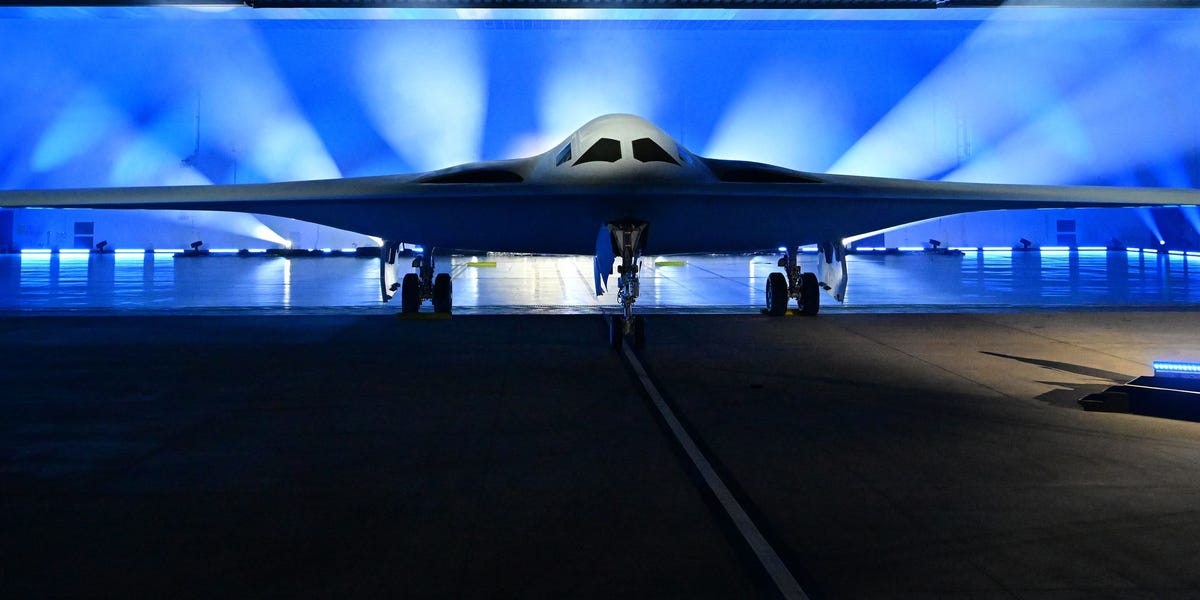
Australia won’t be buying the B-21 Raiderat least not under its current defense planand that sentence has caused more raised eyebrows than a kangaroo wandering into a Pentagon budget hearing. The B-21 Raider is America’s next-generation stealth bomber, a shadowy flying wing built by Northrop Grumman for the U.S. Air Force. It is designed to slip through advanced air defenses, deliver conventional or nuclear weapons, and make adversaries wonder whether the sky itself has developed opinions.
So why would Australia, a close U.S. ally facing a tougher Indo-Pacific security environment, pass on such a powerful aircraft? The answer is not “because it forgot to add one to cart.” Australia studied the idea, discussed it with the United States, and then chose a different path: more missiles, upgraded fighters, autonomous aircraft, northern-base hardening, submarines under AUKUS, and a broader strategy of deterrence by denial.
In plain English, Canberra appears to have decided that the B-21 Raider is impressive, but not the right tool for Australia’s current defense strategy. It is a bit like admiring a Formula 1 car and then remembering you need a reliable truck for rough roads, long distances, and carrying actual gear.
What Is the B-21 Raider?
The B-21 Raider is the U.S. Air Force’s future long-range stealth bomber. It is intended to replace or supplement older American bombers, including the B-1 Lancer and B-2 Spirit, while operating alongside the upgraded B-52 fleet. The aircraft is described as dual-capable, meaning it can carry both conventional and nuclear weapons. It also uses stealth shaping, advanced materials, digital engineering, and open-systems architecture so it can be upgraded over time instead of aging like a forgotten printer driver.
Northrop Grumman unveiled the B-21 publicly in December 2022, after years of secrecy. Its first flight took place in November 2023, and the program has moved into flight testing and low-rate production. Many details remain classified, which is exactly what one expects from a stealth bomber. If the Pentagon released a full technical brochure with glossy diagrams and “10% off your first hypersonic integration,” something would be terribly wrong.
Why Australia Looked at the B-21 Raider
Australia’s strategic problem is geography. The country is huge, its northern approaches are vast, and many of the security challenges that matter most are far from its major southern population centers. Modern missiles, drones, submarines, cyber systems, and long-range sensors have changed the defense math. The Indo-Pacific is no longer a slow chessboard; it is a chessboard where some of the pieces fly at Mach speed and everyone has satellites.
A bomber like the B-21 naturally attracts attention because it promises long-range strike, survivability, and the ability to hold targets at risk from great distances. For Australia, that sounds tempting. A small fleet of stealth bombers could theoretically provide deep strike capability without relying entirely on forward bases or tanker aircraft. It would also send a loud strategic message, even if the aircraft itself is designed to be very quiet.
Australian defense analysts had previously argued that the B-21 could help fill a long-range strike gap. Some suggested that a limited number of Raiders might give Australia a powerful deterrent while it waits for nuclear-powered submarines under AUKUS. But defense planning is not a fantasy football draft. Capability must match budget, workforce, logistics, doctrine, training, sovereignty requirements, and alliance strategy.
The Defence Strategic Review Said “No Thanks”
Australia’s 2023 Defence Strategic Review examined the B-21 Raider as a potential capability option. The review noted that discussions had taken place in Australia and the United States. But its conclusion was clear: under Australia’s strategic circumstances and defense development approach, the B-21 was not considered a suitable option for acquisition.
That does not mean the B-21 is a bad aircraft. Far from it. The Raider may become one of the most important military aircraft of the 21st century. The decision means Australia judged that buying it would not be the best use of defense resources right now. In defense policy, “not suitable” often means “amazing, expensive, complicated, and not aligned with the plan.”
Australia Is Choosing Missiles Over Bombers
Instead of buying America’s secret bomber, Australia is focusing on weapons that can extend the reach of platforms it already has. The Defence Strategic Review recommended integrating the Long-Range Anti-Ship Missile, or LRASM, onto the F-35A and F/A-18F Super Hornet. It also recommended integrating the Joint Strike Missile onto the F-35A, which requires the aircraft to move toward Block 4 configuration.
This approach gives Australia more punch without creating an entirely new bomber force. Fighter aircraft already in service can become more dangerous with better standoff weapons. A Super Hornet armed with LRASM is not a B-21, but it is also not a paper airplane with patriotic stickers. It can threaten ships at range, contribute to maritime denial, and work within existing Royal Australian Air Force training and maintenance structures.
Long-Range Strike Without a Bomber Fleet
Australia is also pursuing land-based long-range fires, including HIMARS and the Precision Strike Missile. These systems fit the country’s push toward distributed, mobile, and survivable firepower. A truck-mounted missile launcher can hide, move, fire, and disappear. It lacks the glamour of a stealth bomber, but glamour is not usually listed as a battlefield requirement.
The broader pattern is easy to see: Australia wants more ways to hold adversary forces at risk across its northern approaches and surrounding maritime region. It is spreading capability across air, land, sea, cyber, space, and autonomous systems rather than concentrating a massive amount of money into a tiny fleet of exotic aircraft.
The MQ-28A Ghost Bat Matters Too
One of the most interesting parts of Australia’s airpower strategy is the MQ-28A Ghost Bat, an uncrewed aircraft developed with Boeing Australia. The Defence Strategic Review identified Ghost Bat as a priority for collaborative development with the United States. The idea is to pair crewed aircraft with autonomous systems that can scout, jam, sense, decoy, or potentially carry weapons.
That matters because future air combat will not be only about one magnificent aircraft doing everything. It will be about networks: fighters, drones, satellites, tankers, sensors, command systems, missiles, and electronic warfare platforms working together. The B-21 is part of America’s version of that future. Australia’s version may lean more heavily on upgraded fighters, loyal-wingman-style drones, and precision weapons.
Cost Is the Elephant in the Hangar
The B-21 Raider is designed to be more affordable than the older B-2 Spirit, but “more affordable stealth bomber” is still a phrase that should be handled with financial oven mitts. Buying the aircraft would not only require paying for the jets. Australia would also need specialized infrastructure, secure facilities, trained crews, maintainers, mission planners, weapons integration, simulators, software support, security protocols, spare parts, and long-term sustainment.
A small fleet might look manageable on a slide deck, but small fleets often create big problems. If Australia bought only a dozen aircraft, how many would be available on a normal day after maintenance, training, upgrades, and operational rotation? A tiny bomber force could be powerful, but also fragile. Lose readiness, lose spare parts, or lose trained personnel, and suddenly the “strategic game changer” becomes the world’s most expensive garage ornament.
Why the B-21 Is Still Important to Australia
Even if Australia does not buy the B-21, the aircraft still matters to Australian security. The United States is Australia’s central defense ally. American long-range bombers already rotate through or operate from allied facilities in the Indo-Pacific. As the B-21 enters service, it could become part of the broader allied deterrence picture around Australia’s region.
That means Australia may benefit from the Raider without owning it. Hosting, supporting, exercising with, or integrating operations alongside U.S. bombers could strengthen deterrence while avoiding the full cost of building an Australian B-21 force. It is the defense equivalent of having a friend with a very useful truckexcept the truck is stealthy, nuclear-capable, and maintained by the U.S. Air Force.
AUKUS Changes the Conversation
AUKUS is another reason the B-21 decision cannot be viewed in isolation. Through AUKUS, Australia is pursuing nuclear-powered submarines with the United States and United Kingdom. Submarines offer stealth, persistence, sea denial, intelligence collection, and long-range strike potential. They are extremely expensive and slow to deliver, but they fit Australia’s maritime geography in a way bombers may not.
Critics argue that AUKUS timelines are long and uncertain, which is why some have suggested revisiting the B-21 as a stopgap or complement. Supporters counter that Australia must focus resources on a coherent force structure instead of chasing every shiny capability with a classified paint job. Both sides have a point. The B-21 debate is really a debate about time, risk, money, sovereignty, and how Australia can deter conflict before the 2030s arrive wearing combat boots.
Could Australia Buy the B-21 Later?
Never say never in defense policy. Programs mature, threats change, budgets shift, and governments rediscover old ideas under new PowerPoint templates. Northrop Grumman executives have suggested that Australian interest could be revisited later, especially as the B-21 program becomes more mature. But for now, the official Australian defense plan does not include buying the Raider.
There are practical reasons for waiting. The U.S. Air Force needs the B-21 for its own bomber recapitalization. Exporting such a sensitive aircraft would involve strict technology controls, political approvals, classified support arrangements, and deep interoperability planning. Australia is a trusted ally, but the B-21 is not a regular defense export. It is one of America’s crown-jewel programs.
What This Decision Says About Modern Deterrence
Australia’s decision not to buy the B-21 Raider shows how modern deterrence is becoming more distributed. Instead of relying on one dramatic platform, countries are building webs of capability. Missiles, drones, cyber tools, space sensors, submarines, hardened bases, electronic warfare, and alliance networks all contribute to deterrence.
The question is not simply, “Can Australia strike far away?” The better question is, “Can Australia make hostile action too risky, too costly, and too uncertain?” A B-21 fleet might help answer that question, but so might a mix of long-range anti-ship missiles, land-based fires, autonomous aircraft, resilient northern bases, and U.S. alliance integration.
Specific Examples: What Australia Is Doing Instead
Upgrading the F-35A
The F-35A is already central to Australia’s air combat force. Upgrading it to carry more advanced weapons, including the Joint Strike Missile, increases its value in maritime and land-strike missions. The F-35 is not a bomber, but with stealth, sensors, and standoff weapons, it can be a serious part of an integrated strike network.
Keeping the Super Hornet Relevant
The F/A-18F Super Hornet remains useful because it can carry heavy weapons and perform strike roles. Integrating LRASM gives it a stronger anti-ship mission. In a region defined by sea lanes and naval competition, that matters.
Building Long-Range Fires
HIMARS and Precision Strike Missile investments give the Australian Army a role in long-range deterrence. This is a major shift from traditional short-range land warfare. Land forces can now contribute to maritime denial, which is a fancy way of saying, “Ships may want to think twice before sailing too close.”
Developing Ghost Bat
The MQ-28A Ghost Bat gives Australia a chance to shape the future of crewed-uncrewed air combat. It also supports sovereign industry and technology development. That is strategically valuable because buying foreign platforms is useful, but developing domestic expertise can pay dividends for decades.
Experience-Based Reflections: Lessons From the B-21 Debate
Watching the Australia B-21 Raider debate unfold offers a useful lesson for anyone interested in defense strategy: the most powerful option is not always the best option. In public discussions, people often compare platforms as if they were sports cars. Which is faster? Which is stealthier? Which has more range? Which one looks most like it arrived from a science-fiction movie with excellent funding? Those questions are fun, but defense planners live in a less glamorous world of maintenance hours, fuel logistics, runway resilience, spare parts, training pipelines, classified networks, and budget trade-offs.
The B-21 is a remarkable aircraft, but owning a remarkable aircraft means owning the entire ecosystem around it. Australia would not simply be buying bombers; it would be buying a new strategic culture. It would need to create bomber doctrine, build support infrastructure, train specialized crews, secure sensitive technology, integrate weapons, and protect bases that would instantly become high-value targets. That is not impossible, but it is a national commitment, not a shopping decision.
Another lesson is that geography shapes strategy. Australia’s defense problem is not the same as America’s. The United States needs global bomber reach because it operates as a worldwide military power with global commitments. Australia needs to defend its approaches, secure maritime routes, support regional balance, and work closely with allies. A stealth bomber could help, but it may not be as efficient as layered missiles, submarines, drones, sensors, and hardened bases.
There is also a timing lesson. The B-21 is still entering service with the U.S. Air Force. Early production aircraft are precious, testing is ongoing, and the American bomber fleet has its own urgent modernization needs. Even if Australia wanted the Raider, it might not receive aircraft quickly. A defense capability that arrives too late can be strategically elegant and practically awkward, like buying a fire extinguisher after the barbecue has already achieved orbit.
The final lesson is that alliances can provide capability without direct ownership. Australia may not need its own B-21 fleet if U.S. B-21s can operate in the region as part of allied deterrence. The key is integration: shared planning, compatible systems, secure communications, joint exercises, and resilient bases. In that sense, Australia’s choice is not necessarily “B-21 or nothing.” It is “owned bomber fleet or allied bomber access plus Australian long-range strike investments.” That is a more mature and realistic conversation.
For readers, the most practical takeaway is this: defense decisions are rarely about liking or disliking a weapon. They are about fit. The B-21 Raider fits America’s global strike mission. Australia, for now, believes its money and effort fit better elsewhere. That may disappoint bomber fans, but strategy is not built to satisfy aircraft posters. It is built to deter war, survive pressure, and give national leaders credible options when the world gets noisy.
Conclusion
Australia won’t be buying the B-21 Raider because its defense leadership has chosen a different path for long-range strike and deterrence. The Raider is powerful, stealthy, and strategically important, but it is also expensive, sensitive, complex, and not currently aligned with Australia’s force design. Instead, Canberra is investing in upgraded fighters, advanced missiles, autonomous aircraft, land-based fires, submarines, and deeper U.S. cooperation.
The decision does not close the book forever. If AUKUS timelines slip, regional threats intensify, or the B-21 becomes easier to export and sustain, Australia may revisit the idea. For now, though, the country’s message is clear: it admires America’s secret bomber, but it is not buying one. Sometimes the smartest move in defense is not grabbing the flashiest tool in the hangarit is building the toolkit that actually fits the mission.
Note: This article is prepared for web publication and synthesizes public defense information from official releases, defense reviews, industry statements, and reputable military reporting without adding source-link clutter inside the article body.