

What would happen if you could sit across from a younger version of yourselfnot the polished highlight-reel version, but the one who was confused, defensive, desperate for approval, and occasionally spectacularly wrong? Most of us would probably begin with a hug, continue with an apology, and end by confiscating that person’s haircut.
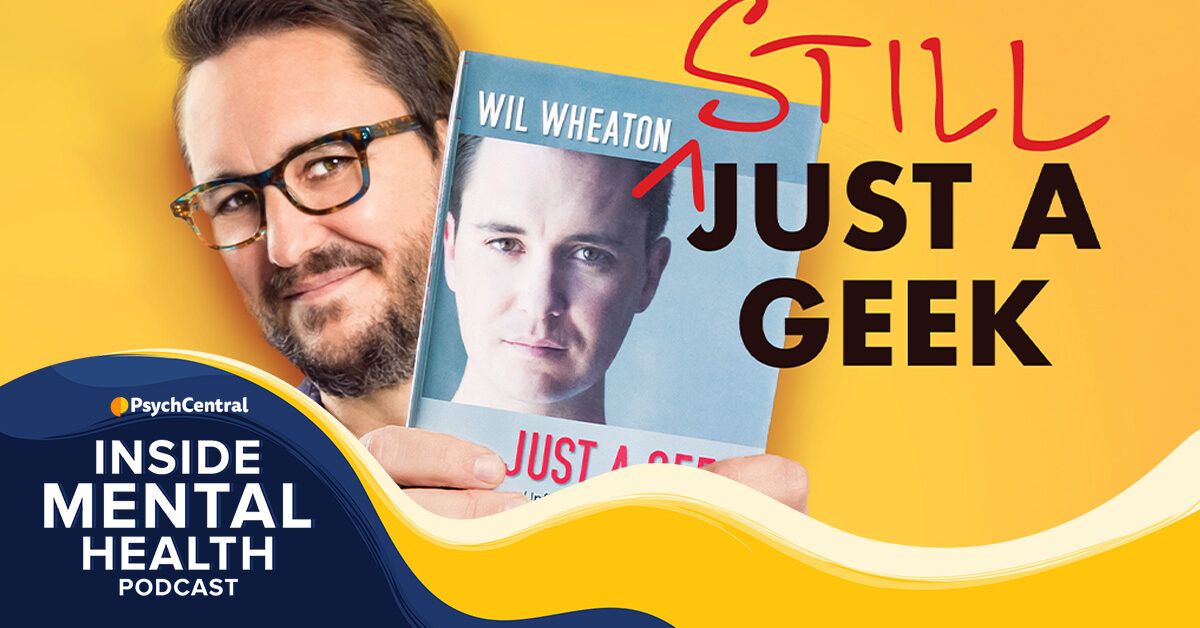
That uncomfortable conversation is at the center of the Inside Mental Health podcast episode “Advice I’d Give My Younger Self with Wil Wheaton.” Host Gabe Howard speaks with actor, writer, and narrator Wil Wheaton about revisiting his 2004 memoir, Just a Geek, for the expanded 2022 book Still Just a Geek: An Annotated Memoir.
This is not a standard celebrity victory lap. It is an examination of memory, shame, accountability, childhood trauma, mental health, and growth. Wheaton does not pretend his earlier words belonged to a mysterious stranger named “Definitely Not Wil.” He acknowledges them, challenges them, and tries to understand the hurting person who wrote them.
Why This Wil Wheaton Podcast Episode Matters
Different audiences know Wheaton as Gordie Lachance in Stand by Me, Wesley Crusher in Star Trek: The Next Generation, or the mischievous fictional Wil Wheaton on The Big Bang Theory. He also built a career as a blogger, author, audiobook narrator, host, and ambassador for tabletop games and geek culture.
The podcast moves beyond that résumé. Wheaton discusses surviving childhood exploitation and emotional abuse, living with post-traumatic stress, anxiety, and depression, and growing up where mental illness was treated as weakness. Therapy and medication could have helped him earlier, he explains, but family shame delayed care.
That context changes the meaning of “advice to my younger self.” The episode is not about cute warnings concerning auditions or fashion. It asks a harder question: How do you look back honestly without turning reflection into another form of punishment?
Still Just a Geek: A Memoir Talking Back to Its Past
Just a Geek collected writing from a period when Wheaton was rebuilding his identity after early fame and career disappointment. Nearly two decades later, he returned to the text with extensive annotations and new material. The format allows several versions of one person to share the page: the child actor, the frustrated adult writer, and the older man with more therapeutic and emotional tools.
Why Annotation Is More Powerful Than Quiet Revision
A traditional revision can make mistakes disappear. An annotation leaves the original visible and adds context, disagreement, or correction. Wheaton does not airbrush his history until it appears he arrived in adulthood fully enlightened and carrying a reusable water bottle. Readers see the distance between who he was and who he is trying to become.
In the episode, he describes initially feeling embarrassed and impatient with his younger self. He later recognized that contempt was not the same as growth. Understanding the pain and limitations of his past self does not excuse harmful choices; it makes honest examination possible.
Growth Should Leave Evidence
One of the conversation’s strongest ideas is that a person’s “best” changes. If your emotional skills and judgment at 49 are identical to what they were at 28, that may be stagnation wearing a nice jacket. Mature accountability can hold two truths together: “I caused harm” and “I can become better.” Without the first, reflection becomes denial. Without the second, it becomes permanent self-condemnation.
Self-Compassion Is Not a Get-Out-of-Guilt-Free Card
Self-compassion is sometimes mistaken for rewarding bad behavior. In practice, it can make accountability more sustainable. People who believe admitting a mistake will destroy their identity often defend, minimize, blame, or disappear into the shrubbery. People who can tolerate imperfection are better able to examine what happened and change.
Wheaton’s approach separates shame from responsibility. Shame says, “I am irredeemably bad.” Responsibility says, “I did something harmful, and I must respond differently.” The first freezes a person in place. The second creates a task.
Regret Becomes Useful When It Changes Behavior
The podcast addresses insensitive language in Wheaton’s earlier writing, including misogynistic and homophobic material. He explains that ironic intent did not make the impact harmless. His broader point is that new knowledge creates new obligations. Once you understand why behavior is harmful, you must listen, correct it, make amends where possible, and choose differently.
Accountability Needs Humility
When discussing allyship, Wheaton argues that support should not become a performance starring the ally. People with influence can challenge harmful behavior, amplify others, and direct resources toward less-supported communities. They do not need a parade or a “World’s Best Supportive Person” mug.
The same principle applies to apologies. A sincere apology centers the harm and the repair needed. It does not pressure the injured person to offer immediate forgiveness so the apologizer can feel emotionally moisturized.
Trauma, Fame, and the Child Behind Wesley Crusher
The discussion of Wesley Crusher gives the episode much of its emotional weight. Wheaton was a teenager playing a gifted, socially awkward character in a major franchise. Some fans and commentators directed intense hostility toward Wesley and, by extension, the young actor portraying him.
Wheaton says that criticism echoed painful messages he already received at home. Public ridicule did not land on a secure foundation supported by reassuring adults; it reinforced an existing wound.
A Child Actor Is Still a Child
The episode offers a necessary reminder: a young performer is not a fictional character, marketing asset, or communal dartboard. Children in public life can be talented professionals while still lacking adult emotional protection. Mockery may be packaged as fandom or comedy, but the nervous system receiving it does not care about the packaging.
Wheaton also speaks warmly about the support he found in his Star Trek family. Safe relationships can challenge the belief that love must be earned through performance or obedience.
Reclaiming Wesley Without Letting Critics Define Him
Later, Wheaton heard from fansespecially neurodivergent peoplewho recognized themselves in Wesley’s intelligence, awkwardness, enthusiasm, and unintended overstepping. Those messages expanded the picture beyond the loudest critics. The healing shift was not that everyone suddenly loved Wesley. It was that another person’s opinion no longer functioned as a verdict on Wheaton’s worth.
What Listeners Can Learn From Wil Wheaton’s Advice
Speak to Your Past Self With Accuracy and Kindness
Kindness without accuracy becomes avoidance. Accuracy without kindness becomes cruelty. Name what happened, identify what you did not yet understand, and decide what your present self can do differently.
Do Not Confuse Explanation With Excuse
Trauma, family patterns, social conditioning, and untreated mental illness may explain behavior without erasing its effects. Explanations reveal where change is needed; excuses are designed to end the conversation.
Let Embarrassment Prove You Have Changed
Cringing at an old opinion can be evidence of development. The goal is not to build a vacation home inside the cringe. Learn, repair what you can, and move forward.
Seek Qualified Mental Health Support
Wheaton repeatedly emphasizes therapy, appropriate medication, and breaking family silence around mental illness. A podcast may offer recognition and useful language, but it cannot diagnose or treat an individual listener.
Measure Change Through Practice
Personal growth is not a speech about personal growth. It appears in repeated choices: how you react when corrected, whether an apology includes repair, whose experiences you hear, and what you do when nobody applauds.
Why the Conversation Feels Refreshingly Human
Celebrity interviews often sand away contradiction. A guest becomes triumphant or broken, inspiring or scandalous. This episode allows a more believable combination. Wheaton can be proud of his work and grieve what fame cost him. He can condemn earlier behavior while feeling compassion for the person who behaved that way. He can love Star Trek while acknowledging pain connected to it.
Gabe Howard keeps the conversation from becoming a solemn lecture aboard the USS Self-Improvement. In one revealing moment, Howard forgets Stand by Me while discussing Wheaton’s first major role. He owns the mistake instead of hiding itan accidental demonstration of the episode’s central lesson.
The exchange does not promise a spotless final version of adulthood. Healing, accountability, listening, and becoming less defensive are ongoing work. Apparently, there is no graduation ceremony, which feels administratively unfair but emotionally accurate.
Experiences Inspired by the Podcast: Five Ways to Meet Your Younger Self
The themes in “Advice I’d Give My Younger Self with Wil Wheaton” become most useful when they move beyond admiration and into practice. These exercises are not substitutes for therapy, and anyone with significant trauma should approach memory work carefully.
Write an Annotated Page From Your Past
Find an old journal entry, email, social post, school essay, or note. Read it once without comment. Then add annotations from your present perspective. Mark where you lacked information, repeated someone else’s beliefs, protected yourself, acted unfairly, or showed strength you did not recognize.
The goal is not to roast your younger self like a celebrity at a comedy special. Write comments that are direct but humane: “This joke hurt people, even though you wanted approval,” or “You thought saying no would make you unlovable.” Those observations are more useful than “I was the worst.”
Separate the Apology From the Self-Punishment
Choose one past action you regret. Divide a page into impact, responsibility, and repair. Describe what another person may have experienced, name your choice without hiding behind intent, and identify one realistic repair. That might be an apology, replacing something damaged, changing a habit, or respecting that the person does not want contact.
Leave out dramatic promises to hate yourself forever. Self-hatred can look like moral seriousness while shifting the emotional work back to the injured person, who may then feel pressured to reassure you.
Identify an Old Voice That Still Sounds Like Truth
Write one recurring belief: “I am too awkward,” “I must earn rest,” or “A mistake makes me unworthy.” Ask who taught it to you, what evidence supports it, what contradicts it, and what you would tell a younger person who believed the same thing.
This echoes Wheaton’s realization that hostility toward Wesley reinforced messages from home. Understanding a belief’s source can reduce its authority. An old voice can be loud without being correct.
Define What “My Best” Means Today
Describe your best under three conditions: a good day, a difficult day, and a crisis day. On a good day, it may include focused work and thoughtful communication. On a difficult day, it may mean completing one priority and asking for help. During a crisis, it may mean staying safe, eating, taking prescribed medication, or contacting support.
This flexible definition avoids treating human capacity like a phone battery that must remain at 100 percent while fifteen emotional apps run in the background.
Choose One Future Annotation
Imagine yourself five years from now reviewing this week. What behavior would you hope to praise? What pattern would you hope to have interrupted? Choose one small action your future self could annotate with, “This is where things began to change.” It could be scheduling therapy, apologizing without defending yourself, setting a boundary, listening more carefully, or returning to a creative project.
The past cannot be rewritten, but your relationship with it can change. Today’s choices also determine what your future annotations will say.