

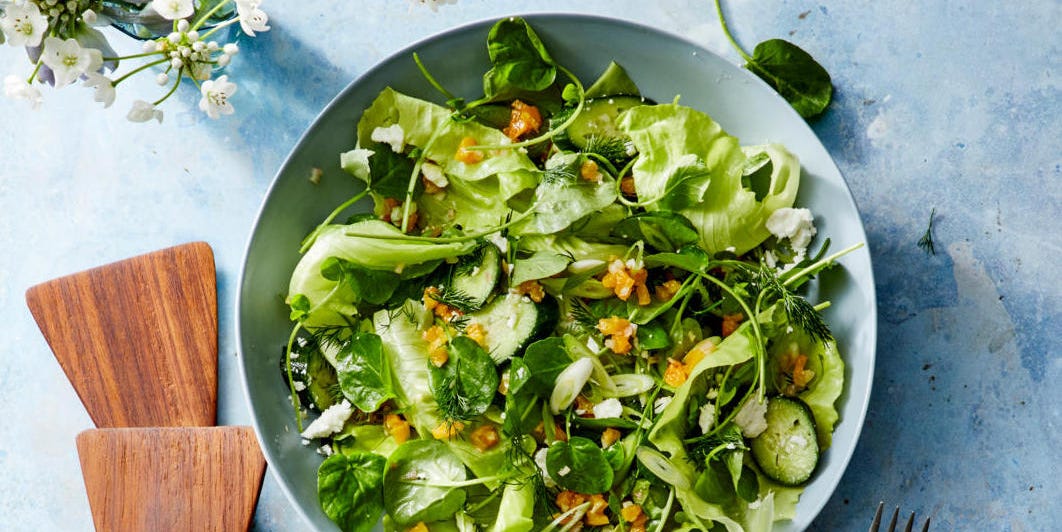
Spring has a habit of making everything look more ambitious. Flowers appear, windows open, and suddenly a bowl of leafy greens seems far more exciting than the heavy dinners that got us through winter. This spring green salad with apricot vinaigrette captures that mood perfectly: fresh, colorful, crisp, lightly sweet, and elegant without requiring you to attend culinary school or purchase tweezers for plating.
Tender butter lettuce and peppery watercress form the base. Cucumber, scallions, dill, and optional seasonal vegetables add crunch and garden-fresh flavor. Crumbled feta supplies a creamy, salty contrast. The real star, however, is the apricot vinaigrette, made by soaking chopped dried apricots in warm white wine vinegar before combining them with shallot, Dijon mustard, and olive oil.
The result is a lively homemade dressing with little bursts of softened fruit in every forkful. It tastes sophisticated, yet the entire salad can be ready in about 20 minutes. That is less time than it takes to debate whether the bag of forgotten spinach in the refrigerator is still “probably fine.”
Why This Is One of the Best Spring Salad Recipes
A memorable salad needs more than lettuce wearing a light mist of dressing. It needs contrast. This recipe delivers contrast through flavor, texture, color, and temperature without becoming cluttered.
Sweet and Tangy Apricot Vinaigrette
Dried apricots have concentrated sweetness and a pleasantly chewy texture. Pouring hot white wine vinegar over them softens the fruit and allows it to absorb acidity. After about 10 minutes, the apricot pieces become plumper, brighter, and better suited to a delicate salad.
Dijon mustard provides gentle heat while helping the oil and vinegar mixture cling to the leaves. Shallot contributes savory depth without the sharp punch of raw yellow onion. Together, the ingredients create a dressing that is fruity but not sugary, tart but not mouth-puckering, and interesting enough to make lettuce feel like the main event.
Layers of Fresh Spring Flavor
Butter lettuce is soft, mild, and slightly sweet. Watercress brings peppery energy, while dill and scallions add herbal and onion-like freshness. Thin cucumber slices provide cool crunch. Feta finishes the salad with saltiness and creaminess, preventing the flavors from drifting into fruit-salad territory.
Easy to Customize
This spring green salad is also an excellent framework rather than an inflexible formula. Add asparagus, snap peas, radishes, fresh peas, berries, toasted nuts, or grilled protein according to what is available. The vinaigrette is versatile enough to welcome substitutions without filing a formal complaint.
Spring Green Salad Recipe at a Glance
- Preparation time: 20 minutes
- Cooking time: About 2 minutes to warm the vinegar
- Total time: Approximately 20 minutes
- Yield: 6 to 8 side-dish servings
- Difficulty: Easy
- Best for: Easter, Mother’s Day, brunch, lunch, cookouts, showers, and weeknight dinners
Ingredients for Spring Green Salad With Apricot Vinaigrette
For the Apricot Vinaigrette
- 1/4 cup dried apricots, finely chopped
- 1/4 cup white wine vinegar
- 1 small shallot, finely minced
- 1 teaspoon Dijon mustard
- 2 tablespoons extra-virgin olive oil
- 1/4 teaspoon kosher salt, plus more to taste
- Freshly ground black pepper, to taste
For the Spring Green Salad
- 1 large head butter lettuce, leaves separated
- 2 small bunches watercress, thick stems removed
- 1 Persian cucumber, thinly sliced
- 2 scallions, thinly sliced
- 1/4 cup fresh dill, roughly chopped
- 1 ounce feta cheese, crumbled
Optional Seasonal Additions
- 1 cup blanched asparagus pieces
- 1 cup thinly sliced sugar snap peas
- 1/2 cup shelled fresh or thawed frozen peas
- 3 to 4 radishes, shaved into thin rounds
- 1/3 cup toasted pistachios, almonds, or walnuts
- 1 cup sliced strawberries
- Fresh mint, parsley, chives, or pea shoots
How to Make Spring Green Salad With Apricot Vinaigrette
Step 1: Wash and Thoroughly Dry the Produce
Wash your hands and clean the preparation area before handling the vegetables. Rinse lettuce, watercress, cucumber, scallions, dill, and any optional produce under cool running water. Do not use soap or household detergent on produce.
Dry the greens thoroughly in a salad spinner or between clean kitchen towels. This step matters because vinaigrette slides off wet leaves. Excess water also dilutes the dressing, turning its bright apricot flavor into a vague rumor.
Step 2: Soften the Dried Apricots
Place the finely chopped apricots in a heat-safe bowl. Add the white wine vinegar to a small saucepan and bring it just to a simmer. You need small bubbles around the edge, not a dramatic rolling boil.
Pour the hot vinegar over the apricots and let them stand for 10 minutes. During this brief soak, the fruit softens and absorbs some of the vinegar’s tartness.
Step 3: Build the Apricot Vinaigrette
In a second small bowl, combine the minced shallot, Dijon mustard, salt, and a few grinds of black pepper. Use a slotted spoon to transfer the softened apricot pieces to the mustard mixture.
Measure 2 teaspoons of the apricot-infused vinegar and add it to the bowl. Reserve the remaining vinegar for another salad dressing, a quick cucumber pickle, or discard it. Adding the full amount would overwhelm the delicate greens.
Slowly whisk in the olive oil until the vinaigrette looks glossy and lightly thickened. Taste it on a lettuce leaf rather than directly from a spoon. Dressing can taste intense by itself because it is designed to season an entire bowl of vegetables.
Step 4: Prepare Optional Spring Vegetables
Raw snap peas and radishes can be sliced and added directly. Fresh peas, green beans, or asparagus benefit from brief blanching.
Bring a pot of salted water to a boil. Add the vegetables and cook only until bright green and crisp-tender, usually 1 to 3 minutes depending on size. Transfer them immediately to ice water, drain well, and pat dry. The goal is a cheerful snap, not the exhausted texture of vegetables that have been through a three-hour meeting.
Step 5: Assemble the Salad
Tear large butter lettuce leaves into comfortable bite-size pieces. Place them in a wide salad bowl with the watercress, cucumber, scallions, dill, and any optional vegetables.
Start with about two-thirds of the vinaigrette. Toss gently with clean hands or salad servers, lifting the greens from the bottom so the dressing is distributed rather than pooled. Add more vinaigrette only if needed.
Sprinkle the feta over the dressed salad and toss once or twice more. Serve immediately while the leaves are crisp and the apricot pieces are evenly scattered.
Expert Tips for a Better Spring Green Salad
Chop the Apricots Finely
Small pieces soften more evenly and spread throughout the salad. Large chunks tend to fall to the bottom, where one fortunate diner discovers an apricot treasure chest while everyone else receives lettuce.
Use a Mild Vinegar
White wine vinegar has enough acidity to wake up the dressing without covering the fruit. Champagne vinegar is an excellent substitute. Apple cider vinegar works, but it creates a more rustic and assertive flavor.
Dress the Salad at the Last Minute
Tender spring greens wilt quickly once coated with salt and acid. Prepare the ingredients in advance, but keep the dressing separate until shortly before serving.
Use a Large Mixing Bowl
Greens need room to move. A crowded bowl encourages aggressive stirring, bruised leaves, and cucumber slices escaping onto the counter. Toss in a spacious bowl and transfer the salad to a serving platter afterward.
Balance Every Forkful
The salad should contain something soft, something crisp, something sweet, something salty, and something acidic. Before serving, taste a forkful containing lettuce, feta, cucumber, and apricot. Adjust with salt, pepper, vinegar, or olive oil as necessary.
Ingredient Substitutions and Variations
Greens
Replace watercress with baby arugula for a similar peppery quality. Baby spinach creates a milder salad, while chopped romaine adds extra crunch. A combination of Bibb lettuce and arugula is especially reliable when watercress is unavailable.
Cheese
Goat cheese provides a tangier, creamier result. Shaved Parmesan gives the salad a savory edge. For a dairy-free version, omit the cheese and add toasted pistachios or avocado for richness.
Fruit
Dried peaches, golden raisins, cranberries, or chopped dates can replace apricots, though each changes the flavor. Fresh strawberries or blueberries may be added to the salad itself, but dried fruit is preferable in the vinaigrette because it absorbs the warm vinegar.
Protein
Turn the recipe into a complete lunch with grilled chicken, salmon, shrimp, hard-boiled eggs, chickpeas, lentils, or white beans. A cup of cooked farro or quinoa adds substance while preserving the salad’s fresh character.
Crunch
Toasted almonds, pistachios, walnuts, sunflower seeds, or pepitas all work well. Add them immediately before serving so they remain crisp.
What to Serve With Apricot Vinaigrette Salad
This spring green salad is light enough to accompany rich entrées and flavorful enough to sit beside simple ones. It pairs particularly well with roasted chicken, glazed ham, grilled salmon, seared shrimp, lamb chops, quiche, or vegetable tarts.
For brunch, serve it with deviled eggs, smoked salmon, biscuits, or a savory breakfast casserole. For lunch, add crusty bread and a protein. At a spring cookout, place it beside grilled chicken and potato salad to provide a fresh counterpoint.
The pale greens, pink radishes, orange apricot pieces, and white feta also make the dish naturally attractive on an Easter or Mother’s Day table. No edible flowers are required, though nobody will object if a few appear.
Make-Ahead and Storage Instructions
The apricot vinaigrette can be prepared up to three days ahead and refrigerated in a covered container. Olive oil may thicken in the refrigerator, so let the dressing sit at room temperature for 15 to 20 minutes and whisk it again before using.
Wash and dry the greens up to one day ahead. Store them in a container lined with clean paper towels, which help absorb excess moisture. Slice the cucumber, scallions, and radishes several hours ahead and refrigerate them separately.
Once dressed, the salad is best eaten immediately. Leftovers remain safe when promptly refrigerated, but the greens will gradually soften. They may still taste good the next day, although nobody will mistake them for newly harvested lettuce.
Common Spring Salad Problems and How to Fix Them
The Dressing Tastes Too Sharp
Whisk in another teaspoon of olive oil or a small amount of honey. Also check whether too much of the soaking vinegar was added. The recipe needs only a little of that concentrated liquid.
The Dressing Tastes Too Sweet
Add a few drops of vinegar, another pinch of salt, or a little more Dijon mustard. Peppery watercress and salty feta will also reduce the perception of sweetness.
The Salad Is Soggy
Wet greens, too much dressing, or early assembly are the usual causes. Dry the leaves carefully, add vinaigrette gradually, and toss immediately before serving.
The Flavors Seem Flat
A salad that tastes dull often needs salt rather than more dressing. Add a small pinch, toss, and taste again. Fresh lemon zest, extra dill, or cracked black pepper can also brighten the bowl.
The Vinaigrette Separates
Separation is normal for a homemade dressing. Whisk it vigorously or shake it in a tightly sealed jar. Dijon mustard helps keep the oil and acidic ingredients combined, but the mixture may still need a quick reunion before serving.
Practical Experience: What Home Cooks Learn From Making This Salad
The experience of making spring green salad with apricot vinaigrette often begins with mild skepticism. Dried fruit in dressing can sound like the sort of idea invented to make a restaurant menu longer. Then the warm vinegar hits the chopped apricots, the fruit softens, and the logic becomes clear. Instead of sitting on top of the salad as chewy decorations, the apricots become part of the vinaigrette itself.
The Smallest Step Makes the Biggest Difference
Soaking the apricots is the step home cooks are most tempted to shorten. Ten minutes feels unnecessary when dinner is already waiting. Yet unsoaked fruit remains firm and separate from the dressing, while softened apricot distributes its sweetness more evenly. The waiting time is also useful for washing greens, slicing cucumber, and crumbling feta, so it does not actually delay the meal.
Dry Greens Change the Entire Result
Another lesson arrives after comparing carefully dried greens with leaves that are merely shaken over the sink. Dry lettuce holds a thin, even coating of vinaigrette. Damp lettuce sends the dressing to the bottom of the bowl, where it forms a shallow pond that nobody ordered. A salad spinner is helpful, but clean towels work well when the leaves are handled gently.
More Dressing Is Not Always Better
The first instinct is often to pour in every drop of vinaigrette. After all, homemade dressing is delicious, and leaving some behind feels emotionally complicated. However, butter lettuce and watercress require only a light coating. Beginning with two-thirds of the dressing makes it easier to preserve the greens’ texture and add more only when necessary.
This method also reveals an important difference between restaurant-style salad and the overdressed version many people make at home. A successful vinaigrette should season the vegetables, not hide them beneath an oil-based winter coat.
The Best Variations Preserve Contrast
Experiments with extra ingredients are most successful when they support the salad’s balance. Radishes contribute peppery crunch. Snap peas add sweetness and crispness. Asparagus gives the bowl more substance. Toasted pistachios provide nuttiness, while strawberries reinforce the fruity dressing.
Problems begin when too many additions compete for attention. Avocado, berries, nuts, grains, chicken, eggs, and three cheeses may all be excellent individually, but together they turn a graceful spring salad into an overcrowded neighborhood meeting. Choosing two or three additions usually produces a better result.
The Salad Works Best as a Flexible Template
Perhaps the most useful experience is realizing that the recipe does not depend on one perfect farmers’ market visit. Regular watercress can replace a specialty variety. Arugula can replace watercress entirely. Frozen peas can stand in for fresh peas, and a common cucumber works when Persian cucumbers are unavailable.
What matters is preserving the central structure: tender greens, crisp vegetables, fresh herbs, a salty element, and a fruity vinaigrette with enough acidity to connect everything. Once that structure is understood, the recipe becomes useful throughout spring rather than being made once and forgotten.
It Often Wins Over Reluctant Salad Eaters
Plain green salads can feel like an obligation placed beside the “real” food. Apricot vinaigrette changes that perception because it offers recognizable sweetness, savory shallot, creamy feta, and noticeable texture. The bowl no longer reads as a collection of responsible choices. It simply tastes good.
That may be the salad’s greatest practical achievement. It feels bright and wholesome without behaving like a lecture. Guests return for another serving because they enjoy it, not because someone is monitoring their vegetable intake from across the table.
Final Thoughts
This spring green salad with apricot vinaigrette succeeds because every ingredient has a clear job. Butter lettuce provides tenderness, watercress adds peppery bite, cucumber supplies crunch, herbs create freshness, feta contributes salt, and apricot vinaigrette ties everything together with sweet-tart flavor.
It is quick enough for a weekday lunch, attractive enough for a celebration, and flexible enough to accommodate whatever spring vegetables look best. Prepare the components ahead, dry the greens carefully, dress them lightly, and serve the salad immediately. Then enjoy the rare recipe that makes a large bowl of leaves disappear before the bread basket.