

Long before satellite maps, documentary crews, and travelers armed with review apps, the unexplored edges of the world were crowded with extraordinary inhabitants. Ancient writers, medieval mapmakers, village storytellers, and wandering merchants described hidden races with backward-facing feet, faces on their chests, supernatural strength, or an inconvenient habit of kidnapping anyone who ignored local warnings.
These legendary Earth peoples were not simply monsters invented to frighten children. Their stories helped communities explain unfamiliar landscapes, cultural outsiders, dangerous wilderness, childbirth, famine, warfare, and the uncertain boundary between human society and untamed nature. They also reveal an old habit humanity has never completely abandoned: when facts are unavailable, imagination happily clocks in for the night shift.
The following list explores ten mythical races and folklore beings from Europe, Africa, Asia, and South America. Some appear in ancient literature, others survive through oral tradition, and a few have inspired speculative connections with archaeology. They should not be confused with scientifically recognized human populations or modern ethnic communities.
Why Ancient Cultures Imagined Legendary Peoples
To ancient Greek and Roman geographers, the known world was surrounded by terra incognitaterritory that had not been reliably mapped. Writers filled these blank spaces with ideal kingdoms, enormous monsters, and unusual human societies. Medieval bestiaries later placed many of these legendary peoples alongside lions, dragons, and other creatures believed to inhabit distant lands.
This imaginary geography was rarely random. A people’s strange anatomy often symbolized something about the land where they supposedly lived. Huge feet offered protection from a blazing sun. Backward feet confused trackers in dense forests. Wild, hairy guardians represented the power of mountains and woodland. The farther a story traveled from its source, the more impressive its residents tended to become. A traveler might report seeing an unfamiliar group; several retellings later, everyone had moved their faces into their torsos.
Ancient and medieval audiences therefore used legendary races as a combination of anthropology, entertainment, moral instruction, and creative guesswork.
1. Abarimon: The Backward-Footed Mountain Runners
The Abarimon were said to inhabit a secluded valley near Mount Imaus, a name ancient writers used for part of the great mountain systems of Central Asia. Their most memorable feature was a pair of feet turned backward. This anatomical arrangement sounds like a serious disadvantage when buying sandals, yet the Abarimon supposedly ran with astonishing speed.
Pliny the Elder included them in his Natural History, describing swift people who lived among wild animals. According to the tale, the atmosphere of their valley had another unusual property: anyone who breathed it for too long became unable to survive in any other air. The Abarimon could not leave their homeland, transforming their valley into both a sanctuary and a prison.
Backward-facing feet later became a widespread folklore motif. They appear in stories about forest spirits across parts of Asia and Latin America, where they often serve one practical purpose: confusing anyone attempting to follow their tracks. The Abarimon legend may reflect ancient ideas about inaccessible mountain communities, combined with the timeless traveler’s temptation to improve a story before reaching the next tavern.
2. Abatwa: The Tiny Hunters Beneath the Grass
In stories associated with southern African folklore, the Abatwa are minute humanlike hunters capable of hiding beneath blades of grass and traveling on ants. They carry tiny bows, live nomadically, and are extremely sensitive about their size.
One popular version says that a person encountering an Abatwa may be asked, “When did you first see me?” The safest answer is to claim the little hunter was spotted from a distant mountain. Saying, “I noticed you just now,” would imply that the Abatwa was too small to see earlierand mythical archers are not famous for accepting accidental insults with calm professionalism.
The folklore should be separated from the history of real communities. “Abatwa” has also been used in connection with San-descended groups in southern Africa. Harvard’s Peabody Museum has documented people preserving and reviving Abatwa or San ancestry after generations of displacement and cultural pressure. The legendary tiny hunters and living communities are therefore not interchangeable, even though names and stories may overlap.
3. Anthropophagi and Blemmyes: A Famous Folklore Mix-Up
Popular lists sometimes describe the Anthropophagi as headless people whose eyes and mouths appeared on their chests. Historically, however, two different legendary groups have been blended together.
Anthropophagi Were the “Man-Eaters”
The Greek-derived name Anthropophagi essentially means “human eaters.” Ancient writers applied it to alleged cannibal peoples living beyond familiar civilization. Such accounts were often based on rumor, cultural hostility, or attempts to portray distant communities as frightening outsiders.
The Headless People Were Blemmyes
The beings with faces on their torsos were more commonly called Blemmyes, Blemmyae, or akephaloi. Herodotus, Pliny, and later writers placed them in remote regions of Africa. Medieval artists loved them, perhaps because ordinary humans were apparently not challenging enough to draw.
There was also a real historical people known as the Blemmyes in northeastern Africa. Greek and Roman descriptions of that community gradually mixed with the headless-human tradition. The resulting legend demonstrates how geography, prejudice, misunderstood clothing or posture, and repeated storytelling could turn real populations into mythical anatomy lessons.
4. Basajaun: The Hairy Lord of the Basque Forest
Basque mythology gives us the Basajaun, whose name is commonly translated as “Lord of the Forest.” He is usually portrayed as a large, powerfully built, extremely hairy being living in mountain caves and deep woodlands of the western Pyrenees.
Despite his intimidating appearance, Basajaun is not merely a rampaging wild man. Many stories present him as a protector of livestock and a guardian of nature. His cries may warn shepherds of approaching storms or wolves. Other traditions credit Basajaunak with possessing early knowledge of agriculture, milling, metalworking, and construction.
Humans do not always receive this knowledge through polite classroom instruction. Folktales frequently describe people tricking the Basajaun, spying on him, or stealing his technological secrets. This makes him both a symbol of wilderness and a mythical teacher. Civilization advances, according to these stories, because one brave human looked at a giant forest guardian and thought, “I could probably borrow that farming technique without asking.”
The Basajaun remains an important figure in Basque cultural storytelling, representing the mountains’ strength, generosity, and refusal to become fully domesticated.
5. Dziwożony: The Dangerous Wild Women of Slavic Folklore
Dziwożonysingular dziwożonabelong to Polish and broader Slavic folklore. They were supernatural wild women associated with forests, caves, rocky places, lakes, and swamps. Traditional descriptions often gave them long tangled hair, strange clothing, distorted bodies, or exaggerated physical features.
Unlike Basajaun, the Dziwożony were rarely friendly woodland neighbors. They were particularly feared by mothers and pregnant women. Some tales accused them of stealing newborn babies and leaving weak or uncanny changelings behind. These stories likely expressed historical anxieties surrounding pregnancy, infant illness, disability, maternal mortality, and the vulnerability of families living far from medical assistance.
The legends sometimes claimed that certain women became Dziwożony after dying under socially troubling circumstances, including pregnancy or childbirth. That detail shows how folklore could preserve community fears while also enforcing traditional expectations about marriage, motherhood, and acceptable behavior.
Modern readers may find the descriptions grotesque, but beneath the horror is a deeply human concern: when a child became ill and no medical explanation existed, families created a story capable of giving shape to their fear.
6. Ebu Gogo: Flores Island’s Mysterious Little People
On the Indonesian island of Flores, oral traditions describe the Ebu Gogo as short, hairy, pot-bellied beings with broad faces and protruding ears. They supposedly walked awkwardly, murmured in their own manner of speech, and could imitate human words without necessarily understanding them.
The Ebu Gogo were often portrayed as troublesome rather than magical. Stories accuse them of stealing food and behaving without restraint. In some versions, conflict with local villagers eventually led to their disappearance.
The legend gained international attention after scientists announced the discovery of Homo floresiensis, a small-bodied extinct human species whose remains were found in Liang Bua Cave on Flores. The resemblance between a real small hominin and folklore about little forest people encouraged speculation that the Ebu Gogo stories preserved a distant cultural memory.
It is an irresistible possibilitybut still only a possibility. Current scientific evidence indicates that Homo floresiensis disappeared tens of thousands of years ago. No direct evidence proves that the Ebu Gogo tradition records encounters with that species. Myth and fossil happen to share an island, but they have not yet agreed to provide matching identification cards.
7. Fir Bolg: Ireland’s Defiant Predecessors
The Fir Bolg appear in medieval Irish mythological tradition as inhabitants of Ireland before the arrival of the Tuatha Dé Danann. They belong to a complex sequence of legendary migrations preserved in works commonly grouped with the Book of Invasions.
Later explanations connected the name Fir Bolg with “men of bags.” One story says their ancestors were enslaved in Greece and forced to carry soil in leather bags. They eventually escaped, supposedly converting the bags into boats and sailing to Ireland. It is the sort of transformation that makes modern luggage warranties look painfully unimaginative.
In Ireland, the Fir Bolg divided the land into territories and established kingship. Their rule ended after the First Battle of Mag Tuired, where they fought the supernatural Tuatha Dé Danann. Although defeated, they were remembered as courageous opponents. Their champion Sreng wounded Nuada, leader of the Tuatha Dé, while their king Eochaid mac Eirc became an important figure in later retellings.
The Fir Bolg are best understood as a literary people shaped by medieval efforts to organize Ireland’s legendary past. They should not automatically be treated as a securely identified prehistoric population.
8. Fomorians: Ireland’s Powers of Chaos
The Fomorians are among the most formidable beings in Irish mythology. Early traditions present them as supernatural opponents of several waves of settlers, especially the Tuatha Dé Danann. Later storytellers often portrayed them as monstrous giants, raiders from the sea, or embodiments of destructive natural forces.
Their most famous leader is Balor, whose deadly eye could devastate anyone exposed to its gaze. Balor’s grandson Lugh eventually kills him during the Second Battle of Mag Tuired, helping the Tuatha Dé Danann defeat Fomorian domination.
Calling the Fomorians simply “evil,” however, flattens a more complicated tradition. Some members form relationships with the Tuatha Dé Danann, and several major figures possess ancestry from both groups. The conflict can be interpreted as a struggle between opposing but interconnected powers: cultivation and wilderness, social order and destructive abundance, light and darkness, or younger gods and older cosmic forces.
Medieval scholars sometimes reimagined the Fomorians as foreign pirates, possibly reflecting later historical experiences with maritime raiders. The legends therefore changed with Ireland itself, absorbing new political fears into very old supernatural battles.
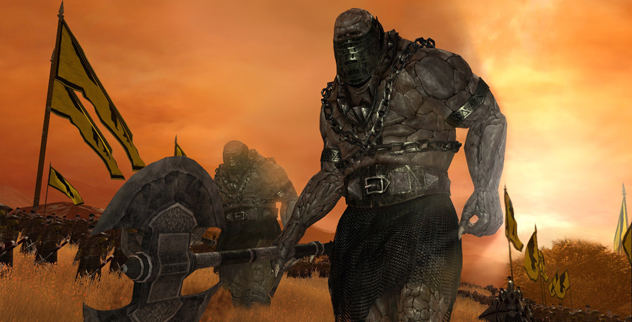
9. Giants: The Worldwide Heavyweights of Myth
Giants appear in an extraordinary range of cultures. Greek mythology has the earthborn Gigantes, who challenged the Olympian gods. Norse traditions describe jötnar, powerful beings linked with wilderness, ancient forces, and cosmic conflict. Biblical literature includes Goliath, while European folklore fills mountains, coastlines, and ruined structures with oversized builders.
Giants often represent the world before human order. They shape valleys, throw boulders, build impossible monuments, and fight younger gods or heroes. Their enormous bodies provide convenient explanations for enormous features in the landscape. A strangely balanced rock may be a geological formation to a scientist, but folklore knows perfectly well that a giant dropped it while arguing with another giant.
In Greek art, the Gigantomachythe battle between the Olympians and Giantsbecame a major symbol of order defeating rebellion. Monumental works such as the Pergamon Altar turned the conflict into political imagery, allowing rulers to compare their victories with those of Zeus and Athena.
Giants remain popular because scale instantly creates drama. A human hero fighting another human is a duel. A human hero fighting someone the size of an apartment building is a legend.
10. Salvaje: The Wild People of the South American Forest
The final entry is the most difficult to define. Salvaje is a Spanish word meaning “wild” or “savage,” rather than the universally recognized name of one standardized mythological race. Accounts grouped under this label describe dangerous hairy wild people in parts of Venezuela, Colombia, and neighboring regions.
Some versions give these forest beings backward-facing feet, primitive shelters, crude weapons, and extraordinary strength. Similar characteristics appear in better-documented South American traditions involving forest guardians such as the Curupira, Boraro, Chullachaki, and other beings that mislead hunters by reversing tracks or imitating familiar people.
The shared motif reflects the psychological power of the tropical forest. Dense vegetation limits visibility, changes familiar sounds, hides tracks, and can leave even experienced travelers disoriented. A supernatural being with backward feet becomes a perfect explanation for a trail that seems to lead in the wrong direction.
These tales may also encode ecological rules. Hunters who take too much, disrespect animals, or enter forbidden places are punished by forest guardians. Beneath the frightening description lies a practical warning: the wilderness is not empty property, and anyone who treats it carelessly may discover that the forest has its own opinions.
What These Legendary Peoples Reveal About Humanity
Although these mythical races come from different regions, several patterns repeat. The beings at the edge of civilization possess reversed bodies, unusual size, strange language, supernatural knowledge, or an unstable relationship with ordinary humans. They embody everything familiar society believes it is not.
That contrast can be entertaining, but it can also expose ancient prejudice. Real foreign communities were sometimes transformed into monsters simply because travelers misunderstood their appearance, customs, or language. Studying legendary peoples responsibly therefore requires asking not only, “What did the creature look like?” but also, “Who told the story, and what did the storyteller fear?”
At their best, these legends preserve environmental wisdom, communal memory, and imaginative attempts to explain a mysterious world. At their worst, they turn unfamiliar humans into grotesque outsiders. Understanding both possibilities makes world mythology richer, more honest, and considerably more interesting.
Experiencing the World of Legendary Earth Peoples
Reading a list of mythical races is entertaining, but the subject becomes far more vivid when experienced through landscapes, museum objects, historical maps, oral storytelling, and regional art. A useful starting point is a medieval map or illustrated bestiary. Instead of looking only at the central cities and familiar coastlines, examine the margins. That is where mapmakers placed headless Blemmyes, enormous-footed Sciapods, dog-headed people, dragons, and warnings about regions beyond reliable knowledge.
The experience quickly changes the way a modern viewer understands maps. Today, maps promise accuracy. Medieval maps often combined geography, theology, history, morality, and imagination. Their legendary peoples were not decorative stickers randomly added during a slow afternoon. They helped organize the universe, showing where ordinary society ended and uncertainty began.
Museums offer another route into these traditions. Greek pottery depicting the Gigantomachy shows that mythology was not confined to books. Cosmic battles appeared on cups, jars, temples, funeral objects, and public monuments. Viewers can study how artists made Giants look powerful without simply enlarging them. Twisting bodies, flying weapons, dramatic poses, and crowded compositions turn myth into visual noisethe ancient equivalent of a blockbuster action sequence, only with fewer computer-generated explosions.
Landscape adds a different dimension. In the Basque Pyrenees, deep forests, caves, fog, sudden storms, and isolated grazing areas make the Basajaun legend feel geographically believable. The point is not to search behind every tree for a hairy metallurgy instructor. It is to notice how the environment shapes the story. A forest guardian makes emotional sense in a landscape where human survival has long depended on understanding animals, weather, and mountain terrain.
Flores provides an even more remarkable experience because folklore and paleoanthropology occupy the same island. Learning about Ebu Gogo stories before examining reconstructions of Homo floresiensis creates an immediate temptation to connect them. The responsible experience includes resisting that temptation long enough to separate confirmed evidence from imaginative possibility. Fossils establish that a small-bodied human species once lived on Flores. Oral tradition establishes that island communities told stories about small humanlike beings. A direct connection remains unproven, and that uncertainty is part of the fascination.
Irish legendary peoples are best experienced through narrative rather than isolated character summaries. Reading the Fir Bolg, Fomorians, and Tuatha Dé Danann as parts of a connected mythological cycle reveals alliances, family relationships, territorial claims, and repeated battles. The supposedly monstrous enemy may be an ancestor, relative, or former ruler. Irish mythology rarely behaves like a simple game in which good characters wear white and evil characters thoughtfully select black armor.
Finally, exploring legendary Earth peoples can become an exercise in media literacy. Compare an ancient source, a museum interpretation, a modern encyclopedia, and a popular list. Details will shift. Names may be confused, as happened with the Anthropophagi and Blemmyes. Speculation may quietly transform into “fact” after being copied across enough websites.
The most rewarding experience is therefore not deciding whether every creature existed. It is following the journey of a story: from oral warning to written account, from manuscript illustration to internet list, and from local tradition to global entertainment. That journey reveals something more durable than a backward footprint. It reveals how human beings build meaning when the world beyond the firelight remains unknown.