

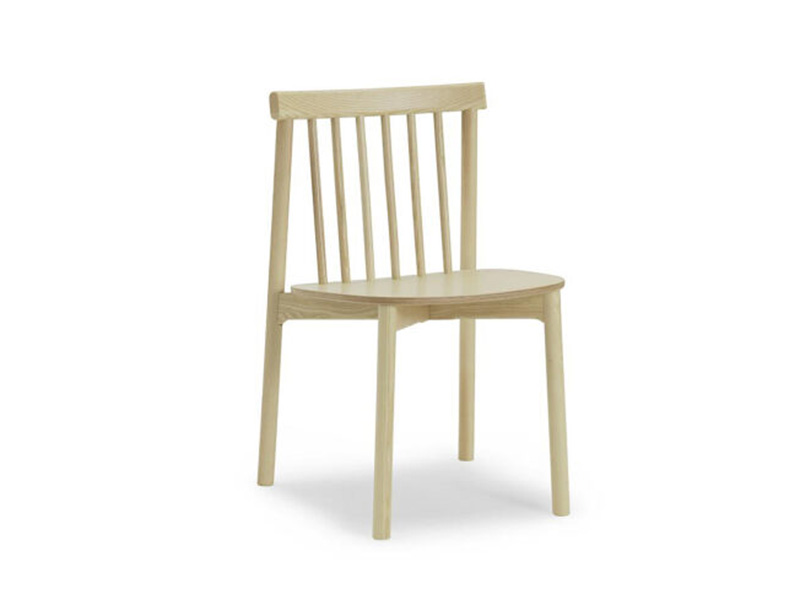
Some chairs are designed to disappear into a room. The Pind Chair Ash does the opposite: it walks in, straightens its collar, and quietly proves that simple lines can still have personality. The Pind collection from Normann Copenhagen is designed by Simon Legald, introduced in 2022, and built from solid wood plus ash plywood. It is a clear nod to Shaker-inspired furniture, but with a modern Danish accent that keeps it from feeling like a museum piece.
That balance matters. In American design coverage, the best dining chairs are usually praised for three things: clean lines, comfort, and the ability to play nicely with different interiors. Editors at Architectural Digest, House Beautiful, Veranda, and Apartment Therapy keep returning to that same formula because it works in real homes, not just in glossy photos. The Pind Chair Ash lands squarely in that sweet spot.
What the Pind Chair Ash Really Is
At first glance, the chair looks almost understated. Look again, and the details start doing the talking. The back is made from slender vertical elements that echo classic ladder-back and Shaker traditions, while the overall silhouette stays crisp and contemporary. Retail and design listings describe the Pind chair as a modern interpretation of classic Shaker chairs, with gently curved lines and a refined, light expression that makes the wood feel less heavy and more architectural.
The ash version is especially appealing because ash wood brings a bright, pale tone with visible grain, which gives the chair warmth without making it look bulky. Bob Vila describes ash as light in color, surprisingly lightweight for a hardwood, strong, stiff, and shock-resistant, while The Spruce notes that ash is a light, bright wood often used when designers want a fresh, natural look. That combination is a big part of why ash remains such a favorite in furniture.
A Shaker spirit, without the Sunday sermon
The Shaker influence is not just a cute design label. In U.S. design writing, Shaker furniture is repeatedly associated with honesty, utility, simplicity, and craftsmanship. Veranda and HGTV both emphasize that the style endures because it strips away fluff and keeps the essential structure beautiful. That same philosophy shows up in the Pind Chair Ash: no visual confetti, no overworked ornament, just a form that earns attention by being well made.
That is one reason the chair feels current even when trends shift around it. Remodelista has highlighted the return of Shaker-inspired design, and American design editors continue to point toward pieces with quiet profiles and honest materials as long-term winners. The Pind Chair Ash fits that wave without shouting about it. It does not beg for likes; it gets them anyway.
Why Ash Wood Works So Well Here
Ash is a smart material for a chair like this because it gives the designer room to create a visually light object that still feels sturdy in daily use. Bob Vila notes that ash is strong, lightweight, and easy to stain or paint, which helps explain why it appears so often in cabinetry, flooring, sports gear, and furniture. In a dining chair, those traits matter. A chair has to move often, survive constant contact, and still look nice after the hundredth scoot across the floor.
Designers also love ash because the grain is legible without becoming loud. That means the wood contributes texture, not noise. In Scandinavian design coverage, The Spruce points out that light woods such as ash, beech, and pine are foundational to the look because they support an airy, natural palette. The Pind Chair Ash uses that advantage beautifully: it feels friendly in a bright kitchen, calm in a minimalist apartment, and polished enough for a more formal dining room.
Dimensions and proportions that make sense
Good chair design often comes down to geometry that behaves itself. Product listings for the Pind Chair Ash give it a height of about 81 cm, a seat height of 46 cm, a width of 50 cm, and a depth of 52 cm. Those dimensions place it in the practical range for dining use, where you want enough structure to feel stable, but not so much visual weight that the room starts feeling crowded.
The gently curved backrest is another detail that sounds small until you sit down. Retail descriptions call out the comfortable curve, and that is exactly the kind of thing that separates a merely pretty chair from one people actually keep using after dinner, after dessert, and after someone decides the conversation should become a two-hour event. Comfort in a dining chair is not a luxury; it is the reason guests stay.
Where the Pind Chair Ash Fits Best
In a dining room, the Pind Chair Ash works as a bridge piece. It can sit beside a rustic oak table without looking overly polished, or next to a modern slab-top table without looking too cute or retro. House Beautiful and Veranda repeatedly stress that well-chosen dining chairs should be stylish enough to matter but versatile enough to survive changing décor. That is the Pind Chair Ash in a sentence.
It is also strong in smaller rooms. Apartment Therapy’s dining-chair roundups and Remodelista’s chair guides make the same point in different ways: when space is limited, visual lightness is your friend. Slender frames, open backs, and honest wood tones help a room breathe. The Pind Chair Ash has exactly that kind of footprint, so it does not bulldoze a breakfast nook the way heavier upholstered chairs sometimes do.
For kitchens, the chair’s ash finish also plays well with white cabinets, stone counters, and natural textiles. HGTV’s guidance on dining and kitchen spaces keeps circling back to wooden chairs, neutral materials, and cozy, grounded finishes because those elements make daily life feel calmer and more lived in. The Pind Chair Ash fits that logic without needing a design manifesto taped to the fridge.
Styling It Without Overthinking Your Life
The best way to style the Pind Chair Ash is to let it keep its dignity. Pair it with a table that has one strong material story, then stop. If the table is visually heavy, the chair’s lighter ash tone can balance it. If the room is already full of pattern, the chair’s restrained profile gives the eye somewhere to rest. U.S. design magazines repeatedly celebrate furniture that brings restraint to rooms that would otherwise be trying too hard, and this chair was clearly built for that role.
Textiles help, too. A simple wool runner, linen napkins, or a woven pendant light can echo the chair’s material honesty without turning the room into a theme park for “natural textures.” The point is not to match everything; it is to let the chair’s ash grain show up as a quiet repeated note. When designers talk about timeless furniture, this is usually what they mean: enough warmth to feel human, enough structure to feel intentional.
What to Look for Before Buying
If you are comparing the Pind Chair Ash with other dining chairs, check three things first: seat comfort, table height clearance, and how much visual weight the chair adds to the room. The market is full of pretty chairs that look great for a week and then become annoying roommates. Reviews and editor-tested roundups from Apartment Therapy, Veranda, and Architectural Digest all suggest the same rule: buy the chair you can live with, not just the chair you can photograph.
Also pay attention to finish. Ash can be left light, lacquered, or stained, and each version changes the personality of the piece. A lighter finish leans breezy and Scandinavian; a darker stain leans more formal and grounded. That flexibility is one of the reasons ash shows up in so many modern furniture collections. It allows one design to move between moods without losing its shape.
Care and Longevity
Because the chair is wood, basic maintenance matters. The Spruce recommends dusting wood furniture every few days or at least weekly so dust does not scratch the surface, and Apartment Therapy advises using microfiber cloths or other gentle dry-cleaning methods before reaching for anything wet. In practical terms, that means the Pind Chair Ash will reward ordinary, boring care far more than dramatic “deep clean” energy.
Keep moisture under control, avoid abrasive cleaners, and wipe spills sooner rather than later. If the chair lives in a kitchen or breakfast nook, that is even more important, because food residue, steam, and repeated handling can slowly dull a finish. Nothing glamorous here; just the same sensible care that keeps any well-made wood furniture looking like an investment instead of a regret.
Experience Notes: Living with the Pind Chair Ash
Living with a chair like this is usually less about “Wow, what a chair” and more about “Why does this room suddenly feel better?” That is the quiet power of a well-resolved design object. The Pind Chair Ash brings structure to a room without hard edges dominating the scene. It gives you a visual line to follow, a grain pattern to notice, and a shape that feels purposeful every time you slide it back from the table. That repeated daily moment is where design earns its keep.
In real homes, a chair becomes part of choreography. People pull it out with one hand while balancing coffee in the other. Children twist sideways in it. Guests hang a jacket over the back. Someone inevitably uses it as a temporary side table for a book, a phone, or a bag of groceries. The Pind Chair Ash seems built for those ordinary life scenes because its form is calm enough to be forgiving and strong enough to take the abuse of everyday use. That is not flashy, but it is the kind of design most people actually need.
It also teaches a useful lesson about “character.” A lot of furniture tries to earn character by adding details that age badly. The Pind Chair Ash gets character the old-fashioned way: through proportion, material, and restraint. Ash wood gives it warmth. The Shaker lineage gives it honesty. The curved back gives it a human touch. Put together, those elements make the chair feel less like a trend item and more like a piece you could keep through several apartment moves, a renovation, and maybe one regrettable paint color decision.
Another experience people often notice is how well the chair settles into different design personalities. In one home, it may read rustic and warm; in another, it may read crisp and architectural. That flexibility is part of the appeal of Scandinavian-influenced wood seating: it is specific without being stubborn. If the rest of the room changes, the chair usually does not need to be replaced, which is good news for both the planet and the wallet. Furniture that survives style changes is usually the furniture worth buying in the first place.
There is also a tactile experience that photos never fully capture. Ash is one of those woods that feels crisp but not cold, and the chair’s smooth edges invite use rather than warning you away from it. That matters more than people admit. A dining chair is not just decoration; it is a daily interface. You touch it, move it, lean against it, and notice it when the room is quiet. The best compliment to a chair is not applause. It is forgetting you are sitting in a chair because everything about it already makes sense.
Over time, a chair like this becomes part of household rhythm. It catches the first cup of coffee in the morning, the last conversation at night, and the in-between moments that actually make a home feel lived in. Because the Pind Chair Ash has such a restrained profile, it tends to age with the room instead of fighting it. That is the real luxury here: not excess, but longevity.
Final Take
The Pind Chair Ash is not trying to be the loudest chair in the room. It is trying to be the one that still looks right ten years from now. With its Shaker-inspired silhouette, ash wood warmth, practical proportions, and calm modern presence, it earns that ambition. If the goal is a chair that feels timeless, easy to live with, and quietly smarter than it first appears, this one has a strong argument.
It is the kind of piece that does not need a dramatic reveal. It simply improves the room, one meal and one awkwardly dragged-back seat at a time. And honestly, that is a pretty good definition of good furniture.
Note: This body-only draft is ready to copy into your webpage.