

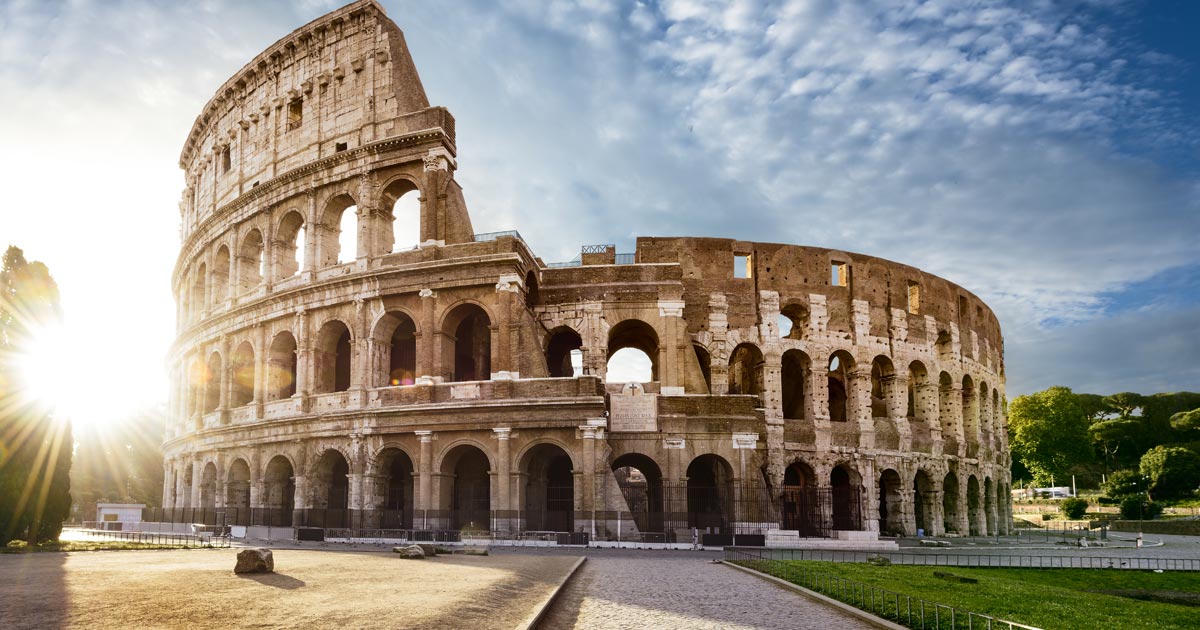
Ancient Rome gave the world concrete domes, paved highways, aqueducts, representative government, and enough political drama to keep television writers employed for centuries. From a distance, the empire can look impressively modern. Step closer, however, and ordinary Roman life begins to resemble a survival game designed by architects, landlords, priests, tax collectors, and people with an alarming enthusiasm for public bloodshed.
Daily life in Ancient Rome varied enormously according to wealth, legal status, gender, location, and historical period. A senator reclining in a decorated villa experienced a different Rome from an enslaved mine worker, a market vendor, or a tenant living six floors above a sausage shop. Still, archaeology, inscriptions, graffiti, household objects, and Roman literature reveal several recurring realities that would make most modern residents immediately check the return policy on their time machine.
Here are six reasons everyday life in Ancient Rome was totally insaneand why the civilization’s greatest achievements often existed directly beside its messiest problems.
1. Your Apartment Could Collapse, Burn Down, or Do Both
Popular images of Ancient Rome focus on marble temples, elegant courtyards, and villas with painted walls. Most urban residents were not living in those places. They commonly rented rooms in multistory apartment buildings known as insulae. These structures helped house the enormous population of Rome, but comfort and safety were not always included in the monthly rent.
The Higher You Lived, the Worse It Got
Ground-floor apartments were generally larger, more accessible, and more expensive. The upper stories tended to contain smaller and cheaper rooms reached by narrow stairs. Water was harder to carry upstairs, escape routes were limited, and basic sanitation could be inconvenient or nonexistent. In modern terms, the penthouse was not luxurious. It was the place where you paid less because gravity had become your landlord.
Construction quality also varied. Timber floors, wooden stairs, open flames, braziers, oil lamps, and tightly packed buildings created constant fire hazards. Thin walls and weak foundations increased the possibility of structural failure. Emperors introduced height restrictions and building reforms partly because fires and collapses were serious urban problems. After the catastrophic fire of 64 CE, Nero ordered changes intended to create wider spaces and make fires easier to fight.
Street Life Was Not Exactly Peaceful
Even when your building remained upright, sleep was not guaranteed. Rome’s narrow streets carried merchants, delivery carts, animals, workers, customers, and people conducting loud arguments with the commitment of professional actors. Commercial traffic was often restricted during parts of the day, which pushed some deliveries into nighttime hours. Residents could therefore enjoy a soothing bedtime soundtrack of wheels, hooves, shouting, hammering, and one neighbor insisting that his amphora had definitely been stolen.
2. Going to the Bathroom Was a Group Activity
Roman engineering produced drains, aqueducts, sewers, and public latrines that were remarkable for their time. That does not mean a visit to the restroom would feel advanced to a modern user. Many public toilets consisted of long stone or wooden benches with regularly spaced openings. Dividers were generally absent, so privacy amounted to staring forward and pretending the person beside you was not discussing grain prices.
Shared Seats, Shared Conversations, Shared Everything
Some latrines were connected to flowing water or sewer systems, while others had more limited drainage. A shallow channel could run near users’ feet, providing water for cleaning. The infamous tersoriuma sponge fixed to a stickis often described as a Roman wiping tool, although scholars continue to debate exactly how universally it was used and whether some examples functioned more like toilet-cleaning brushes.
Either interpretation is not especially comforting. The key point is that toilet hygiene depended on communal facilities, flowing water of inconsistent cleanliness, and practices that did not include individually wrapped aloe-infused tissue.
A Sewer Did Not Make the Whole City Sanitary
The Cloaca Maxima remains one of Rome’s most celebrated engineering works, but it began largely as a drainage system and did not connect every home to a modern-style sanitation network. Residents of upper apartments still had to transport waste downstairs or use containers. Street filth, animal droppings, wastewater, and overflowing drains remained ordinary urban problems.
Rome had sophisticated infrastructure, but infrastructure and public health are not identical. The city could build a monumental sewer while leaving a tenant on the seventh floor wondering what to do with a full chamber pot at two in the morning.
3. Your Clean Clothes Were Washed With Urine
Ancient Roman laundry workers, called fullones, cleaned clothing and processed textiles in workshops known as fullonicae. Their work was economically important, physically demanding, and memorable for one particular ingredient: human and animal urine.
Ancient Rome Had a Very Unusual Detergent Aisle
Stale urine produces ammonia, which can help break down grease and remove stains. Fullers placed clothing in vats containing water and urine, then agitated the fabricsometimes by stomping on it. Additional rinsing, whitening, brushing, and finishing stages followed. The process was effective enough to support a profitable industry, although Roman society often looked down on the workers performing it.
Urine could be collected from public vessels and latrines. Under Emperor Vespasian, the trade even became associated with taxation, inspiring the famous idea that money does not smell. Technically, the coins may not have smelled. The workshop almost certainly did.
This strange practice also illustrates a broader Roman talent: turning nearly everything into a commercial resource. Waste could become a cleaning agent, a taxed commodity, and somebody’s full-time occupation. It was circular economics, although the circle led directly through a vat no modern employee would enter without industrial gloves and a substantial benefits package.
4. The Public Baths Were a Spa, Gym, Office, and Germ Convention
Roman baths were among the most impressive public spaces in the ancient world. Depending on the complex, visitors could exercise, swim, receive massages, eat, read, conduct business, gossip, and move through rooms maintained at different temperatures. Admission could be inexpensive, allowing people from a range of social classes to participate in bathing culture.
Bathing Was About Much More Than Getting Clean
Romans commonly applied oil to the skin and removed it with a curved metal tool called a strigil. The scraping took away oil, sweat, and dirt. Visitors then moved among warm, hot, and cold rooms or pools. Large imperial bath complexes could contain gardens, exercise courts, libraries, food sellers, and meeting spaces. They were community centers with saunas attached.
The baths were also ideal places to exchange news, build political relationships, seek clients, and display status. Imagine combining a fitness club, coworking space, neighborhood café, public pool, and rumor factory. Now remove deodorant and add several hundred oil-covered strangers.
Roman Hygiene Had Serious Limits
Aqueduct-fed facilities could move substantial amounts of water, but conditions differed by place and period. Research on early baths at Pompeii indicates that before an aqueduct improved the supply, water might have been replaced too infrequently to remain clean. Chemical evidence suggests that sweat, skin oils, bathing products, urine, and microbial activity accumulated in some pools.
That finding does not mean every Roman bath was permanently filthy. It does mean that magnificent architecture could conceal water quality problems. A visitor might enter beneath vaulted ceilings, admire polished decoration, and then lower himself into a warm communal broth seasoned by the previous shift.
5. Your Household Was a Legal Hierarchy, Not a Cozy Family Unit
Roman family life revolved around the paterfamilias, the senior male legally recognized as head of the household. Under the concept of patria potestas, his authority could extend over descendants, property, marriage arrangements, and household dependents. Traditional Roman law described this power in extremely broad terms, although its harshest theoretical forms were not necessarily common in everyday practice and became increasingly restricted.
Adult Children Could Remain Legally Dependent
A Roman son could become a soldier, magistrate, husband, and father while still remaining under his own father’s legal authority if the older man was alive. Family property and personal independence did not operate exactly as they do in a modern household. Marriage customs also changed over time, and many womenparticularly during the late Republic and imperial periodscould control property more independently than stereotypes suggest. Nevertheless, Roman law was structured around male authority and unequal status.
Slavery Was Built Into Ordinary Life
The deepest inequality was slavery. Enslaved people worked in homes, farms, workshops, construction projects, mines, transport networks, and public facilities. Some were highly educated tutors, accountants, physicians, or secretaries. Others endured brutal labor under deadly conditions. Legal treatment varied, and manumission allowed some people to become freedmen or freedwomen, but these possibilities did not change the fundamental reality: human beings could be bought, sold, punished, and forced to work.
Slavery was not a strange activity occurring at the distant edge of Roman civilization. It supported households, businesses, agriculture, entertainment, and government. Even many ordinary free residents encountered enslaved labor constantly. Rome’s celebrated leisure and monumental architecture depended heavily on people who possessed little or no control over their own daily lives.
That is the point where “insane” stops being merely humorous. Ancient Rome could be dazzling, inventive, and culturally sophisticated while normalizing a system of profound human exploitation.
6. A Family Day Out Could Include Executions and Fatal Crashes
Modern sports fans may complain about expensive tickets, bad officiating, or limited parking. Roman spectators faced different concerns, such as whether a chariot driver would be dragged beneath four horses or whether a condemned prisoner would be forced to reenact a myth immediately before dying.
Chariot Racing Was Fast, Political, and Extremely Dangerous
Chariot racing was among Rome’s most popular entertainments. Teams identified by colors attracted intensely loyal supporters, while successful drivers could become famous and wealthy. Races featured high speeds, tight turns, collisions, and vehicles packed closely together. Crashes were common enough to be an expected part of the spectacle rather than an unfortunate interruption.
The Circus Maximus could host enormous crowds, giving political leaders an opportunity to appear before the public and sponsor popular events. Team loyalty sometimes spilled into public disorder. Ancient Rome did not invent the angry sports fan, but it provided that fan with faction colors, gambling, mass seating, and airborne pieces of chariot.
Arena Programs Turned Death Into Theater
Gladiatorial combat was only one part of Roman arena entertainment. Programs could include animal hunts, staged battles, athletic displays, and public executions. Some condemned people were killed during elaborate performances inspired by mythology. Exotic animals were transported from across the empire, placed in unfamiliar environments, and slaughtered for mass amusement.
Not every gladiator fought to the death in every match. Gladiators required training and represented financial investments, so organizers did not casually discard all of them. Some fighters volunteered, achieved celebrity, or earned freedom. Even so, the institution remained rooted in violence, coercion, punishment, and the transformation of suffering into public entertainment.
The most unsettling detail is not that Roman spectacles were violent. Human history contains plenty of violence. It is that executions and deadly contests could be scheduled as routine entertainment between morning events and afternoon combat, complete with food vendors and enthusiastic crowds.
Experiencing One Ordinary Day in Ancient Rome
The following scene is an evidence-based imaginative reconstruction rather than the diary of a specific historical person. It combines documented features of Roman housing, streets, patronage, markets, latrines, baths, labor, and entertainment to illustrate how these conditions might have felt to an ordinary free resident.
Dawn: Your Building Is Already Making Suspicious Noises
You wake before sunrise in a rented room several floors above a busy street. The room is small, smoky, and warmer than you would prefer. Your neighbor has been coughing all night. Somewhere below, a shopkeeper is moving storage jars, and the staircase creaks whenever anyone uses it. You briefly wonder whether the noise is normal settling or the opening act of a structural collapse.
There is no convenient tap in your room. Water must be carried from a fountain or purchased from someone willing to haul it. Cooking indoors with an open brazier would add another fire risk, so breakfast is simple: bread, perhaps olives, cheese, or leftovers. Wealthy Romans can afford elaborate meals, but ordinary diets depend heavily on grains, legumes, vegetables, oil, and whatever can be purchased cheaply.
Morning: Work Begins With a Favor
If you depend on a powerful patron, your morning may include joining other clients at his house. You wait to greet him, offer respect, exchange news, and perhaps receive food, money, legal help, or a recommendation. The relationship is unequal but useful. Rome runs on formal offices, family connections, friendships, obligations, and favors layered together like a political pastry.
Afterward, you enter the crowded streets. Vendors advertise produce, wine, cooked food, pottery, cloth, and household goods. Craftspeople hammer metal or carve stone. Animals contribute noise and manure. A delivery cart blocks an alley while two drivers debate which one has offended the gods of navigation.
Midday: A Restroom With Networking Opportunities
You stop at a public latrine. Several people are already seated along the same bench. Nobody appears embarrassed. One man discusses a lawsuit. Another complains about bread prices. A third tries to involve you in a conversation that you urgently wish to avoid.
Outside, containers collect urine for nearby fullers. At the laundry workshop, workers tread soiled clothing in cleaning liquid. The sharp smell announces the business before its painted sign becomes visible. Customers later collect brightened garments and try not to think too deeply about the production process.
Afternoon: The Baths Turn Hygiene Into a Social Event
Work slows, and you visit a public bath. You undress in a changing area while keeping a careful eye on your belongings. Theft in crowded facilities is not an impossible concern. After exercising, you apply oil and scrape your skin with a strigil. Then you move through heated rooms while talking with acquaintances.
The architecture is impressive. Warm air circulates beneath floors and through walls. Light reflects from water and polished surfaces. Business deals are proposed, political rumors circulate, and everyone claims to know what the emperor is really planning. The pools may be clean enoughor they may have absorbed the day’s sweat, oil, dirt, and enthusiasm. You decide not to ask.
Evening: Entertainment Comes With a Body Count
On a festival day, you might join thousands of spectators at a race or arena program. At the circus, drivers thunder around the track while fans scream for their preferred faction. A chariot overturns at a turn, but the race continues. Spectators react with horror, excitement, or both.
At an amphitheater, the program may include trained fighters, wild animals, or condemned prisoners. The crowd responds collectively, turning individual danger into a shared emotional experience. Food is sold. Bets are placed. Political leaders benefit from sponsoring the spectacle. What feels shocking to a modern visitor is woven into the rhythm of public life.
Night: Home Is Where the Fire Hazard Is
You climb the dark staircase to your room. Oil lamps flicker behind neighboring doors. Somewhere nearby, a cooking flame has been left unattended. You hear arguments, babies, animals, street traffic, and people emptying containers into places where containers should probably not be emptied.
Before sleeping, you hope the building remains standing, the neighborhood avoids fire, and tomorrow’s bread supply arrives on schedule. Rome is powerful enough to rule distant provinces and construct aqueducts across valleys, yet your personal concerns are immediate: rent, food, work, water, noise, disease, and whether the downstairs restaurant is about to ignite the staircase.
That contradiction defines the experience. Ancient Rome was not simply primitive or advanced. It was bothoften in the same street, building, or bucket.
Conclusion: Rome Was Brilliant, Brutal, and Bizarre
Everyday life in Ancient Rome was totally insane notday life in Ancient Rome was totally insane not because Romans were foolish, but because their civilization combined extraordinary innovation with risks and inequalities that modern visitors would find difficult to accept. Apartment towers housed huge urban populations but frequently threatened tenants with fire and collapse. Public toilets and baths demonstrated impressive engineering while offering little privacy and inconsistent hygiene. Laundry workers transformed urine into detergent. Household law concentrated authority in senior men, while slavery sustained much of the Roman economy. Public entertainment united communities by placing real danger and death at center stage.
Rome’s contradictions are precisely what make it fascinating. It was a civilization where a person could walk beneath an aqueduct, admire a marble temple, discuss poetry in a bath complex, watch a deadly race, collect clothes washed in urine, and return to an apartment that might not survive the night. History rarely fits neatly into “advanced” or “backward.” Ancient Rome managed to be spectacularly advanced and spectacularly alarming before dinner.