

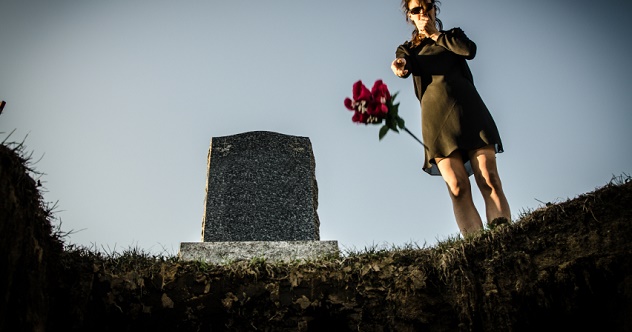
Funerals tend to reveal what a culture believes about love, memory, family, and the afterlife. To one person, a brass band in the street might feel wildly unexpected. To another, it is the only proper way to say goodbye. Around the world, funeral customs range from solemn and stripped-down to colorful, musical, communal, and deeply symbolic. Some center on returning the body to nature. Others focus on keeping the dead close through ritual, art, food, music, or annual remembrance.
If the word bizarre sounds a little dramatic, that is because it is. Most of these customs are not strange to the people who practice them. They make perfect sense inside the beliefs, landscapes, and family traditions that shaped them. Still, to outsiders raised on black clothing, hushed chapels, and casseroles in foil trays, these global funeral traditions can feel surprising, fascinating, and occasionally mind-bending in the best possible way.
What Makes Funeral Customs Around the World So Different?
Religion plays a huge role, of course, but geography matters too. In crowded cities, land is scarce, so burial traditions adapt. In mountain regions, funerary practices often reflect the terrain. In close-knit communities, a funeral may be less of a private event and more of a massive public gathering that doubles as a family reunion, a spiritual ceremony, and a social reset. In other words, grief is universal, but the choreography of grief is wildly local.
These unusual burial customs and mourning rituals also remind us of something modern life often tries to hide: death is not only a medical event or a legal document. In many cultures, it is a relationship. The dead are remembered, visited, fed symbolically, celebrated, sung to, paraded, or welcomed back for a day. That may sound unconventional, but honestly, pretending grief follows a neat little schedule may be the real oddity.
1. Ghana’s Fantasy Coffins Turn Funerals Into Folk Art
In parts of Ghana, especially among the Ga people, funerals can feature handcrafted coffins shaped like objects tied to the person’s life, identity, work, or ambitions. A fisherman might be buried in a fish-shaped coffin. A pilot could get an airplane. A musician might make a final entrance in a trumpet. This is not funeral whimsy for whimsy’s sake. These so-called fantasy coffins symbolize the story of the deceased and honor the role they played in the world.
The result is striking: a funeral becomes not just a farewell, but a visual biography. It is serious, celebratory, and artistic all at once. For outsiders, the idea may sound surreal, yet the underlying message is beautifully familiar: people want to be remembered as themselves, not as a generic plaque with dates.
2. Madagascar’s Famadihana Reintroduces the Ancestors
In Madagascar, some Malagasy families practice Famadihana, often translated as “the turning of the bones.” During this ceremony, ancestors are respectfully brought from family tombs, rewrapped in fresh cloth, and honored with music, gathering, and movement. The atmosphere is not built around horror-movie vibes. It is rooted in kinship, continuity, and the idea that family bonds do not snap in half the moment life ends.
For many people raised to think of cemeteries as quiet places where everyone whispers like they are sneaking through a library, this custom can feel startling. But Famadihana reflects a worldview in which the dead remain part of family life. Memory is active. Ancestors are not a chapter that closed; they are still part of the sentence.
3. Tibetan Sky Burial Returns the Body to Nature
In Tibetan Buddhist tradition, sky burial has long been understood as an act of generosity and release. The body, no longer seen as the self once life has ended, is returned to the natural world in an open-air ritual. The spiritual emphasis is not on preserving a physical shell forever but on helping the soul move on while the body sustains other life.
This is one of the most discussed funeral customs in the world because it challenges Western instincts about burial and cremation. Yet its logic is deeply philosophical: life is impermanent, nature is cyclical, and even in death one can give something back. Strange? Maybe at first glance. Thought-provoking? Absolutely.
4. In Toraja, Indonesia, Funerals Can Be Delayed for Months
Among the Torajan people of Indonesia, death is often treated as a gradual transition rather than a sudden full stop. A loved one may remain at home for an extended period before the main funeral ceremony takes place, especially while relatives gather and families prepare the elaborate event. In this cultural framework, the deceased may be spoken of as ill or not yet fully gone until the funeral rites are completed.
That means the funeral is not a one-afternoon appointment squeezed between traffic and emails. It is a major social and spiritual event, often lasting days and involving extended family, ceremony, food, and community participation. For outsiders, the timeline can feel astonishing. For Torajan families, it can be an expression of devotion, status, duty, and love.
5. The Hanging Coffins of the Philippines Defy Gravity
In Sagada, in the mountainous north of the Philippines, one famous tradition involves coffins placed high on cliffs. The hanging coffins are visually unforgettable, as if the landscape itself decided to become a cemetery. The practice is associated with beliefs about elevating the dead, protecting remains, and keeping families connected to ancestral traditions.
The image of a coffin fastened to rock rather than lowered into soil feels almost cinematic, but it is not theatrical for its own sake. It reflects place. In a rugged highland environment, burial customs developed in ways that matched local belief and geography. Once again, the lesson is simple: traditions are often maps of the land as much as they are maps of the soul.
6. Zoroastrian Towers of Silence Follow Rules of Purity
In traditional Zoroastrian practice, the dead body is treated with great ritual care because earth, fire, and water are considered sacred and should not be defiled. Historically, this led to the use of dakhmas, or Towers of Silence, circular structures where the dead were placed in the open air. The practice was shaped by religious ideas about purity, not spectacle.
To modern readers, this may sound radically different from burial or cremation, but the principle behind it is consistent and coherent: honor the dead while protecting the sacred elements. It is one more example of how funeral customs often answer the same human question in very different ways: how do we care for the dead without violating what the living believe is holy?
7. South Korea Turns Cremated Remains Into Memorial Beads
In South Korea, one modern memorial practice transforms cremated remains into smooth, polished beads in soft colors such as blue-green, pink, or black. These memorial beads are displayed in the home, often in elegant containers. The result is more decorative and intimate than a standard urn, and it reflects broader social realities, including limited burial space and the widespread acceptance of cremation.
There is something unexpectedly moving about this custom. Instead of hiding remembrance on a shelf that people avoid looking at, it creates a visible object of memory that can be part of everyday life. Grief, in this case, does not have to vanish into a closet. It can sit in the light and still feel beautiful.
8. New Orleans Jazz Funerals March Through Sorrow and Joy
A New Orleans jazz funeral typically begins with solemn music and a slow procession, then shifts into brighter, more rhythmic celebration as the march continues. The famous “second line” follows with music, dancing, and movement through the street. It is one of the world’s most recognizable funeral traditions, and it captures a powerful emotional truth: grief and celebration are not enemies.
This custom turns mourning into something communal and audible. You do not sit quietly with your sadness; you walk it, play it, and share it. The music says what words often cannot. It acknowledges loss, but it also insists that a life well lived deserves more than silence. A funeral with a soundtrack? In New Orleans, that is not unusual. It is just good manners.
9. Bolivia’s Fiesta de las Ñatitas Honors the Dead in a Very Direct Way
In Bolivia, the Fiesta de las Ñatitas is a remembrance tradition in which some people honor skulls they believe offer protection, luck, or spiritual companionship. On the festival day, these skulls may be decorated with flowers, hats, or sunglasses and brought for blessing. Yes, sunglasses. Death, apparently, can also have accessories.
What sounds shocking at first becomes more understandable when viewed through the lens of folk Catholicism, Indigenous belief, and lived spirituality. This is not a prank, a stunt, or a weird internet challenge before the internet existed. It is a ritual of connection, reciprocity, and remembrance. And it reminds outsiders that the line between reverence and strangeness often depends entirely on where you are standing.
10. Mexico’s Day of the Dead Welcomes Loved Ones Back
Día de los Muertos, or Day of the Dead, is not a funeral in the narrow sense, but it is one of the world’s most meaningful death-related traditions. Families create ofrendas, or altars, with photographs, candles, flowers, favorite foods, drinks, and symbolic items for the dead. Rather than treating death as a topic that must stay behind a locked emotional door, the holiday invites memory to the table.
The mood is often colorful, festive, and warm. That does not mean it lacks depth. Quite the opposite. Day of the Dead reflects the belief that remembering the dead is an act of love, not just sadness. In many ways, it flips the modern fear of death on its head and says, “Come in, sit down, we saved you a place.”
What These Unusual Funeral Customs Really Tell Us
When you line up funeral practices from different cultures, a pattern emerges. The details vary, but the goals are surprisingly similar. People want to honor the dead, comfort the living, explain what happens next, and place loss inside a story that feels bearable. Whether that story involves music, mountains, beads, cliffs, altars, or extraordinary craftsmanship, the emotional engine is the same.
These global funeral traditions also expose how narrow the “normal funeral” idea really is. Many Americans are used to a checklist model: service, flowers, burial or cremation, reception, done. Yet around the world, mourning can be slow, public, artistic, annual, portable, ecological, or joyfully noisy. Death rituals are not one-size-fits-all. Never were.
That may be the most interesting takeaway of all. Funeral customs are really cultural answers to a universal heartbreak. And some of the answers are so creative, layered, and emotionally intelligent that they make standard beige-carpet funeral home culture look, frankly, a little undercaffeinated.
Experiences Related to “10 Bizarre Funeral Customs From Around The World”
Reading about funeral customs around the world is one thing. Imagining what it feels like to encounter them is another. The experience is often less “That is bizarre” and more “Wow, I did not realize how many ways humans have invented to love each other after death.” The first surprise is usually emotional. You expect shock. What you get instead is tenderness in a different accent.
Picture standing in New Orleans as the first notes of a brass band roll down the street. At first the music is slow, almost heavy, and the crowd moves with the weight of loss. Then the rhythm changes. Shoulders loosen. Feet answer back. People clap, sway, and follow. You suddenly understand that celebration is not the opposite of grief. Sometimes it is grief’s loudest language.
Now imagine seeing Ghana’s fantasy coffins, each one shaped like a fish, a bird, a bottle, a shoe, or an airplane. What seems quirky from a distance becomes deeply personal up close. These are not novelty items. They are stories carved in wood and color. A coffin stops being an object and becomes a final introduction: this is who this person was, this is what mattered to them, this is how we remember.
Or think about the feeling of walking through a cemetery culture where silence is not the only rule. In Mexico during Day of the Dead, memory shows up with candles, marigolds, sugar skulls, bread, and favorite dishes. The atmosphere can feel intimate rather than frightening, festive rather than gloomy. Instead of pretending the dead are gone in some clean administrative sense, the living make room for them. That emotional openness can be startling if you come from a culture that treats grief like a private leak you are supposed to fix quickly.
The Torajan approach can create a different kind of reaction: patience. Many modern societies are obsessed with speed. Fast messages, fast meals, fast healing, fast closure. Toraja pushes in the opposite direction. A funeral may wait until the family is ready, until relatives return, until the ceremony can properly reflect the life that ended. To an outsider, that can feel almost radical. It suggests that grief deserves time and that love should not be rushed just because the calendar is impatient.
Even the customs that seem hardest to understand at first often leave behind the strongest questions. Sky burial, hanging coffins, and Towers of Silence all force the same realization: our own funeral habits are not neutral or inevitable. They are simply the ones we inherited. The more you learn about other traditions, the more your definition of respect begins to widen. You stop asking, “How could they do that?” and start asking, “What belief makes that meaningful?” That shift is the real journey.
In the end, the experience of exploring these funeral traditions is humbling. It reminds you that every culture is trying to solve the same impossible problem: how to keep love visible when a person is no longer physically here. Some communities use music. Some use ritual objects. Some use annual feasts, mountain landscapes, handcrafted art, or family ceremonies that stretch across generations. Different tools, same ache. And maybe that is the least bizarre thing in the world.
Conclusion
The world’s most unusual funeral customs are not just fascinating trivia for curious readers. They are windows into belief, geography, family structure, and the endless human effort to make loss meaningful. Whether a community honors the dead with a brass band, a cliffside coffin, polished memorial beads, or a bright altar covered in marigolds, the message is remarkably consistent: the dead matter, memory matters, and goodbye does not always have to look quiet.
If there is one lesson hidden inside these funeral customs around the world, it is this: the way people mourn may differ dramatically, but the desire to honor a life is universal. And once you see that, the customs feel less bizarre and far more brilliant.