

A pile of rough lumber can look promising at the lumberyard and slightly less charming once it reaches the workshop. Boards bow, cup, twist, and occasionally behave as though they have personal objections to becoming furniture. That is where a jointer and thickness planer earn their floor spaceand where a jointer planer combo can become especially appealing.
Instead of dedicating room to two large machines, a combination unit uses one cutterhead to flatten faces, square edges, and bring boards to consistent thickness. For a garage shop, basement workshop, or small professional space, that can be a major advantage.
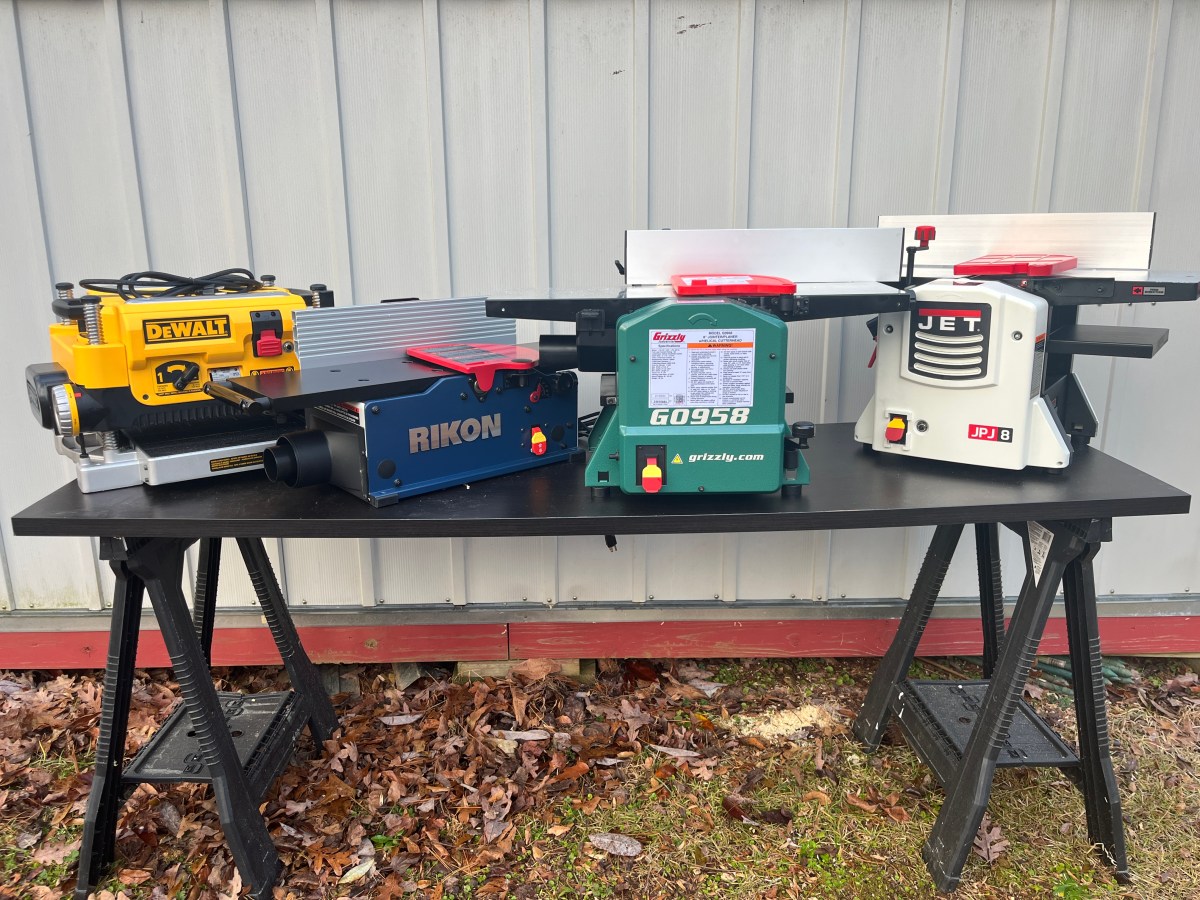
Bob Vila’s product-testing team evaluated leading benchtop options in a hands-on comparison published in February 2026. The testing involved eight hours of work with rough-cut pine and oak, assessing assembly, ease of use, accuracy, surface quality, and overall value. The team also compared combo machines with a dedicated benchtop planer and jointer.
After reviewing those results alongside current manufacturer specifications and guidance from established woodworking authorities, the picture is clear: The best machine depends less on finding one mythical “perfect” tool and more on matching capacity, cutterhead style, power, table length, and workflow to the work you actually do.
Best Jointer Planer Combos at a Glance
- Best Overall: Grizzly G0958 8-Inch Combo Planer/Jointer
- Best Value: Jet JJP-8BT 8-Inch Planer/Jointer Combo
- Best Separate-Machine Alternative: DeWalt DW735X Planer with Rikon 20-800HSP Jointer
- Best With a Stand: Jet JJP-10BTOS 10-Inch Jointer/Planer Combo
- Best for Premium Cut Quality: Rikon 25-210H 12-Inch Helical Planer/Jointer
- Best Heavy-Duty Choice: Grizzly G0634X 12-Inch 5 HP Planer/Jointer
Best Overall: Grizzly G0958 8-Inch Combo Planer/Jointer
Why it stands out
The Grizzly G0958 earned the top position in Bob Vila’s hands-on comparison because it combines the characteristics most small-shop woodworkers actually need: compact dimensions, useful 8-inch capacity, strong cutting performance, and a segmented helical cutterhead.
The machine uses 18 indexable carbide inserts rather than a pair of long straight knives. That matters when working with figured hardwood, knots, or reversing grain. Small inserts engage the wood progressively, helping reduce tear-out while producing a cleaner surface. When an insert becomes damaged or dull, it can be rotated instead of requiring an entire long knife to be sharpened and reset.
During Bob Vila’s testing with pine and oak, the motor maintained its feed rate without noticeable bogging during normal cuts. The conversion between jointing and planing reportedly took less than a minute, an important detail because even a wonderful combination machine becomes annoying if every mode change feels like assembling patio furniture without instructions.
The drawbacks were relatively minor but worth knowing. The planer produced some end snipe, and the dust hose could interfere with the planer infeed area unless it was supported or routed carefully. Still, the overall combination of accuracy, finish quality, manageable weight, and quick changeover made the G0958 the strongest all-around choice for a compact shop. Grizzly specifies an 8-inch helical cutterhead with 18 indexable carbide inserts, while Bob Vila’s test team praised its clean surface quality and resistance to bogging.
Best for: Hobbyists, furniture makers, and garage-shop woodworkers who want excellent cut quality without moving to a massive 220-volt stationary machine.
Best Value: Jet JJP-8BT 8-Inch Planer/Jointer Combo
A practical entry point into two-machine functionality
The Jet JJP-8BT is aimed squarely at woodworkers who want a real jointer and planer in one compact package without paying for a premium floor-standing machine. It runs on standard 120-volt power and uses a traditional two-knife cutterhead.
That straight-knife design cannot quite match the polished surface produced by a good helical cutterhead, particularly on difficult grain. Bob Vila’s testers found that the Jet achieved the required dimensions accurately but generally left more sanding work before finishing. On the other hand, its lower cost makes the compromise understandable.
The machine weighs roughly 58 pounds, has an approximately 29-inch jointer table, and uses a 13-amp motor. Its tall fence offers helpful support while edge-jointing, and its dust connection can accommodate common shop-vac setups with an adapter. The official Jet lineup continues to position the JJP-8BT as a compact benchtop combination machine, while Bob Vila rated it especially highly for value.
Setup may require patience. Table adjustment was described as somewhat fiddly, and the lighter construction uses aluminum and sheet metal where a more expensive stationary machine would typically rely on cast iron. Still, for occasional furniture projects, boxes, cabinets, and general DIY woodworking, it offers a lot of capability per square foot.
Best for: Budget-conscious woodworkers who prioritize compact size and functional accuracy over the finest possible surface directly off the cutterhead.
Best Separate-Machine Alternative: DeWalt DW735X and Rikon 20-800HSP
For woodworkers who do not actually need a combo
A jointer planer combo saves space, but a combination machine is not automatically the best solution for everyone. Bob Vila’s comparison included a dedicated DeWalt DW735X thickness planer paired with the Rikon 20-800HSP benchtop jointer to show what separate machines can offer.
The DeWalt provides 13-inch planing capacity, a three-knife cutterhead, two feed speeds, and a fan-assisted chip-ejection system. The Rikon offers an 8-inch jointing capacity, a 12,000 RPM cutterhead, 16 insert cutters, and extension supports that stretch the working table to more than 51 inches.
The biggest advantage is workflow. There is no changeover between operations. Joint a face, move directly to the planer, then return to the jointer whenever necessary. Separate cutterheads also divide wear between two machines.
The disadvantages are equally obvious: higher total cost, more storage space, and more equipment to move or maintain. Bob Vila’s testing found only a modest improvement in results compared with the better benchtop combo machines, suggesting that occasional users should not assume separate machines are automatically necessary.
Best for: High-volume hobbyists and small professional shops that value uninterrupted workflow more than minimum footprint.
Best With a Stand: Jet JJP-10BTOS 10-Inch Jointer/Planer Combo
More width without entering industrial-machine territory
The Jet JJP-10BTOS fills an interesting middle ground. It offers a broader 10-inch cutting capacity than typical compact benchtop models and comes with a stand, yet it still operates from a standard 120-volt electrical supply.
Its two-knife cutterhead runs at 9,000 RPM, and the approximately 36-inch jointer table gives boards more support than the shortest benchtop designs. The supplied stand allows the machine to work as a floor-standing tool without requiring the buyer to build a dedicated cabinet immediately.
The trade-off is construction. Aluminum and steel tables keep weight manageable, but they lack the mass and vibration-damping characteristics of cast iron. The stand also deserves periodic inspection because fasteners can loosen with use.
For many home workshops, however, the balance is attractive. Ten-inch jointing capacity opens the door to wider furniture components while the machine remains far easier to relocate than a 400- or 600-pound cabinet model.
Best for: Serious hobbyists who want greater jointing width and a ready-to-use stand without upgrading the shop to 220-volt machinery.
Best Cut Quality: Rikon 25-210H 12-Inch Helical Planer/Jointer
A major step toward professional production
Once woodworking moves from occasional weekend projects to frequent rough-lumber milling, machine mass and cutterhead quality become increasingly important. The Rikon 25-210H is a heavy, 220-volt machine built around a 3 HP motor and a 12-inch helical cutterhead.
Its cutterhead uses multiple rows of carbide inserts, and Bob Vila’s researched recommendation emphasized the machine’s ability to produce exceptionally smooth surfaces while maintaining a fast feed rate. Heavy cast-iron tables provide the rigidity and long workpiece support that lightweight benchtop tools cannot fully duplicate.
This is not a machine to buy casually and then wonder where to put it when the delivery truck arrives. It requires suitable electrical service, substantial floor space, and a serious plan for installation. The setup can also demand more mechanical adjustment than a beginner may expect.
It is important to distinguish between Bob Vila’s hands-on test group and the larger recommendations in the roundup: The Rikon was selected through research rather than included among the small machines physically tested for that comparison.
Best for: Advanced woodworkers and professional shops that regularly mill hardwood and care deeply about minimizing tear-out and sanding.
Best Heavy-Duty Choice: Grizzly G0634X 12-Inch 5 HP Planer/Jointer
For the shop where “portable” is no longer part of the conversation
The Grizzly G0634X is the heavyweight option in this group. Its 5 HP, 220-volt motor and 12-inch V-helical cutterhead are intended for demanding work, not for being carried from a shelf to a folding table on Saturday morning.
Grizzly specifies a 25-amp, single-phase motor and a maximum 12-inch jointing width. The cutterhead uses indexable carbide inserts, and the machine’s long, heavy tables are designed to support substantial workpieces with far greater stability than a compact aluminum-table model.
The benefit is production capacity. Wide hardwood boards, repeated milling sessions, and heavy cuts are much closer to this machine’s natural habitat. The penalty is equally substantial: electrical requirements, cost, delivery logistics, and a machine weight measured in hundreds of pounds.
As with the large Rikon, this Grizzly was a researched selection in Bob Vila’s roundup rather than one of the compact machines subjected to the same hands-on bench test.
Best for: Professional or highly committed woodworking shops processing significant quantities of rough lumber.
How to Choose the Best Jointer Planer Combo
Start with cutting width
For many buyers, width is the first specification that changes what they can build. An 8-inch jointer planer is enough for many furniture parts, cabinet components, rails, and stiles. A 10- or 12-inch machine makes it possible to face-joint wider stock without ripping a beautiful board into narrower pieces first.
Do not look at width alone, however. Table length matters when flattening long boards. Woodcraft notes that compact benchtop jointers sacrifice support length compared with stationary machines, which can affect the ability to flatten long stock accurately.
Choose between straight knives and helical inserts
Straight knives are simple, familiar, and economical. They can leave an excellent finish when sharp and properly adjusted, particularly on straightforward grain.
Helical and segmented cutterheads generally have the advantage with figured hardwood and difficult grain. Small insert cutters engage the board progressively, and a damaged cutter can often be rotated individually. Fine Woodworking’s evaluation of Grizzly’s compact combo machines similarly highlighted the quality of surfaces produced by segmented cutterheads on a range of woods.
Think about changeover, not just footprint
Combination machines save space, but the workflow requires switching between modes. Some users barely notice because they batch their work: joint every board first, convert the machine, then plane the entire batch. Others constantly move back and forth and quickly discover that even a short changeover can become tiresome.
Popular Woodworking describes this as one of the central trade-offs of combo ownership: a smaller footprint and wide jointing capacity in exchange for the time required to switch operations. Experienced users often reduce the inconvenience by organizing milling into batches.
Check your electrical service before falling in love
Compact machines commonly operate on 120-volt household power. Larger 3 HP and 5 HP machines often require 220- or 230-volt service and a suitable dedicated circuit. That can turn a machine purchase into an electrical project, which is a slightly less exciting surprise than finding an extra carbide insert in the box.
Do not treat dust collection as an accessory
Planers and jointers create an astonishing amount of chips and fine dust. A proper collection system improves visibility, reduces cleanup, and helps prevent waste from packing around the cutterhead or dust chute.
There is also a health reason to take dust seriously. OSHA identifies airborne wood dust as a potential respiratory hazard, and NIOSH has documented effects including irritation, allergy, and reduced lung function among exposed workers. Use the machine’s dust port with an appropriately sized collector and follow the manufacturer’s safety recommendations.
Jointer Planer Combo vs. Separate Machines
A jointer flattens one face and creates a straight, square reference edge. A thickness planer then makes the opposite face parallel and brings the stock to a uniform thickness. The tools perform complementary jobs rather than interchangeable ones. WOOD Magazine’s stock-preparation guidance follows this same basic sequence: flatten a reference face, plane the opposite face parallel, then square and size the remaining edges.
A combo machine is usually the stronger choice when workshop space is limited, wide jointing capacity is valuable, and the user is comfortable processing lumber in batches. Separate machines become more attractive when production speed matters, two people may need the tools simultaneously, or frequent switching would interrupt the workflow.
The important question is not whether a combo machine is universally “better.” It is whether sharing one cutterhead and one footprint makes sense for your shop.
Workshop Experience: What Using a Jointer Planer Combo Is Really Like
The specifications tell you how wide a board a machine can accept and how powerful its motor is. They do not fully explain what living with the machine feels like. That practical experience usually becomes clear during the first serious milling session.
The first lesson is that workflow matters more than expected. A new owner may begin by jointing one face, switching to planer mode, thicknessing the board, then deciding another board needs to return to the jointer. Technically, the machine can do that. Practically, repeated switching soon becomes the woodworking equivalent of walking upstairs because you forgot why you went downstairs.
The smoother routine is to inspect and mark an entire batch of rough lumber first. Flatten the reference faces on every board. Joint the necessary edges. Then convert the machine once and thickness the batch together. Popular Woodworking’s long-term combo-machine experience reaches the same practical conclusion: Even a changeover measured in seconds encourages more organized batch processing.
The second lesson is that table length becomes very noticeable with long lumber. Compact benchtop machines are wonderfully convenient with shorter furniture parts, but an 8-foot board can turn a small jointer into a balancing exercise. Good roller stands or auxiliary supports help, but they must be aligned carefully. A support that is slightly too high can lift the workpiece and compromise the reference surface you are trying to create.
The third lesson concerns cut depth. A machine may be capable of taking an aggressive cut, but maximum capacity should not become the default setting. Light passes are easier on the motor and cutters, and they usually improve surface quality. This becomes especially obvious with dense hardwood or grain that changes direction. The last few passes should be conservative. The lumber is not impressed by bravery.
The fourth lesson is that helical cutterheads can change the finishing workflow. Fine Woodworking’s review of Grizzly’s compact combination machines found that the segmented cutterhead produced impressive surfaces across challenging material. Bob Vila’s test team likewise preferred the cleaner finish of the helical-equipped Grizzly over the straight-knife Jet. That does not eliminate sanding in every situation, but it can reduce the amount of corrective sanding needed before finishing.
The fifth lesson is that snipe is often manageable rather than catastrophic. Benchtop planers can leave a slightly deeper cut near the beginning or end of a board. Good support, careful table adjustment, conservative final passes, and leaving workpieces slightly long can make the problem far less dramatic. In a normal furniture workflow, trimming project parts to final length later often removes the affected ends anyway.
Finally, a combo machine tends to make owners more aware of shop organization. There must be enough clearance on both sides for the longest lumber. The dust hose needs a route that does not interfere with feeding stock. Push blocks must be close at hand. Conversion parts cannot disappear beneath a mountain of offcuts. The machine may save floor space, but it works best when the surrounding space is planned thoughtfully.
That is why the Grizzly G0958 makes such a compelling choice for many smaller shops. It does not pretend to be a 5 HP industrial machine. Instead, it combines a useful 8-inch capacity, a quality insert cutterhead, manageable dimensions, and fast changeover in a package that fits the way many real-world hobbyists work. The Jet JJP-8BT offers a less expensive route into the same basic workflow, while the larger Rikon and Grizzly machines make more sense once production volume and wide-board milling become priorities.
Final Verdict
For most home woodworkers seeking the best jointer planer combo, the Grizzly G0958 is the most balanced choice in this group. Its compact footprint, carbide insert cutterhead, useful 8-inch capacity, and strong showing in Bob Vila’s hands-on testing make it particularly well suited to a garage or basement workshop.
The Jet JJP-8BT is the smarter value option when budget matters more than achieving the smoothest possible finish straight from the machine. The Jet JJP-10BTOS adds welcome width and a stand for woodworkers who need something larger but still manageable.
At the professional end, the Rikon 25-210H and Grizzly G0634X offer the mass, power, and wide capacity serious rough-lumber processing demands. And for woodworkers who dislike changing modes altogether, a dedicated planer and jointer remain an excellentif less space-efficientsolution.
The real winner is the machine that matches your lumber, electrical supply, available space, and working habits. Choose those correctly, and rough boards stop looking like problems and start looking like future furniture.
Note: The phrase “Tested by Bob Vila” refers to testing conducted for BobVila.com by its product-testing team and contributors; it does not imply that Bob Vila personally operated every machine discussed. The compact Grizzly G0958 and Jet JJP-8BT, along with the separate DeWalt and Rikon bench tools, were part of the reported comparison process, while the larger freestanding recommendations were research-based selections. This article also synthesizes manufacturer documentation and guidance from established woodworking and workplace-safety resources, including Grizzly, Jet, DeWalt, Rikon, Fine Woodworking, WOOD Magazine, Popular Woodworking, Woodcraft, OSHA, and NIOSH.