

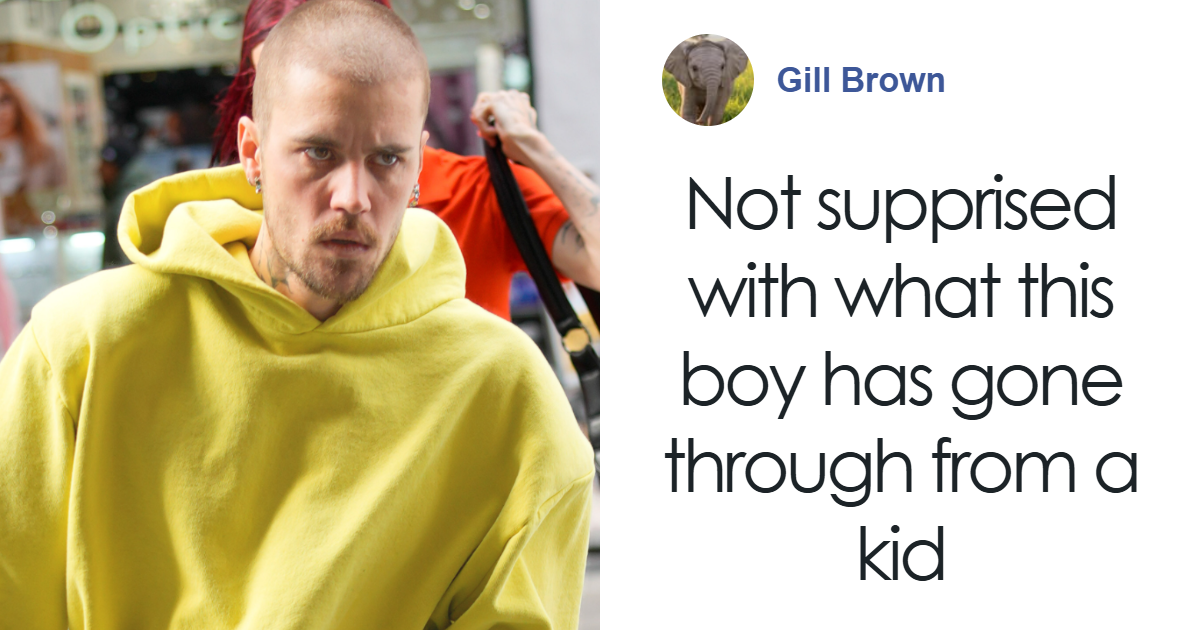
Justin Bieber has lived under a microscope for so long that even the microscope probably needs a vacation. A hoodie, a tired face, a quiet walk, a serious expression, or one slightly awkward paparazzi photo can turn into an entire internet courtroom before lunch. Recently, the Grammy-winning pop star found himself at the center of another wave of speculation after public outings sparked online concern about his health, appearance, and possible substance abuse.
The rumor cycle moved quickly. Social media users dissected photos, tabloids ran concern-heavy headlines, and fans debated whether something deeper was happening behind the scenes. Then Bieber’s team stepped in and firmly denied the drug-use rumors, calling the narrative harmful, false, and exhausting. According to the statement reported by multiple entertainment outlets, Bieber was not using hard drugs. Instead, his camp pointed to a very human explanation: a packed creative schedule, sleepless nights, new fatherhood, and a year of major personal change.
That clarification did not erase the public’s curiosity, but it did shift the conversation. The bigger story is not simply whether one celebrity looked tired in a photo. It is about how quickly public concern can turn into public judgment, how addiction rumors follow stars with past struggles, and how the internet often confuses visibility with access. Bieber may be one of the most famous singers in the world, but fame does not make his private life public property.
What Actually Happened?
The latest discussion began after several recent Justin Bieber outings led fans and online commentators to speculate about his well-being. Some focused on his facial expressions, slim appearance, and tired-looking eyes. Others connected those visuals to Bieber’s past openness about substance abuse and mental health struggles. In the age of zoomed-in screenshots and instant hot takes, a few photographs became the raw material for a thousand theories.
Bieber’s representative responded by denying the drug-use speculation. The statement framed the past year as “transformative” for the singer, noting that he had stepped away from certain friendships and business relationships that no longer served him. The rep also said Bieber was focusing on his wife, Hailey Bieber, their son Jack Blues Bieber, his health, and his art.
That matters. A celebrity appearing tired is not evidence of substance abuse. New parents look tired. Musicians working late in the studio look tired. People dealing with stress, recovery, creative pressure, family responsibilities, spiritual reflection, or simple lack of sleep can look tired. The internet, however, often treats tiredness like a clue in a mystery series. Sometimes the answer is not scandal. Sometimes the answer is: the man has a baby and a recording schedule.
Why the Rumors Spread So Fast
Justin Bieber is not just any celebrity. He is a former teen idol who grew up in public, became one of the biggest pop acts of his generation, and openly discussed the darker side of fame. Because he has previously talked about substance abuse, anxiety, depression, health challenges, and the pressure of being globally recognized as a teenager, every new public moment gets filtered through that history.
That is unfair, but it is also predictable. When a public figure has once admitted to struggling, audiences often keep looking for signs of relapse, pain, or collapse. The intention may be concern, but the result can become invasive. Fans may say, “We are worried,” while tabloids translate that worry into dramatic headlines. Social media then adds fuel, emojis, reaction videos, and armchair analysis. By the end, a human being has become a trending topic with no chance to simply have a bad day.
This is especially true for celebrities whose lives are visually documented. A regular person can run errands in sweatpants and look half-asleep without becoming a news cycle. Bieber does it, and suddenly strangers are debating his marriage, his health, his friendships, his spirituality, and his future. That is not normal attention. That is fame with a magnifying glass and a fog machine.
Justin Bieber’s Past With Substance Abuse
Bieber has been candid about his past substance use, particularly in interviews and documentary projects where he reflected on the cost of early fame. He has described a period when his struggles became serious and frightening, and he has spoken about the work it took to move toward a healthier life. Those admissions were important because they showed a young superstar trying to be honest about pain that fame could not solve.
But past honesty should not become a permanent public sentence. Recovery is not a tabloid category. It is not a label that gives strangers permission to diagnose someone from paparazzi footage. Bieber’s past can provide context for why fans care, but it should not be used as proof of anything happening now.
There is a difference between saying, “Justin has openly discussed past addiction,” and saying, “Justin must be using drugs because he looks tired.” The first is a documented fact. The second is speculation. Responsible coverage should keep that line bright, bold, and impossible to miss.
New Fatherhood Changed the Picture
Another major part of the story is fatherhood. Justin and Hailey Bieber welcomed their son, Jack Blues Bieber, in August 2024. Since then, the couple has shared only limited glimpses of their child, choosing to protect his privacy while adjusting to life as a family of three.
Anyone who has been around a newborn knows the early months can turn even the most organized adult into a walking coffee commercial. Sleep becomes a luxury item. Schedules become suggestions. The phrase “I’ll rest later” becomes a lifestyle. Bieber’s team reportedly pointed to late-night recording sessions and caring for his son as reasons he may have appeared tired.
That explanation is not glamorous, but it is believable. It also makes the online reaction feel a little overcooked. Sometimes celebrity culture expects stars to be relatable but punishes them when they look too human. If Bieber looks polished, people say he is performing perfection. If he looks exhausted, people say something must be wrong. That is a no-win game, and nobody should have to play it while raising a baby.
Health History Also Matters
Bieber’s public health history adds more context. In 2022, he revealed that he had Ramsay Hunt syndrome, a condition that caused facial paralysis and forced him to postpone performances. He later stepped back from touring because his body needed rest. That chapter reminded fans that even global pop stars have physical limits.
Health issues, exhaustion, stress, and recovery can affect appearance. So can lighting, camera angles, travel, medication, sleep, diet, grief, and about a hundred other ordinary things. The problem is that online culture often wants one dramatic explanation. A nuanced answer does not trend as fast as a scandal.
When discussing Bieber’s appearance, the most responsible approach is simple: avoid making medical claims. Public photos do not equal a health report. Paparazzi clips do not equal a diagnosis. A social media thread is not a doctor’s office, even if everyone in the comments suddenly sounds like they completed medical school during a lunch break.
The “Broken” Comment and Emotional Honesty
Months after the February 2025 rumor cycle, Bieber also made headlines for vulnerable posts about feeling “broken,” angry, exhausted, and emotionally overwhelmed. Those posts were interpreted in many ways. Some fans saw them as spiritual honesty. Others saw them as signs that he needed privacy and support. Critics turned them into another round of speculation.
The word “broken” is powerful because it sounds dramatic, but it can also be deeply human. Many people use that language when they feel tired of trying to fix themselves, tired of being judged, or tired of performing strength for others. Bieber’s public reflections on self-worth, feeling like a fraud, and struggling with anger fit into a broader pattern of vulnerability that has appeared throughout his adult life.
That does not mean the public should overanalyze every sentence. Emotional honesty is not automatically a crisis. A person can be struggling and still be working, parenting, creating, loving, praying, resting, and healing. Human beings are not simple headlines. They can be messy and sincere at the same time.
Why Celebrity Concern Can Become Harmful
There is a thin line between concern and consumption. Concern asks, “Is he okay?” Consumption says, “Let me watch every clip, zoom in on every frame, and build a theory.” The first can be compassionate. The second can be damaging.
For celebrities with known struggles, public concern can feel like surveillance. Every appearance becomes a test. Every mood becomes evidence. Every unusual post becomes a clue. That pressure can make recovery and emotional health harder, not easier. Imagine having millions of strangers decide whether you are okay based on one walk from a restaurant to a car. Most of us would fail that test before breakfast.
Responsible fandom should make space for privacy. Fans can support Bieber’s music, celebrate his growth, and hope for his well-being without turning into a detective agency. Support does not require certainty. It can simply mean refusing to spread unverified claims.
Media Responsibility: Reporting Without Diagnosing
Entertainment journalism has a tricky job. Celebrity news is built on public interest, but public interest does not justify careless framing. In stories involving substance abuse rumors, the language matters. Words like “alleged,” “speculation,” “denied,” and “unverified” are not boring legal decorations. They are guardrails.
A responsible article should clearly state what is known: Bieber’s team denied the rumors. It should state what is not known: the private details of his current health. It should avoid presenting fan comments as evidence. It should not treat paparazzi images as medical data. And it should remember that addiction and mental health are serious subjects, not plot twists.
The best coverage gives readers context without feeding panic. Bieber’s past struggles are relevant only because he has spoken about them himself. They should not be used to trap him in an old narrative. People are allowed to grow beyond the hardest chapters of their lives.
What Fans Should Take Away
The Justin Bieber substance abuse rumors reveal more about internet culture than they reveal about Bieber. They show how quickly concern can become certainty, how easily old stories can be attached to new images, and how difficult it is for public figures to be seen as fully human.
For fans, the takeaway is not to stop caring. It is to care better. That means avoiding rumors, resisting dramatic assumptions, and supporting artists without demanding constant access to their private lives. It also means remembering that a person’s recovery story belongs to them.
Bieber has already given the public more vulnerability than most stars ever do. He has talked about fame, faith, marriage, health, addiction, insecurity, and the desire to become a better husband, father, friend, and artist. That openness should be met with maturity, not endless suspicion.
Experience-Based Reflections: What This Story Teaches About Rumors, Recovery, and Public Pressure
Stories like this feel familiar because they tap into a broader experience many people recognize: being misunderstood at the exact moment you are already tired. You do not have to be Justin Bieber to know what it feels like when people assume the wrong thing. Maybe you were quiet one day and someone decided you were rude. Maybe you looked exhausted and someone asked if your life was falling apart. Maybe you changed your circle, pulled back from social media, or started prioritizing your family, and people treated your growth like a mystery that needed solving.
That is why Bieber’s situation connects beyond celebrity gossip. At its core, it is about the gap between what people see and what is actually happening. A public outing shows a few seconds. A photograph captures one angle. A video clip removes context. But life happens in the parts no camera sees: the sleepless night before, the difficult conversation, the private prayer, the studio session, the parenting shift, the stress, the healing, the ordinary human fatigue.
There is also an important lesson for anyone who has struggled with mental health, addiction, or burnout. Once people know about your past, they may try to read it into your present. If you had a hard chapter years ago, some people will act as if every bad day is proof you are back in that chapter. That can feel deeply unfair. Growth should not require looking perfect at all times. Recovery should not require smiling in every photo. Healing is not a brand campaign with flawless lighting.
The experience of watching these rumors unfold also reminds readers to be careful with “concern.” True concern is gentle. It respects boundaries. It does not need to be the loudest comment under a viral post. It does not turn someone else’s pain into entertainment. Real concern might look like sending encouragement, choosing not to repost a cruel headline, or simply saying, “I hope he is surrounded by people who love him.”
For public figures, the pressure is even more intense. A singer like Bieber is expected to be talented, stylish, emotionally open, professionally active, spiritually grounded, physically healthy, happily married, creatively inspired, and camera-ready at all times. That is not a standard; that is a circus act. Nobody can live naturally when every ordinary moment becomes content.
For readers, the practical takeaway is simple: slow down before believing or sharing a rumor. Ask what is actually confirmed. Ask whether the headline is informing you or manipulating your curiosity. Ask whether your comment would feel supportive if the person in the story were sitting across from you. The internet moves fast, but compassion should not be rushed.
In Bieber’s case, the confirmed information is that his team denied the substance abuse rumors, emphasized his focus on family and music, and pushed back against harmful speculation. Everything beyond that should be handled carefully. He may be a superstar, but he is also a husband, a father, an artist, and a person with a history he has had the courage to discuss publicly. That deserves more than a rumor mill with Wi-Fi.
Conclusion
Justin Bieber breaking silence through his representative did more than deny substance abuse rumors. It exposed a larger issue in celebrity culture: the habit of turning concern into speculation and speculation into a storyline. Bieber’s past struggles, health history, and emotional honesty make fans understandably attentive, but they do not give the public permission to diagnose him from afar.
The fairest reading of the situation is also the most humane one. Bieber is navigating fatherhood, music, personal changes, public pressure, and ongoing scrutiny. His team says the drug rumors are false. Until credible information says otherwise, that should be enough. The internet may love a dramatic theory, but people deserve room to be tired, complicated, private, and healing without becoming a headline every time they step outside.
Note: This article is written for web publication using verified public reporting, careful wording, and no medical diagnosis. It does not claim that Justin Bieber is using substances; it explains the rumor cycle, the public response, and the denial from his representative.