

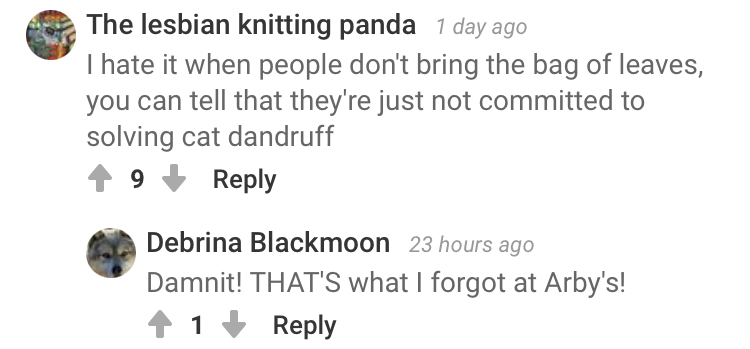
You can spend fifteen minutes watching a carefully edited video, reading a thoughtful article, or admiring a perfectly composed photoand then discover that the real entertainment is hiding three scrolls below it. The comment section is where ordinary conversation puts on a fake mustache, borrows someone else’s shoes, and begins explaining why pigeons should be allowed to vote.
Weird internet comments come in many flavors. Some are brilliant jokes delivered with surgical timing. Others appear to have escaped from a completely different discussion. A few read like accidental diary entries. Then there are comments so strangely specific that you wonder whether the writer has been waiting their entire life for exactly that post.
So, Pandas, it is time to open the digital cabinet of curiosities. What is the weirdest comment you have ever seen? Share the bizarre, hilarious, confusing, or unexpectedly wholesome remark that still occupies a furnished apartment in your memory.
Why the Comment Section Is Often Stranger Than the Post
A post usually has a purpose. It may inform, entertain, advertise, complain, celebrate, or demonstrate how to cook a meal using only an air fryer and unreasonable confidence. Comments have no such obligation. They can react to the post, argue with another commenter, tell a personal story, correct a typo, propose marriage, promote a suspicious investment opportunity, or ask whether anyone else can smell burnt toast.
This freedom makes comment sections unpredictable. Researchers studying online behavior have long noted that distance, invisibility, delayed responses, and perceived anonymity can make people communicate differently than they would face-to-face. Sometimes that produces hostility. At other times, it produces unusual honesty, playful absurdity, or confessions nobody requested.
Online communities also develop their own styles. One group may reward detailed advice, while another prefers jokes delivered in the driest possible tone. Reddit formally describes its moderation system as layered and community-driven, with sitewide rules supplemented by community-specific expectations. That helps explain why a comment that earns thousands of upvotes in one corner of the internet might be greeted elsewhere with the digital equivalent of everyone slowly backing out of the room.
The Major Species of Weird Internet Comment
The Majestic Non Sequitur
This comment has little or no visible connection to the original post. A creator uploads a video about repairing a kitchen faucet, and someone responds, “My uncle feared spoons after 1987.” No explanation follows. The commenter vanishes into the mist.
Non sequiturs are funny because they interrupt our expectations. Humor research often describes amusement as involving some form of incongruity: the mind anticipates one thing and receives something dramatically different. A random observation about spoons beneath a plumbing tutorial certainly qualifies.
The Alarmingly Specific Compliment
Normal compliment: “Your outfit looks great.”
Weird compliment: “You dress like the friendly manager of a haunted bookstore who knows which staircase disappears on Thursdays.”
These comments are delightful because they sound oddly personal without necessarily being insulting. They offer a complete fictional biography in one sentence. Collections of unusual compliments routinely attract attention online because readers cannot immediately decide whether the recipient has been praised, gently roasted, or recruited into a fantasy novel.
The Accidental Life Story
Some commenters treat a simple question as an invitation to release a seven-season family drama. The post asks, “Do you prefer crunchy or smooth peanut butter?” The answer begins with a divorce in Toledo, includes a ferret named Kevin, and ends with a warning never to trust a man who owns three decorative ladders.
These stories may be wildly off-topic, but they can also be fascinating. A comment section allows people to turn a small prompt into a larger memory. Sometimes the strangest response is strange only because the reader arrived without the missing thirty years of context.
The Confidently Incorrect Expert
This person does not merely misunderstand the subject. They misunderstand it with authority. Their comment may contain percentages, capital letters, and the phrase “Do your research,” despite presenting no evidence beyond an aunt’s neighbor who once watched half a documentary.
There is something hypnotic about a comment that is both extremely certain and spectacularly wrong. However, misinformation stops being harmless when it concerns health, safety, elections, finances, or another person’s reputation. The funniest approach is usually to share the absurd structure of the comment without repeating dangerous claims as though they might be true.
The Wrong-Post Wanderer
This commenter appears to be responding to another piece of content entirely. Beneath a photograph of a sleeping puppy, they write, “The lasagna was acceptable, but the parking situation ruined the evening.”
Perhaps they clicked the wrong post. Perhaps the app refreshed. Perhaps the puppy is secretly running an Italian restaurant. We may never know.
The Unintentional Poet
Autocorrect errors, broken translations, voice-to-text mistakes, and missing punctuation can transform ordinary sentences into surreal literature. “Please bring milk when you come home” becomes “Please bring the moon when you become home,” and suddenly the grocery list has been nominated for a literary award.
These comments are often funniest when nobody was trying to be funny. Their charm comes from accidental imagery, unexpected rhythm, and the reader’s attempt to reconstruct the original message.
The Comment That Becomes the Main Event
Sometimes the top comment is more memorable than the content beneath which it appears. It may summarize the entire situation in six words, identify a background detail nobody else noticed, or compare the subject to something so accurate that the comparison can never be unseen.
Online humor collections frequently highlight comments that turn ordinary posts into collaborative comedy. The original creator supplies the stage; the commenters arrive carrying props, fog machines, and at least one deeply unnecessary raccoon.
Why Weird Comments Stay in Our Memory
Most online remarks disappear from memory almost immediately. Weird comments survive because they violate a pattern. We expect a familiar response and receive something surprising, vivid, or emotionally mismatched. The brain pauses to resolve the contradiction, which is also one reason incongruity is so closely associated with humor.
Specificity helps too. “That is strange” is forgettable. “This looks like the waiting room of a dentist who accepts payment in riddles” creates a miniature scene. You can picture the chairs. You can hear the unsettling aquarium. You know the receptionist has not blinked since 2004.
We also remember comments that create a shared experience. One person posts an absurd observation, another extends it, and a third adds fictional lore. Soon the discussion has built an entire universe around a blurry photograph of a badly shaped potato. The fun is no longer contained in a single remark; it belongs to the group.
However, the emotional direction of a conversation can spread just as quickly. Research analyzing large online discussions has found that toxic comments can increase the likelihood of further toxic responses, with immediate conversational context playing an important role. In practical terms, one rude comment can become a permission slip for the next ten. One playful comment can also encourage others to join the joke.
Weird, Funny, or Harmful? Know the Difference
Not every shocking comment deserves a spotlight. Some remarks are strange because they are creative. Others are strange because they are invasive, threatening, discriminatory, or cruel. The difference matters.
Online harassment is not rare. Pew Research Center reported that 41% of U.S. adults surveyed in 2020 had personally experienced at least one measured form of online harassment. Social media was the most commonly reported setting, although harassment also appeared in comment sections, forums, email, gaming spaces, and dating platforms.
Major platforms consequently maintain rules covering harassment, privacy violations, hateful conduct, spam, threats, and other harmful behavior. YouTube’s guidelines apply to comments as well as videos and posts. Reddit prohibits harassment and the exposure of private information. Meta’s standards provide protections against bullying and degrading attacks, with heightened concern for minors.
A good rule is simple: laugh at the absurdity, not at a vulnerable person. A strange typo can be funny. A harmlessly dramatic opinion can be funny. A bizarre comparison involving a medieval goose can be very funny. Doxxing, threats, stalking, or targeted humiliation are not quirky additions to the internet’s comedy museum.
How to Share the Weirdest Comment Safely
Remove Identifying Information
Crop or blur usernames, profile photographs, email addresses, locations, workplace details, and anything else that could expose a private individual. Even a public comment can attract unwanted attention when reposted to a much larger audience.
Include Enough Context
A comment may look bizarre because readers cannot see what it was responding to. Briefly explain the original post without turning your submission into a doctoral dissertation. “This appeared beneath a tutorial about folding fitted sheets” is probably enough.
Paraphrase When Necessary
When a comment contains slurs, personal information, graphic language, or harmful misinformation, summarize the strange part instead of reproducing it word for word. The goal is to share an amusing experience, not preserve every unpleasant syllable for future historians.
Do Not Organize a Digital Pile-On
A strange comment does not automatically justify sending hundreds of strangers toward its author. Avoid encouraging harassment, digging through someone’s account, or turning a harmlessly awkward remark into a public punishment ritual.
Check Whether It Is Satire
The internet is full of jokes written in a serious voice. Before declaring that you have discovered the world’s most confused person, consider whether the commenter may be deliberately absurd. Tone is difficult to read online, especially when sarcasm arrives without facial expressions, vocal cues, or a tiny employee holding up a “THIS IS A JOKE” sign.
How to Respond When You Encounter a Truly Bizarre Comment
You have several options. You can ignore it, ask for clarification, respond with humor, report it, or quietly save a screenshot for the day someone asks, “What is the weirdest comment you have ever seen?”
If the comment is harmless, a playful reply may create an entertaining exchange. Try matching the commenter’s energy without becoming insulting. When someone writes, “This cat has the expression of an accountant who has discovered forbidden mathematics,” the correct response is not “You are weird.” It is “He has already deducted your soul as a business expense.”
If the comment appears confused rather than comedic, a polite question may reveal missing context. If it contains threats, harassment, impersonation, spam, or private information, use the platform’s reporting tools instead of escalating the argument. YouTube, for example, allows users to report inappropriate comments and states that reports are anonymous.
Hey Pandas, Your Turn
Think back through your years of scrolling. Which comment made you stop, reread it, check whether you had accidentally opened another post, and then send it to three friends with no explanation?
Maybe it was an oddly detailed compliment. Perhaps it was a dramatic confession beneath a recipe. It could have been a customer review that slowly became a ghost story, a typo that created a new philosophy, or a reply so unrelated to the topic that it achieved artistic independence.
Share the weirdest comment you have ever seen, but protect personal information and avoid directing attention toward private individuals. Add a little context, explain why it stayed with you, and tell us whether you laughed, worried, or simply stared at the screen while your brain restarted.
Experiences From the Comment-Section Wilderness
Anyone who spends enough time online eventually becomes an amateur archaeologist of strange remarks. You begin by reading a normal discussion and end up excavating a sentence that should be placed behind glass.
One memorable type of experience begins with an innocent cooking video. The creator calmly explains how to roast vegetables. Most viewers discuss oven temperatures and seasoning. Then one person comments that the carrots remind them of a former landlord who collected porcelain birds and communicated exclusively by leaving notes inside shoes. Nobody asks for clarification. Instead, another commenter replies, “I think we rented from the same man.” A third person says the birds were probably witnesses. Within an hour, the recipe has become a collaborative mystery series.
Another classic experience involves product reviews. You search for practical information about a lamp and discover a reviewer who has assigned it a single star because it failed to improve their marriage. The review explains that the light is bright, the switch works, and the packaging was secure. Nevertheless, the reviewer’s spouse still prefers another room. The lamp is held responsible. Somewhere, a warehouse employee is reading this and reconsidering every career decision that led to customer support.
Then there are comments that become strange through excessive honesty. Beneath a post asking for quick breakfast suggestions, someone describes eating cereal from a mixing bowl while standing beside the refrigerator at 2 a.m. They explain that regular bowls create “false confidence” and that chairs encourage emotional attachment. The comment is peculiar, yet also weirdly relatable. Many readers have probably eaten an improvised meal in circumstances they would not include in a lifestyle magazine.
The most charming experiences often involve accidental language. A person using voice-to-text attempts to praise a dog and produces, “He has the honorable face of a regional potato king.” That sentence may have begun as something ordinary, but the final version is better. The dog now has a title, agricultural responsibilities, and several provinces to govern.
Comment sections also contain moments of unexpected kindness. Someone may leave a silly remark beneath a sad post simply to offer a small distraction. Another person may describe an embarrassing experience, prompting dozens of strangers to confess similar mistakes. Humor becomes a way of saying, “You are not the only human whose brain occasionally trips over its own shoelaces.” Research and psychological writing on humor frequently emphasize its role in easing tension, coping with awkwardness, and creating social bonds.
Of course, some experiences are uncomfortable rather than amusing. A commenter may become aggressive over a harmless opinion, reveal private details, or repeatedly target another person. Those moments demonstrate why moderation matters. Studies and platform reports show that maintaining large online communities requires both formal rules and extensive action by moderators, administrators, automated systems, and users who report violations.
The best weird comments occupy a narrow but wonderful space. They surprise without harming, confuse without threatening, and reveal just enough personality to make strangers feel briefly connected. They remind us that millions of people are typing from kitchens, buses, offices, bedrooms, waiting rooms, and possibly haunted bookstores. Naturally, some of the resulting sentences will arrive wearing roller skates.
Conclusion: Preserve the Absurdity, Not the Harm
The weirdest comments are tiny pieces of accidental internet folklore. They thrive on surprise, specificity, misunderstanding, bold creativity, and the human inability to remain on topic for longer than four consecutive minutes.
Share the comments that made you laugh or left you delightfully confused. Remove identifying details, provide useful context, and avoid amplifying cruelty or misinformation. Most importantly, appreciate the rare commenter who can transform a routine post into a sentence nobody in human history was previously required to process.
Note: The sample comments and situations in this article are original, paraphrased, or composite examples created to illustrate common online experiences. They are not presented as direct quotations from identifiable users.