

Some people enter a crowded room and immediately begin collecting new friends. Introverts enter the same room, locate the nearest quiet corner, and calculate how soon leaving would still count as socially acceptable. Sarah Andersen has spent more than a decade turning that second experience into wonderfully chaotic comedy.
Her long-running webcomic, Sarah’s Scribbles, captures the small dramas of modern adulthood: unanswered messages, canceled plans, creative insecurity, bedtime procrastination, book-buying habits, clingy pets, suspiciously energetic morning people, and the emotional consequences of hearing someone say, “Let’s all introduce ourselves.”
The 50-comic roundup commonly circulated under this title was published in March 2024. Additional Sarah Andersen collections and online selections have appeared since then, so “newest” describes that particular roundup rather than a definitive 2026 chronology. What has not changed is the appeal of these relatable introvert comics: they make private thoughts feel hilariously public.
Who Is Sarah Andersen?
Sarah Andersen is an American cartoonist and illustrator best known for Sarah’s Scribbles, a semi-autobiographical webcomic that began while she was studying art. The series follows a wide-eyed, messy-haired character navigating work, relationships, anxiety, creativity, pets, and the poorly documented wilderness known as adulthood.
Andersen graduated from the Maryland Institute College of Art in 2014. Her comics have appeared across major webcomic and social platforms, including Tumblr, Instagram, Tapas, and GoComics. Tapas lists hundreds of episodes, while GoComics describes the strip as a celebration of everything weird, awkward, and embarrassing about everyday life.
The success has extended far beyond social media. Her first three Sarah’s Scribbles collectionsAdulthood Is a Myth, Big Mushy Happy Lump, and Herding Catswon consecutive Goodreads Choice Awards in the Graphic Novels & Comics category. In 2024, the National Cartoonists Society named Andersen the winner in its Online ComicsShort Form division.
She has also expanded into the supernatural romance Fangs, the full-color creature comedy Cryptid Club, and other illustration projects. Her fifth Scribbles collection, Adulthood Is a Gift!, was released in October 2024 with 100 comics, 15 essays, sketches, photographs, and a behind-the-scenes look at her creative process.
Why Sarah Andersen’s Introvert Comics Feel So Accurate
The secret is not complicated artwork or elaborate world-building. Andersen usually starts with a tiny emotional truth and pushes it exactly one step beyond reality. A manageable task becomes an epic quest. A minor social interaction becomes a courtroom trial conducted entirely inside the protagonist’s head. A cat becomes an adorable domestic tyrant with no respect for closed doors.
She Understands the Social Battery
Introversion is often mistaken for disliking people. Andersen’s comics show something more recognizable: enjoying friends while also requiring a recovery period afterward. The protagonist may genuinely want to attend an event, have fun for twenty minutes, and then mentally transform into a tired Victorian ghost.
This contradiction supplies endless material. An invitation can feel flattering and terrifying at the same time. Canceled plans bring disappointment, relief, freedom, and immediate pajama deployment. Readers laugh because the joke does not mock introverts from the outside. It recognizes the internal negotiation already taking place.
She Turns Overthinking Into Physical Comedy
In real life, anxiety is invisible. On Andersen’s page, it can become a monster, a dark cloud, an accusing double, or an enormous wave swallowing a very small cartoon person. That transformation makes an abstract feeling instantly understandable.
A simple message such as “Okay” can therefore trigger ten imaginary interpretations. Is the sender angry? Are they disappointed? Did the missing exclamation mark end the friendship? The logical answer is probably no. The anxious brain, however, has already hired investigators and scheduled a six-part documentary.
Her Character Is Specific but Easy to Inhabit
The central figure has recognizable featureslarge eyes, dark hair, expressive eyebrowsbut remains visually simple. That simplicity allows readers to project themselves into each scene. She is Sarah, but she can also be anyone who has rehearsed a phone call, hidden from a delivery person, or waited three days to answer a message because answering late became increasingly embarrassing.
The Biggest Themes Running Through the 50 Comics
1. Socializing Versus Staying Home
Several of the funniest situations revolve around the eternal introvert debate: meaningful human connection or blanket? Human connection is lovely, of course, but the blanket is already here and has never requested small talk.
Andersen captures the preparation required before socializing, the energy spent while performing normal-person behavior, and the peaceful collapse afterward. Going out is not portrayed as bad. It is portrayed as an activity with a surprisingly expensive emotional cover charge.
2. The Anxiety of Ordinary Communication
Phone calls, introductions, group conversations, unexpected visitors, and unread messages all become miniature suspense stories. Her protagonist frequently understands that a situation is harmless while simultaneously reacting as though she has been asked to negotiate an international peace treaty without notes.
The humor comes from exaggeration, but the underlying experience remains familiar. Many readers know how it feels to compose a two-sentence email, edit it twelve times, send it, and then avoid the inbox as if something inside has developed teeth.
3. Modern Adulting Without an Instruction Manual
Sarah’s Scribbles has always questioned the idea that adulthood arrives as a stable, organized identity. Bills get paid, groceries get purchased, and appointments occasionally happen on the correct day, yet the person completing these tasks may still feel like three children wearing a trench coat.
The newest selections continue exploring productivity, work, sleep schedules, household responsibilities, and comparisons with apparently functional peers. The protagonist sees someone exercising at sunrise or preparing meals for an entire week and reacts as though she has encountered an advanced civilization.
4. Procrastination and the Creative Brain
Artists, writers, students, and remote workers will recognize the cycle immediately. First comes ambition. Then comes planning. Next comes an oddly urgent need to clean one drawer, research an unrelated historical mystery, and inspect every photograph ever taken of a particular cat.
Andersen does not present procrastination as simple laziness. It often grows from perfectionism, fear of failure, exhaustion, or the pressure to make every creative effort successful. In interviews, she has discussed becoming less controlled by performance numbers and more comfortable with work that might not connect with every audience.
5. Books as a Financial Emergency
One recurring version of the character is extremely cautious with ordinary purchases and completely defenseless inside a bookstore. Food must be practical. Household items should be affordable. Clothing can wait. Books, meanwhile, are apparently essential survival equipment.
This joke became one of Andersen’s most recognizable observations because it captures a specific kind of irrational logic. The unread books at home do not prevent another purchase. They merely form a welcoming committee.
6. Cats, Pets, and Domestic Chaos
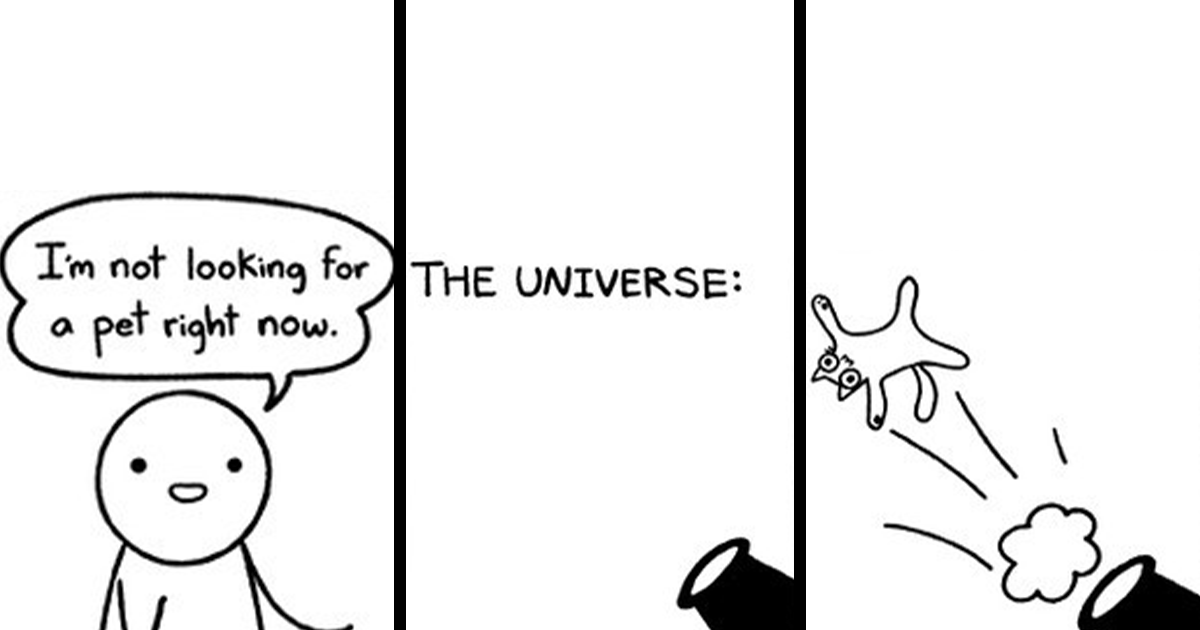
Pets in Sarah Andersen comics are companions, emotional support systems, sleep-disruption specialists, and tiny landlords who contribute nothing financially. Cats ignore boundaries, demand access to rooms they immediately want to leave, and select the least convenient moment to express affection.
The relationship is never purely sentimental. Andersen understands that loving an animal means accepting an adorable creature whose daily objectives may include sitting on your work, screaming at a wall, and knocking a glass onto the floor while maintaining eye contact.
7. Body Image and Impossible Expectations
The comics frequently challenge the pressure to look polished, confident, productive, and camera-ready at all times. Andersen contrasts idealized images with the softer, stranger, less coordinated reality of inhabiting a human body.
Instead of offering a perfect self-love speech, she uses recognition. Hair refuses instructions. Clothing changes personality after leaving the fitting room. Photographs capture expressions no mirror has ever witnessed. The joke provides relief by admitting that almost everyone is improvising.
8. The Internet as Friend and Natural Predator
Online spaces offer introverts community without requiring them to stand in a noisy room. They also offer endless comparison, unsolicited opinions, algorithmic confusion, and the possibility that an innocent sentence will be interpreted in seventeen alarming ways.
Andersen knows this tension especially well because online publishing shaped her career. She has described audience feedback as both creatively valuable and intimidating. Positive reactions can reveal which observations resonate, but constant visibility can be overwhelming for an introverted artist.
9. Weirdness as a Form of Belonging
As the series has grown, its humor has expanded beyond classic millennial anxiety into monsters, covens, strange animals, gothic interests, and increasingly surreal situations. The result still feels consistent because weirdness has always been part of the comic’s emotional vocabulary.
In one interview, Andersen explained that she wants her work to communicate acceptance and help readers feel more normal about who they are. That goal connects Sarah’s Scribbles with Fangs and Cryptid Club: each series finds warmth among characters who do not fit conventional expectations.
10. The Relief of Being Understood
The most successful Sarah Andersen comics create an instant two-part reaction: first laughter, then the slightly alarming realization that a stranger has documented your private behavior.
That recognition matters. A fear or habit may feel uniquely embarrassing until thousands of readers respond, “Wait, you do that too?” The comics do not solve social anxiety, eliminate procrastination, or teach cats to respect personal property. They simply make those experiences less lonely.
How the Minimalist Art Makes Every Joke Stronger
Andersen’s black-and-white visual style is deliberately economical. Backgrounds appear when they support the joke and disappear when they do not. Faces can shift from mild concern to total psychological collapse with a few lines. The reader never has to search for the emotional center of a panel.
Her timing is equally important. A typical strip establishes an ordinary expectation, pauses long enough for the reader to recognize it, and then delivers an exaggerated reversal. The final panel may introduce a creature, a dramatic transformation, or a painfully honest confession.
This structure makes the comics ideal for online reading. They are easy to understand on a phone, quick to share, and expressive even when the dialogue is minimal. Yet the strongest strips remain memorable because their compact format contains a complete emotional story.
Why the Comics Appeal Beyond Introverts
Although introvert humor is central to the collection, the audience is much broader. The comics speak to anyone who feels uncertain about adulthood, creativity, appearance, productivity, technology, friendship, or the correct number of books to own. The correct number, according to bookstore mathematics, is always one more.
Extroverted readers can recognize procrastination, workplace exhaustion, or pet-related defeat. Younger readers see the confusing future approaching. Older readers remember discovering that adults do not actually possess a secret manual. Artists recognize the unstable mixture of inspiration and self-doubt that accompanies creative work.
That range explains why Sarah’s Scribbles has endured while countless viral posts disappear. The jokes respond to internet culture, but their foundationsembarrassment, insecurity, affection, fatigue, and the wish to be acceptedare not dependent on one platform or trend.
A Reader’s Experience: Fifty Comics and One Depleted Social Battery
Reading 50 Sarah Andersen comics in one sitting feels less like browsing cartoons and more like discovering that someone has been quietly taking notes during your least dignified moments. The first few strips invite ordinary laughter. Then a comic about avoiding a basic interaction appears, and the experience becomes personal.
You may begin confidently, sitting upright and behaving like a responsible media consumer. Within minutes, you are curled into a chair, remembering every party where you spent twenty minutes petting the host’s dog because the dog did not ask what you did for work.
The social-anxiety comics produce the strongest flashbacks. They recall the message drafted but never sent, the phone call postponed until the business closed, and the moment someone unexpectedly said your name during a group conversation. Outwardly, nothing happened. Inwardly, a small office caught fire.
Then come the productivity strips. These encourage readers to examine the ambitious schedule they created that morning. According to the schedule, several meaningful tasks should already be complete. According to reality, someone has watched four videos about restoring antique furniture despite owning neither antique furniture nor restoration equipment.
The book-related jokes create a different sensation: accusation. Many readers possess a stack of unread books that has moved beyond “collection” and begun forming geological layers. Sarah’s protagonist treats another bookstore visit as a necessary expedition, and suddenly every previous purchase feels completely reasonable. Those books are not clutter. They are options for future versions of yourself who have more free time and better lighting.
Pet owners receive no mercy. A comic about cats will remind them of the animal currently sleeping peacefully after conducting a loud hallway investigation at 3:17 a.m. The accuracy is comforting and offensive in equal measure.
The most enjoyable part of the reading experience is the rhythm between exaggeration and sincerity. Andersen can depict a minor inconvenience as an apocalyptic event, yet the emotional truth remains intact. She understands that embarrassment rarely feels minor while it is happening. A forgotten name, awkward goodbye, or delayed response can occupy the mind long after everyone else has forgotten it.
By the twentieth comic, readers begin anticipating the transformations. A small worry will probably grow limbs. Motivation may appear as a fragile creature and immediately escape. Confidence will enter the room, notice another person, and leave through a window.
By the fortieth, the collection starts to feel like group therapy conducted by cartoon animals and a woman in an oversized sweater. There is no formal advice, no motivational worksheet, and no demand to become a fearless networking machine. Instead, the comics offer recognition. Your habits may be inconvenient, your thoughts may be dramatic, and your cat may be actively sabotaging your employment, but you are not uniquely defective.
After the fiftieth comic, the ideal response is to share a few favorites with someone who understands, close every unnecessary browser tab, and recover from the exhausting social activity of laughing alone. The experience leaves readers amused, exposed, and oddly reassuredthe signature emotional combination of Sarah’s Scribbles.
Conclusion
“50 Of The Newest Comics About Life As An Introvert By Sarah Andersen” succeeds because the collection recognizes experiences people often struggle to explain. It captures the comfort of canceled plans, the danger of a ringing phone, the mysterious disappearance of motivation, and the powerful gravitational field surrounding a warm bed.
Sarah Andersen’s humor is self-aware without becoming cruel. Her protagonist fails, worries, hides, procrastinates, buys books, loves animals, and continues moving through adulthood anyway. Beneath every joke is a quiet message: being awkward does not make someone broken, and needing solitude does not mean rejecting the world.
The comics may take only seconds to read, but their emotional accuracy gives them unusual staying power. For introverts, anxious overthinkers, creative people, book lovers, cat servants, and anyone pretending to understand adulthood, these scribbles remain funny because they remain true.