

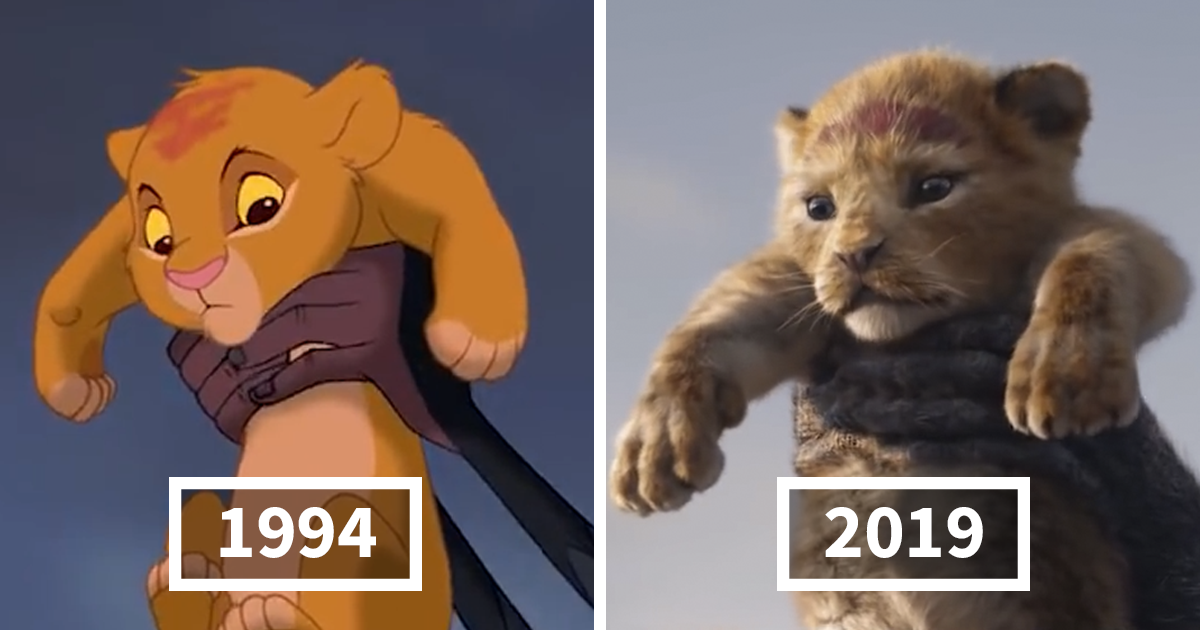
There are movie comparisons, and then there are movie comparisons that make an entire generation sit upright like a meerkat hearing a suspicious twig snap.
When a side-by-side video placed The Lion King (2019) beside Disney’s 1994 animated classic, viewers were not merely looking at old footage versus new footage. They were watching two wildly different philosophies of filmmaking square off in the savanna. One version says, “Let color, exaggeration, and musical chaos do their glorious thing.” The other says, “What if lions looked so real you could almost smell the dust on their paws?”
The early comparison video, created by motion graphics designer Sowick, highlighted how closely the 2019 teaser mirrored shots from the original film. That simple split-screen setup sparked a bigger conversation: Why can two movies with nearly the same story, familiar songs, and matching camera compositions feel so emotionally different?
The answer is not that one movie has lions and the other has slightly more expensive lions. It is about animation style, visual language, performance, nostalgia, and the strange truth that realism is not always the same thing as feeling real.
Why the Lion King Side-by-Side Comparison Became So Fascinating
A side-by-side comparison works because it removes memory from the equation. Without it, viewers might say the 1994 version feels “more magical” simply because they watched it repeatedly on a scratched VHS tape while eating cereal that turned the milk an unnatural shade of blue.
Put the scenes together, however, and the differences become obvious. The 1994 Lion King is hand-drawn, theatrical, colorful, and openly emotional. The 2019 version is photo-realistic computer animation designed to resemble an epic nature documentary with a royal family problem.
The 2019 remake was often described as “live action,” but that label is a little misleading. Its world was created through photorealistic digital animation and virtual production techniques rather than traditional live-action animal filming. Disney explained that director Jon Favreau and his team used a virtual set that allowed filmmakers to work inside a digital version of the Pride Lands.
That achievement is impressive. The grass moves. The fur reacts to light. The animals carry weight. Dust behaves like dust, which is perhaps dust’s greatest professional skill. But when viewers compare the remake with the original frame by frame, technical realism sometimes reveals what was traded away: expressive exaggeration.
The 1994 Lion King Was Designed to Feel Big
The original The Lion King did not try to convince anyone that its lions belonged in a wildlife documentary. It wanted viewers to believe in a myth.
Its Pride Lands are not simply African grasslands. They are a visual kingdom built from sweeping skies, warm golds, deep reds, sharp shadows, and dramatic silhouettes. Mufasa does not just stand on Pride Rock; he occupies it like a king carved out of thunderclouds. Scar does not merely look different from Mufasa; he is designed to look like trouble in lion form.
Hand-drawn animation gave the artists room to push character design beyond biology. Scar’s angular face, narrow green eyes, dark mane, and sly movements communicate danger before he even opens his mouth. Simba’s oversized cub features make him instantly vulnerable. Timon’s tiny body and hyperactive gestures make him look like he drank four cups of coffee and then discovered jazz.
That flexibility matters because animation is not only about making something move. It is about deciding how it should move. A character can stretch, pose, bounce, glare, collapse, or perform a facial expression that no real lion could physically produce. Those choices turn drawings into personalities.
Critics and animation historians have often pointed to this expressive freedom as one of the original film’s biggest strengths. The 1994 version used stylized character acting and visual exaggeration to move easily between comedy, tragedy, spectacle, and music-video-level drama.
The Opening Scene Proves the Point
In the original “Circle of Life” sequence, the animals arrive in an almost ceremonial parade. The sunlight glows. The camera soars. The music swells. Rafiki raises Simba above the gathered kingdom, and the entire scene feels less like a family introduction and more like the grand opening of the universe.
The 2019 version recreates the same basic sequence with astonishing visual detail. The animals look natural. The landscapes look enormous. The sunrise could make a travel brochure feel insecure.
Yet the emotional effect changes. In the animated film, the scene is stylized into a visual anthem. In the remake, it is grounded in realism. Both approaches are valid, but they are trying to create different kinds of wonder.
What the 2019 Lion King Did Better Than Many People Admit
The side-by-side comparison is not a legal trial where the 2019 remake must sit in a tiny defendant chair wearing a powdered wig. The newer film has genuine strengths, especially in atmosphere, scale, and environmental realism.
The 2019 Lion King made the Pride Lands feel physically huge. Cliffs have texture. Water has weight. Storms carry menace. A stampede does not look like a stylized wave of wildebeests; it feels like a dangerous mass of animals capable of flattening absolutely everything in its path, including your emotional stability.
The new version also made several story adjustments. Nala receives more agency, including an expanded escape from Pride Rock and a more active role in resisting Scar’s rule. The remake also adds a longer journey for Simba’s fur before Rafiki discovers it, updates dialogue for Timon and Pumbaa, and introduces Beyoncé’s song “Spirit.”
Those changes were not all cosmetic. Expanding Nala’s role helps the story feel less dependent on Simba alone. The original has a powerful emotional core, but the remake gives more room to the lionesses as active participants in restoring the Pride Lands.
Some scenes also benefit from a touch of realism. Simba’s escape from the gorge, for example, is staged in a way that feels more physically plausible. It is not necessarily more dramatic than the animated version, but it avoids the delightful cartoon logic where characters survive falls that would make a mountain goat request a safety harness.
The Visual Effects Were an Extraordinary Technical Achievement
Even critics who preferred the original animation generally acknowledged the accomplishment of the 2019 film’s visual effects. The remake earned an Academy Award nomination for Visual Effects, reflecting the scale of its technical work.
Every blade of grass, fur strand, rain cloud, animal movement, and sunlit landscape had to work together inside an entirely digital environment. That does not automatically make a film emotionally stronger, but it does make the production an impressive example of modern computer animation.
The 2019 film also found enormous commercial success, earning more than $1.66 billion worldwide. Clearly, plenty of viewers wanted to revisit the Pride Lands, even if some left the theater wondering why Scar seemed less like a fabulous villain and more like a lion who had not slept well.
Where the 1994 Animation Still Wins
The original movie’s biggest advantage is emotional readability. When Simba is terrified, audiences can see it immediately. When Scar is amused by his own cruelty, his face announces it like a neon billboard. When Timon and Pumbaa perform comedy, they are allowed to bend reality until the joke lands.
The 2019 animals are more anatomically believable, but real lions do not have eyebrows designed for Shakespearean betrayal. That creates a challenge. The voices may deliver rage, fear, grief, or humor, yet the faces often remain restrained because the animals must still resemble actual animals.
This is especially noticeable in scenes involving Scar, Simba, and Mufasa. The original animated performances use posture, eye shape, timing, and exaggerated movement to communicate emotional stakes. The remake relies more heavily on voice acting, lighting, and camera placement.
That is not a failure of the artists. It is a consequence of the visual rules the movie chose. A realistic lion cannot suddenly throw up its paws, widen its eyes, and sing while dancing through a field of color without breaking the illusion. The 1994 version has no such restriction. It can be dramatic one second and joyfully ridiculous the next.
Music Suffers When Reality Gets Too Serious
The musical sequences make this difference impossible to ignore.
“I Just Can’t Wait to Be King” in the 1994 version is a full-blown animated fever dream: geometric animals, impossible towers, bright colors, marching rhythms, and enough visual energy to power a small city. It is not trying to be realistic. It is trying to show what Simba’s confidence feels like.
In the 2019 remake, the song is more grounded. The animals travel through the landscape, and the scene follows the physical rules of its photo-realistic world. That makes it visually coherent, but it also removes much of the original’s playful chaos.
The same issue appears in “Be Prepared.” In the animated classic, Scar leads a sinister, highly stylized musical number packed with dramatic imagery. In the remake, the scene becomes more restrained and closer to spoken-word menace than a full villain anthem.
For some viewers, this makes the remake feel more serious. For others, it feels like inviting Scar to karaoke night and then asking him to read the menu instead.
Scar Is the Perfect Example of the Two Films’ Different Priorities
Scar may be the clearest side-by-side lesson in why visual style matters.
In 1994, Scar is designed as a theatrical villain. He is leaner, darker, sharper, and visually separate from Mufasa. His movements are elegant and slippery. His expressions tell the audience exactly what he thinks about everyone else: mostly that they are exhausting and should probably move out of his sunlight.
In 2019, Scar is more realistic, which means he looks much closer to an actual lion. Chiwetel Ejiofor gives the character a grave, intelligent vocal performance, and the remake adds more suggestion of a past conflict between Scar and Mufasa.
Still, the photo-realistic design makes Scar less immediately distinct. The original lets the audience see villainy through caricature. The remake tries to reveal villainy through behavior and dialogue. Again, neither method is automatically wrong, but the original has a visual shortcut that is hard to beat.
Nostalgia Is Part of the Comparison, but It Is Not the Whole Story
It is tempting to dismiss criticism of the 2019 remake as nostalgia. People love the 1994 film because they grew up with it, sang its songs, memorized its jokes, and probably cried at Mufasa’s death long before they had the emotional vocabulary to explain why.
But nostalgia alone does not explain why the side-by-side clips are so revealing. The comparison works because it shows concrete artistic differences: brighter color choices, broader facial acting, more exaggerated choreography, and more freedom in camera movement and staging.
The original Lion King is not beloved simply because it is old. It is beloved because it is carefully designed to communicate emotion at every level. The music carries the story. The visual shapes reinforce the characters. The colors change with the mood. The movement is never merely realistic; it is expressive.
That artistic influence has lasted. The 1994 film was added to the Library of Congress National Film Registry in 2016, a recognition of its cultural, historical, or aesthetic importance. It also won Academy Awards for Best Original Score and Best Original Song for “Can You Feel the Love Tonight.”
What the Side-by-Side Video Really Teaches Us About Remakes
The most interesting thing about comparing The Lion King 2019 to the 1994 animation is that it reveals how much storytelling depends on style.
A remake can preserve dialogue, plot points, songs, and camera angles, yet still feel different because it changes the artistic language. The original tells its story through expressive animation. The remake tells a nearly identical story through realism and spectacle.
The 1994 film asks viewers to believe in animated lions who can sing, dance, mourn, rule a kingdom, and deliver life advice. The 2019 film asks viewers to believe those same lions could exist in a brilliantly rendered version of the natural world.
One approach favors myth. The other favors immersion.
One favors visual exaggeration. The other favors physical detail.
One lets a meerkat perform a hula distraction because, frankly, the laws of animation are flexible and everyone is having a marvelous time. The other keeps its feet firmly on the ground, even when the ground is digitally assembled grain by grain.
Neither film erases the other. The remake introduced the story to new audiences and demonstrated extraordinary technical ambition. The original remains a masterclass in how animation can turn a familiar story into something emotionally huge, visually distinctive, and impossible to confuse with anything else.
Watching the Two Lion King Movies Side by Side: A Viewer Experience
Watching The Lion King 1994 and The Lion King 2019 side by side feels a little like comparing a stage musical to an ultra-high-definition wildlife special. Both can be beautiful. Both can make you stare. But they invite your feelings to arrive through completely different doors.
With the animated film, the emotion often reaches you before you have time to think about it. Mufasa’s voice fills the screen. Scar’s smirk signals danger. Simba’s panic is written across his face. The colors darken when the kingdom falls apart, and the music seems to grow heavier with every scene. You do not have to study the image to understand the mood. The film practically walks over, grabs you by the shoulders, and says, “We are sad now. Please prepare your tissues.”
The 2019 version asks for a different kind of attention. You notice the fur moving in the wind. You look at the muscles beneath a lion’s coat. You watch sunlight hit a rock face or dust roll across the land. It can create a sense of scale that the original never aimed for. Pride Rock looks enormous. The stampede feels dangerous. The natural world appears less like a painted kingdom and more like a place where you would absolutely need sunscreen, water, and a very fast guide.
That difference changes how viewers react to familiar scenes. In the 1994 movie, “Hakuna Matata” is a celebration of absurd animated joy. Timon and Pumbaa are performers, Simba is growing up before our eyes, and the world is free to become a musical playground. In the 2019 film, the same moment is more grounded. The characters travel, eat bugs, and sing in a setting that still needs to obey the rules of physical reality. It is pleasant, but it cannot explode into the same kind of cartoon spectacle without breaking the visual contract.
The comparison also changes with age. Adults who watched the original as children may notice its craftsmanship more clearly now. They may see how Scar’s design creates instant tension, how the score makes every emotional turn feel larger, or how the movie balances tragedy and comedy without falling apart like a warthog on roller skates.
Younger viewers may have the opposite experience. They may be amazed by the realistic animals in the 2019 version because the technology feels current, polished, and immersive. For them, the remake may be the first trip to the Pride Lands, not a return visit. That matters. Every generation deserves a chance to discover Simba’s story, even if they later become extremely opinionated about whether “Be Prepared” should include dramatic marching hyenas.
The best way to watch both films is not as enemies competing for the same crown. Think of them as two artistic interpretations of the same legend. The 1994 original is bold, emotional, musical, and proudly artificial in the best possible way. The 2019 remake is detailed, atmospheric, and technically daring. One roars with animation’s freedom. The other whispers, “Look how far digital filmmaking can go.”
And after seeing them side by side, most viewers reach the same conclusion: realism can be impressive, but style is what makes a story unforgettable.