

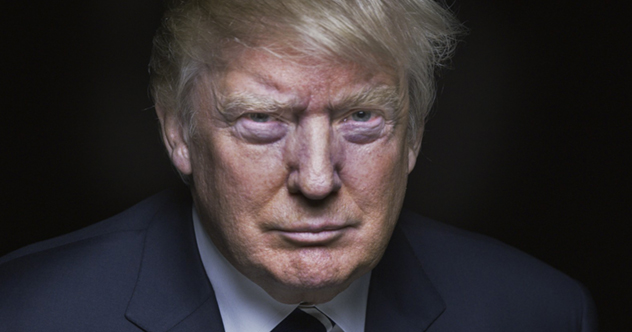
Love him, loathe him, quote him, mute him, or discuss him at Thanksgiving until someone dramatically reaches for the mashed potatoes, Donald Trump has changed American politics in ways that will not simply vanish when one election cycle ends. His influence has reshaped the Republican Party, altered media strategy, challenged old political norms, and forced both parties to rethink who their voters are and what those voters actually want.
The phrase “changed politics forever” sounds dramatic, but in Trump’s case, it is not just headline confetti. Since his 2016 rise, through his 2024 comeback and second administration, Trump has transformed political communication, voter coalitions, campaign branding, presidential power, trade policy, immigration debate, and trust in institutions. Some of these changes energize his supporters. Others alarm his critics. All of them matter.
This article breaks down 10 ways Donald Trump has changed politics forever, using real examples, voter trends, and institutional shifts. The goal is not to hand out red hats or protest signs. The goal is to understand how American politics now works in the Trump eraand why the old rulebook looks like it was left out in the rain.
1. He Turned Personality Into a Political Platform
Before Trump, presidential candidates certainly had personal brands. Barack Obama had “hope,” Ronald Reagan had sunny conservatism, and Bill Clinton had the famous thumb-pointing empathy pose. But Trump turned personality itself into a central political machine. His stylecombative, unscripted, theatrical, repetitive, and instantly recognizablebecame inseparable from his message.
For Trump supporters, this directness felt refreshing. They saw a candidate who spoke like a barstool commentator rather than a committee-approved policy memo. For opponents, it felt reckless and divisive. Either way, Trump proved that in modern politics, tone can be as powerful as policy. A memorable insult, a rally chant, or a viral clip could shape an entire news cycle faster than a 40-page white paper on infrastructure financing. Shocking, I know: America did not gather around the fireplace to read the appendix.
His success showed future candidates that voters often respond to emotional authenticity, even when that authenticity is messy. Politicians across the ideological spectrum now work harder to seem unfiltered, online, and personally accessible. Trump changed the job description from “candidate” to “main character.”
2. He Rebuilt the Republican Party Around MAGA
One of Trump’s biggest political achievements is the transformation of the Republican Party. Before 2016, the GOP was strongly associated with free trade, entitlement reform, hawkish foreign policy, business conservatism, and carefully polished donor-class messaging. Trump scrambled that menu like a short-order cook during a breakfast rush.
Under his influence, the party became more nationalist, more populist, more skeptical of global institutions, more focused on immigration restriction, and more openly hostile toward what supporters call “the establishment.” The phrase America First politics became a guiding principle, not just a campaign slogan.
Trump also changed the internal power structure. Republican candidates learned that loyalty to Trump could matter more than traditional conservative credentials. Primary races increasingly became tests of MAGA alignment. Politicians who once criticized him often softened, reversed course, or exited the stage entirely. The result is a GOP where Trumpism is not merely a faction; it is the operating system.
3. He Changed the Way Politicians Use Media
Trump did not invent political media strategy, but he did upgrade it into a 24-hour, all-caps, notification-powered spectacle. His campaigns mastered the art of forcing attention. Traditional politicians tried to win the evening news. Trump tried to become the evening news, the morning news, the cable panel topic, the podcast argument, and the meme by lunch.
His use of Twitter during his first term, and later Truth Social and friendly media ecosystems, showed how politicians could bypass traditional gatekeepers. Instead of waiting for journalists to interpret his message, Trump could publish directly to millions, creating a feedback loop between supporters, influencers, commentators, and mainstream outlets.
This approach changed the political incentives. Silence became risky. Outrage became currency. Candidates now think not only about speeches and ads but also about clips, posts, screenshots, livestreams, podcast moments, and whether a sentence can survive being turned into a meme by strangers with too much coffee.
4. He Made Distrust of Institutions a Mainstream Campaign Force
American distrust of institutions existed long before Trump. Watergate, the Iraq War, the financial crisis, and years of partisan conflict had already weakened public confidence. But Trump placed institutional distrust at the center of national politics and gave it a simple vocabulary: fake news, deep state, rigged systems, corrupt elites.
To supporters, this language named real frustrations with government, media, universities, corporations, and permanent Washington. To critics, it weakened shared facts and encouraged suspicion of democratic institutions. Either way, it changed the way campaigns operate.
Modern candidates now run not only against opponents but against systems. They campaign against courts, agencies, prosecutors, media companies, intelligence officials, universities, election administrators, and sometimes their own party leadership. In the Trump era, anti-establishment politics is no longer a fringe accessory; it is a powerful engine.
5. He Redefined the Politics of Immigration
Immigration was central to Trump’s rise from the start. His 2015 announcement speech, border wall promise, travel restrictions, deportation agenda, and hard-line rhetoric made immigration one of the defining issues of modern American politics.
Before Trump, many national Republicans talked about border security while also supporting some form of immigration compromise. After Trump, the center of gravity moved sharply toward enforcement-first politics. The border became not just a policy issue but a symbol of sovereignty, cultural anxiety, economic pressure, crime fears, and national identity.
Democrats also changed their approach in response. Some moved left in reaction to Trump’s rhetoric, while others later adopted tougher border language as public concern about migration increased. In short, Trump made immigration impossible to treat as a secondary issue. It became a headline issue, a rally issue, a legal issue, and a test of political identity.
6. He Made Trade Protectionism Popular Again
For decades, both parties largely accepted the benefits of globalization, even while disagreeing over labor protections and enforcement. Trump blew a giant golden trumpet into that consensus. His tariff-heavy approach, criticism of trade deals, and promises to revive American manufacturing changed the politics of trade.
Instead of speaking like a traditional free-market Republican, Trump argued that the United States had been cheated by allies and rivals alike. He framed tariffs as tools of leverage, patriotism, and economic self-defense. Supporters saw this as long-overdue toughness. Critics argued that tariffs raised costs and created economic uncertainty.
The larger political shift is undeniable: trade skepticism is now more mainstream in both parties. Democrats under Joe Biden kept or adapted some Trump-era trade positions, while Republicans became far less uniformly pro-free-trade than they once were. Trump made it politically normal for a Republican president to sound like a factory-floor nationalist instead of a Chamber of Commerce brochure.
7. He Expanded Expectations of Presidential Power
Every modern president uses executive authority. Trump, however, pushed the question of presidential power into the center of American politics. Through executive orders, agency directives, personnel decisions, legal battles, and aggressive claims of authority, he forced the country to debate how far a president can go when Congress is gridlocked or hostile.
His second administration intensified that debate, with large numbers of executive actions and court fights over issues such as federal workforce control, immigration, trade, and agency independence. Supporters argue that bold executive action is necessary to break bureaucratic resistance and deliver what voters demanded. Critics warn that it weakens checks and balances and risks creating an imperial presidency.
The long-term effect is clear: future presidents of both parties will study Trump’s use of executive power. Some will copy it. Others will campaign against it and then quietly discover the convenience of the same tools once they sit behind the Resolute Desk. Washington hypocrisy: now available in bipartisan packaging.
8. He Changed Who Republicans Can Win
Trump’s political coalition challenged old assumptions about race, class, education, and party loyalty. His strongest support has long come from white voters without college degrees, but the 2024 election showed important movement among Hispanic voters, some Black voters, Asian voters, younger men, and working-class voters across racial lines.
This does not mean Trump turned every demographic group Republican. Far from it. But he exposed weaknesses in the Democratic coalition and showed that economic frustration, cultural alienation, masculinity politics, immigration concerns, and distrust of elites could appeal beyond the GOP’s traditional base.
That shift matters because it forced both parties to rethink their maps. Democrats can no longer assume that nonwhite voters automatically move as one bloc. Republicans can no longer rely only on suburban tax-cut messaging and country-club polish. Trump made politics more class-inflected, more culturally volatile, and less predictable.
9. He Turned Campaigns Into Entertainment Ecosystems
Trump understood something many politicians learned too late: attention is a battlefield. His rallies became part political event, part fan convention, part grievance festival, part stand-up routine, and part cable television content factory. People did not just attend; they participated in a shared identity.
This entertainment style changed campaign culture. Podcasts, influencers, livestreams, viral videos, and alternative media became more important. Campaigns now compete in an attention economy where a candidate’s ability to dominate conversation can matter as much as the day’s official policy rollout.
Trump’s media ecosystem also blurred the line between politics and fandom. Yard signs became identity markers. Hats became symbols. Catchphrases became social passwords. Political support began to resemble brand loyalty, complete with merchandise, inside jokes, villains, heroes, and a never-ending season finale.
10. He Made Political Norms a Permanent Debate
Perhaps Trump’s most lasting impact is that he made political norms visible. Before him, many Americans barely thought about unwritten rules: conceding elections gracefully, avoiding personal attacks on judges, maintaining distance from law enforcement investigations, respecting bureaucratic independence, or using careful language about allies and adversaries.
Trump challenged many of those norms directly. His supporters often saw this as necessary disruption. They argued that polite norms had protected a failed establishment. His critics saw danger, warning that democracy depends not only on laws but also on restraint, trust, and voluntary limits.
Now every major political conflict includes a norms debate. Is a president defending voters or attacking institutions? Is a court ruling law or politics? Is media scrutiny accountability or bias? Is party loyalty democratic representation or personality politics? Trump did not create these questions, but he dragged them onto center stage and handed them a microphone.
What These Changes Mean for American Politics
The Trump era has made American politics louder, faster, more personal, more populist, and more suspicious of institutions. It has also made politics more participatory for voters who once felt ignored. Millions of Americans who believed both parties had abandoned them saw Trump as a battering ram against a closed system.
At the same time, his rise has deepened fears about polarization, democratic erosion, misinformation, and the collapse of shared reality. Trump’s critics argue that his political style rewards conflict over competence and loyalty over expertise. His supporters reply that the old expert class had already failed and deserved to be challenged.
Both reactions reveal the same truth: Trump changed politics because he understood frustration. He did not simply sell policy; he sold recognition. He told voters that their anger was justified, their enemies were powerful, and he alone was willing to fight in public without apology. Whether viewed as leadership or performance art with nuclear codes, that formula changed the political marketplace.
Experiences and Real-Life Reflections on the Trump Era
To understand how Donald Trump changed politics forever, it helps to move beyond Washington and look at everyday political life. The Trump era did not stay neatly inside campaign headquarters, congressional hearings, or Sunday talk shows. It entered family dinners, workplaces, churches, group chats, school board meetings, barbershops, union halls, college campuses, and neighborhood Facebook groups where one post about potholes somehow becomes a 94-comment argument about democracy.
For many Americans, politics became more emotional and personal during Trump’s rise. People who rarely discussed elections began wearing campaign gear, attending rallies, sharing videos, donating small amounts online, or arguing with relatives who suddenly had very strong opinions about federal judges. Politics became less like a civic chore and more like a daily identity signal.
One common experience is the feeling that every news alert matters. During earlier administrations, some people could ignore politics for days or weeks. In the Trump era, even casual observers often felt pulled into constant updates: a court ruling, a social media post, a rally comment, a cabinet shake-up, a tariff announcement, a border dispute, a criminal case, a primary endorsement. The pace made politics feel less like a calendar and more like a treadmill with cable news graphics.
Another experience is the collapse of polite political small talk. In the past, someone might say, “I’m more of a fiscal conservative,” or “I usually vote Democratic,” and the conversation could continue with minimal furniture damage. Now, political labels often carry heavier emotional weight. MAGA, Never Trump, establishment, woke, elite, populist, nationalist, globalistthese words do not merely describe opinions. They sort people into teams.
Trump also changed how voters judge authenticity. Many supporters say they prefer him because he sounds unscripted and imperfect. They do not mind the rough edges because, to them, the rough edges prove he is not controlled by consultants. Critics hear the same words and see irresponsibility. This split explains why traditional scandals often failed to damage Trump the way analysts expected. The very behavior that shocked opponents sometimes confirmed supporters’ belief that he was different from polished politicians.
In workplaces and communities, Trump’s influence has also forced people to confront class and education divides. College-educated professionals may focus on democratic norms, legal institutions, and international alliances. Working-class voters may focus more on prices, wages, immigration, cultural respect, and whether leaders seem to understand ordinary frustration. Of course, these groups overlap, and no voter category is a cardboard cutout. Still, Trump exposed a painful truth: Americans often live in different political realities even when they shop at the same grocery store.
The Trump era also changed how younger people encounter politics. Many first met politics through memes, clips, podcasts, TikTok commentary, YouTube debates, and influencer reactions rather than newspapers or televised speeches. That has made politics more accessible but also more chaotic. A 20-second clip can introduce a real issueor completely flatten it into rage bait with captions. Democracy now competes with snackable content, and snackable content has excellent lighting.
For writers, voters, teachers, business owners, parents, and local leaders, the practical lesson is this: Trump changed politics by changing expectations. Voters now expect speed, conflict, directness, and visible loyalty. They also expect leaders to speak to emotion, not just policy. Any future politician who ignores that shift will sound like a fax machine trying to join a podcast.
Whether Trump’s changes ultimately strengthen or weaken American democracy remains fiercely debated. But his impact is already baked into the system. Campaigns are more digital. Parties are more unstable. Voters are less predictable. Institutions are more contested. Political identity is more intense. The old politics is not coming back in its previous form. It packed a bag sometime around 2016 and has not texted since.
Conclusion
Donald Trump has changed politics forever by transforming the Republican Party, redefining political communication, energizing anti-establishment voters, reshaping voter coalitions, challenging institutional norms, and making personality a central force in campaigns. His influence reaches far beyond one presidency or one election. It has altered how candidates speak, how voters organize, how parties choose nominees, how media covers politics, and how Americans argue about democracy itself.
Some will remember Trump as a disruptive reformer who broke stale political rules. Others will remember him as a destabilizing figure who weakened democratic guardrails. The most accurate assessment may be that he did both what supporters wanted and what critics feared: he changed the system. And once voters, parties, and media learn a new kind of politics, they rarely forget it.