

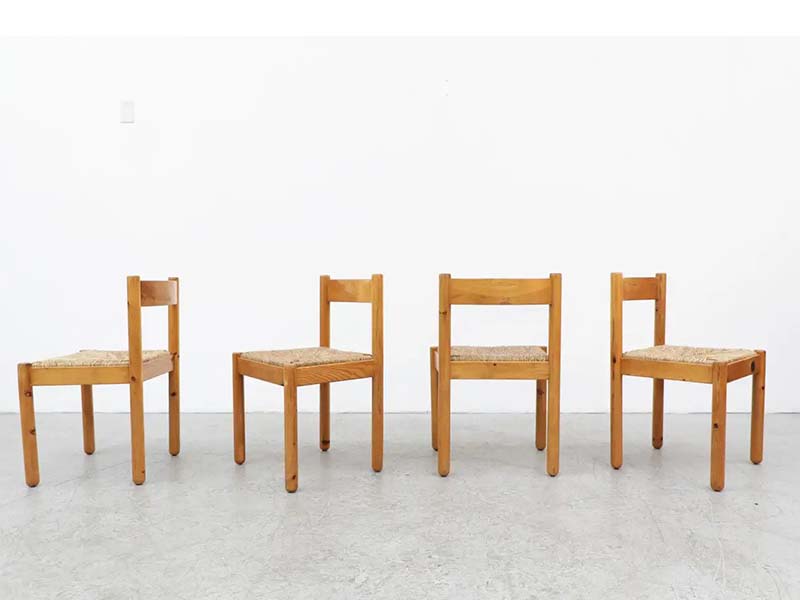
A set of four Vico Magistretti-style pine dining chairs has a rare talent: it can make a dining room look thoughtfully designed without makiames, handwoven rush seats, rounded structural details, and gently curved backs, these vintage Italian chairs sit comfortably between rustic furniture and sophisticated mid-century modern design.
The appeal is not based on decoration. There are no velvet cushions demanding constant attention, no shiny chrome surfaces collecting fingerprints, and no elaborate carvings involving grapes, lions, or mysterious woodland creatures. Instead, the chairs rely on proportion, natural materials, and honest construction. They look simple because the design work has already done the heavy lifting.
Vintage listings describe comparable sets as Italian-made pine chairs with woven rush seats, curved backrests, rounded legs, original surface wear, and seat heights near 17.5 inches. Some examples are also attributed to architect Giovanni Michelucci or described more generally as being “in the manner of” Vico Magistretti. That wording matters because a Magistretti-style chair is not automatically an authenticated Magistretti design. t Are Vico Magistretti-Style Pine Dining Chairs?
These chairs are vintage dining seats inspired by the practical elegance associated with Italian architect and designer Vico Magistretti. They typically combine a solid pine frame with a woven rush seat, an armless profile, rounded legs, and a curved or gently shaped backrest.
The word “style” indicates a visual or structural relationship rather than confirmed authorship. A seller may use the term because the chair shares recognizable characteristics with Magistretti’s work: traditional materials, simplified geometry, rounded wooden components, and a clever balance between country furniture and modern design.
That distinction does not make the chairs undesirable. In fact, a well-made period chair with uncertain attribution can be an excellent purchase for someone who values design more than labels. You can enjoy the Italian-modern character without treating every spaghetti dinner like a museum conservation emergency.
Typical Features of the Set
- Four coordinating vintage dining chairs
- Solid pine or pine-like softwood frames
- Handwoven rush or natural-fiber seats
- Curved wooden backrests
- Rounded legs and supporting rails
- Warm golden or amber-toned patina
- Visible wear consistent with age and regular use
- Compact proportions suitable for smaller dining areas
One documented set measures approximately 19.5 inches wide, 17.625 inches deep, 28.75 inches high, and 17.5 inches at the seat. Another closely related set is listed at about 19.25 inches wide, 18.125 inches deep, and 29.25 inches high. Small dimensional differences are normal among vintage examples, especially when sellers are describing separate productions or related chair models. Design Connection to Vico Magistretti
Vico Magistretti was one of the major figures in twentieth-century Italian architecture and industrial design. His work ranged from furniture and lighting to residential buildings, yet chairs held a particularly important place in his career. His designs are represented in museum collections, including those of the Museum of Modern Art and the Metropolitan Museum of Art. clearest reference point for these pine and rush chairs is Magistretti’s famous Carimate chair. Created around 1960 for the restaurant of the Carimate Golf Club near Milan, the original design transformed the familiar rural rush-seat chair into a modern design object. It retained traditional materials and recognizable construction but sharpened the proportions, emphasized rounded wooden supports, and gave the form a new architectural presence.
The Fondazione Vico Magistretti describes the original Carimate chair as having a beechwood frame and rush seat. Early versions were produced by local craftspeople before the design entered wider production, including production connected with Cassina. Cassina records indicate that its production of the Carimate small armchair began in 1963. pine dining chairs discussed here are not necessarily Carimate chairs. Their lighter wood, armless construction, and particular back shape may differ considerably from authenticated versions. What they share is the broader idea behind the Carimate: take an ordinary vernacular chair, simplify it, improve its proportions, and let the material remain visible.
Pine Frames: Warm, Casual, and Full of Character
Pine gives these chairs much of their relaxed personality. Compared with dark walnut or glossy lacquer, pine feels informal, approachable, and naturally suited to everyday dining. Its visible grain and knots prevent the chairs from looking overly polished, while decades of oxidation can deepen pale wood into honey, amber, or warm caramel tones.
Pine is a softwood, so vintage examples commonly show dents, scratches, compressed edges, and small marks. These signs are not automatically defects. Wood-identification guidance notes that pine typically develops deeper dents than harder woods such as oak. On an older dining chair, that softness helps explain why the frame may carry a visible record of belts, buttons, table edges, moving boxes, and at least one person who leaned back farther than physics recommended. challenge is separating attractive patina from structural damage. Smoothly worn edges, small surface scratches, and variations in color can enhance the appearance. Split joints, major cracks, severe warping, active insect damage, or legs that move independently like a newborn giraffe require closer attention.
Why Woven Rush Seats Matter
Rush seating provides visual texture and a direct connection to traditional chairmaking. The woven surface softens the geometry of the pine frame and introduces subtle variations in color. It also allows a firm seat to feel slightly flexible without requiring foam, springs, or upholstery.
Natural rush seats have appeared in European and American furniture traditions for centuries. Museum collections include numerous wooden chairs with rush seats, showing how durable and adaptable the material can be when properly woven and maintained. Magistretti’s use of a rush seat in the Carimate design deliberately connected modern Italian furniture with anonymous rural precedents. vintage seats may have light breakage, loose strands, stains, or uneven tension. A few broken fibers near an edge may be repairable, but extensive collapse usually calls for professional reweaving. Buyers should also determine whether the seat is made from natural rush, paper fiber, seagrass, or another woven material because appearance, care requirements, and restoration methods can differ.
Comfort and Everyday Function
A seat height of approximately 17.5 inches is close to the common dining-chair standard of about 18 inches. That makes these chairs compatible with many tables measuring roughly 28 to 30 inches high. Their armless shape also allows them to slide beneath a tabletop more easily than wide carver chairs. curved backrest is more than a decorative flourish. It provides a broader contact point across the back and makes the chair feel more finished than a completely straight ladder-back design. However, these remain relatively upright dining chairs rather than padded lounge seating. They are suitable for meals, coffee, homework, and spirited debates about who finished the olive oil, but they are not recliners wearing Italian shoes.
Before purchasing, compare the chair width with the available table space. Allowing approximately two feet of table perimeter per diner is a useful starting point for comfortable seating. Also check that the table apron does not interfere with the sitter’s knees or prevent the chairs from sliding inward. the Chairs Work in Different Interiors
Rustic Modern Dining Rooms
The combination of pine and rush naturally suits rustic modern interiors. Pair the chairs with a simple oak or pine table, limewashed walls, hand-thrown ceramics, and a linen pendant shade. The result feels warm and collected rather than coordinated by a furniture showroom computer.
Mid-Century Modern Spaces
Although the chairs reference rural furniture, their economical structure works well with mid-century pieces. Place them around a round pedestal table, beneath a sculptural pendant, or beside a streamlined teak cabinet. Their natural texture keeps a modern room from feeling too smooth or overly staged.
Scandinavian-Inspired Interiors
Pale wood, woven fibers, and restrained forms make the set an easy fit for Scandinavian-inspired homes. Use a neutral rug, off-white walls, and a few black accents to prevent the palette from becoming one large bowl of oatmeal.
Eclectic and Collected Homes
Vintage pine dining chairs also work surprisingly well with contemporary art, stainless-steel kitchens, colorful rugs, or antique tables. Repeating one elementsuch as warm wood, rounded shapes, or natural fiberwill help the contrast look intentional.
Condition, Attribution, and Authenticity
When a listing uses phrases such as “Vico Magistretti style,” “in the manner of,” or “attributed to,” read them literally. “Style” means resemblance. “Attributed to” suggests a possible connection based on available evidence. Neither phrase carries the certainty of “designed by Vico Magistretti and manufactured by Cassina.”
Authenticating vintage designer furniture usually requires more than matching a silhouette. Buyers should examine construction, materials, production details, labels, stamps, documented ownership, old invoices, catalog references, and credible provenance. Even labels must be evaluated carefully because tags can be replaced or transferred. Experts also recommend prioritizing structural condition and estimating restoration costs before purchasing. this set, request detailed photographs of the underside, joints, seat weaving, leg bottoms, repairs, and any labels or pencil marks. Compare all four chairs. Differences in color are acceptable, but major variations in construction may indicate that the group was assembled from multiple sets.
A Practical Inspection Checklist
- Sit carefully in every chair and listen for cracking or excessive creaking.
- Place each chair on a level floor and check for rocking.
- Inspect the joints where legs, rails, and back supports meet.
- Look beneath the rush seats for broken strands or improvised repairs.
- Check whether old glue has dried, failed, or squeezed from the joints.
- Confirm that previous refinishing has not removed too much wood.
- Ask whether the finish, weaving, and structural components are original.
- Verify measurements against your table before arranging delivery.
Cleaning and Caring for Pine and Rush Chairs
Routine care should be gentle. Dust the wooden frames with a soft, dry cloth and use a soft brush or low-suction vacuum attachment on the woven seats. Always support loose fibers while cleaning rather than pulling across them.
Avoid soaking the rush, applying heavy furniture polish, or saturating the pine with household cleaners. Excess moisture may stain the fibers, loosen the weave, affect adhesives, or cause uneven movement in the wooden components. Keep the chairs away from persistent dampness, strong heating vents, and prolonged direct sunlight.
Do not aggressively sand away every mark. Original finishes and accumulated patina contribute to a vintage chair’s appearance and may influence its desirability. Architectural Digest and Chairish buying guides consistently emphasize examining condition, preserving worthwhile original surfaces, and understanding the cost of refurbishment before altering older furniture. chair is loose, consult a furniture restorer familiar with traditional joinery and woven seating. Adding random screws through the frame may stop movement temporarily, but it can damage the wood and make a proper repair more complicated later.
Are These Chairs Worth Buying?
A set of four Vico Magistretti-style pine dining chairs is most appealing to buyers who appreciate natural materials, visible age, Italian-modern influences, and furniture that does not need to look flawless to look beautiful.
Comparable dealer listings have placed sets around the upper end of the vintage dining-chair market, with some examples offered near $2,750. Asking prices are not the same as completed sale prices, however. Value depends on attribution, provenance, condition, originality, restoration quality, location, shipping costs, and current demand. the chairs because their proportions, materials, and character suit your homenot because a listing title hints that they will finance an early retirement. Unverified attribution should be treated as design context, not an investment guarantee.
Living With the Chairs: An Experience-Based Perspective
The first thing you notice when a set like this enters a dining room is not its designer association. It is the texture. Smooth tables, painted walls, glass windows, and metal appliances suddenly have something tactile to argue with. The woven seats catch the light differently throughout the day, while the pine frames introduce variations that cannot be perfectly repeated by a factory finish.
Moving the chairs around is generally easy because their armless forms and modest dimensions make them less cumbersome than upholstered dining seats. They can be arranged around a compact breakfast table, placed two on each long side of a rectangular table, or temporarily used as occasional chairs when extra guests arrive. One may migrate to a bedroom holding folded clothes, although it should not be blamed for becoming a wardrobe. That is a human management issue.
During everyday meals, the rush seats feel firm but not harsh. The woven surface gives slightly beneath the body and feels warmer than molded plastic or metal. The upright back encourages a proper dining posture, which is useful during dinner and slightly less thrilling during a three-hour board-game session. For longer gatherings, a thin, breathable seat pad can add comfort, but many owners prefer leaving the weaving exposed.
The chairs also change how wear is perceived. A new lacquered chair can make its first scratch feel like a small household tragedy. A vintage pine chair has already survived decades of movement, meals, and changing interiors. Another minor mark usually joins the existing patina without demanding a family meeting. This makes the set especially appealing in homes where furniture is used rather than ceremonially observed.
There is still a difference between relaxed ownership and neglect. Rush fibers can be damaged by sharp hardware, pet claws, standing on the seat, or repeated exposure to moisture. Children may need to be reminded that the woven center is a seat, not a trampoline designed by an optimistic Italian engineer. Periodically inspecting the underside catches loose strands before a small problem becomes a complete reweaving project.
Styling the chairs is pleasantly forgiving. Around a dark table, the pine creates contrast. Around a pale table, the set produces a calm, tonal effect. A patterned rug gives the simple frames more visual energy, while bare wood or stone flooring emphasizes their rustic character. Because the chairs are not heavily decorated, they can coexist with colorful artwork, contemporary lighting, and mismatched tableware without causing visual traffic.
Guests often respond to vintage chairs differently from obviously expensive new furniture. The pieces feel familiar even when their exact history is unknown. The rush seats recall country kitchens, while the shaped backs and controlled proportions signal that someone made deliberate design choices. That combination creates an atmosphere that feels special but not precious.
Over time, the strongest pleasure comes from seeing the four chairs together. A single pine and rush chair can look quaint. Four matching examples create rhythm, repetition, and architectural presence. Their curved backs form a continuous line around the table, while the woven seats repeat a natural grid. The set becomes part of the room’s structure rather than a collection of objects pushed beneath a tabletop.
Living with these chairs ultimately means accepting that beauty can include evidence of use. The best examples do not hide their age. They display it through softened edges, mellowed color, repaired joints, and slightly varied weaving. In return, they offer something difficult to manufacture instantly: a room that feels as though it has developed over time.
Conclusion
A set of four Vico Magistretti-style pine dining chairs offers an attractive meeting point between Italian modernism and traditional craft. Pine frames provide warmth and visible character, while woven rush seats introduce texture, flexibility, and a connection to vernacular chairmaking. Curved backs and rounded structural elements give the chairs enough refinement to work in modern, Scandinavian, rustic, or eclectic interiors.
The most important buying rule is to respect the word “style.” Unless documentation confirms the designer and manufacturer, evaluate the set as vintage furniture with a Magistretti-inspired appearance. Inspect the joints, weaving, dimensions, finish, and repairs carefully. When the construction is sound and the patina is appealing, these chairs can become practical everyday seating as well as a memorable design feature.
Note: The phrase “Vico Magistretti style” describes a design resemblance and should not be interpreted as confirmed authorship or Cassina production without supporting labels, records, or professional authentication.