

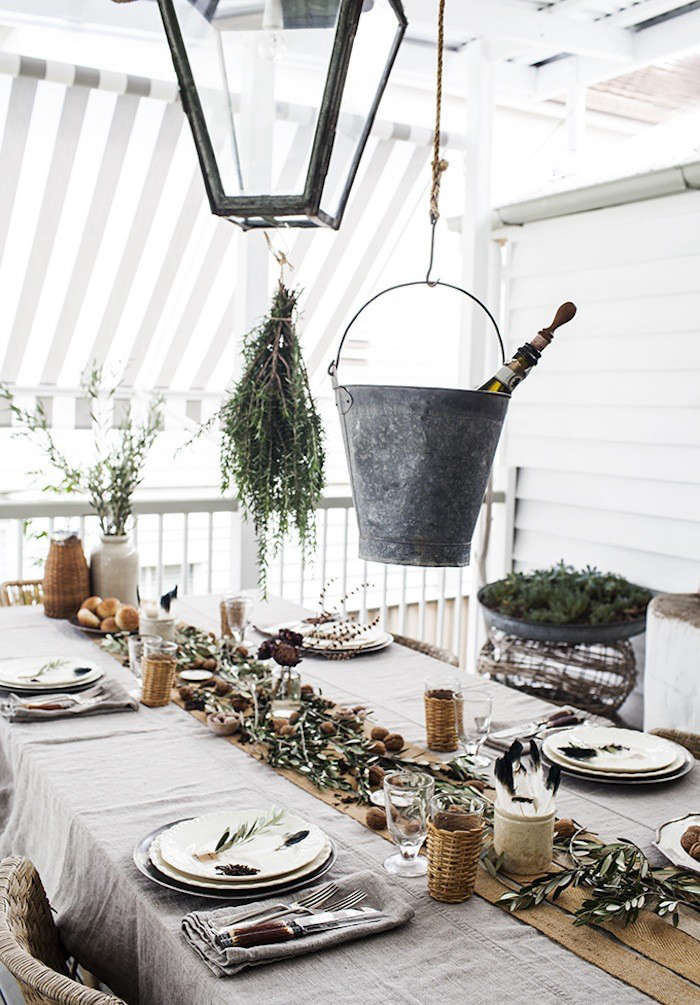
There is something wonderfully rebellious about an Australian holiday table. While much of the Northern Hemisphere is busy decorating with snowflakes, faux icicles, and enough velvet ribbon to restrain a reindeer, Christmas in Australia arrives during summer. The light is brighter, the greenery feels fresher, and a reontrast is exactly what makes the rustic holiday table associated with Australian photographer and stylist Kara Rosenlund so memorable. The original setting celebrated humble materials: olive branches, rosemary, walnuts, cloves, natural linen, vintage vessels, simple white dishes, wood-accented flatware, and even feathers in place of conventional flowers. One particularly clever detail moved the drinks bucket above the table, freeing precious serving space below.
The result feels rural, romantic, and collected rather than decorated within an inch of its life. Better yet, the style translates beautifully to American homes. You do not need an Australian worker’s cottage, chickens casually donating feathers, or a passport. You need texture, restraint, a little greenery, and the confidence to accept that a walnut can indeed be holiday decor.
Why This Rustic Australian Holiday Table Works
The secret is not one centerpiece or one perfect set of plates. It is the relationship between materials. Rough linen meets smooth glass. Fresh herbs soften aged metal. White ceramic dinnerware creates breathing room beside earthy brown nuts and pale wood. Almost everything looks useful, touchable, and slightly imperfect.
That approach fits a broader rustic-table principle repeated across major American decorating and entertaining resources: earthy colors, natural materials, tactile linens, simple dinnerware, greenery, and layered objects can create atmosphere without depending on formal floral arrangements. Designers also frequently recommend mixing different heights while protecting sight lines across the table. al Without Shouting “Christmas”
There is no plastic Santa army marching between the gravy boat and the potatoes. Instead, the holiday mood comes from fragrance, candlelight, abundance, and gathered natural elements.
Rosemary immediately suggests winter cooking and festive meals to many American hosts, yet it also looks completely at home on a summer-inspired table. Olive branches bring a dusty green tone that works with natural linen. Walnuts and cloves introduce deep browns and texture. Together, these ingredients form a restrained palette of cream, tan, wood, iron, green, and clear glass.
The colors are quiet, but the table is not boring. Think of it as the decor equivalent of someone who enters a party wearing an excellent linen shirt and somehow looks better than the person dressed like a sequined disco ornament.
The Imperfections Are Part of the Design
A rustic holiday table should not resemble a furniture showroom moments before the store opens. Let the linen wrinkle. Allow branches to lean in different directions. Use old jars or mustard pots with varied shapes. Mix a few glasses if you do not own twelve matching goblets.
Natural holiday settings become more convincing when there is evidence of a human hand. A handwritten place card, a loosely folded napkin, or a slightly crooked sprig of rosemary gives the setting personality. The goal is artful easenot surgical precision.
Start with Natural Linen and a Warm Neutral Foundation
Before arranging a single clove, build the table from the bottom up. Natural linen is ideal because it brings visual texture without competing with the food or centerpiece. A flax-colored tablecloth, oatmeal runner, or soft neutral napkins immediately establish the rustic mood.
Linen is particularly effective because its irregular texture catches light differently across folds and wrinkles. Do not attack every crease with an iron as though the fabric has personally offended you. A relaxed drape suits this table.
For a handsome wood dining table, consider skipping the full tablecloth and using only a loose woven runner. Southern Living and other design publications have highlighted the strength of exposed wood paired with draped or layered linens, greenery, and simple place settings. Textural fabric also appears repeatedly in current table-design advice as a way to give rustic settings an artisanal edge. y Color Palette
Keep the foundation to three or four dominant families:
- Warm white or cream
- Natural flax and weathered brown
- Olive, rosemary, or eucalyptus green
- Small accents of blackened iron or aged metal
This limited palette helps mismatched pieces feel intentional. A thrifted crock, modern white plate, and old wooden serving board can happily share the table when their colors relate to one another.
Use Olive Branches, Rosemary, Walnuts, and Cloves as Decor
Here is where the Australian-inspired table starts having fun. Instead of buying an oversized floral centerpiece, use ingredients and branches with natural character.
Create a Loose Greenery Runner
Lay small olive branches loosely along the center of the table. Do not weave a dense garland unless you genuinely enjoy complicated craft projects two hours before guests arrive. A relaxed scatter looks more authentic.
Add rosemary sprigs at irregular intervals. Fresh herbs have long been used by stylists as fragrant holiday-table material, and American design publications regularly recommend rosemary, thyme, greenery, branches, and other natural elements as alternatives to conventional floral displays. le walnuts through the greenery. Group them in twos and threes rather than spacing them precisely every six inches. Nature, notably, has never used a ruler to style a dinner party.
A few whole cloves can be tucked into the arrangement or incorporated into small aromatic bundles. The darker color adds contrast, while the familiar spice association supports the holiday mood.
Adapt the Botanicals to Your Region
Olive branches are beautiful, but the design principle matters more than copying one exact plant. Depending on where you live in the United States, you might use magnolia leaves, cedar, eucalyptus, bay, juniper, or pesticide-free herb clippings suitable for your decorating plan.
Choose one dominant green and one aromatic accent. Too many plant varieties can turn a simple rustic table into the produce department’s annual office party.
Skip the Formal Flowers and Try Vintage Vessels
The original Australian inspiration uses small vintage pots filled with feathers rather than traditional bouquets. It is a smart styling lesson: the vessel can be just as important as whatever goes inside it.
Search your kitchen cabinets before buying anything. Stoneware jars, old creamers, tiny crocks, earthenware cups, and handmade ceramic containers can all work. Thrift stores and flea markets are particularly useful when you want character rather than a perfectly matched collection.
How to Use Feathers Without Making the Table Look Like a Costume Shop
Use only a few clean decorative feathers from an appropriate craft or decor source. Choose soft neutral shades such as cream, brown, gray, or speckled black and white. Place three to five feathers in a small vessel and allow plenty of empty space around them.
The arrangement should feel like a curious natural object discovered in an old country house. If it begins looking ready for a Vegas stage show, you have perhaps embraced the feathers too enthusiastically.
For a feather-free alternative, use dried seed heads, wheat stems, bare twigs, or one sculptural herb branch. Architectural Digest and other American design sources frequently emphasize branches, compact greenery, vintage objects, and earth-toned vessels as effective table-centerpiece materials. ite Place Settings
Rustic does not mean every plate needs to look as though it was excavated behind a barn. Simple white dinnerware provides necessary visual calm.
Textured white earthenware is especially effective. A slightly ribbed, linen-like, speckled, or handmade surface introduces subtle interest while allowing the greenery and natural materials to lead the design.
Layer Only What the Meal Requires
Start with a dinner plate. Add a salad plate or shallow bowl only when the menu calls for it. You are decorating a dining table, not constructing a ceramic wedding cake.
This practical restraint also agrees with traditional American table-setting guidance from the Emily Post Institute: utensils should generally be arranged in order of use from the outside in, forks typically sit to the left, knives and spoons to the right, and hosts should set out only the pieces actually needed for the meal. liday lunch, that might mean one plate, one fork, one knife, a water glass, and a wineglass. The simpler the setting, the more room you have for shared platters and conversation.
Bring Warmth with Wood-Toned or Vintage-Style Flatware
Wood details prevent a white-and-green table from feeling chilly. Flatware with wooden or horn-inspired handles is particularly effective because it visually connects the place setting to walnuts, woven fibers, and an exposed timber table.
Real vintage flatware can be gorgeous, but check condition and suitability before using inherited or secondhand utensils for dining. For an easier approach, choose contemporary stainless steel flatware with brown, wood-look, or natural-material handles from a reputable manufacturer.
Do not worry about matching every serving utensil. A rustic table is remarkably forgiving. In fact, an old serving spoon can contribute more personality than a flawless twelve-piece set that appears to have never experienced mashed potatoes.
Add Clear Glassware and Let the Light Do the Decorating
Clear wine glasses keep this table airy. Look for simple goblets with a gently rustic or handmade silhouette rather than heavily cut crystal.
Colored glass can also work, especially smoky green or amber, but use it sparingly. The original Australian mood depends on lightness. A room full of jewel-toned goblets may be beautiful, but it moves the design toward a richer, more traditional holiday aesthetic.
Use Candlelight Carefully
Low votives or slim tapers add movement and warmth after sunset. Varying the height of candleholders can create dimension, a strategy recommended by several major table-styling resources. erbs, dry branches, feathers, and open flames are not a charming combination when they become acquainted too closely. The U.S. Fire Administration advises keeping candles at least 12 inches from anything that can burn, using stable holders, and considering battery-operated flameless candles. NFPA likewise treats candles as open flames capable of igniting combustible materials. eavy centerpiece, realistic flameless tapers or votives may be the smartest option. Your rosemary should fragrance the room, not become the room’s most dramatic event.
Borrow the Brilliant Hanging Drinks Bucket Idea
One of the most memorable details of the original look is the suspended galvanized drinks bucket. The idea uses vertical space instead of consuming the tabletop, turning a practical object into part of the decor. </pually, it is excellent. Practically, it requires caution. Never improvise an overhead suspension with weak hooks, decorative twine, or hardware that has not been properly selected and installed for the expected load. Ice, bottles, and a metal container become heavy surprisingly quickly.
For most homes, steal the idea rather than copying the engineering literally. Place a galvanized bucket on a sturdy side table, hang an empty decorative basket overhead, or use a professionally installed ceiling-mounted storage solution rated for its intended load.
The lesson is vertical thinking. When the dining table is small, move beverages, extra plates, or decor to a nearby console, bar cart, windowsill, or wall-mounted shelf. Suddenly the centerpiece can breathe and Aunt Linda has somewhere to put the rolls.
Make Place Cards Look Casual, Not Corporate
The Australian inspiration also demonstrates how a tiny unconventional detail can make a table memorable: simple place cards attached directly to plates.
Cut heavyweight cream paper into small rectangles. Write each guest’s name by hand using black ink. You can rest the card on the plate, tuck it beneath a rosemary sprig, or secure it with a food-safe presentation method that will not damage the dinnerware.
Do not obsess over perfect calligraphy. Slightly uneven handwriting works with the rustic mood. Guests are generally delighted to see their names at a table. Nobody has ever stormed out of Christmas dinner because the lowercase “g” lacked sufficient flourish.
A Simple Shopping and Styling Formula
To recreate this rustic holiday table without chasing discontinued products or buying an entirely new dining room, use this formula:
- One natural linen tablecloth or woven runner
- Neutral cloth napkins
- Simple white or cream dinnerware
- Clear glasses or restrained green glassware
- Wood-toned or vintage-inspired flatware
- Olive branches or locally appropriate greenery
- Rosemary or another woody culinary herb
- Walnuts and whole spices for textural accents
- Two or three small vintage ceramic vessels
- Decorative feathers, dried stems, or sculptural twigs
- Safe candle or flameless candle lighting
- Handwritten place cards
Notice what is missing: a seventeen-piece matching Christmas dinnerware collection. This is intentional.
Experience Notes: What Re-Creating This Rustic Holiday Look Teaches You
The most useful experience associated with styling a table like this is learning that restraint takes more editing than abundance. It is easy to keep adding things. Another branch. Another candle. One more charming antique crock that absolutely deserves a moment. Soon, there is nowhere to place dinner, and guests must negotiate with a forest to reach the salt.
A better experience begins by setting the functional table first. Put down the plates, flatware, glasses, serving platters, water carafe, and any condiments you know will be used. Only then decorate the remaining space. This simple order changes everything because the table continues to function after guests arrive.
Another lesson is that natural materials look better when they are not micromanaged. A greenery runner can initially feel too loose or asymmetrical. The instinct is to adjust every leaf until it resembles a department-store garland. Resist. After the plates, food, glasses, and people are present, those irregular branches provide exactly the relaxed texture the setting needs.
Hosts also tend to notice how strongly scent affects the dining experience. Rosemary and cloves may feel like small visual details, but aromatic materials can shape the atmosphere before the first plate reaches the table. That means moderation matters. Fragrance should whisper “holiday kitchen,” not tackle guests at the front door. A few herb sprigs are usually more pleasant than an enormous scented centerpiece competing with the actual meal.
Working with thrifted and mismatched pieces brings another practical realization: color is often more important than identical design. Two cream crocks from different decades can look related. Clear glasses with slightly different stems can still belong together. White plates from separate sets often become visually cohesive once they are surrounded by natural linen and repeated greenery.
This is especially freeing for a large gathering. Instead of panic-buying a complete service for twelve, many hosts can build an attractive table from what they already own and borrow. Keep the color story narrow and repeat a few materials. Linen appears more than once. Greenery travels down the table. Wood tones reappear in boards or utensil handles. Repetition quietly tells the eye, “Yes, this was intentional.”
The biggest experiential lesson, however, arrives once everyone sits down. Guests rarely discuss whether the napkin fold was technically correct. They notice the rosemary. They pick up the handwritten place card. Someone asks about the odd little pottery jar. Another person compliments the way candlelight moves across the glasses. The memorable pieces are usually the human ones.
That is why this Australian-inspired holiday table works so well. It does not attempt to create a perfect holiday stage set. It creates evidence of gathering: herbs from the kitchen, branches that feel freshly cut, old vessels given a new job, useful objects displayed beautifully, and a table designed around food and people.
There is also a practical benefit to the relaxed aesthetic. When a napkin shifts or a walnut rolls six inches to the left, the entire design does not collapse emotionally. Rustic styling absorbs movement. In fact, the table often improves during dinner as wine is poured, serving bowls arrive, and the greenery becomes slightly tousled.
For hosts accustomed to elaborate holiday decorating, re-creating this look can feel almost suspiciously simple. The trick is trusting materials with character. Good linen does not need a holiday slogan. Rosemary does not need glitter. An old ceramic vessel does not need to match the plates. Give each item some space and let texture carry the design.
Finally, the Australian influence offers a refreshing reminder that holiday style does not belong to one climate. A Christmas table can feel festive without artificial snow, heavy red plaid, or miniature pine trees. Warm-weather hosts can embrace herbs, pale fabric, open windows, cold drinks, and summer greenery. Cold-weather hosts can use the same design language to bring freshness into a winter dining room.
Either way, the experience is less about copying a photograph and more about learning its logic. Start neutral. Add nature. Repeat textures. Keep the table functional. Use objects with history. Then stop decorating slightly earlier than your inner holiday maximalist would prefer.
Conclusion: Rustic, Relaxed, and Ready for a Holiday Feast
To steal the look of a rustic holiday table from Australia, forget the idea that seasonal decorating requires a cart full of themed accessories. Begin with linen and simple white dishes. Add olive-colored greenery, rosemary, walnuts, warm wood, clear glass, and a few collected vessels. Introduce candlelight safely, personalize each place, and protect enough table space for the reason everyone showed up: dinner.
The beauty of this tablescape lies in its relaxed confidence. It looks special without looking nervous. It combines country-house warmth with Australian summer lightness and proves that the humblest objects can become decorative when thoughtfully repeated.
So yes, put the walnuts on the table. Give the rosemary a starring role. Rescue the old crock from the back of the cabinet. Your holiday table does not need to resemble a snow-covered department-store window. Sometimes all it needs is linen, greenery, good food, and enough room for guests to reach the wine.