

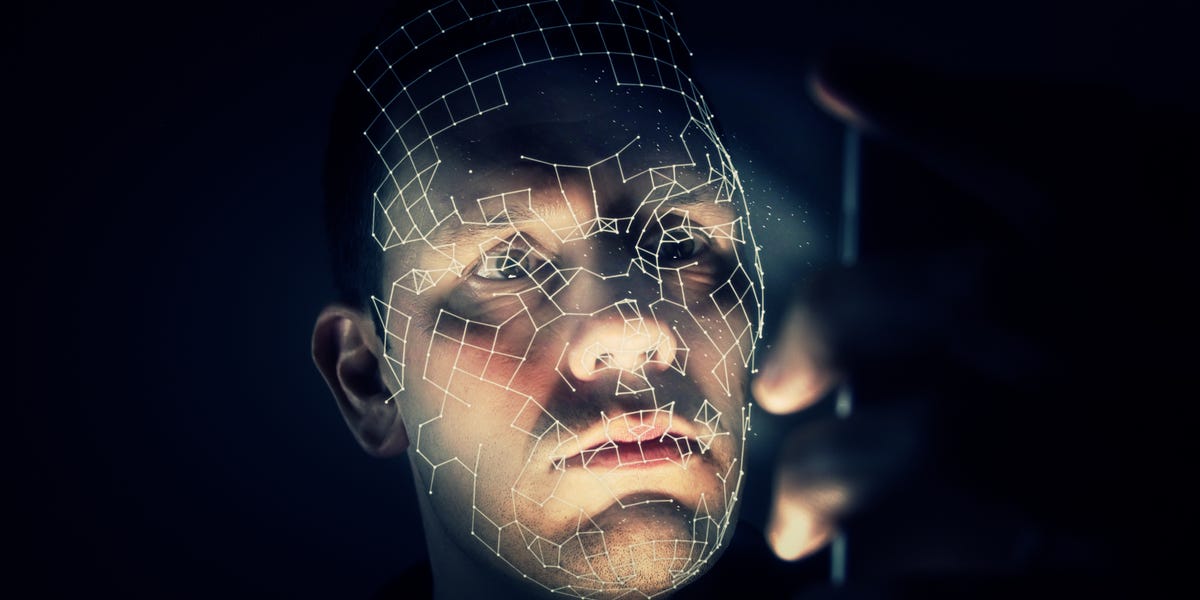
Portland, Oregon is famous for coffee, bridges, rain, indie bookstores, and a level of civic debate that can make a zoning meeting feel like a graduate seminar with kombucha. But in 2020, the city became known for something much bigger than its weather and food carts: one of the strongest facial recognition bans in the United States.
The Portland facial recognition ban did not simply tell police, “Please do not scan everyone’s face like a sci-fi mall cop.” It went further. The city passed two ordinances: one banning City of Portland bureaus from acquiring or using facial recognition technology, and another banning private entities from using facial recognition technologies in places of public accommodation within city limits. In plain English, Portland said: government agencies cannot use it, and businesses open to the public generally cannot use it either.
That second piece is what made Portland stand out nationally. Many cities had already moved against government use of face surveillance, but Portland’s private-sector restriction changed the conversation. Suddenly, the debate was not just about police departments and public cameras. It was also about retail stores, gyms, hotels, entertainment venues, restaurants, and other public-facing businesses that might be tempted to use automated face scans for security, customer tracking, or identity verification.
This article explains what the Portland facial recognition ban does, why it was passed, how it affects businesses and residents, and what lessons it offers for the future of biometric privacy in the United States.
What Is the Portland Facial Recognition Ban?
The Portland facial recognition ban refers to a pair of local laws approved by the Portland City Council on September 9, 2020. The first ordinance prohibits City of Portland bureaus and offices from using or acquiring face recognition technologies, with limited exceptions. The second ordinance prohibits private entities from using face recognition technologies in places of public accommodation within Portland.
The city’s private-sector ordinance took effect on January 1, 2021. That date matters because any business operating in Portland after that point needed to evaluate whether its cameras, security systems, customer analytics tools, or identity systems involved facial recognition technology covered by the law.
Portland defines face recognition broadly. The law covers automated or semi-automated processes that use facial features to identify, verify, detect, characterize, or capture information about a person based on that person’s face. This is not limited to a futuristic police database. It can include systems that compare a live camera image to stored images, search for a face in a database, or use facial geometry to determine whether a person matches someone on a watchlist.
Why Portland Passed the Ban
The ban grew out of several overlapping concerns: privacy, civil rights, racial equity, transparency, and the rapid spread of surveillance technology before strong rules were in place. Portland officials and community groups argued that facial recognition technology could normalize constant identification in public life. That is a big deal because the ability to walk into a store, attend a protest, visit a clinic, or simply move through a city without being automatically identified is part of everyday privacy.
Facial recognition also raised accuracy concerns. Research and government testing have repeatedly found that some facial recognition algorithms perform differently across demographic groups. In particular, studies have shown higher error rates for women, people of color, older adults, and people with darker skin tones, depending on the system and use case. Even when technology improves, Portland’s position was that residents should not be used as beta testers for tools that could deny entry, trigger suspicion, or create lasting records of where they go.
There was also a trust problem. Once a biometric scan is collected, it is not like a password that can be changed after a breach. You can reset your Netflix password. You cannot reset your face, unless you are a cartoon villain with a suspiciously good plastic surgeon. Biometric information is intimate, permanent, and difficult to protect once it enters commercial or government systems.
What the Ban Means for City Government
For the City of Portland, the rule is straightforward: city bureaus cannot acquire or use facial recognition technologies, except in narrow circumstances. Those exceptions include employee verification to access personal or city-issued devices, certain social media face detection functions, and limited uses such as redacting recordings before public disclosure to protect a person’s privacy.
The public-sector ban applies across city offices, including law enforcement. That means Portland police and other city departments cannot deploy facial recognition systems to identify people in surveillance footage, match faces against databases, or run broad facial searches as part of routine government work.
The policy reflects a larger shift in how cities think about “smart city” technology. For years, smart city marketing promised sensors, cameras, dashboards, predictive systems, and data-driven everything. Portland’s ban pushed a different idea: a city is not smarter merely because it collects more data. Sometimes, the smarter move is deciding what not to collect.
What the Ban Means for Private Businesses
The private-sector portion of the Portland facial recognition ban is the more unusual and controversial part. It says that a private entity may not use facial recognition technologies in places of public accommodation within Portland city limits.
A place of public accommodation generally means a place or service open to the public. That can include stores, restaurants, hotels, entertainment venues, fitness centers, service businesses, and other public-facing locations. The definition does not usually include private residences, truly private clubs, or places that are distinctly private in nature.
For businesses, the message is simple: if customers, guests, clients, or visitors enter a public-facing Portland location, the company should not use facial recognition there unless a specific exception applies. A standard security camera that records video is not necessarily facial recognition by itself. The legal concern begins when a system automatically analyzes faces to identify, verify, compare, detect, or characterize individuals using facial features.
Examples of Business Uses That May Raise Problems
A retailer using facial recognition to identify suspected shoplifters at the entrance would likely fall within the ban. A hotel scanning guests’ faces to verify identity at check-in could raise issues. A gym using facial recognition to replace membership cards may also need serious legal review. A concert venue using facial matching to screen people against a watchlist would be exactly the kind of use privacy advocates worry about.
On the other hand, ordinary video security footage that is not analyzed by facial recognition software may not be covered in the same way. Likewise, a person unlocking their own phone with Face ID is not the target of the ordinance. Portland’s law is aimed at entities using facial recognition on the public, not individuals using device security for themselves.
Exceptions Under the Portland Facial Recognition Ban
The Portland ordinance includes limited exceptions. Private entities may use facial recognition technology when necessary to comply with federal, state, or local law. The ban also does not apply when an individual uses face verification to access that person’s own personal or employer-issued communication and electronic devices. Automatic face detection services in social media applications are also exempted.
These exceptions are narrow. They are not a giant loophole big enough to drive a surveillance van through. A business cannot simply say, “We like security,” and treat that as an exemption. A company operating in Portland should carefully review whether its technology performs facial recognition, where it is used, who is affected, and whether any exception truly applies.
Penalties and Enforcement
One of the sharpest teeth in the Portland facial recognition ban is its private right of action. A person injured by a material violation may bring a legal claim. The ordinance allows recovery of actual damages or $1,000 per day for each day of violation, whichever is greater, along with possible attorney fees for a prevailing plaintiff.
That enforcement structure matters because it does not rely only on city officials to investigate every possible violation. Individuals can bring claims themselves. For businesses, this turns facial recognition compliance into a real litigation risk, not just a theoretical privacy concern.
The first major lawsuit under the ordinance was filed against Jacksons Food Stores, a convenience store chain accused of using facial recognition technology at certain Portland locations after the ban took effect. Plaintiffs alleged that customers were required to look into a camera and that the system compared their faces to a repository of people who had been banned or flagged. The case became an early test of how Portland’s ordinance might operate in real business settings.
Why the Ban Became Nationally Important
Portland’s ban became nationally important because it expanded the facial recognition debate beyond policing. Before Portland, much of the policy discussion focused on whether police departments should be allowed to use facial recognition to identify suspects. That issue remains crucial, but Portland highlighted another reality: private businesses can build or buy surveillance systems too.
A retail chain with hundreds of cameras can gather enormous amounts of data. A stadium can scan thousands of faces in a few minutes. A landlord, hotel, workplace, or shopping center can create systems that track people across physical spaces. If that information is stored, shared, sold, hacked, or handed to law enforcement, the privacy implications become much larger than a single store camera at the front door.
Portland’s ordinance was also influential because it treated privacy as a civil rights issue. The city connected face surveillance to over-policing, discrimination, algorithmic bias, and the unequal burdens of monitoring. That framing helped move facial recognition from a “cool tech” topic to a public accountability issue.
The Debate: Privacy Protection or Overreach?
Supporters of the ban argue that facial recognition technology is too risky to use in public spaces without strong democratic oversight. They say people should not have to trade their face for the privilege of buying groceries, attending a concert, or walking into a store. They also argue that biased or inaccurate systems can turn innocent people into suspects, especially in communities already subject to disproportionate surveillance.
Critics argue that facial recognition can help prevent theft, fraud, violence, and unauthorized access. Some businesses say the technology may improve safety for employees and customers. Financial institutions, retailers, and security vendors have argued that carefully controlled facial recognition systems can be useful when paired with human review, transparency, and safeguards.
The heart of the disagreement is not whether safety matters. Of course safety matters. The real question is whether facial recognition is the right tool, who controls it, what data it collects, how accurate it is, and what happens when it makes a mistake. Portland answered by saying that, in public-facing spaces, the risks outweigh the benefits for now.
How Portland Compares With Other Cities
San Francisco, Oakland, Boston, and several other cities restricted government use of facial recognition before or around the same period. Portland followed that government-ban trend but went further by including private businesses in public accommodations. That made its policy one of the broadest local facial recognition restrictions in the country.
The Portland approach differs from state biometric privacy laws such as Illinois’ Biometric Information Privacy Act, commonly known as BIPA. BIPA focuses broadly on biometric identifiers and requires notice, consent, retention policies, and other safeguards. Portland’s ordinance is narrower in one sense because it specifically targets facial recognition, but broader in another sense because it bans certain uses outright in public accommodations rather than merely regulating notice and consent.
This distinction matters. A consent-based law says, “You may use this technology if you follow rules.” Portland’s law often says, “You may not use this technology here at all.” That is a very different policy choice.
Business Compliance Lessons
Businesses operating in Portland should start with a technology inventory. That means reviewing cameras, access systems, loss-prevention tools, customer analytics products, visitor management software, employee check-in systems, and third-party security services. Many companies do not realize a vendor has added facial recognition features until a contract, dashboard, or product update reveals it.
Second, companies should distinguish between video recording, face detection, and facial recognition. A camera that records footage is not automatically a facial recognition system. A tool that detects a face for photo focus or image formatting may be different from a tool that identifies a person. But if a system compares facial features against stored images or uses face geometry to verify or identify someone, the Portland ban may be implicated.
Third, businesses should train staff. A store manager should not casually activate a “watchlist camera” because a vendor says it reduces theft. A hotel should not install facial check-in kiosks without legal review. A gym should not replace key cards with face scans and assume customers will shrug because everyone loves convenience. Spoiler alert: not everyone loves convenience when it comes with a biometric database.
Finally, businesses should document decisions. If a company disables facial recognition features in Portland, it should keep records. If a vendor confirms that a product does not perform facial recognition, save that confirmation. If an exception is being relied upon, document the legal basis. Privacy compliance is much easier when the paper trail exists before a complaint arrives.
What Residents Should Know
For Portland residents and visitors, the ban means that public-facing businesses generally should not be scanning faces with facial recognition technology. If a store, gym, venue, or other business appears to require facial scans for entry, identity checks, or watchlist matching, that may raise concerns under the ordinance.
Residents can ask businesses what technology is being used and whether facial recognition is involved. They can look for signage, privacy notices, or device instructions that mention face matching, biometric identification, watchlists, or automated identity verification. If something feels off, documenting the date, place, and circumstances may be useful.
The ban also invites a broader civic question: what kind of city do people want to live in? A city where every entrance quietly becomes an identity checkpoint feels very different from a city where public life remains, well, public. Portland chose the second model.
The Bigger Privacy Picture
The Portland facial recognition ban is part of a larger American debate about biometric privacy. Federal law has not kept pace with the rapid spread of facial recognition, voice recognition, fingerprint systems, gait analysis, and other biometric tools. As a result, cities and states have become laboratories for privacy policy.
That patchwork creates challenges. A company may face one rule in Portland, another in Illinois, another in Texas, another in Washington, and a different expectation in cities with surveillance ordinances. Still, local action often pushes national debate forward. Portland’s ban helped show that communities do not have to wait for Congress to decide whether face surveillance belongs in daily life.
The technology will keep evolving. Algorithms may become more accurate. Cameras may become cheaper. Vendors may promise stronger safeguards. But better technology does not erase every concern. A highly accurate surveillance system can still be invasive. A perfectly functioning tracking tool can still chill speech, protest, worship, shopping, health care visits, and ordinary movement.
Experiences and Real-World Reflections on the Portland Facial Recognition Ban
To understand the Portland facial recognition ban, imagine a very normal day. You walk into a convenience store for coffee, because adulthood is mostly errands with caffeine. At the door, a camera points at your face. Maybe there is a sign. Maybe there is not. You are not suspected of anything. You just want a drink, a snack, and maybe the dignity of pretending that a protein bar counts as breakfast.
Now imagine that the camera is not simply recording video. It is measuring your facial features, comparing your image to a database, and deciding whether you match someone the store has flagged. If the system is wrong, you may be delayed, embarrassed, denied entry, questioned, or treated as suspicious. Even if the system is right, your face has become a credential you never knowingly offered.
That everyday experience is exactly why Portland’s ban resonates. The issue is not only dramatic surveillance towers or dystopian control rooms. It is the quiet transformation of ordinary spaces into monitored checkpoints. A grocery store becomes a scan zone. A gym becomes a biometric gate. A hotel lobby becomes an identity filter. Life starts to feel like airport security, except you are just trying to buy toothpaste.
For employees, the experience can be complicated too. Retail workers often deal with theft, safety issues, and difficult customers. Some may welcome tools that promise protection. But workers can also become subjects of biometric monitoring themselves. If a business uses face scans for access control, attendance, productivity, or internal security, employees may feel they have little real choice. “Consent” in the workplace can be slippery when the alternative is losing hours, upsetting a manager, or not getting hired.
For customers from communities that have historically been over-policed or over-surveilled, facial recognition can feel less like convenience and more like suspicion with a power cord. Even a small risk of misidentification can carry a heavy emotional cost. Being watched is one thing. Being algorithmically judged is another. The Portland ban recognizes that public spaces should not make people feel they are entering a lineup every time they open a door.
Business owners also have a real-world experience worth acknowledging. Many small businesses are not trying to build a surveillance empire. They are trying to reduce shoplifting, protect employees, and keep insurance costs from performing acrobatics. A vendor may pitch facial recognition as a simple safety upgrade. The owner may not fully understand the legal risk or the civil rights concerns. That is why clear rules matter. Portland’s ordinance gives businesses a bright warning sign: do not use this technology in public accommodations unless the law clearly allows it.
From a practical standpoint, the best experience for everyone may be a return to less invasive safety tools. Better lighting, trained staff, thoughtful store design, incident reporting, non-biometric access cards, and human judgment can often address problems without turning every face into data. Technology should serve people, not make people feel like barcodes with cheekbones.
The Portland facial recognition ban also offers a cultural lesson. Privacy is not only about hiding secrets. It is about preserving breathing room. It is the freedom to browse, meet, wander, protest, worship, shop, and exist without being automatically identified and categorized. In a world where almost every device wants to know who we are, where we are, and what we are doing, Portland’s law says: not every useful tool belongs everywhere.
Conclusion
The Portland facial recognition ban is one of the most important local privacy laws in the United States because it challenges the assumption that facial recognition should quietly spread through public life. By banning city use and restricting private-sector use in places of public accommodation, Portland made a bold statement: convenience and security do not automatically outrank privacy, civil rights, and public trust.
The ban does not end the national debate. Businesses still want tools to improve safety. Governments still face pressure to adopt powerful investigative technologies. Vendors still promise more accurate, less biased systems. But Portland changed the baseline. Instead of asking residents to prove why they should not be scanned, the city asked technology users to prove why face surveillance belongs in public spaces at all.
That is the lasting significance of the Portland facial recognition ban. It is not just a local ordinance. It is a reminder that the future of technology is not inevitable. Cities, communities, businesses, and individuals still get a vote. And sometimes, the smartest city is the one that knows when to say no.