

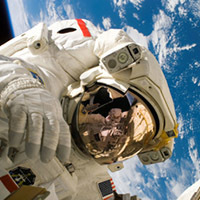
Space looks glamorous from Earth. Movies give us smooth starship corridors, dramatic windows full of galaxies, and heroic astronauts who somehow always have perfect hair. Reality is less “luxury cruise through the cosmos” and more “camping inside a high-tech washing machine while your bones quietly file a complaint.”
Life in space is incredible, historic, and scientifically important. It is also cramped, noisy, physically punishing, psychologically weird, and surprisingly gross. Science fiction often shows the big dangers: meteors, aliens, exploding engines, and someone dramatically yelling, “We’ve lost pressure!” But the everyday problems are usually stranger. Your face gets puffy. Your legs shrink. Your food tastes dull. Your toilet uses suction. You may see 16 sunrises in one day and still feel exhausted. Worst of all, space itself is constantly trying to remodel your body without asking permission.
This article explores the real challenges of living in space, especially on long-duration missions aboard spacecraft or the International Space Station. These are the unglamorous details that sci-fi usually hides behind cool helmets, clean uniforms, and suspiciously spacious spacecraft kitchens.
Why Life in Space Is Harder Than Sci-Fi Makes It Look
Space travel is not just “Earth, but floating.” Human bodies evolved under gravity, atmospheric pressure, natural day-night cycles, fresh food, open landscapes, microbial diversity, and convenient plumbing. Remove those things, and the body reacts like a houseplant moved into a nightclub: confused, stressed, and probably not thriving.
NASA often groups human spaceflight risks into major categories such as radiation, isolation and confinement, distance from Earth, altered gravity, and closed or hostile environments. Put simply, space is not one problem. It is a bundle of problems wearing a shiny silver suit.
1. Your Body Starts Falling Apart in Microgravity
In sci-fi, zero gravity looks fun. Characters glide elegantly through corridors, flip through the air, and catch floating snacks like cosmic dolphins. In real life, microgravity is fun for about five minutes. Then your muscles and bones notice that nobody is asking them to do their jobs anymore.
On Earth, gravity is a full-time personal trainer. Every time you stand, walk, climb stairs, or carry groceries, your bones and muscles receive mechanical stress that tells them, “Stay strong, we still need you.” In microgravity, that signal weakens. The body becomes brutally efficient: if muscles and bones are not being loaded, it begins reducing them. Astronauts can lose muscle mass and bone density without aggressive countermeasures.
Space Turns Fitness Into Survival
Astronauts exercise for roughly two hours a day using specialized equipment such as treadmills with harnesses, stationary bikes, and resistive exercise devices that mimic weightlifting. This is not because astronauts are trying to get shredded for an orbital beach vacation. It is because exercise is one of the main defenses against muscle atrophy, bone loss, cardiovascular changes, and the misery of returning to Earth unable to move normally.
Even with careful exercise, coming home can be rough. After months in orbit, the body must relearn gravity. Balance can feel strange. Walking can be difficult. The cardiovascular system has to readjust. The heroic return scene rarely shows the less cinematic sequel: rehabilitation, medical checks, and a body that feels like it has been pranked by physics.
Microgravity also shifts body fluids upward. On Earth, gravity pulls blood and other fluids toward the lower body. In space, fluids move toward the head, causing puffy faces, stuffy noses, and “bird legs,” where the lower body looks thinner. It is basically the worst possible beauty filter: swollen face, skinny legs, and no refund.
2. Space Can Mess With Your Eyes and Brain
One of the more unsettling realities of life in space is that microgravity can affect vision. NASA studies a condition called spaceflight-associated neuro-ocular syndrome, or SANS. It involves changes to the eyes and surrounding structures, including optic nerve swelling, retinal folds, and flattening at the back of the eye in some astronauts.
The suspected villain is the upward fluid shift caused by weightlessness. When fluids move toward the head, pressure and circulation patterns change. The eyes and brain do not simply shrug and say, “Cool, new environment.” They adapt, and sometimes those adaptations affect vision.
The Space Head Cold That Never Asked Permission
Astronauts often describe a congested feeling in space. Because fluids collect higher in the body, it can feel like having a mild head cold. That may sound minor until you imagine doing complex scientific work, emergency drills, maintenance tasks, and live communications while feeling stuffed up for weeks or months.
Then there is carbon dioxide. On Earth, air naturally circulates through convection, but in microgravity, exhaled carbon dioxide can linger around a person if ventilation is not carefully managed. Elevated carbon dioxide levels in spacecraft have been associated with headaches and discomfort. In a closed environment, “bad air” is not just annoying; it is a mission issue.
Sci-fi spacecraft rarely show someone floating near a vent muttering, “I think the CO2 is giving me a headache.” But real spaceflight depends on constant environmental monitoring. The spacecraft is not just transportation. It is lungs, plumbing, climate control, garbage management, radiation shelter, and apartment building all smashed into one fragile machine.
3. Radiation Is an Invisible Space Monster
Space radiation is one of the scariest parts of long-term space travel because it does not roar, glow green, or politely announce its arrival. Beyond Earth’s protective magnetic field and atmosphere, astronauts face increased exposure to galactic cosmic rays and solar particle events. These high-energy particles can pass through spacecraft and human tissue, damaging cells.
NASA’s Human Research Program studies radiation because it may increase long-term risks such as cancer, central nervous system effects, cardiovascular problems, and other health concerns. The danger becomes more serious for missions beyond low Earth orbit, such as lunar stays or Mars journeys, where astronauts cannot rely on Earth’s magnetic shield in the same way.
Solar Storms Are Not Movie ExplosionsThey Are Planning Nightmares
A solar particle event can happen when the Sun releases energetic particles. For deep-space missions, crews may need to take shelter in better-shielded areas of the spacecraft. The challenge is that shielding is heavy, and heavy things are expensive to launch. Engineers have to balance protection, mass, mission design, and practicality.
This is one reason Mars missions are so difficult. The trip is long, the exposure is prolonged, and the spacecraft cannot be wrapped in endless layers of lead like a cosmic burrito. Researchers study shielding materials, mission timing, storm shelters, monitoring systems, and biological countermeasures, but radiation remains one of the biggest obstacles to making deep-space life routine.
In a movie, radiation problems often last for one tense scene. In real space exploration, radiation is a constant background concern. It is not dramatic every minute, but it is always there, like a villain who prefers spreadsheets.
4. The Food Is Safe, But Your Taste Buds May Quit
Food in space has improved enormously since the early days of tubes and cubes. Astronauts can eat tortillas, soups, rehydratable meals, thermostabilized foods, snacks, coffee, and occasional fresh items. Still, space dining is not exactly a five-star restaurant unless your favorite restaurant serves everything in pouches and has a strict anti-crumb policy.
Food must be lightweight, compact, shelf stable, nutritious, safe, and easy to prepare in microgravity. Crumbs are a problem because they float, and floating crumbs can get into equipment, vents, eyes, or noses. That is why tortillas are often more practical than regular bread. A sandwich that sheds crumbs in space is not lunch; it is a tiny debris field.
Microgravity Makes Flavor Weird
Astronauts often report that food tastes different in space. The fluid shift that creates nasal congestion may dull the sense of taste and smell. That helps explain why astronauts may crave stronger flavors, spicy sauces, and bolder seasonings. Imagine eating your favorite meal while mildly congested, sealed in a machine, and floating sideways. Congratulations: dinner is now a systems-engineering problem.
Nutrition is not just about comfort. Long missions require food systems that maintain health, immune function, muscle, bone, mood, and performance. NASA has demonstrated adequate nutrition for shorter missions and limited one-year missions, but future deep-space journeys raise harder questions. A Mars mission may need food that remains safe, nutritious, and acceptable for years with little or no resupply.
Food fatigue is another problem. Eating the same limited menu repeatedly can reduce appetite. Reduced appetite can mean inadequate calorie intake. In space, that can worsen muscle loss, immune changes, and general health. So yes, the menu matters. A boring dinner can become a medical issue with packaging.
5. Hygiene and Bathroom Breaks Are Deeply Unromantic
Sci-fi loves sleek space suits and polished control rooms. It rarely pauses to show someone attaching a personal urinal funnel to a hose while trying not to create a floating disaster. But hygiene is one of the most practical challenges of living in space.
Astronauts cannot take normal showers on the International Space Station. Water would float away in blobs, cling to surfaces, and create problems. Instead, astronauts use rinseless shampoo, wet wipes, small amounts of water, liquid soap, towels, and careful routines. Personal hygiene is possible, but it is not luxurious. It is more like camping inside a laboratory that cost billions of dollars.
The Toilet Uses Suction Because Gravity Resigned
Space toilets rely on airflow and suction to move waste where it needs to go. Astronauts use restraints to position themselves, and urine is collected through funnels and hoses. Solid waste is handled separately. Every step must be controlled because, in microgravity, “oops” does not fall to the floor. It floats into legend.
Water is also too valuable to waste. On the ISS, systems reclaim water from urine, sweat, humidity, and breath moisture. The recycled water is heavily filtered and cleaned, and NASA emphasizes that the crew is drinking purified reclaimed water, not simply “urine.” Still, the famous astronaut joke remains hard to beat: today’s coffee can become tomorrow’s coffee.
None of this makes astronauts less impressive. It makes them more impressive. They are not only scientists, engineers, pilots, doctors, and mechanics. They are also highly trained participants in the most complicated bathroom arrangement humanity has ever invented.
6. Isolation Can Grind Down Even the Toughest People
Space is lonely in a way Earth rarely is. Even on the ISS, astronauts are separated from family, friends, nature, weather, fresh air, and the casual freedom to step outside. On future Mars missions, the psychological challenge will be much greater. The crew will live in confinement for months or years, with limited privacy and no quick return home.
NASA studies behavioral health risks because isolation and confinement can affect mood, sleep, morale, teamwork, decision-making, and mental health. Anxiety, depression, irritability, conflict, fatigue, and stress are not signs of weakness. They are predictable human responses to extreme environments.
Even Calling Home Gets Complicated
On the ISS, communication with Earth is relatively fast. For Mars, communication delays can reach up to about 20 minutes one way, depending on planetary positions. That means no normal conversation. Ask a question, wait. Hear the answer, wait again. A simple back-and-forth could take nearly an hour.
That delay changes everything. Crews must solve problems independently. Medical emergencies, equipment failures, interpersonal conflicts, and unexpected mission events cannot always be handled by Mission Control in real time. In sci-fi, someone always seems to patch directly through to headquarters. In real life, deep-space astronauts may have to become their own mechanics, doctors, therapists, and crisis managers.
Isolation also amplifies small annoyances. A noisy fan, a repetitive meal, a crewmate’s habit of leaving tools in the wrong placeon Earth, these are minor irritations. In a spacecraft, they can become psychological sandpaper. There is no weekend getaway, no private backyard, no long walk under trees. There is just the crew, the mission, and the constant hum of machinery keeping everyone alive.
The Closed Environment Problem: Your Spaceship Is Also Your Ecosystem
A spacecraft is not merely a vehicle. It is a sealed habitat. Air, water, temperature, humidity, pressure, microbes, waste, food, and equipment all interact. If something goes wrong, the crew cannot open a window or call a plumber who arrives between 9 a.m. and noon.
Closed environments can affect immune function and microbial balance. Spaceflight stressors such as microgravity, radiation, disrupted sleep, isolation, and altered nutrition may influence immune responses. Meanwhile, the habitat’s microbial environment is unusual: it contains microbes brought by humans, living on surfaces in a carefully controlled but confined ecosystem.
Too dirty is dangerous. Too sterile may also create problems by reducing exposure to beneficial microbial diversity. Future spacecraft design may need to think not only about killing bad microbes, but also about creating healthier indoor ecosystems. That sounds strange until you remember that humans are walking microbial planets with opinions.
Why Sci-Fi Skips the Gross Stuff
Science fiction is not wrong to make space exciting. Space is exciting. It is one of the most awe-inspiring frontiers humanity has ever explored. But storytelling usually trims the boring and awkward details. Nobody wants a ten-minute bathroom training montage in the middle of a laser battle.
Still, the hidden details matter because they show how hard space exploration really is. The challenge is not only building faster rockets. It is keeping human beings healthy, sane, fed, rested, clean, and functional in an environment that is fundamentally hostile to biology.
Every successful space mission is a victory over thousands of small problems: loose crumbs, stiff joints, recycled water, bad sleep, CO2 levels, bone loss, radiation monitoring, food storage, emotional strain, and equipment maintenance. The drama is not always cinematic. Sometimes the drama is making sure the toilet fan works.
Experiences That Reveal Why Life in Space Sucks
To understand why life in space can be so uncomfortable, imagine a day in orbit without the movie soundtrack. You wake up inside a small sleeping compartment, zipped or strapped into place so you do not drift around. There is no sunrise through a bedroom window in the normal sense. The station circles Earth roughly every 90 minutes, so outside the window, day and night keep switching like someone is playing with the universe’s light switch.
You start your morning hygiene routine. No hot shower. No sink full of running water. You use wipes, carefully managed water, rinseless products, and a hygiene kit. Brushing your teeth is familiar, but even toothpaste requires planning. Anything loose can float. Hair clippings, water droplets, crumbs, and tiny bits of trash become free-range nuisances.
Breakfast may be oatmeal, fruit, coffee, or a rehydrated meal. It is nutritious, but your sense of taste may feel muted. Your nose may feel stuffy from fluid shifts. You add hot sauce because apparently your taste buds now need a megaphone. A tortilla replaces crumbly bread because crumbs in microgravity behave like tiny edible satellites with bad intentions.
Then comes work. You may run experiments, repair equipment, check systems, document observations, talk with Mission Control, and clean surfaces. Cleaning is not optional busywork. In a sealed habitat, dust, microbes, moisture, and debris can affect health and equipment. You are living inside a machine that must remain clean enough to be safe but biologically balanced enough not to become its own weird problem.
Exercise takes a huge chunk of the day. You strap yourself to a treadmill or use resistive equipment so your muscles and bones receive the message that they are still employed. Without that daily effort, your body adapts too well to weightlessness. Unfortunately, “adapts” here means “starts downsizing important tissue.” After exercise, you cannot take a normal shower, so cleanup is another careful routine involving towels, wipes, and patience.
Bathroom breaks are their own adventure. The toilet depends on suction and positioning. Privacy exists, but glamour does not. Every astronaut becomes very aware that gravity was doing a lot of unpaid labor back on Earth.
Later, you might look out the window and see Earth. That part is genuinely magnificent. Many astronauts describe the view as life-changing. The planet glows below, thin atmosphere visible, continents drifting past, storms swirling like living paintings. For a moment, all the discomfort makes sense.
Then a fan hums, a schedule alarm rings, your back feels strange, your face feels puffy, and you remember you are months away from fresh laundry, fresh air, and a real shower. You may miss family intensely. You may want silence and privacy but have very little of either. Even entertainment has limits. You can call home, but mission schedules, communication windows, and distance shape everything.
On a Mars mission, this experience becomes even harder. Communication delays mean emotional support from Earth is not immediate. A medical issue cannot be solved with a quick emergency room visit. A broken part may require improvisation. A conflict between crew members cannot be escaped by going for a drive. The crew must carry not just supplies, but resilience.
This is why the phrase “life in space sucks” is not an insult to space exploration. It is respect. Astronauts endure discomfort most people never see because exploration requires it. The real story is not that space is impossible. The real story is that humans keep going anyway, armed with science, discipline, humor, and an alarming amount of Velcro.
Conclusion: Space Is Beautiful, But It Is Not Comfortable
Life in space is one of humanity’s greatest achievements, but it is not the sleek fantasy that science fiction often sells. Microgravity weakens muscles and bones. Fluids shift toward the head and may affect vision. Radiation creates long-term health risks. Food becomes a nutritional engineering challenge. Hygiene and bathroom routines require suction, restraint, and humility. Isolation tests the mind as much as the body.
That does not make space exploration less inspiring. It makes it more impressive. Every astronaut living in orbit is not just floating around doing cool science. They are surviving inside an artificial bubble beyond Earth, trusting machines, teammates, training, and research to keep them alive.
The next time a sci-fi movie shows a spotless starship with huge bedrooms, instant communication, perfect meals, and suspiciously normal bathrooms, enjoy it. Then remember the real heroes are probably somewhere above Earth, drinking recycled water, exercising for two hours, chasing a floating tortilla crumb, and pretending the suction toilet is totally normal.