

Some people approach a buffet with caution. Others treat it like an obstacle course designed by a hungry game-show producer. They will eat fiery peppers, mystery meat from an unlabeled tray, gas-station sushi at midnight, and leftovers whose origin story has been lost to history. Yet even these fearless eaters have limits.
The foods people hate most are rarely plain or forgettable. They tend to arrive with a powerful smell, an aggressive flavor, a slippery texture, an unsettling appearance, or all four at once. In a Harris Poll conducted for Instacart, Americans identified smell, strong flavor, texture, and appearance as major reasons a food becomes polarizing. Anchovies, black licorice, and oysters led the survey’s list of widely disliked foods.
Of course, calling these the most inedible foods is intentionally dramatic. Most are perfectly edible, and many are treasured delicacies. A food that makes one person reach for a napkin may remind another of childhood, family celebrations, or home. This list explores foods that adventurous eaters commonly find difficultnot foods that deserve cultural disrespect.
Why Can a Perfectly Good Food Feel Inedible?
Food aversion is more complicated than simply being picky. The sight, smell, taste, or texture of a particular food can trigger nausea, gagging, or an immediate feeling that the item should not be swallowed. Past experiences, sensory sensitivity, unfamiliarity, and individual differences in taste perception can all influence that response.
That helps explain why the following foods create such dramatic reactions. Some attack the nose before reaching the plate. Others wobble, stretch, crunch, leak, or stare back. A few can actually be dangerous when prepared incorrectly. Put on your imaginary bib and keep a respectful emergency cracker nearby.
Everyday Foods That Start Surprisingly Fierce Arguments
-
Anchovies
Anchovies are tiny fish with the confidence of a much larger animal. Their concentrated saltiness and unmistakable marine flavor can dominate pizza, salads, and sauces. Half of respondents in the Instacart-Harris Poll said they hated anchovies, making them the survey’s most disliked polarizing food. Hidden in Caesar dressing, however, they often become savory background music rather than a fishy solo.
-
Black Licorice
Black licorice tastes as though candy briefly considered becoming medicine and never reconsidered. Its powerful anise character can be herbal, bitter, sweet, and strangely cooling at the same time. Fans love its intensity. Critics believe it is what happens when a tire receives a confectionery education. It ranked second among the most hated foods in the same national survey.
-
Raw Oysters
Oyster lovers describe brine, minerals, cucumber, melon, and the refreshing taste of the sea. Oyster opponents describe swallowing a cold ocean-flavored button. The slippery texture is usually the main obstacle. Raw oysters also carry a genuine food-safety risk because contaminated shellfish may look and smell normal, and lemon juice or hot sauce does not reliably eliminate harmful germs.
-
Blue Cheese
Blue cheese is proof that mold can hire a publicist and enter fine dining. Its sharp aroma, salty flavor, creamy texture, and blue-green veins make it one of the world’s most recognizable acquired tastes. A mild blue can add complexity to burgers or dressings. A powerful one can enter the room five seconds before the person carrying it.
-
Olives
Olives are bitter when freshly harvested and are normally cured before eating. Even after curing, their dense texture and salty, briny flavor divide diners. Olive enthusiasts snack on them by the bowl. Olive haters remove them from pizza with the precision of surgeons handling dangerous equipment.
-
Mayonnaise
For fans, mayonnaise is creamy, rich, and essential to sandwiches. For critics, it is a suspicious white substance with the personality of wet wallpaper paste. Temperature matters enormously: cold mayonnaise can feel silky, while warm mayonnaise at an outdoor picnic can inspire immediate questions about mortality.
-
Beets
Beets are sweet, earthy, colorful, and nutritionally respectable. Unfortunately, “earthy” is also the polite culinary term for “reminds some people of garden soil.” Their deep red juice stains cutting boards, hands, clothing, and possibly memories. Roasting and adding acid can soften the flavor, but committed beet opponents remain unmoved.
-
Brussels Sprouts
Modern roasted Brussels sprouts can be crisp, nutty, and caramelized. The boiled version many people remember from childhood was gray-green, sulfurous, and emotionally complicated. Overcooking releases stronger aromas and destroys texture, creating the vegetable equivalent of a damp apology. Proper browning has converted many former enemies, but not everyone is ready to forgive.
-
Okra
Okra contains a natural thickening substance that gives gumbo its body. It also gives poorly prepared okra a texture frequently described as slimy. Fans appreciate its grassy flavor and tender seeds, especially when fried or roasted. Skeptics feel as though the vegetable has produced its own defensive gel.
-
Cilantro
To many people, cilantro tastes bright, citrusy, and fresh. To others, it tastes unmistakably like soap. Research has connected part of this difference to variations involving olfactory receptors that respond to naturally occurring compounds in the herb. No amount of cheerful taco presentation can convince someone that dinner should taste like a freshly cleaned countertop.
Foods That Turn Texture Into a Full-Contact Sport
-
Raw Tomatoes
A ripe tomato can be sweet, fragrant, and juicy. It can also contain slippery seed pockets surrounded by a texture that some diners find deeply unpleasant. Interestingly, people who reject raw tomatoes may happily eat ketchup, pasta sauce, or soup because cooking and blending completely change the texture and flavor balance.
-
Cottage Cheese
Cottage cheese occupies the difficult territory between dairy product and science demonstration. The flavor is mild, but its wet curds create a texture that can stop adventurous eaters in their tracks. Blending it into a smooth dip solves the problem for some people. Others cannot forget what it looked like before blending.
-
Liver
Liver has a mineral-rich flavor, soft texture, and aroma that announces exactly which organ has arrived. When cooked carefully, it can be tender and savory. When overcooked, it becomes grainy, dry, and capable of making chewing feel like an administrative task.
-
Tripe
Tripe is edible stomach tissue, commonly from cattle. It appears in beloved soups and stews around the world, where slow cooking helps it absorb seasonings. The challenge is its honeycomb appearance and springy chew. Diners who dislike tripe often spend so much time thinking about what it is that they never discover what it tastes like.
-
Blood Sausage
Blood sausage combines animal blood with fat, grains, spices, or other fillers. Variations appear in many food cultures, including British black pudding and Spanish morcilla. Its dark color and iron-forward flavor can be intimidating, particularly for diners who prefer their breakfast ingredients to reveal less biographical information.
-
Head Cheese
Despite the friendly name, head cheese is neither a head-shaped cheese nor ordinary cheese. It is a cold terrine traditionally made from pieces of meat set in gelatin. The mosaic appearance can be beautiful to experienced charcuterie fans. To newcomers, it may resemble a deli counter assembled by a cubist painter.
-
Jellied Eels
This traditional English dish consists of chopped eels cooked and cooled in a seasoned gelatin. Its defenders appreciate the soft fish, savory broth, and history. Its critics encounter cold seafood suspended in wobbling jelly and decide they have already experienced enough personal growth for one afternoon.
-
Natto
Natto is a Japanese food made by fermenting soybeans with bacteria. It is famous for a powerful aroma and sticky strands that stretch dramatically from bowl to chopsticks. Fans enjoy its deep umami flavor, especially with rice and seasonings. First-time tasters sometimes feel that breakfast has developed a web-based security system.
Famous Acquired Tastes From Around the World
-
Stinky Tofu
Stinky tofu is fermented tofu known for an aroma that can travel across a night market faster than a person can. Fried versions often develop a crisp exterior and creamy center, creating a flavor far gentler than the smell suggests. Approaching the stall is the difficult part. Eating it may be surprisingly easy.
-
Durian
Durian has a hard, spiked shell and a custard-like interior. Admirers find notes of vanilla, almond, caramel, and tropical fruit. Detractors report onions, sulfur, and an unattended gym bag in midsummer. Its combination of sweetness and savory funk makes it one of the world’s most famously polarizing fruits.
-
Century Eggs
Century eggs are preserved eggsnot eggs that have actually waited 100 years for dinner. Their whites become dark, glossy, and jelly-like, while the yolks turn creamy and strongly flavored. They are often eaten with rice porridge or seasonings. Visually, they resemble an egg that has returned from a mysterious journey and refuses to discuss it.
-
Balut
Balut is a fertilized duck egg traditionally eaten in the Philippines and elsewhere in Southeast Asia. The broth, yolk, and developing embryo create multiple textures inside one shell. Many people consider it comforting street food. Unfamiliar diners may find the visible anatomy difficult, regardless of how adventurous they normally claim to be.
-
Surströmming
Swedish surströmming is fermented Baltic herring famous for its extraordinary odor and pressurized cans. It is traditionally served with flatbread, potatoes, onion, and other accompaniments rather than eaten alone. Experienced diners commonly open the can outdoors or underwater to control the spray and smell. This is less a snack than a coordinated neighborhood event.
-
Hákarl
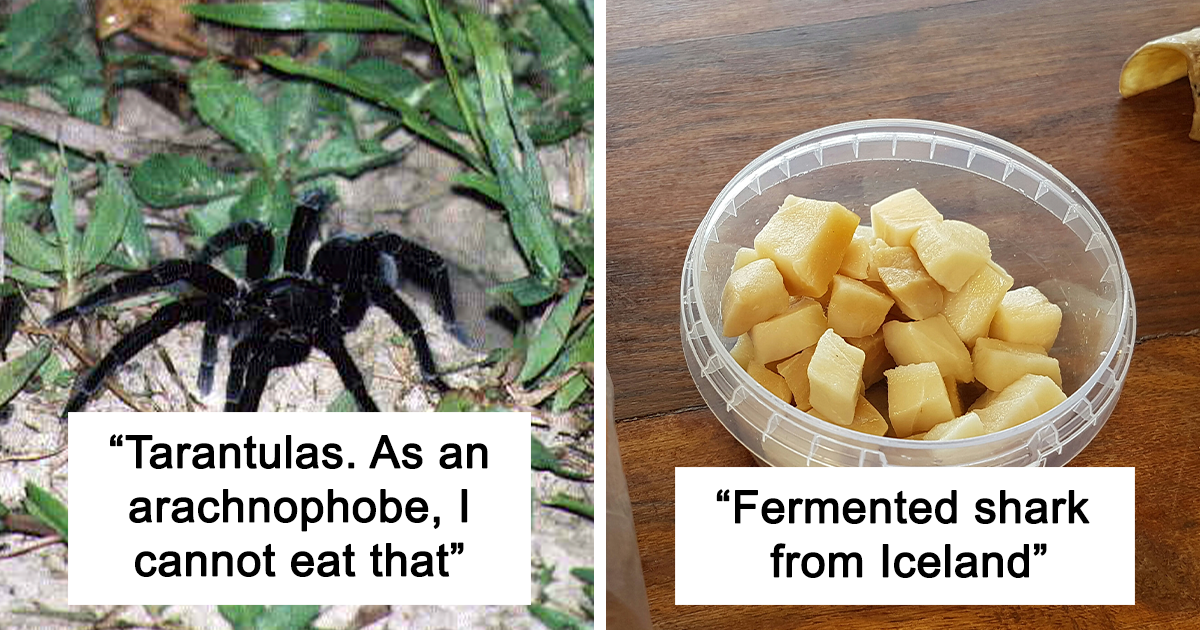
Hákarl is Icelandic fermented and dried Greenland shark. Fresh Greenland shark meat requires careful processing before consumption, and the finished product is notorious for its ammonia-like aroma. Tasters often describe the flavor as intensely fishy or cheese-like, followed by an aftertaste that remains long after everyone has stopped pretending to be relaxed.
-
Lutefisk
Lutefisk is dried whitefish rehydrated through a process involving water and lye, followed by additional soaking before cooking. It is especially associated with Scandinavian traditions and Midwestern American community dinners. Its soft, gelatinous texture inspires devotion in some families and strategic holiday travel in others.
-
Casu Marzu
Casu marzu is a Sardinian sheep’s milk cheese transformed through the activity of cheese-fly larvae. The process creates an extremely soft, pungent product that remains controversial and is subject to food regulations. Even diners comfortable with strong cheese may reconsider when dinner appears to be moving independently.
-
Hongeo
Hongeo is Korean fermented skate. Because skates handle nitrogenous waste differently from many other fish, fermentation produces a famously ammonia-heavy aroma. The sensation can travel from the mouth into the nasal passages with impressive efficiency. Fans value the chewy texture and intensity; beginners may briefly forget how breathing works.
Foods That Can Be Genuinely Unsafe When Mishandled
-
Fugu
Fugu is Japanese pufferfish prepared by specially trained professionals. Certain pufferfish tissues may contain tetrodotoxin, a potent neurotoxin, making careless preparation extremely dangerous. This is not the moment for an ambitious home cook to announce, “I watched most of a video.” Eat it only where preparation is legal, regulated, and handled by qualified experts.
-
Improperly Prepared Cassava
Cassava is a major staple crop and is safely enjoyed by millions when properly processed and cooked. However, some varieties contain compounds that can release cyanide, especially when eaten raw or inadequately prepared. Peeling, soaking, fermenting, drying, and thorough cooking may be necessary depending on the product. Follow established preparation instructions rather than improvising.
-
Unripe Ackee
Ripe, correctly processed ackee is an important part of Caribbean cuisine. Unripe ackee, as well as its seeds and rind, can contain dangerous levels of hypoglycin A. The FDA advises that only the edible portion of fully ripe, properly processed fruit should be consumed. A fruit naturally opening on the tree is giving useful information; this is not a situation where impatience deserves a reward.
What Adventurous Eaters Learn From Trying “Inedible” Foods
The first lesson is that smell can be a terrible preview. Fermented foods provide the clearest examples. A bowl of natto, a piece of stinky tofu, or a carefully dressed surströmming sandwich may smell much more forceful than it tastes. The nose detects volatile compounds before the tongue gets any information about salt, sweetness, richness, acidity, or umami. That early warning can make the brain decide the food is unacceptable before the first bite reaches the mouth.
Experienced tasters therefore avoid beginning with an enormous serving. They try a small amount with the food’s traditional accompaniments. Natto makes more sense with warm rice, mustard, and seasoned sauce than it does alone from a cold package. Blue cheese becomes friendlier beside fruit, honey, or bread. Anchovies disappear beautifully into tomato sauce, butter, or Caesar dressing. Durian may seem more approachable when chilled or incorporated into a dessert.
The second lesson is that texture often defeats people who are otherwise comfortable with bold flavors. An eater may enjoy spicy curries, intense cheeses, and bitter vegetables but still struggle with oysters, okra, cottage cheese, or jellied dishes. Flavor enthusiasm does not automatically create immunity to slime, wobble, gristle, or unexpected crunch. The mouth is a sensitive security guard, and it becomes suspicious when a food does not behave as predicted.
Changing the preparation can reveal whether the objection is really about taste. Someone who dislikes raw tomatoes may enjoy them roasted. A person who rejects boiled Brussels sprouts may love them charred until crisp. Okra becomes less slippery when roasted or fried. Liver can become more approachable when sliced thinly, cooked briefly, and paired with caramelized onions. The ingredient has not changed, but the sensory experience has been completely redesigned.
The third lesson is that context matters. A strange food eaten alone under bright kitchen lighting can feel like an examination. The same food served by a knowledgeable host, surrounded by complementary dishes and a good story, becomes an experience. Traditional foods were not invented merely to challenge tourists. They developed through local climates, preservation needs, available ingredients, religious practices, family customs, and generations of culinary knowledge.
That perspective encourages curiosity without demanding performance. Nobody earns a medal for swallowing something that makes them miserable. It is acceptable to take one thoughtful bite, describe the experience respectfully, and decide it is not for you. “The ammonia aroma is too intense for me” communicates more than “That is disgusting.” Specific descriptions recognize the food’s qualities without insulting the people who enjoy it.
Adventurous eaters also learn to distinguish challenging food from unsafe food. A strong smell does not automatically indicate danger, and a mild smell does not guarantee safety. Raw oysters contaminated with harmful bacteria may seem completely normal. Improperly prepared cassava or unripe ackee can present risks that cannot be solved through bravery. Safe sourcing and correct preparation matter more than internet dares.
Finally, preferences can change. The Instacart-Harris Poll found that nearly seven in ten respondents had eventually learned to enjoy at least one food they initially disliked. Repeated exposure, better preparation, changing taste sensitivity, and positive social experiences can all help.
That does not mean everyone will eventually crave fermented shark. Sometimes personal growth means developing a sophisticated palate. Sometimes it means confidently ordering something else.
Conclusion
The world’s most polarizing foods demonstrate that eating involves far more than taste buds. Aroma, appearance, texture, memory, culture, and expectations all arrive at the table. Anchovies and black licorice divide ordinary grocery shoppers, while surströmming, hákarl, balut, natto, and casu marzu challenge even experienced culinary explorers.
Trying unfamiliar food can be rewarding when it is done safely and respectfully. Start small, use traditional accompaniments, avoid mocking cultural dishes, and never gamble with ingredients requiring professional preparation. Your next favorite food may be hiding behind a strange smell or unusual texture. It may also remain completely intolerableand that is why menus contain choices.
Note: The word “inedible” is used humorously to describe highly polarizing foods. Many entries are respected traditional dishes. Foods with safety risks should be purchased from reputable sources and prepared according to official guidance.