

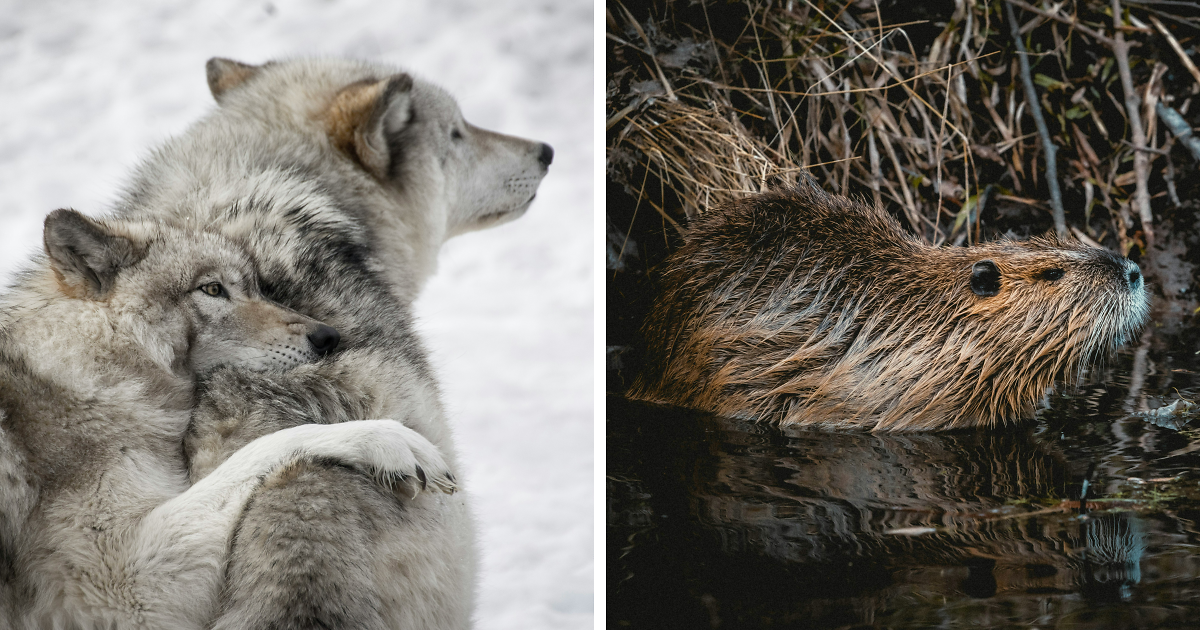
Some wild animals have a serious “golden retriever energy” problem. Not because they secretly want to move into your apartment and start paying rent (they don’t),
but because evolution, intelligence, and social life sometimes produce behaviors that look surprisingly familiar: playing, cuddling, grooming, following, “talking,”
and even what humans interpret as gift-giving.
This guide explores 10 untamed animals with pet-like behaviorsthe ones that make people whisper, “Okay… that’s basically a dog,” while nature politely
clears its throat and reminds us: still wild. You’ll get real examples, the science behind the “mild,” and the most important rule of all:
appreciating wild animals should never turn into trying to own them.
What Counts as “Pet-Like” in a Wild Animal?
“Pet-like behaviors” usually fall into a few categories: social bonding (grooming, cuddling, staying close), play (chasing, tugging, object games),
communication (vocalizations, gestures, recognition), and problem-solving (puzzles, tools, planning).
These traits show up in many speciesespecially those that are social, intelligent, or both.
Here’s the catch: a wild animal acting “friendly” is often responding to curiosity, social learning, habituation (getting used to humans),
or food opportunities. That’s not the same as domestication. Domestication is a long genetic process; habituation can happen fastand can create
dangerous situations for animals and people.
A quick (important) reality check
This article is about wild-to-mild vibes, not wild-to-living-room plans. Many species are protected by laws, have specialized needs, can carry diseases,
or may become stressed or aggressive when approached. The ethical move is to enjoy them at a safe distance, support conservation, and let “aww” stay respectful.
From Wild to Mild: 10 Untamed Animals With Pet-Like Behaviors
-
Sea Otters: Hand-Holders, Cuddlers, and Tool-Using Snack Artists
Sea otters are famous for floating in groups called rafts, sometimes holding paws so they don’t drift apart while resting. If you’ve ever thought,
“That’s the most wholesome thing I’ve seen today,” you’re not alone. They also wrap themselves in kelp like nature’s coziest weighted blanket.Then there’s their “pet-level” party trick: tool use. Sea otters can use rocks as anvils to crack open hard-shelled preybasically the wilderness version
of “I brought my own can opener.” The combo of social closeness + clever tool behavior makes them feel oddly familiar… while still being very much
ocean wolverines with a strict seafood budget. -
Common Bottlenose Dolphins: Playful, Social, and (Sometimes) Too Comfortable Around People
Dolphins are intensely social, often seen playing, surfing waves, and interacting with one another in ways that look like joyful roughhousing.
That playfulness is part of why humans feel such a strong connection to them.But here’s the twist: dolphins that start seeking humans can be a sign of habituation, and experts warn that close interaction can harm dolphins by changing
their natural behavior and increasing risk. In other words, dolphins can look “pet-like,” but treating them like pets is a fast track to troublefor everyone involved. -
American Crows: Face-Recognizers, Grudge-Holders, and Occasionally “Gift” Droppers
Crows are the clever neighborhood characters who watch everything you do like tiny judges in feathered robes. Research and reporting have documented that crows can
recognize individual human faces and remember how people treated themvery “I know what you did last summer,” but with more wing-flapping.Some people also report crows leaving small objects (buttons, shiny bits) near places where humans feed thembehavior often described as “gifting.”
Whether it’s true gratitude, social exchange, or “Here’s a random bead; keep the peanuts coming,” the effect is undeniably pet-adjacent. -
Ravens: Big-Brain Mischief With Play, Planning, and Curiosity
Ravens aren’t just “large crows.” They’re problem-solvers with a reputation for playful behavior and advanced thinking. Studies and science coverage describe ravens
as capable of planning-like behaviors and using past experience to prepare for future opportunitiesskills we tend to associate with primates.Their play can look strikingly pet-like: experimenting with objects, engaging in social games, and generally acting like the clever kid in class who finishes the
assignment early and then invents chaos for entertainment. -
Capybaras: Social, Chill, and Basically the Internet’s Favorite “Roommate” Energy
Capybaras are highly social animals that live in groups and communicate with a range of vocalizations. Zoos and wildlife educators often highlight their calm,
herd-based lifestyle and the way group members stay connectedtouching, grooming, and keeping track of one another.Their “pet-like” vibe comes from a mix of tolerance and social bonding: they often appear relaxed around other animals, and they’re famous for looking like they
are perpetually about to offer you a warm beverage and ask how your day’s going. -
Meerkats: Grooming, Playing, and Family-Style Teamwork
Meerkats live in cooperative groups (“mobs”) and spend plenty of time grooming and playing togetherbehaviors that look a lot like the social maintenance
you see in dogs or cats that share a home. Grooming helps keep the group bonded and coordinated, which matters when your daily schedule includes
“avoid predators” and “raise the kids together.”Their pet-like behaviors show up in the little moments: close contact, playful wrestling, and group routines that feel oddly like a householdif your household
had a designated lookout whose job is to stand tall and panic professionally. -
Wolves: Pack Bonding, Play, and Affectionate Social Rituals
Wolves are highly social canids with strong pack relationships. Observations and educational materials from park and wildlife organizations emphasize that wolves
live in family groups and rely on cooperationcommunicating, traveling, and raising young together.Within packs, behaviors like play, close proximity, and social bonding can look very dog-like (which makes sense, given dogs’ evolutionary history).
But wolf behavior is shaped by wild needs: territory, hunting, and survival. Translation: impressive social warmth… plus the wilderness version of a
“do not disturb” sign that deserves respect. -
Elephants: Comforting Touch, Friendship Networks, and Big Feelings
Elephants are famous for complex social lives. Research and science writing describe elephants responding to distress in others and using physical contact to
comfortbehaviors that resemble empathy-driven soothing in humans.And it’s not only the matriarchal family groups that matter: work on male elephants shows they can form long-term friendships and social networks.
The pet-like part isn’t “cuteness”it’s the recognizable social intelligence: bonding, reassurance, and relationships that look deeply familiar. -
Raccoons: Dexterous “Hands,” Curiosity, and Puzzle-Solving Chaos
Raccoons have the vibe of a clever pet who learned how cabinets work and now refuses to respect your boundaries. Wildlife education sources describe them as
adaptable and smartwell-suited to city life, and very skilled at getting into things humans thought were secure. (Spoiler: they were not.)Their pet-like behaviors include curiosity, manipulation with sensitive paws, and a boldness that can look like “confidence.” But raccoons are wild animals,
and experts warn against approaching or trying to keep them as pets. They’re cute, yeslike a tiny burglar in a bandit mask. -
Octopuses: Curious, Playful, and Weirdly “Interactive”
Octopuses are the invertebrate world’s brainy rebels. Studies and science coverage describe octopus curiosity and problem-solvingexploring objects, learning,
and showing behaviors that look a lot like play. The Smithsonian Ocean Portal even reports playful interactions with objects in controlled settings, like repeatedly
pushing items in a way that doesn’t seem strictly necessary for survival.Octopus “pet-like” behavior is less about cuddling (they’re not plush toys) and more about engagement: investigating, manipulating, learning patterns,
and responding to stimulation. If dogs are emotional extroverts, octopuses are the introverted geniuses who still want to know what every button does.
Why Do Some Wild Animals Act “Mild”?
When wild animals display pet-like behaviors, it usually comes from one (or several) of these drivers:
- Social survival: Grooming, touch, and play help animals build trust and cooperation in groups (meerkats, wolves, elephants).
- High intelligence: Curiosity and problem-solving often look like play or “personality” (crows, ravens, octopuses, raccoons).
- Habituation: Animals that repeatedly encounter humans may become less fearfulsometimes dangerously so (dolphins, urban foxes, raccoons).
-
Domestication (rare and long-term): True domestication is genetic change across generations. Selective breeding experiments in foxes show how
selecting for tameness can quickly shift behaviorand even physical traitsover time.
The big takeaway: “pet-like” doesn’t automatically mean “safe,” “friendly,” or “wants to be adopted.” It often means “this species is social or smart” or
“humans changed the environment and the animal adapted.”
How to Enjoy Wild Animals Without Turning It Into a Problem
If an animal seems tame, the best response is to become extra responsible. Wildlife agencies repeatedly stress that close interaction can disturb animals,
change their behavior, and increase injury risk. Here are safer ways to enjoy the wild-to-mild magic:
- Observe from a distance: Use binoculars or a zoom lens instead of your feet.
- Don’t feed wildlife: Food creates dependency and risky behaviorespecially for clever species.
- Respect resting animals: Disturbing a resting marine mammal or otter can cost them crucial energy.
- Follow local rules: Parks and wildlife agencies set guidelines for a reason (and it’s not to ruin your vacation).
Nature is better when animals stay good at being wild.
FAQ: Wild Animals With Pet-Like Behaviors
Are these animals safe to approach if they seem friendly?
No. “Friendly-looking” can be curiosity, stress, habituation, or a learned association with food. Keep distance and follow wildlife-viewing guidance.
Is it ethical to keep wild animals as pets?
In most cases, it’s not recommended. Many wild species have complex needs, may be protected by law, and can suffer in captivity. Enjoy them in the wild or
through reputable sanctuaries and conservation programs.
Why do crows sometimes leave objects for humans?
Reports suggest it can happen around consistent feeding spots. The motivation is debatedpossible social exchange, curiosity, or learned association with humans.
Either way, avoid creating dependency by feeding wildlife.
Experiences: What “Wild to Mild” Looks Like in Real Life (and Why It Sticks With You)
People often describe a special kind of awe when they see a wild animal do something that feels almost domesticlike the animal briefly speaks a language we
recognize. It might happen on a boardwalk at dusk when a raccoon carefully tests a latch with those sensitive “hands,” pausing the way a dog pauses before
opening a forbidden door. Or maybe it’s on a windy coastline, where sea otters cluster into a raft, drifting like a floating neighborhood, their bodies rising and
falling with the swell like synchronized nappers at a group sleepover.
In wildlife parks and zoo education programs, visitors frequently notice how social animals “run on relationships.” Meerkats grooming in a tight huddle can look
like pets piled on a couchexcept the couch is sand, and the neighbor who stops grooming to stand upright is scanning for hawks like it’s their full-time job.
With elephants, it’s often the gentle physical reassurance that gets people: a trunk laid across another elephant’s body, a quiet touch that reads as comfort
even if you don’t know the whole story behind it. Those moments hit hard because they echo how humans soothe one another.
The bird moments can feel even weirderin a good way. Someone who regularly walks the same path might realize that the local crows are tracking them,
reacting differently based on past encounters. It can feel like being recognized by a neighborhood dog, except the dog can fly and is probably smarter than
your average password. Ravens add another layer: they don’t just watch; they seem to experiment. People report ravens playing with objects, investigating
odd shapes, and generally acting like pranksters with a research grant.
Then there are the “marine mind” experiences. Dolphins can look like they’re inviting playsurfing waves, pacing boats, popping up with a curiosity that reads
as friendly. That perception is exactly why wildlife agencies emphasize distance: when humans lean into the illusion of a bond, dolphins may lose wariness and
become more vulnerable. The most meaningful experience is often the one where you keep your space, watch respectfully, and let the animal choose its own
behavior without your influence.
The common thread in these experiences is not that wild animals are secretly petsit’s that nature produces familiar patterns when brains get bigger, groups get
tighter, and survival depends on cooperation. Seeing those patterns can make you feel more connected to the living world. The best way to honor that feeling is
to protect the boundary that keeps it real: admire the “mild,” but respect the “wild.”