

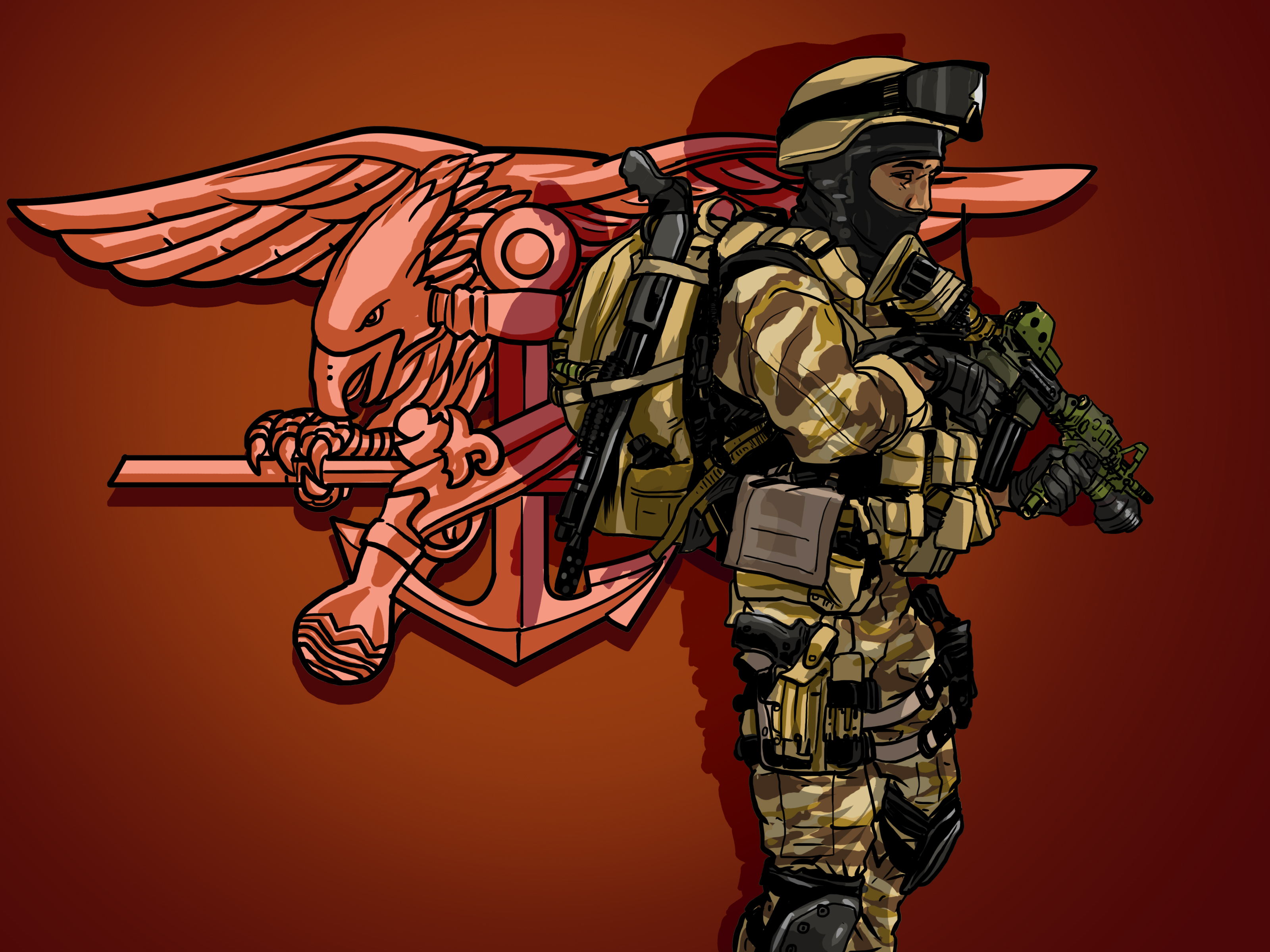
Becoming a Navy SEAL is not simply a matter of doing several thousand push-ups, buying camouflage workout gear, and learning to look serious near a swimming pool. Navy SEAL candidates must satisfy strict academic, medical, citizenship, character, and physical requirements before entering one of the most demanding military training pipelines in the world.
SEAL stands for Sea, Air, and Land, reflecting the environments in which these Naval Special Warfare operators may serve. Their work can include special reconnaissance, maritime operations, personnel recovery, crisis response, and other classified or sensitive missions. Despite the Hollywood image of a lone action hero jogging away from an explosion, actual SEAL operations depend heavily on discipline, preparation, communication, and teamwork.
This guide explains how to become a Navy SEAL through either the enlisted or officer pathway, what the current entry standards look like, how the training pipeline works, and how aspiring candidates can prepare intelligently without turning every workout into an appointment with the emergency room.
Understand What Becoming a Navy SEAL Really Means
A Navy SEAL is an active-duty member of the U.S. Navy’s Naval Special Warfare community. Enlisted graduates receive the Special Warfare Operator rating, commonly abbreviated as SO. Both enlisted candidates and prospective officers must complete the required selection and training process before earning the SEAL Trident.
The occupation demands much more than physical strength. Candidates need sound judgment, emotional control, integrity, attention to detail, adaptability, and the ability to contribute to a team while tired, uncomfortable, and under pressure. A person who can perform 100 push-ups but refuses to listen to teammates is not bringing the complete package.
Official Navy information describes an initial training pipeline of approximately 62 weeks, including Basic Underwater Demolition/SEAL training, parachute training, and SEAL Qualification Training. Graduates then continue with specialized preparation and pre-deployment training before serving operationally.
Meet the Basic Navy SEAL Requirements
Before planning an epic training montage, determine whether you meet the basic eligibility rules. Requirements may change, and waivers are handled individually, so final answers must come from an authorized Navy recruiter.
Citizenship and security eligibility
Navy SEAL candidates must be U.S. citizens and must qualify for the required security clearance. The clearance process can include a review of financial history, criminal conduct, substance use, foreign contacts, employment, and other background information.
Honesty is essential. Trying to hide an old mistake can create a larger problem than disclosing it accurately. Applicants should gather relevant documents and answer questions completely rather than testing whether investigators enjoy surprise plot twists.
Age requirements
The Navy’s current enlisted SEAL career guidance generally requires applicants to be younger than 29. Prospective SEAL officers are generally required to be 28 or younger. Certain highly qualified applicants may be considered for age waivers, but a waiver is never guaranteed.
Education requirements
Enlisted applicants generally need a high school diploma or an accepted equivalent. Officer candidates normally need a bachelor’s degree from an accredited four-year institution and must complete an approved Navy officer accession program.
A college degree is not required for the enlisted pathway, but academic ability still matters. SEAL training includes technical instruction, navigation, planning, communications, diving knowledge, and other subjects that cannot be mastered by simply yelling “motivation” at a textbook.
Medical and vision standards
Applicants must pass the Military Entrance Processing Station medical examination and a separate physical examination associated with diving duties. Current Navy recruiting guidance lists specific eyesight standards, including vision that is correctable to the required level. Color-vision questions, previous surgeries, prescription medications, injuries, and other medical issues should be discussed directly with a recruiter and qualified military medical personnel.
ASVAB requirements
Enlisted applicants must take the Armed Services Vocational Aptitude Battery and achieve one of the qualifying score combinations specified for the Special Warfare Operator program. These combinations use results from areas such as arithmetic reasoning, mathematics knowledge, mechanical comprehension, electronics information, general science, word knowledge, and paragraph comprehension.
Because qualifying formulas can be updated, applicants should request the current combinations from a Navy recruiter. Preparing for the ASVAB is worthwhile even for excellent athletes. The Navy is looking for candidates who can learn, solve problems, and retain technical informationnot merely people who can perform pull-ups while making intense eye contact with the ceiling.
Choose an Enlisted or Officer Pathway
The enlisted SEAL pathway
Most civilian enlisted applicants begin by contacting a Navy recruiter and expressing interest in the Special Warfare Operator program. They complete aptitude testing, medical screening, background paperwork, and the Physical Screening Test. Candidates who qualify may enter the Delayed Entry Program with a contract that places them on the SEAL training track.
Applicants should read every contract carefully. A conversation about becoming a SEAL is not the same as having the appropriate program written into an enlistment agreement. Ask direct questions, request explanations of unfamiliar terms, and keep copies of documents.
The SEAL officer pathway
Prospective officers may pursue commissioning through the U.S. Naval Academy, Navy Reserve Officers Training Corps, Officer Candidate School, or another approved commissioning route. They must earn a bachelor’s degree, complete officer training, and compete for selection into Naval Special Warfare.
Officer applicants are evaluated not only as athletes but also as potential leaders. Academic performance, judgment, communication, military aptitude, integrity, and leadership experience all matter. The officer is expected to lead highly trained personnel, manage risk, make decisions, and accept responsibility when conditions are far from convenient.
Pass the Navy SEAL Physical Screening Test
The Physical Screening Test, or PST, is an early gateway for Special Warfare applicants. It evaluates swimming, upper-body endurance, core endurance, pulling strength, and running ability. The events are performed in a specified order with controlled rest periods.
| Event | Current Minimum | Elevated Target |
|---|---|---|
| 500-yard combat sidestroke swim | 12:30 | 9:30 |
| Push-ups in 2 minutes | 50 | 75 |
| Sit-ups in 2 minutes | 50 | 75 |
| Pull-ups | 10 | 15 |
| 1.5-mile run | 10:30 | 9:30 |
These figures reflect current Navy recruiting information, but standards and contracting policies can change. Candidates should verify every number before testing. The elevated scores are more useful preparation targets than the minimums, and top candidates frequently perform well beyond the entry floor.
Passing by one second or one repetition may technically count, but arriving barely able to satisfy the minimum standard leaves little protection against illness, fatigue, unfamiliar conditions, or an imperfect testing day. The PST is the beginning of the physical challenge, not the final boss battle.
Prepare for the PST Safely and Systematically
Become an efficient swimmer
Swimming ability is one of the most important differences between ordinary gym fitness and Special Warfare preparation. Candidates must learn the combat sidestroke or another currently authorized technique and become comfortable moving efficiently through the water.
Work with a qualified swim coach when possible. Technique improvements can reduce effort more effectively than simply adding endless laps. Practice should include controlled pacing, turns, streamlined body position, and breathing rhythm.
Never practice underwater breath-holding, blackout drills, or hypoxic swimming alone. Shallow-water blackout can occur without dramatic warning. Water-confidence training conducted by the military takes place under professional supervision with established safety procedures; a public swimming pool is not an audition stage.
Build running durability
Aspiring candidates need both speed and the ability to tolerate repeated running. A balanced program usually includes easy aerobic running, controlled tempo work, intervals, and gradual increases in weekly volume.
Avoid increasing distance and intensity at the same time. Shin pain, knee irritation, and stress injuries can turn several productive months into an unwanted season of sitting on the couch and explaining to everyone that the ice pack is tactical.
Develop practical strength endurance
Push-ups, sit-ups, pull-ups, and core exercises should be practiced with strict form. Strength training for the legs, hips, back, and shoulders can improve durability, but excessive bodybuilding volume may interfere with running and swimming performance.
A candidate should be strong enough to control body weight, maintain posture, handle repetitive work, and resist injury. Maximum size is not the objective. The goal is useful performance across many activities, often on the same day.
Schedule recovery
Training hard every day may feel dedicated, but it often becomes a sophisticated method of getting worse. Include easier sessions, adequate sleep, nutritious meals, mobility work, and complete rest when needed. Navy fitness resources specifically emphasize regeneration and low-intensity recovery between demanding sessions.
Persistent pain, dizziness, chest symptoms, unusual shortness of breath, or declining performance should be evaluated rather than hidden. Heat illness and dehydration are not proof of toughness. Navy medical guidance emphasizes evidence-based prevention rather than attempts to develop “dehydration tolerance.”
Complete Navy Recruit Training
Enlisted candidates attend Recruit Training Command at Great Lakes, Illinois, the Navy’s only enlisted boot camp. Recruit training develops basic military knowledge, discipline, physical readiness, teamwork, seamanship, and the habits expected of a Sailor.
SEAL candidates do not receive a magical exemption from basic Navy responsibilities. They must learn to follow instructions, maintain equipment, meet uniform standards, pass inspections, and function within a military organization. The Navy’s current public information describes recruit training as approximately nine weeks, although schedules can be adjusted.
Advance Through the SEAL Training Pipeline
Naval Special Warfare preparatory training
After recruit training, selected candidates enter preparatory training designed to improve physical readiness for the greater demands ahead. Performance is evaluated again, and candidates must continue meeting program standards.
This is why applicants should not expect the Navy to transform an unprepared beginner into an elite athlete. Preparatory training can sharpen a strong foundation, but it is not a rescue boat for someone who arrived without one.
Basic Underwater Demolition/SEAL training
BUD/S is conducted at the Naval Special Warfare Center in Coronado, California. The curriculum progressively evaluates physical conditioning, water competency, diving skills, land-warfare fundamentals, mental resilience, attention to detail, and teamwork.
The famous Hell Week occurs during the physical-conditioning portion of training. It is a closely supervised selection event involving prolonged physical and mental stress. Its purpose is not to create social-media legends; it helps evaluate whether candidates can continue contributing to a team under extreme fatigue and discomfort.
Candidates can be removed for performance, medical, safety, disciplinary, or administrative reasons. Others voluntarily withdraw. The best preparation is not to spend years rehearsing dramatic speeches about never quitting. It is to build reliable habits, learn to solve the problem directly in front of you, and remain useful to the people beside you.
Parachute and qualification training
Completing BUD/S does not yet make someone a fully qualified Navy SEAL. Graduates continue to parachute instruction and SEAL Qualification Training, where they develop the foundational professional skills required before assignment to a SEAL team.
After successfully completing the required pipeline, graduates receive the SEAL Trident and the Special Warfare Operator designation. Training continues throughout the career through unit instruction, specialized schools, rehearsals, and pre-deployment workups.
Common Mistakes Navy SEAL Candidates Should Avoid
Training only for the minimum scores
Minimum standards allow an applicant to remain in the process; they do not prove readiness for the complete pipeline. Build a comfortable margin in every PST event while remaining healthy.
Ignoring swimming technique
Strong runners and weightlifters sometimes assume general fitness will automatically transfer to the water. It does not. Water punishes wasted motion with remarkable enthusiasm.
Adding weight too quickly
Running or hiking with heavy loads before developing basic durability can lead to preventable injuries. Candidates should not imitate advanced military training evolutions without appropriate instruction and supervision.
Sacrificing sleep to prove commitment
Deliberate sleep deprivation before entering training does not manufacture mental toughness. It reduces recovery, learning, coordination, and immune function. Arrive healthy rather than pre-exhausted.
Neglecting character and personal responsibility
Poor financial decisions, substance misuse, criminal conduct, dishonesty, and repeated disciplinary problems can end an application regardless of athletic performance. Becoming a credible candidate starts with daily behavior long before the first official test.
Believing motivation will replace preparation
Motivation is useful for starting. Systems are what keep progress moving when motivation disappears for the weekend. A written schedule, training log, realistic progression, and regular testing are more reliable than watching the same inspirational video until the soundtrack becomes your legal guardian.
What the Journey May Feel Like: A Realistic Candidate Experience
The following scenario is a composite illustration based on the documented SEAL application and training process. It is not presented as the personal experience of the writer or as a guarantee that every candidate will follow the same timeline.
Imagine a candidate named Daniel who can run a respectable mile and perform plenty of push-ups but has never learned an efficient combat sidestroke. His first practice PST is humbling. He starts the swim too quickly, fights the water, finishes exhausted, and discovers that the run feels considerably different after the calisthenics events. The stopwatch is brutally honest and, unlike a supportive friend, does not say, “That was basically ten minutes.”
Daniel spends the next several months building a structured routine. He swims three times per week under the guidance of a coach, runs at several different intensities, practices strict calisthenics, and strength-trains twice per week. Instead of testing himself at maximum effort every day, he separates hard sessions with easier aerobic work and recovery.
His progress is not a smooth cinematic sequence. Some weeks are excellent. During others, his swim time refuses to improve, his shoulders feel tired, or work interferes with training. He learns that consistency means adapting without abandoning the goal. When his lower leg begins aching, he reduces impact, gets it evaluated, and maintains conditioning in the pool rather than pretending pain is a personality test.
As his physical scores improve, the application process introduces a different kind of pressure. Daniel collects school records, completes medical forms, studies for the ASVAB, and discusses an old traffic charge with his recruiter. None of this looks exciting in a movie trailer, yet administrative accuracy can determine whether an application moves forward.
At his official PST, Daniel feels nervous despite having completed many practice tests. The pool seems warmer than usual, another candidate starts faster, and his goggles nearly become independent contractors during the first turn. He sticks to his pacing plan instead of racing the person in the next lane. His scores are comfortably competitive, not because he discovered a secret workout, but because he rehearsed the test repeatedly under controlled conditions.
Recruit training changes the environment again. Daniel is no longer organizing life around his preferred workout time, favorite breakfast, or perfectly curated playlist. He must meet schedules, absorb instruction, pass inspections, and help his division perform. He begins to understand that military reliability includes mundane details: being ready on time, maintaining equipment, listening carefully, and correcting mistakes without producing a five-part documentary about why the mistake was technically someone else’s fault.
Preparatory training and BUD/S increase the physical pressure, but fatigue also exposes habits. Candidates who wasted energy competing over every repetition may struggle to recover. Candidates who ignored swimming weaknesses cannot negotiate with the ocean. Daniel focuses on the next task, protects his teammates when appropriate, follows safety instructions, and avoids mentally traveling too far ahead.
There are moments when confidence drops. A poor evolution can make months of preparation feel irrelevant. The useful response is neither panic nor theatrical bravado. Daniel identifies what went wrong, accepts instruction, and returns to work. Resilience in this environment is often less dramatic than people imagine. It may look like correcting equipment, eating when food is available, maintaining attention, or giving a clear answer while exhausted.
The experience also changes his definition of toughness. Before applying, he associated toughness with discomfort and maximum effort. During training, he sees that professional toughness includes judgment, patience, honesty about injuries, technical competence, and the ability to remain dependable when the excitement has disappeared.
Whether Daniel ultimately earns the Trident or leaves the pipeline, the process demands an honest evaluation of his preparation, motivation, and ability to serve. Candidates cannot control every medical decision, selection outcome, or training event. They can control whether they arrive fit, informed, humble, disciplined, and prepared to work for the team rather than for an imaginary highlight reel.
Conclusion
Learning how to become a Navy SEAL begins with understanding that the job is a military profession, not an extreme-fitness challenge. Applicants must qualify for Navy service, meet Special Warfare requirements, pass medical and background screening, achieve competitive PST scores, and complete a long sequence of military and technical training.
The smartest candidates prepare across every category: swimming, running, strength endurance, academics, recovery, character, and teamwork. They verify current requirements with an authorized recruiter, build fitness gradually, and avoid reckless attempts to copy supervised military training on their own.
There is no guaranteed shortcut to the SEAL Trident. There is, however, a sensible starting point: become healthy, become coachable, become consistent, and take responsibility for the details. The journey may eventually include cold surf and very little sleep, but it usually begins with paperwork, a training plan, and the realization that your swimming technique needs considerably more diplomacy.