

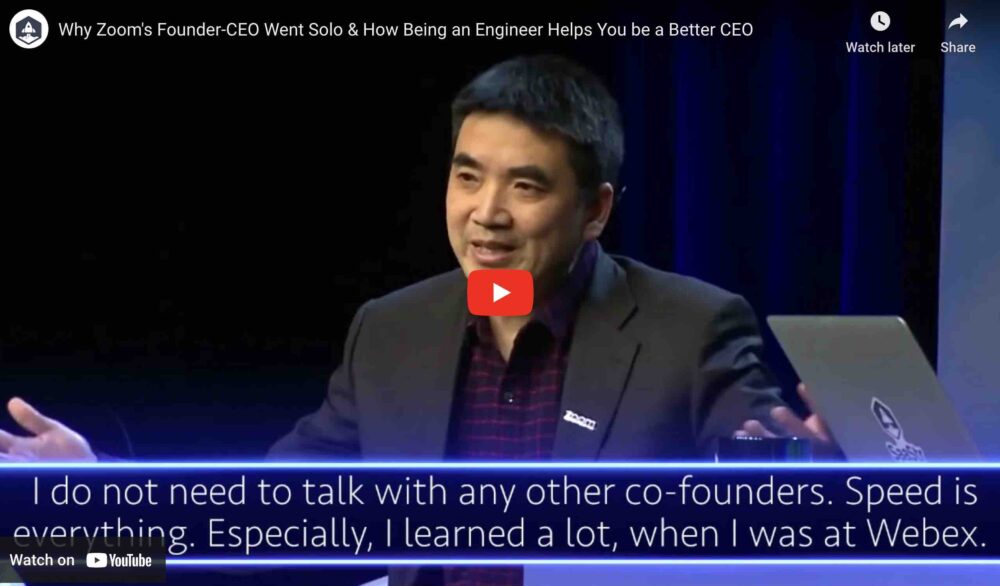
Every SaaS founder eventually asks the same dramatic question, usually sometime between the third cold email campaign, the second broken onboarding flow, and the first moment they realize the “quick MVP” has become a tiny monster wearing a login screen: Do I really need a co-founder?
The honest answer is wonderfully annoying: no, you do not absolutely need a co-founder. But you probably need what a great co-founder provides: complementary skills, emotional durability, faster decision-making, accountability, and someone who can look at the dashboard at midnight and say, “Okay, this is bad, but not legally bad.”
In SaaS, the co-founder question is not just about companionship. It is about speed, skill gaps, trust, fundraising, culture, and long-term stamina. A solo founder can build an excellent company. A founding team can also implode before the product has a pricing page. The real issue is not whether you have a co-founder. The real issue is whether your company has enough founder-level energy to survive the early chaos.
The Short Answer: You Need Founder-Level Help, Not Necessarily a Co-founder on Day One
A co-founder is not a decorative title. They are not there to make your LinkedIn page look less lonely. A real co-founder carries weight. They make hard calls, own critical functions, recruit early talent, talk to customers, lose sleep over churn, and help turn a fragile idea into an actual business.
That said, many successful startups do not begin with the perfect founding duo sitting in a garage beside a suspiciously expensive espresso machine. Some start with one person who validates a painful problem, builds a prototype, gets early customers, and later recruits someone who behaves like a co-founder even if they join as a senior operator, technical lead, head of sales, or COO-style partner.
For SaaS founders, that distinction matters. You do not need to panic-hire a co-founder simply because investors, podcasts, or startup Twitter made you feel incomplete. But you should be brutally honest about whether you can cover the three big early-stage jobs: building the product, selling the product, and keeping the company alive long enough for the market to care.
Why Investors Often Like Co-founder Teams
Investors often prefer startups with more than one founder because teams can reduce certain types of risk. A technical founder plus a commercial founder, for example, can move faster than a solo founder trying to code in the morning, sell in the afternoon, write investor updates at night, and remember to eat something that did not come from a vending machine.
A strong co-founder team can also show that the company is not dependent on a single person for every critical decision. If one founder is deep in product architecture, another can be closing design partners. If one is handling fundraising, another can keep the roadmap from turning into modern art. In a B2B SaaS company, where trust, long sales cycles, customer success, and product reliability all matter, distributed leadership can be a serious advantage.
But investors do not love co-founders just because there are two names on the pitch deck. They love aligned co-founders with complementary strengths. A messy co-founder relationship is not a risk reducer. It is a risk amplifier wearing a company hoodie.
When a Co-founder Is a Very Good Idea
You should seriously consider finding a co-founder if your skill gap is central to the business. For example, if you are a nontechnical founder building a complex developer platform, security product, AI infrastructure tool, or workflow automation engine, you may need a technical co-founder or technical leader with founder-level commitment. Hiring freelancers for the first version can work, but outsourcing the heart of the company is risky if the product itself is the moat.
The same applies in reverse. If you are a brilliant engineer building B2B SaaS for enterprise buyers but you avoid sales calls like they are haunted, a commercial co-founder can be transformational. Early SaaS is not just code. It is customer discovery, positioning, pricing, onboarding, retention, support, and repeatedly hearing, “Interesting, but not a priority this quarter,” without turning into dust.
You may need a co-founder if:
- Your missing skill is essential to product-market fit.
- You cannot sell, build, recruit, and fundraise at the required pace alone.
- The business requires deep domain expertise you do not have.
- You need a trusted decision partner for high-stakes trade-offs.
- You are already becoming the bottleneck in every department.
In plain English: if the company only moves when you touch it, you do not have a startup. You have a very demanding houseplant.
When You Might Not Need a Co-founder
You may not need a co-founder immediately if your SaaS product is narrow, your first market is clear, and you can build or sell enough to validate demand. A founder with strong technical ability can launch a small product, sell to a niche, and use revenue to hire. A founder with strong sales and domain knowledge can sometimes validate pain, collect preorders, and then recruit technical talent with proof instead of poetry.
This is especially true for focused SaaS products: internal tools for a specific industry, lightweight automation, vertical CRM features, reporting dashboards, or workflow software built around a problem the founder understands deeply. If you can reach users, learn quickly, and ship a useful version without burning a year, solo can be a valid path.
But solo should not mean isolated. Solo founders need advisors, early customers, contractors, mentors, peer groups, and eventually senior hires. The mistake is not being solo. The mistake is pretending one human can permanently be CEO, CTO, head of sales, customer success manager, recruiter, finance department, therapist, and snack procurement officer.
The Best Co-founder Is Not Your Clone
A great co-founder does not simply agree with you using different fonts. The best co-founder brings a different operating system. If you are visionary and chaotic, you may need someone structured and practical. If you are technical and detail-heavy, you may need someone who can simplify the story and sell the outcome. If you are customer-obsessed but not product-oriented, you may need someone who can translate pain into software that does not collapse during a demo.
Complementary skills matter more than matching personalities. Friendship can help, but friendship alone is not a qualification. Plenty of friends should remain friends and never be allowed near a shared cap table. The right co-founder relationship should include trust, respect, honesty, and the ability to disagree without turning every roadmap debate into a courtroom drama.
Look for these co-founder traits:
- High ownership: They do not wait to be assigned obvious problems.
- Relevant excellence: They are meaningfully better than you in important areas.
- Emotional stability: They can handle pressure without poisoning the room.
- Customer curiosity: They care about users, not just ideas.
- Integrity: You can trust them with bad news, money, equity, and ambiguity.
Do Not Rush the Co-founder Search
A bad co-founder is more expensive than no co-founder. This is one of the least glamorous truths in startups. A rushed partnership can create equity disputes, decision paralysis, culture problems, investor hesitation, and months of emotional cleanup. Breaking up with a co-founder is not like canceling a SaaS subscription. There is no friendly button that says, “End partnership, export feelings as CSV.”
Before formalizing a co-founder relationship, work together. Build a prototype. Sell to customers. Run a small project. Handle conflict. Talk through money, time commitment, ownership, titles, decision rights, worst-case scenarios, and what happens if one person wants out. If the conversations feel awkward now, imagine how awkward they become when revenue, investor money, and employees are involved.
Co-founder dating should be practical. You are not looking for startup romance. You are testing whether two capable people can build under pressure without confusing ego with strategy.
Equity Splits, Vesting, and the Conversation Everyone Avoids
Founder equity is where optimism meets paperwork. Some teams split equity equally. Others use an unequal split based on idea contribution, technical work, capital invested, customer access, time commitment, or previous progress. There is no universal perfect formula, but there is one universal rule: talk about it early and document it clearly.
Most investor-friendly founder equity structures include vesting, commonly over four years with a one-year cliff. This helps protect the company if someone leaves early. Without vesting, a departed co-founder can keep a large ownership stake while the remaining founder continues doing all the work, which is a charming arrangement only if you enjoy resentment as a business model.
Founders should also discuss intellectual property assignment, roles, decision-making authority, board control, salary expectations, expense approvals, and exit scenarios. Legal documents may not feel exciting, but neither does spending your seed round resolving a preventable founder dispute.
The Solo Founder Playbook
If you decide to build without a co-founder, your first job is to design around your weaknesses. Do not simply work more hours and call it strategy. Solo founders need systems because they have fewer human shock absorbers.
1. Build a personal advisory board
Find three to five people who can challenge you in specific areas: product, sales, finance, legal, and hiring. These do not need to be famous investors. In fact, the best advisor is often someone who has recently solved the exact problem currently chewing on your ankle.
2. Hire for ownership, not just tasks
Your first hires matter enormously. In a tiny company, one strong early employee can reshape momentum. One weak hire can create drag that feels like pulling a piano through wet cement. If you are solo, look for people who can own outcomes, not just complete tickets.
3. Stay close to customers
Customer conversations are the solo founder’s co-founder substitute. They reveal what matters, what confuses users, what they will pay for, and what sounds great in your head but lands like a wet sandwich in the market.
4. Protect your energy
Burnout is not a badge. It is a warning light. Solo founders need routines, boundaries, peer groups, and honest recovery time. If every decision depends on you, your judgment is a company asset. Treat it accordingly.
The Co-founder Decision Framework
Instead of asking, “Do I need a co-founder?” ask a sharper question: “What founder-level responsibilities are currently uncovered?” Then list the work that must happen in the next 12 months.
For a SaaS company, that list may include product development, infrastructure, security, user research, design, sales, onboarding, support, analytics, pricing, fundraising, hiring, partnerships, and financial planning. Now mark what you can do well, what you can learn quickly, what you can outsource temporarily, and what truly requires a long-term owner.
If the uncovered work is central to your company’s survival, a co-founder may be the right answer. If the gap is important but not existential, a senior hire, advisor, contractor, or fractional operator may work. If the gap is temporary, do not give away 30% of the company to solve a three-month problem.
Specific SaaS Examples
Example 1: The technical solo founder
A developer builds a workflow tool for accounting teams. The product is useful, but growth is slow because the founder dislikes demos and avoids outbound sales. In this case, a commercial co-founder could help define the buyer, create repeatable sales motions, test pricing, and turn product usage into revenue. Without that person, the company may become a beautiful product that nobody discovers.
Example 2: The sales-led founder
A former operations director knows a painful problem in healthcare administration and can get meetings with buyers. But the product needs secure architecture and integrations. Here, a technical co-founder may be essential because trust, compliance, and product reliability are not side quests. They are the game.
Example 3: The focused bootstrapper
A founder builds a simple scheduling add-on for a narrow professional niche. The product is small, customers are easy to reach, and support needs are manageable. This founder may not need a co-founder at the start. Revenue, customer feedback, and disciplined hiring may be enough to grow carefully.
Founder Field Notes: Experiences from the Co-founder Question
The co-founder decision often feels abstract until you are living inside it. In practice, it shows up in tiny moments. It is the sales call you postpone because you would rather fix a UI bug. It is the customer complaint that arrives while you are trying to write investor emails. It is the product decision you keep revisiting because there is nobody around to challenge your assumptions. Early-stage SaaS has a way of turning every founder into a one-person circus, except the circus also has billing issues.
One common experience among solo founders is the quiet accumulation of decisions. None of them looks huge alone. Should the onboarding flow require a workspace name first? Should pricing be per seat or usage-based? Should the first hire be engineering, support, or growth? Should you chase enterprise buyers or stay with small teams? Each choice takes energy. Without a co-founder, you may still make good decisions, but you need a process for making them. Otherwise, the company becomes a museum of half-decisions.
Another experience is loneliness that masquerades as productivity. Solo founders can move fast because nobody argues with them. That sounds efficient until the founder realizes nobody is stress-testing the plan either. A co-founder can be valuable not because they slow things down, but because they improve the quality of speed. The right person asks the uncomfortable question before the market does. The wrong person asks the uncomfortable question after creating three new problems and renaming all the Slack channels.
Founding teams have their own emotional weather. The best ones build a rhythm: weekly founder meetings, clear ownership, direct feedback, and rules for disagreements. They know who decides what. They do not need consensus on every button color. They trust each other enough to disagree in private and align in public. This sounds simple, but it is rare. Many co-founder problems come from vague expectations. One founder thinks they are building a venture-scale company. The other wants a profitable lifestyle business. One wants to hire aggressively. The other wants to stay lean. Neither is wrong, but the mismatch can become expensive.
From experience, the smartest founders treat the co-founder decision as a design problem. They do not ask, “Who wants to join my idea?” They ask, “What does this company need to become inevitable?” Sometimes the answer is a co-founder. Sometimes it is a technical lead with equity. Sometimes it is a brutally honest advisor, a strong first salesperson, or a customer who becomes the product’s unofficial therapist.
If you are early, the best move is to create evidence. Build something. Talk to customers. Try working with potential partners on a real project. See who shows up when the work is boring, uncertain, or uncomfortable. The glamorous brainstorming session is not the test. The test is the third revision, the difficult customer, the failed launch, the awkward pricing conversation, and the Monday morning after nobody got enough sleep.
So, dear SaaS founder, do you really need a co-founder? Maybe. But you definitely need judgment, complementary strength, and people who can help carry the company before it becomes heavy. Whether that person is a co-founder, early executive, advisor, or first great hire, do not build alone by accident. Build solo only if it is a strategy, not a default setting.
Conclusion: Choose the Structure That Helps You Win
You do not need a co-founder to earn permission to start. You can validate demand, build a product, close early customers, and create momentum on your own. But SaaS is a long game, and long games reward teams with complementary strengths, clear ownership, and the emotional capacity to keep going when the graphs look rude.
If you find a great co-founder, protect the relationship with honest conversations, written agreements, vesting, and clear roles. If you do not have one, do not panic. Build your support system, hire carefully, stay close to customers, and recruit founder-level talent as soon as the business can support it.
The best answer is not “always get a co-founder” or “always go solo.” The best answer is: make sure every critical part of the company has a capable owner. Startups do not fail because a title is missing. They fail because the work that matters is not getting done.