

Most video game villains are considerate enough to stand directly on the critical path. They deliver a dramatic speech, reveal a second form that suspiciously has wings, and wait patiently while you reorganize your inventory. Secret bosses are less polite.
The enemies on this list hide behind punishing routes, optional regions, lengthy postgame quests, boss gauntlets, obscure rituals, and completion requirements that can consume dozens of hours. Reaching them is often an achievement by itself. Defeating them is where the emotional paperwork begins.
For simplicity, “villain” is used broadly here. Some characters are evil gods, some are corrupted warriors, and others are honorable challengers whose main crime is treating your health bar like a disposable napkin. What unites them is that casual players can finish the main adventure without ever seeing their nastiest attacks.
What Makes a Hidden Video Game Villain Special?
A great secret boss does more than inflate its health total. The encounter should test abilities developed throughout the entire game: recognizing animations, managing resources, building an effective party, moving with precision, or remaining calm when the screen resembles an exploding fireworks warehouse.
The method of access matters, too. Some optional video game bosses reward exploration. Others require completion of difficult side content, a high character level, or a morally disastrous storyline. This creates a sense that the player has deliberately knocked on the monster’s door rather than merely stumbling into another mandatory battle.
-
1. Sans Undertale
How Players Encounter Him
Sans is not the final opponent of an ordinary Undertale playthrough. To fight him, players must commit to the Genocide Route by eliminating every available monster in each major area. Missing the required number of enemies can derail the route, meaning that reaching Sans demands both determination and a willingness to become the Underground’s least welcome tourist.
Why the Battle Is So Difficult
The fight throws out many conventions established earlier in the game. Sans attacks immediately, damages the player through an unusual poison-like effect, dodges ordinary strikes, and uses patterns that demand memorization rather than improvisation. Even the menus become unsafe. The battle is less a traditional duel than an examination administered by a skeleton who has already read your disciplinary record.
What makes Sans memorable is the connection between mechanics and story. The player reaches him only after making destructive choices, and he responds by exploiting nearly every assumption the game previously encouraged.
-
2. Absolute Radiance Hollow Knight
How Players Encounter Her
Absolute Radiance waits at the summit of the Pantheon of Hallownest, the fifth and final Pantheon in the Godmaster content. Players must first complete the earlier Pantheons and then survive an enormous sequence of boss fights. The final Pantheon contains 42 encounters, including stronger variations of familiar enemies.
Why the Battle Is So Difficult
Reaching Absolute Radiance with enough health and concentration is already exhausting. Once she appears, the battle accelerates the original Radiance encounter with faster attacks, overlapping hazards, teleportation, platforming, and projectiles arriving from several directions.
The true enemy is fatigue. A player can perform brilliantly for most of the gauntlet, make one poor decision near the end, and lose a substantial run. Absolute Radiance therefore tests not only mechanical skill but consistency under pressure. She is what happens when a final boss drinks three espressos and develops a personal objection to gravity.
-
3. Yozora Kingdom Hearts III Re Mind
How Players Encounter Him
Yozora appears in the Secret Episode of the Re Mind expansion. Access requires completing the Limitcut Episode, including all 13 Data Organization battles. Those fights are already among the game’s toughest challenges, so Yozora effectively sits behind a wall made from other superbosses.
Why the Battle Is So Difficult
Yozora is fast, deceptive, and capable of punishing careless healing. He can steal items, disrupt Sora’s resources, trap him in elaborate combinations, and rapidly change the rhythm of the fight. Random attacking is almost useless. Players must identify safe openings, recognize subtle visual cues, and resist pressing buttons simply because the controller looks lonely.
The encounter feels like a practical examination of Kingdom Hearts III combat. Guarding, dodging, aerial control, positioning, item management, and counterattacking all matter. Victory proves that the player understands the system rather than merely possesses a large collection of Keyblades.
-
4. Sigrun God of War (2018)
How Players Encounter Her
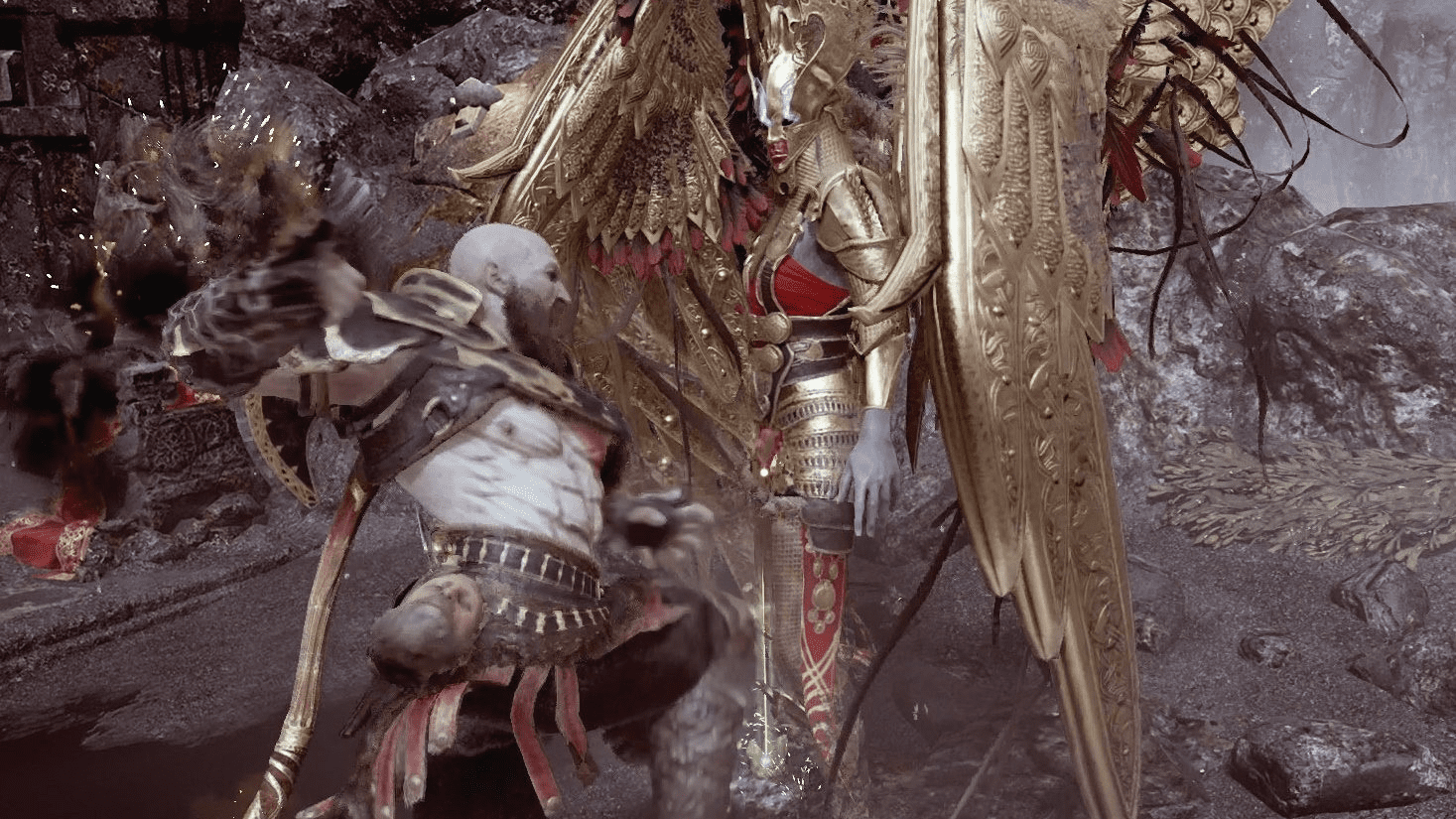
Sigrun, the Valkyrie Queen, cannot be challenged immediately. Kratos must first defeat eight imprisoned Valkyries scattered across the realms. Their helmets are then placed at the Council of Valkyries, summoning the queen for one final optional confrontation.
Why the Battle Is So Difficult
Sigrun combines attacks used by the previous Valkyries, turning the earlier battles into an extended training program. She can dive, charge, blind Kratos, throw projectiles, perform unblockable strikes, and leap into attacks that can erase a health bar with alarming efficiency.
Because her move set is assembled from earlier encounters, excuses become difficult to manufacture. The game has shown the player most of the answers; Sigrun simply asks every question at once. Success depends on reading her animations, controlling distance, interrupting dangerous moves, and knowing when not to become greedy for one additional axe swing.
-
5. Malenia, Blade of Miquella Elden Ring
How Players Encounter Her
Malenia is an optional Shardbearer hidden deep within Miquella’s Haligtree. Reaching the region requires assembling both halves of the Secret Haligtree Medallion, accessing the Consecrated Snowfield, solving the puzzle at Ordina, and surviving the dangerous journey through the Haligtree and Elphael.
Why the Battle Is So Difficult
Malenia recovers health whenever her attacks connect, even when a shield absorbs the damage. Her infamous Waterfowl Dance can overwhelm players who do not recognize its opening animation or know how to control their positioning. After her first health bar is depleted, she transforms and introduces Scarlet Rot, aerial attacks, clones, and a giant blooming explosion.
The encounter exposes weak habits with surgical precision. Excessive blocking feeds her health. Reckless aggression invites a counterattack. Panic rolling can turn Waterfowl Dance into an educational documentary about failure. She is difficult, but her stagger vulnerability and susceptibility to certain status effects leave room for thoughtful builds and disciplined teamwork.
-
6. The Nameless King Dark Souls III
How Players Encounter Him
The Nameless King rules over Archdragon Peak, an optional area that many players can completely miss. Reaching it involves obtaining the Path of the Dragon gesture and using it at a specific location in Irithyll Dungeon. After navigating the hidden region, players must ring the great bell and voluntarily summon a thunderstorm containing their next terrible decision.
Why the Battle Is So Difficult
The encounter begins against the King of the Storm, a dragon ridden by the Nameless King. Camera management can be as dangerous as the dragon’s fire and lightning. Once the mount falls, the real duel begins.
The Nameless King deliberately delays many of his attacks. Players conditioned to dodge as soon as a weapon moves will roll early and receive a lightning spear as corrective feedback. His range, damage, mobility, and timing make the battle a test of patience. He does not merely punish mistakes; he encourages the player to manufacture them.
-
7. Lingering Will Kingdom Hearts II Final Mix
How Players Encounter It
Lingering Will becomes available only after the player has completed every world and defeated the final boss in Kingdom Hearts II Final Mix. A portal then appears at Disney Castle, leading to the Keyblade Graveyard and one of the franchise’s most demanding optional battles.
Why the Battle Is So Difficult
Lingering Will can transform its Keyblade into multiple weapons, rush across the arena, fire projectiles, summon drones, seal commands, and punish attempts to heal at unsafe moments. Its attacks are visually spectacular, which is convenient because players will see many of them while Sora is being launched across the battlefield.
The fight rewards careful guarding and controlled retaliation. Long, thoughtless combos frequently trigger punishment, while disciplined players learn to recognize specific openings. Lingering Will feels less like an ordinary secret boss and more like a highly mobile rulebook that hits Sora whenever he forgets a paragraph.
-
8. Culex 3D Super Mario RPG Remake
How Players Encounter Him
The original Culex is already a famous hidden opponent, but the Nintendo Switch remake adds an even tougher rematch. Players must finish the main story, complete the game’s postgame boss-rematch sequence, and return for a three-dimensional confrontation with Culex.
Why the Battle Is So Difficult
Culex 3D arrives with powerful elemental crystals and an intimidating collection of attacks. Players must manage party health, equipment, buffs, timed actions, and the order in which threats are addressed. The battle can punish a poorly prepared team before Mario has time to reconsider his career in plumbing.
The encounter also reflects the remake’s expanded combat mechanics. Successfully timed commands and strong team composition are essential, while careless resource use can create an unwinnable late phase. Culex 3D is a playful crossover-style villain, but the damage numbers are not participating in the joke.
-
9. The Ebony Warrior The Elder Scrolls V: Skyrim
How Players Encounter Him
The Ebony Warrior is gated by a simple but demanding requirement: the Dragonborn must reach level 80. At that point, the mysterious warrior approaches the player in a major city and requests a final duel at Last Vigil. Many characters complete Skyrim’s central storyline long before reaching that level, so meeting him represents a substantial commitment to exploration, quests, crafting, and skill development.
Why the Battle Is So Difficult
He possesses excellent equipment, powerful perks, strong defenses, magical resistance, healing abilities, and combat options associated with an experienced Dragonborn. He can also reflect damage under certain conditions, creating the unusual possibility that an overpowered attack becomes an elaborate form of self-harm.
The Ebony Warrior is effective because he mirrors the player’s journey. By level 80, the Dragonborn may feel invincible. This challenger arrives specifically to ask whether that confidence has been independently audited.
-
10. Galdera, the Fallen Octopath Traveler
How Players Encounter Him
Galdera is hidden behind Octopath Traveler’s extensive postgame content. Players must finish all eight travelers’ main stories and complete the side-quest chains that unlock “At Journey’s End.” Inside the Gate of Finis, the party must defeat a gauntlet of eight returning bosses before confronting the fallen god.
Why the Battle Is So Difficult
Galdera’s confrontation uses all eight travelers across two parties, making neglected characters an immediate liability. The fight demands carefully assigned jobs, effective equipment, reliable healing, coordinated buffs, shield breaking, turn-order manipulation, and a plan for removing summoned threats.
The cruelest feature is the journey surrounding the battle. The Gate of Finis acts as a point of no return, and failure against Galdera can require repeating the preceding boss gauntlet. It is a strategic endurance test that asks whether the player truly mastered the entire castor simply kept four favorites employed while everyone else waited in a tavern.
Why Developers Hide Their Hardest Villains
Optional superbosses serve several purposes. They give experienced players meaningful challenges without blocking less competitive players from completing the story. They also encourage exploration, experimentation, and deeper engagement with combat systems that ordinary enemies may never fully test.
Most importantly, hidden video game villains create stories that belong to the player. A mandatory boss is something everyone discusses. A secret boss is something a player discovers, prepares for, fails against, studies, and eventually overcomes. The resulting victory feels personal because participation was voluntary. Nobody forced you to enter the portal, ring the bell, open the Gate of Finis, or knock on Sans’s metaphorical door. You selected “Yes” with full knowledge that “Yes” was probably a mistake.
The Player Experience: What Fighting Secret Villains Really Feels Like
The first stage of encountering an optional superboss is usually disbelief. You have defeated the main villain, watched the credits, collected legendary equipment, and begun walking through ordinary enemies with the relaxed confidence of someone shopping for groceries. Then a hidden character removes most of your health before you understand which direction they are facing. Your carefully developed hero suddenly resembles an unpaid intern who wandered into an executive meeting.
The next stage is bargaining. Perhaps the equipment is wrong. Perhaps the difficulty setting secretly changed. Perhaps the controller has developed a technical problem that activates only during Waterfowl Dance. Players begin adjusting accessories, abilities, party roles, healing items, and control settings. This experimentation is part of the appeal. Secret boss battles encourage players to use mechanics that seemed unnecessary during the main campaign. A resistance item that spent 40 hours gathering dust may become essential. A defensive ability dismissed as boring may suddenly look more attractive than unlimited pizza.
Repeated failure also changes how players perceive an encounter. During the first attempt, the boss appears chaotic and impossibly fast. After several attempts, individual moves become recognizable. The player notices a raised arm, a sound cue, a change in posture, or a brief pause before an unblockable attack. Apparent chaos becomes a language. The battle has not necessarily become slower; the player’s understanding has become faster.
That learning process explains why difficult optional bosses can remain satisfying even after dozens of defeats. Progress is not measured only by lowering the enemy’s health. Surviving a previously fatal combination, reaching the second phase with more healing items, or successfully avoiding one notorious attack can feel like a smaller victory. The player gradually replaces panic with intention. Dodges become deliberate. Attacks are selected for safe openings rather than emotional revenge. Healing occurs because the opportunity is secure, not because the health bar has started making alarming suggestions.
Victory often arrives during an attempt that does not initially feel special. The player stops chasing perfection and simply responds to each moment. Muscle memory handles familiar patterns while conscious attention remains available for surprises. When the final strike lands, relief usually arrives before celebration. There may be shouting. There may be a screenshot. There may be a respectful pause while the player considers sending the developers an invoice for emotional damages.
The best secret video game villains remain memorable because they reveal how much the player has changed. At the beginning of the game, basic controls required attention. By the time Absolute Radiance, Yozora, Sigrun, or Galdera appears, the player is combining movement, timing, resource management, pattern recognition, and strategic planning almost automatically. The boss is not merely an obstacle placed at the end of a long journey. It is evidence that the journey taught something.
Conclusion
The toughest optional video game bosses are rarely hidden by accident. Their demanding access requirements protect encounters designed for players who have explored deeply, mastered complicated systems, and developed an unusually healthy relationship with the “Try Again” button.
From Sans judging a destructive playthrough to Absolute Radiance waiting beyond a 42-boss Pantheon, these villains transform persistence into content. They may break confidence, consume healing items, and inspire creative vocabulary, but they also produce some of gaming’s most satisfying victories. Anyone can defeat a villain required by the story. Finding and conquering one the game allowed you to avoid is a different kind of achievement.