

The phrase “the long run” sounds soothing, doesn’t it? It has the same emotional texture as a fleece blanket, a paid-off mortgage, or someone else handling the taxes. In investing, the long run has often been treated like a magic hallway: step inside, wait patiently, and eventually stocks, compounding, and time will escort you to financial glory while playing soft jazz in the background.
But the long run deserves another look. Not because long-term investing is wrongfar from it. A disciplined, diversified, long-term investment strategy remains one of the most practical ways everyday investors can build wealth. The issue is that “the long run” is often simplified until it becomes a bumper sticker. Stocks go up. Dividends compound. Stay invested. Retire happy. Nice story. Slightly too tidy.
The Long Run Revisited is about looking under the hood of that story. It asks what long-term market returns really mean, how historical data can mislead, why dividends matter, why investor behavior matters even more, and why patience must be paired with humility. The long run is powerful, but it is not a vending machine where you insert optimism and receive guaranteed wealth.
What “The Long Run” Really Means in Investing
In personal finance, the long run usually means an investment horizon measured in decades rather than days, quarters, or even a single economic cycle. It is the difference between watching every market wiggle like a nervous squirrel and building a portfolio designed to survive recessions, inflation, rate changes, bubbles, crashes, and the occasional headline that makes investors spill coffee on their keyboards.
Long-term investing relies on several basic ideas. First, productive companies can grow earnings over time. Second, investors who own diversified collections of those companies may participate in that growth. Third, reinvested income and compounding can turn modest contributions into meaningful wealth. Fourth, trying to jump in and out of the market at exactly the right moments is extremely difficult, even for professionals with expensive software and suspiciously ergonomic chairs.
Yet the long run is not simply “hold stocks forever and ignore everything.” A better definition is this: the long run is a disciplined process of matching your investments to your goals, risk tolerance, time horizon, and need for liquiditythen sticking with that process through good markets, bad markets, and the strange markets that make everyone on financial television speak faster.
Why the Classic Long-Run Story Became So Popular
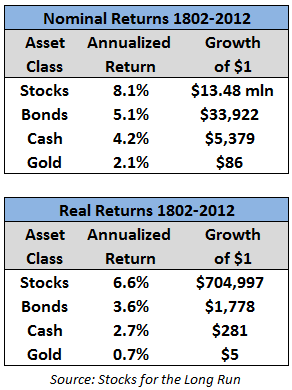
The classic long-run stock market narrative became popular because historical charts are persuasive. Show someone a line that climbs for 100 or 200 years and the human brain says, “Ah, yes, destiny with dividends.” Over very long periods, U.S. equities have produced impressive returns compared with cash and many fixed-income assets. That history helped shape the belief that stocks are the engine of long-term wealth creation.
This view has plenty of merit. Owning stocks means owning claims on businesses that sell products, innovate, expand, raise prices, pay dividends, buy back shares, and sometimes invent things we did not know we needed, such as same-day delivery for socks. Broad stock indexes have historically rewarded patient investors who accepted volatility and avoided panic selling.
But every historical chart contains assumptions. Which markets are included? Which companies survived? How are dividends treated? Are returns adjusted for inflation? What about taxes, fees, trading costs, failed companies, wars, depressions, and the fact that real people often need money at inconvenient times? The answer to “stocks win in the long run” depends partly on how the race is measured.
Dividends: The Quiet Hero With a Complicated Resume
Dividends are central to the long-run return story. When companies distribute cash to shareholders, investors can spend it, save it, reinvest it, or use it to repair whatever appliance decided to break that month. In historical return calculations, dividends are often assumed to be reinvested, which allows compounding to work its mathematical charm.
That assumption is useful, but it can also create a gap between theoretical returns and lived investor experience. If a long-term chart assumes every dividend was reinvested perfectly, immediately, without taxes, fees, behavioral errors, or household emergencies, the chart may describe an elegant model more than an ordinary life. It is like saying, “If you had meal-prepped every Sunday since 1987, you would now be 73% quinoa.” Technically plausible. Humanly ambitious.
This is why revisiting the long run matters. Total return indexes are not useless; they are essential tools. But investors should understand what those numbers assume. A dividend reinvested inside a tax-advantaged retirement account is not the same as a dividend received in a taxable account and spent on groceries. A household that stayed fully invested for 40 years may experience a very different outcome from one that sold during a crisis, changed jobs, borrowed from retirement savings, or chased the hottest stock after it had already become hotter than a sidewalk in Phoenix.
The Return Nobody Got: A Useful Warning
One of the most important modern critiques of long-run return data is the idea that some historical returns may represent “the return nobody got.” This does not mean the numbers are fake. It means the returns shown in long-term datasets may depend on assumptions that few real investors actually followed with perfect discipline.
For example, a model may assume dividends were reinvested across the full market. But if all investors receive dividends at the same time, not everyone can reinvest them into the same shares without another investor selling. On an individual level, reinvestment is possible. On an aggregate level, the mechanics become more complicated. That distinction may sound technical, but it matters because finance has a habit of turning technical assumptions into folk wisdom.
The practical takeaway is not “avoid stocks.” The better takeaway is “respect the difference between market history and personal outcome.” The market may offer a long-term return, but the investor earns only the return that survives taxes, fees, timing, behavior, inflation, and life.
Compounding Is Powerful, But It Needs Fuel
Compound growth is often described as money earning money. That description is true, though it sounds like your dollars have taken night jobs. The basic idea is simple: returns added to principal can generate future returns, and over long periods the effect can become dramatic.
However, compounding needs three things: time, consistency, and participation. Time allows growth to build. Consistency adds fresh capital. Participation keeps the investor from missing recoveries after downturns. Many investors admire compounding in theory but sabotage it in practice by stopping contributions, selling during market declines, or constantly replacing a reasonable plan with whatever strategy looked genius last Tuesday.
The long run rewards patience, but not passive confusion. Investors should know what they own, why they own it, what role each asset plays, and when they will rebalance. A portfolio is not a junk drawer with ticker symbols.
Volatility: The Cover Charge for Long-Term Returns
Stocks have historically offered higher return potential than safer assets because they are riskier. That risk shows up as volatility, drawdowns, uncertainty, and the occasional market environment where everyone suddenly becomes an expert on bond yields at dinner.
Volatility is uncomfortable, but it is not automatically a sign that a long-term plan is broken. Markets decline for many reasons: recessions, inflation scares, policy changes, geopolitical shocks, credit stress, valuation resets, and plain old overenthusiasm wearing off. A diversified investor should expect downturns. The surprise is not that markets fall; the surprise is how often investors act personally betrayed when they do.
A useful long-run strategy plans for volatility before it arrives. That may mean keeping emergency savings outside the market, holding a mix of stocks and bonds, maintaining global diversification, using dollar-cost averaging, and rebalancing on a schedule rather than on a mood swing.
Asset Allocation: The Unsung Adult in the Room
Asset allocation is the process of dividing investments among categories such as stocks, bonds, and cash. It is not the glamorous part of investing. Nobody brags at a party, “My risk-adjusted allocation is aligned with my liquidity needs.” If they do, check on them. But asset allocation is one of the most important decisions an investor makes.
A young investor saving for retirement decades away may be able to hold a higher stock allocation because there is time to recover from downturns. A retiree drawing income from a portfolio may need more stability, cash reserves, and bonds to avoid selling stocks during a bear market. A family saving for a house down payment in three years probably should not treat the stock market like a high-yield savings account with drama.
The long run is personal. A 30-year market average does not help much if your tuition bill is due in 18 months. Matching investments to time horizon is one of the most practical ways to avoid turning temporary market volatility into permanent financial damage.
Diversification: Because Nobody Knows Everything
Diversification spreads money across different investments so one bad outcome does not sink the whole ship. It is the investment version of not carrying soup in a paper bag. You can diversify across companies, sectors, asset classes, countries, and investment styles.
Diversification does not guarantee profits or prevent losses. During major crises, many risky assets can fall together. But diversification can reduce reliance on any single company, trend, country, or prediction. That matters because the future has a rude habit of ignoring consensus forecasts.
The long run is full of surprises. Industries rise and fade. Market leaders change. Interest rates move. Inflation wakes up. New technologies create winners and embarrass former winners. A diversified portfolio admits a humble truth: “I do not know exactly which asset will lead next, so I will avoid betting the entire picnic on one sandwich.”
Active vs. Passive: The Long Run Is Hard on Overconfidence
Another lesson from long-term investing research is that beating broad market indexes consistently is difficult. Active managers may outperform in certain periods, markets, or categories, but long-term evidence has often shown that many active funds lag their benchmarks after costs.
This does not mean active investing is useless. Some managers add value, especially in less efficient markets or specialized strategies. But investors should be realistic. Higher fees, trading costs, tax consequences, and manager turnover can create headwinds. A low-cost index fund does not need to be brilliant; it just needs to be cheap, diversified, and stubborn. There is a certain beauty in that. It is the financial equivalent of a reliable toaster.
For many investors, passive core holdings can provide broad market exposure, while smaller active or thematic positions can be used carefully around the edges. The danger comes when the “edge” becomes the whole portfolio and suddenly retirement depends on three speculative stocks, a podcast tip, and vibes.
Inflation: The Long Run’s Sneakiest Villain
Inflation matters because investors care about real purchasing power, not just account balances. A portfolio that grows from $100,000 to $150,000 may look successful, but if prices rise sharply over the same period, the real gain may be much smaller. Inflation is like a termite wearing a tiny economist hat: quiet, persistent, and expensive.
Stocks can help fight inflation over long periods because companies may raise prices, grow earnings, and own productive assets. But stocks are not guaranteed inflation shields in every period. Bonds can provide income and stability, but long-term fixed payments may lose real value when inflation rises unexpectedly. Cash is useful for emergencies, but too much cash for too long may quietly lose purchasing power.
A thoughtful long-term plan considers inflation directly. That may include equities, Treasury Inflation-Protected Securities, short-term bonds, real assets, or other tools depending on the investor’s goals. The key is to think in real terms: What will this money buy later?
Current Long-Run Expectations Are More Modest
One reason to revisit the long run today is that future returns may not match the most exciting parts of the past. Starting valuations matter. When stocks are expensive relative to earnings, future returns may be lower than historical averages. When bond yields are higher, fixed income may offer more attractive forward returns than it did during ultra-low-rate periods.
Several major investment firms have recently projected more moderate U.S. equity returns over the coming decade than the classic long-term stock market average. Forecasts are not guaranteesif they were, forecasters would own islands and fewer spreadsheetsbut they do encourage realistic planning. Investors saving for retirement, college, or financial independence should avoid building plans that require heroic market returns to work.
A healthier approach is to use conservative assumptions, save consistently, control costs, diversify globally, rebalance, and leave room for error. If returns are better than expected, wonderful. If not, the plan does not collapse like a folding chair at a barbecue.
Behavior: The Investor Is Often the Weakest Asset Class
Long-term investing is simple in the way fitness is simple: exercise regularly, eat reasonably, sleep enough. Easy to understand. Hard to do when life happens and cookies exist.
Investor behavior can make or break long-term results. Panic selling during downturns, chasing performance, overtrading, ignoring fees, concentrating too heavily in employer stock, and changing strategies after every headline can reduce returns. The market’s return and the investor’s return are often different because people do not experience charts; they experience fear, greed, regret, boredom, and neighbor envy.
A good long-run plan must be behavior-proofed. Automation helps. Regular contributions help. Written investment policies help. So does understanding that every strategy looks foolish sometimes. Diversification will always include something disappointing. Bonds will annoy you during stock booms. Stocks will frighten you during crashes. International holdings may underperform for years, then suddenly become the only interesting person at the party.
How to Build a Better Long-Run Strategy
1. Start With the Goal, Not the Product
Before choosing funds or stocks, define the purpose of the money. Retirement in 30 years, a home purchase in five years, and emergency savings for next month require different tools. The goal determines the time horizon, and the time horizon shapes the risk level.
2. Use Broad Diversification
A portfolio built around diversified funds can reduce single-company risk and simplify decision-making. Broad exposure to U.S. stocks, international stocks, bonds, and cash reserves may not sound thrilling, but thrilling is overrated when the rent is due.
3. Control What You Can Control
Investors cannot control market returns, inflation, interest rates, or whether a CEO says something weird on live television. They can control savings rate, fees, taxes, diversification, rebalancing, and emotional discipline.
4. Rebalance Instead of Reacting
Rebalancing means periodically returning a portfolio to its target mix. It can force investors to sell some of what has risen and buy some of what has lagged. This is emotionally awkward, which is often why it is useful.
5. Keep Costs Low
Fees compound too, only in the wrong direction. A small annual cost difference can become meaningful over decades. Low-cost funds leave more of the market’s return in the investor’s pocket, where it can do useful things like compound or buy reasonably priced tacos.
6. Plan for Taxes
Asset location, tax-advantaged accounts, long-term capital gains treatment, and tax-efficient funds can affect real outcomes. The long run should be measured after costs, taxes, and inflation, not before reality gets involved.
Examples: Three Long-Run Investors, Three Different Plans
Consider three investors. Maya is 28, saving for retirement through a 401(k). She has decades ahead, steady income, and no need to touch the money soon. A stock-heavy diversified portfolio may make sense because she can ride out market declines and keep contributing.
Robert is 47 and saving for two goals: retirement and college tuition for his teenage daughter. His retirement account can stay growth-oriented, but the college money needs more stability because the deadline is close. The long run applies to one bucket, not the other.
Linda is 68 and retired. She still needs growth to fight inflation over a retirement that may last 25 years or more, but she also needs income and downside protection. Her plan may include stocks, bonds, cash reserves, and a withdrawal strategy designed to avoid selling equities after sharp declines.
These examples show why “stocks for the long run” is not a one-size-fits-all commandment. The right strategy depends on the investor’s timeline, cash-flow needs, emotional tolerance, and margin of safety.
The Long Run Revisited: What We Should Keep and What We Should Question
We should keep the core insight that patient ownership of productive assets can build wealth. We should keep the discipline of regular investing, diversification, cost control, and resisting emotional market timing. We should keep compounding, because compounding remains one of the few financial concepts that feels almost magical while still being math.
But we should question lazy interpretations. The long run does not erase valuation risk. It does not guarantee that every investor earns the index return. It does not remove sequence-of-return risk for retirees. It does not make taxes vanish, unless your accountant is also a wizard, which is unlikely and probably expensive.
Most of all, we should question the assumption that history delivers simple instructions. Financial history is useful because it widens our imagination. It reminds us that regimes change, winners rotate, inflation matters, behavior matters, and averages can hide painful stretches. The long run is not a promise. It is a framework.
Experiences From the Long Run: What It Feels Like in Real Life
The long run looks elegant on a chart. In real life, it feels messy. It feels like opening your retirement account during a market correction and wondering if “stay the course” was invented by someone who enjoys emotional cardio. It feels like watching a friend brag about a hot stock while your diversified fund moves with all the excitement of a sleepy elevator. It feels like contributing every month and not seeing much happen at first, then suddenly realizing years later that the boring deposits were doing quiet, useful work.
One common experience among long-term investors is the strange boredom of doing the right thing. Good investing often lacks drama. You set an allocation, automate contributions, rebalance occasionally, and ignore most noise. There are no fireworks. No movie montage. No mysterious billionaire mentor appears in a linen suit. Just consistency. At times, this can feel unsatisfying because humans love stories, and “I bought a low-cost index fund again” is not exactly a campfire thriller.
Another real experience is regret. Every investor eventually sees something they did not buy go up dramatically. Maybe it is a technology stock, cryptocurrency, real estate market, or niche fund with a name that sounds like it was assembled by a committee of caffeinated robots. The temptation is to abandon the plan and chase what already worked. The long run teaches a hard lesson here: missing some winners is normal. The goal is not to own every rocket ship. The goal is to avoid blowing up the launchpad.
Long-term investors also learn that risk tolerance is not theoretical. During bull markets, everyone is brave. People say things like, “I can handle a 40% decline,” with the confidence of someone ordering spicy food they have never tried. Then a real downturn arrives, and suddenly that same person is checking futures markets at midnight. A portfolio should be built for the investor you are during stress, not the superhero version of yourself from a spreadsheet.
The long run also changes how people think about money. Early on, investing may feel like trying to get rich. Later, it often becomes about freedom, resilience, and options. A growing portfolio can mean the ability to change jobs, help family, retire with dignity, start a business, or sleep better when the water heater begins making haunted noises. Wealth is not only a number; it is a buffer between you and panic.
Perhaps the most important lived lesson is that the long run is made of short runs. Every decade contains bad months. Every bull market contains scary headlines. Every plan will look imperfect in hindsight. The investors who benefit most are rarely those who predict the future perfectly. They are the ones who build a reasonable plan, keep it funded, adjust when life changes, and refuse to let every market storm become a personal identity crisis.
Revisiting the long run does not make investing gloomy. It makes it more honest. The long run is still one of the best allies an investor has, but it works best when treated with respect rather than worship. Give it time, give it discipline, give it diversification, and give it realistic expectations. In return, it may not make you rich overnightbut it can help you become less fragile over decades. And in a noisy financial world, less fragile is a beautiful thing.
Conclusion: The Long Run Is Still Worth Running
The long run remains a powerful idea, but it should be revisited with clearer eyes. Stocks have historically played a major role in wealth creation, yet historical returns are not personal guarantees. Dividends, compounding, valuation, inflation, taxes, fees, diversification, and behavior all shape the final result.
The smartest long-term investors are not blindly optimistic. They are disciplined, skeptical, patient, and prepared. They know that markets reward risk over time, but not on command. They build portfolios that can survive uncertainty, then they let time do what time does best: turn consistent decisions into meaningful outcomes.
In the end, “The Long Run Revisited” is not an argument against long-term investing. It is an argument for better long-term investing. Keep the patience. Keep the compounding. Keep the diversified exposure to productive assets. Just retire the fairy tale version where the long run solves every problem while you nap. The long run is not magic. It is a marathon with math, mood swings, and occasional paperwork. Run it wisely.