

A sewer smell in the basement can turn a perfectly ordinary trip to the laundry room into an unwanted tour of the municipal wastewater system. Fortunately, the odor does not always mean that a sewer pipe has burst beneath your foundation. A dry floor drain, dirty plumbing trap, loose cleanout plug, or failing toilet seal may be all that stands between you and fresh air.
However, persistent sewage odor can also warn of a blocked vent, damaged drain line, failing ejector-pump seal, sewer backup, or septic-system problem. The key is to investigate in a safe, logical order rather than attacking every drain with random chemicals and heroic optimism.
First, Make Sure It Is Not a Natural Gas Leak
Sewer gas and odorized natural gas can both smell like rotten eggs. If your home uses natural gas or propane and you cannot confidently trace the smell to a drain, toilet, sump area, or plumbing fixture, treat the situation as a possible gas emergency.
Leave the building immediately. Do not operate light switches, appliances, phones, garage-door openers, matches, candles, or anything else that could create a spark. Once you are safely outside and away from the odor, call 911 or your gas utility’s emergency number.
Do not rely on your nose after remaining in a smelly room. The sense of smell can become less responsive during continued exposure to hydrogen sulfide. If anyone develops dizziness, nausea, headache, breathing irritation, confusion, or eye irritation, move into fresh air and seek medical help.
Why Does a Basement Smell Like Sewage?
Household drainage systems are designed to carry wastewater away while keeping sewer gases on the pipe side of the system. Water-filled traps, sealed joints, toilet wax rings, cleanout plugs, vent pipes, and covered sewage basins all help maintain that separation.
When one of those barriers dries out, loosens, cracks, or becomes blocked, odor can enter the basement. Because basements contain many of a home’s lowest drains, the smell often appears there before it becomes noticeable upstairs.
What Is Sewer Gas?
Sewer gas is not one single substance. It can contain hydrogen sulfide, methane, ammonia, carbon dioxide, and other compounds produced as organic waste decomposes. Hydrogen sulfide creates the familiar rotten-egg odor, while ammonia may smell sharp or urine-like.
A faint, temporary odor from a dry drain is often corrected by restoring the trap’s water seal. A powerful or recurring odor deserves more attention, especially when accompanied by wastewater, gurgling fixtures, headaches, or several slow drains.
Common Causes of Sewer Smell in a Basement
1. A Dry Basement Floor-Drain Trap
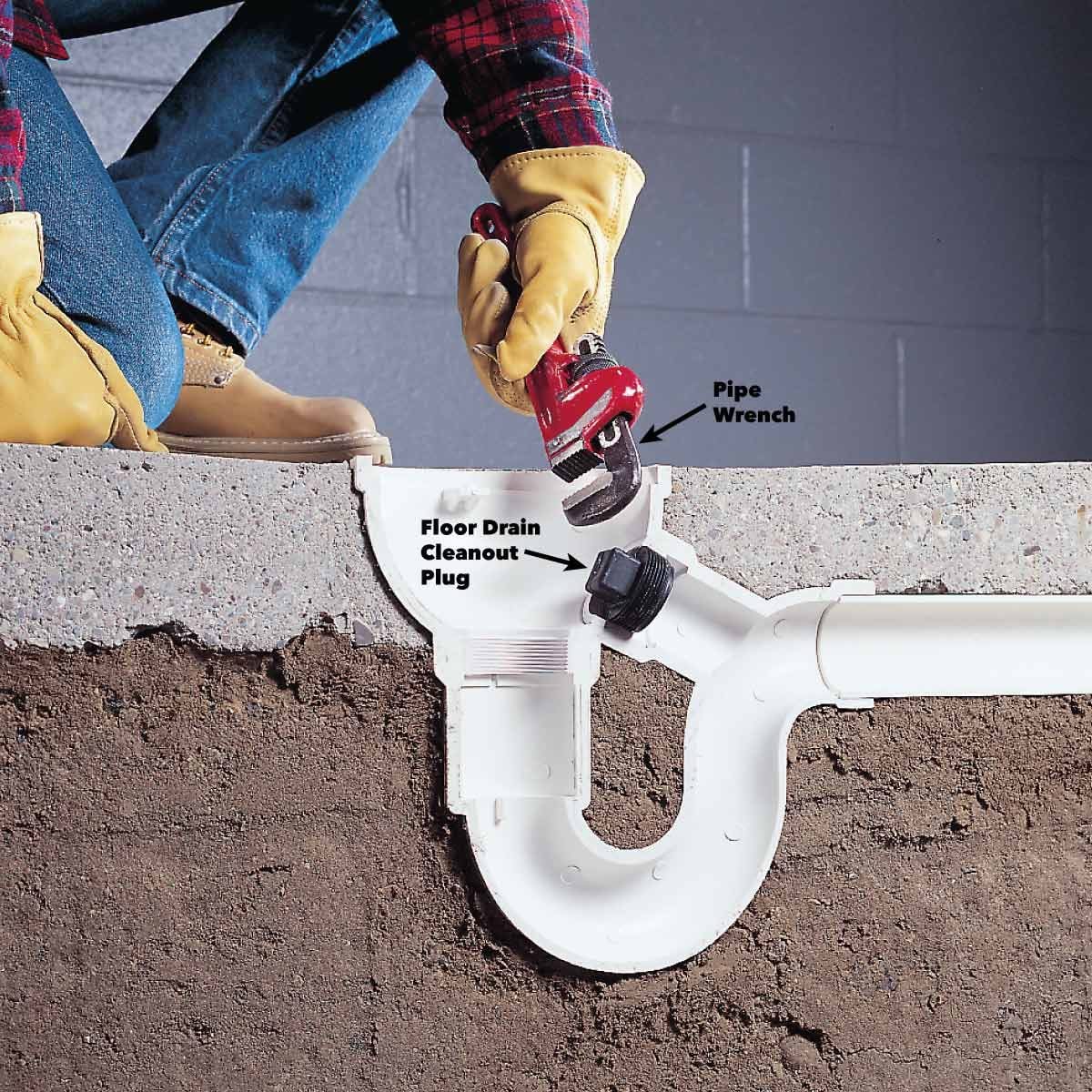
The most common cause is also the easiest to correct. Beneath many basement floor drains is a curved section of pipe called a P-trap. Water remains in this bend and forms a physical barrier that prevents gas from traveling through the drain opening.
If the drain is rarely used, that water can evaporate. Heated basements, dehumidifiers, dry winter air, and long periods without water flowing into the drain can accelerate the process.
Slowly pour several cups of water into the floor drain. For a large or completely dry drain, add enough water to refill the trap thoroughly. Wait several hours and check whether the smell has faded. After the trap is full, a small amount of food-grade mineral oil can be floated on top of the water to slow evaporation. Do not use motor oil or other petroleum products.
2. An Unused Sink, Shower, or Laundry Drain
The floor drain is not the only trap that can dry out. Check basement utility sinks, showers, wet bars, washing-machine standpipes, condensate drains, and plumbing fixtures hidden behind stored boxes. A forgotten drain can perfume an entire lower level with Eau de Sewer.
Run water into every infrequently used fixture. Flush basement toilets and confirm that their bowls retain a normal water level. If a drain repeatedly dries out, ask a plumber whether a trap primer or another code-approved solution is appropriate.
3. Bacteria and Slime Inside the Drain
Not every drain odor is coming from the sewer. Soap, lint, hair, detergent residue, dirt, and organic material can create a slimy biofilm inside a drain or trap. Bacteria feeding on that material may produce a sulfurous or sour smell.
Remove the drain cover and scrub accessible surfaces with a long-handled drain brush and warm, soapy water. Clean the underside of the grate as well. An enzyme-based drain-maintenance product may help digest organic buildup when used according to its label.
Avoid mixing drain cleaners, bleach, acids, ammonia, or vinegar-based products. Combining cleaning chemicals can release dangerous fumes, damage plumbing, and create a much larger problem than the original odor.
4. A Loose or Missing Cleanout Plug
Plumbing cleanouts provide access for clearing and inspecting drain lines. A basement cleanout may be located in the floor, near a foundation wall, or on a large vertical pipe. Its threaded plug must remain sealed.
If the plug is loose, cracked, missing, or improperly fitted, sewer gas can escape even when every P-trap contains water. Do not permanently cover a cleanout or improvise a seal with expanding foam. A plumber can install the correct plug and seal it without eliminating future access.
5. A Failed Toilet Wax Ring
A basement toilet is sealed to its drain flange with a wax ring or compatible gasket. When that seal fails, odor may escape around the toilet’s base. Warning signs include a toilet that rocks, staining around the base, damp flooring, or a smell that becomes stronger immediately after flushing.
Tightening the toilet bolts is not always the answer. Overtightening can crack the porcelain. A deteriorated seal usually requires removing the toilet, checking the flange, and installing a new ring or gasket.
6. A Blocked or Damaged Plumbing Vent
Plumbing vents extend through the roof to balance air pressure inside drain lines. Without adequate airflow, draining water can create suction that pulls water from nearby traps. A vent obstruction may also contribute to slow drainage and gurgling.
Leaves, animal nests, ice, construction debris, or damaged piping can interfere with a vent. Common clues include bubbling toilets, traps that repeatedly lose water, gurgling sinks, and odor affecting more than one fixture.
Roof work is hazardous, and a vent problem may be located inside a wall rather than at the opening. A licensed plumber can inspect the vent system without turning you into the neighborhood’s least-qualified rooftop acrobat.
7. An Improperly Sealed Sewage-Ejector Basin
Basement bathrooms located below the main sewer line may discharge into a sewage-ejector basin. Unlike an ordinary groundwater sump pit, this basin receives wastewater and must have a gas-tight lid with properly sealed pipe and electrical penetrations.
A cracked lid, missing gasket, loose bolt, failed seal, or damaged vent connection can release strong odor. This equipment should be inspected by a plumber familiar with sewage-ejector systems. Do not open a sewage basin simply to investigate the smell.
8. A Dirty or Stagnant Sump-Pump Pit
A normal sump pit collects groundwater, not sewage. Nevertheless, stagnant water, sediment, bacteria, dead insects, or mold can create an odor that resembles sewage. A dry basin may also expose dirty surfaces that were previously underwater.
Check that the pump operates, the discharge line is functional, and the pit is not receiving wastewater from an improper plumbing connection. If the odor is extremely strong or the water looks contaminated, stop handling it and call a professional. A broken sewer line near the foundation can contaminate surrounding soil or groundwater.
9. A Partial Main-Sewer Blockage
A single smelly drain often indicates a local problem. Odor combined with several slow fixtures suggests trouble farther downstream. A partial main-line blockage can trap air, disrupt pressure, and eventually force wastewater toward the lowest openingoften the basement floor drain.
Watch for toilets that bubble when another fixture drains, water rising in a basement drain, repeated clogs, or wastewater appearing after the washing machine empties. Stop using large amounts of water and arrange professional drain service before the warning becomes an indoor sewage fountain.
10. A Cracked Drain or Sewer Line
Cast-iron pipes can corrode, clay pipes can separate, plastic joints can fail, and tree roots can enter damaged sewer laterals. Shifting soil may also crack buried lines. Escaping gas can travel through soil, wall cavities, pipe chases, or gaps around utility penetrations.
Possible signs include recurring odor despite full traps, damp or unusually green areas in the yard, pests near drains, repeated backups, unexplained foundation moisture, and sewage-like smells in multiple rooms.
11. Septic-System Trouble
Homes with septic systems should consider the tank, drainfield, plumbing vents, and household sewer connection. Indoor odor may accompany an overfull tank, blocked line, failed pump, or drainfield problem. Outdoors, unusually wet or spongy soil and strong odor around the drainfield can indicate failure.
A septic problem is not a suitable weekend excavation project. Reduce water use and contact a licensed septic professional.
Quick Basement Odor Diagnostic Guide
| What You Notice | Likely Cause | First Response |
|---|---|---|
| Odor strongest at an unused floor drain | Dry P-trap | Refill the trap with water |
| Smell returns after a few days | Rapid evaporation, leak, or vent issue | Check trap condition and arrange inspection |
| Odor around a rocking toilet | Failed wax ring or flange | Stop movement and replace the seal |
| Gurgling with several slow drains | Vent or main-line blockage | Limit water use and call a plumber |
| Odor from an ejector-pump lid | Failed gas-tight seal | Have the basin professionally inspected |
| Sewage rising through a floor drain | Main-sewer backup | Stop water use and request emergency service |
| Rotten-egg smell with an uncertain source | Possible natural-gas leak | Leave immediately and call from outside |
How to Eliminate Sewer Smell in the Basement Step by Step
Step 1: Ventilate Without Creating an Ignition Risk
When the odor is mild and clearly associated with a drain, open exterior doors or windows when practical. Do not use flames to “test” the gas. If a natural-gas leak remains possible, leave rather than operating electrical fans or switches.
Step 2: Locate the Strongest Odor
Walk through the basement and compare the floor drain, utility sink, toilet base, washer standpipe, ejector basin, sump pit, and cleanouts. Avoid leaning directly over an opening and inhaling deeply. Your nose is a clue, not laboratory equipment.
Step 3: Refill Every Rarely Used Trap
Run water into basement fixtures and pour water into floor drains. Mark the date. If the odor disappears, evaporation was probably the cause. Add trap maintenance to a monthly household checklist.
Step 4: Clean Accessible Drain Components
Remove hair, lint, sediment, and slime from drain covers and accessible pipe surfaces. Clean sink overflow openings when applicable. Follow product instructions and never combine chemical treatments.
Step 5: Inspect Seals and Covers
Look for loose cleanout plugs, damaged drain grates, cracked ejector lids, missing gaskets, rocking toilets, and visible pipe leaks. Do not dismantle wastewater equipment unless you have the correct training and protective equipment.
Step 6: Test the Plumbing Pattern
After simple corrections, run one fixture at a time while someone observes the basement drain. Gurgling, bubbling, rising water, or odor that intensifies during drainage can indicate a vent or main-line issue. Stop the test immediately if wastewater begins to rise.
Step 7: Request Professional Diagnostics
A plumber may use a sewer camera, smoke test, pressure test, drain cable, hydro-jetting equipment, or electronic locating tools. Smoke testing can reveal leaks around fittings, seals, vents, and hidden piping. Camera inspection can identify roots, cracks, corrosion, offsets, and blockages inside the line.
When to Call a Plumber Immediately
Professional service is appropriate when the odor persists after traps are filled and drains are cleaned. Call promptly when you notice any of the following:
- Raw sewage or contaminated water entering the basement
- Several slow, gurgling, or backing-up fixtures
- A smell coming through walls, floors, or pipe chases
- A damaged sewage-ejector basin or loose gas-tight lid
- A toilet that rocks, leaks, or smells after flushing
- Recurring odor after rainfall or heavy household water use
- Possible septic-system failure
- Headache, dizziness, nausea, breathing irritation, or confusion
Do not enter a confined pit, sewer opening, septic tank, or utility vault. Dangerous gases can accumulate in spaces that appear harmless from above.
How to Prevent Basement Sewer Odor
- Pour water into infrequently used floor drains every month.
- Run basement sinks, showers, and toilets regularly.
- Use an approved trap primer where recurring evaporation is a problem.
- Keep floor drains clear of lint, dirt, paint, and stored materials.
- Inspect toilet bases, cleanouts, exposed pipes, and pump-basin lids.
- Address slow drains and gurgling before they become backups.
- Maintain sump pumps and septic equipment according to professional recommendations.
- Never pour grease, wipes, paint, chemicals, or inappropriate waste into drains.
A simple calendar reminder is surprisingly effective. Plumbing traps are excellent odor guards, but they are not known for sending notifications when thirsty.
Experience-Based Lessons From Basement Odor Troubleshooting
The following composite scenarios reflect common patterns encountered in residential odor investigations. They illustrate why finding the source matters more than covering the smell with air freshener.
Experience 1: The Floor Drain That Had Not Seen Water in Years
In one typical unfinished basement, the odor was strongest near a floor drain hidden beneath shelving. The homeowners had placed storage bins around it and forgotten the drain existed. The basement was kept warm, and a dehumidifier operated throughout the year. Those conditions steadily evaporated the trap water.
After the storage was moved, the drain was cleaned and filled with water. The odor faded within several hours. A small amount of food-grade mineral oil was added to slow future evaporation, and the family created a monthly reminder to refill the drain. The lesson was simple: begin with unused fixtures before assuming that the foundation must be excavated.
Experience 2: The Smell That Returned Whenever Laundry Was Done
Another household noticed that the basement smelled normal most mornings but unpleasant after several loads of laundry. The floor drain contained water, so repeatedly refilling it accomplished nothing. Further observation revealed that the drain gurgled whenever the washing machine discharged.
The pattern suggested a pressure or drainage problem rather than evaporation. A plumber found a partial blockage in the shared drain line. The washing machine’s rapid discharge displaced air and disturbed nearby trap seals. Once the obstruction was cleared and the venting was checked, the odor stopped returning. Timing can be an important diagnostic clue: note what was operating when the smell appeared.
Experience 3: The “Sump-Pump Smell” That Was Not From the Pump
In a finished basement, the homeowner blamed an old sump pump because the odor seemed strongest in the utility room. Cleaning the basin reduced a musty smell but did not eliminate the sewage odor. The actual source was a poorly sealed lid on a nearby sewage-ejector basin serving a basement bathroom.
The gasket had deteriorated, and one pipe penetration was no longer airtight. A plumber replaced the sealing components and verified the vent connection. This case demonstrates why a groundwater sump and a sewage-ejector basin should not be treated as interchangeable equipment. One handles groundwater; the other requires gas-tight wastewater containment.
Experience 4: The Odor That Signaled a Bigger Sewer Problem
A stronger warning pattern involves odor combined with several plumbing symptoms. In a common scenario, the basement floor drain smelled bad, an upstairs toilet occasionally bubbled, and the kitchen sink drained slowly. After heavy rain, water briefly appeared around the basement drain.
Pouring water into the trap temporarily diluted the odor but could not correct the underlying problem. Camera inspection revealed root intrusion and deterioration in the sewer lateral. Because the homeowners acted before a complete blockage developed, they avoided a major indoor backup. The experience highlights an important rule: when multiple fixtures behave strangely, stop treating each one as an unrelated problem.
The Most Useful Practical Takeaway
Successful odor troubleshooting follows a progression. Start with safe, reversible checks: identify the source, refill traps, clean accessible drain surfaces, and inspect visible seals. Then pay attention to patterns involving rainfall, laundry, toilet flushing, or simultaneous drainage. Escalate quickly when the smell persists or several fixtures are affected.
Air fresheners, scented candles, and bowls of deodorizer may disguise the odor briefly, but they do not restore a water seal, replace a wax ring, clear a blocked vent, or repair a cracked pipe. In fact, fragrance can make it harder to track the source. Fix the plumbing barrier first; introduce the lavender-scented victory parade afterward.
Conclusion
A sewer smell in the basement often begins with a dry P-trap, dirty drain, loose cleanout plug, or damaged fixture seal. These problems can sometimes be corrected quickly by restoring trap water, cleaning buildup, or replacing a failed component. Odor accompanied by gurgling, repeated clogs, several slow fixtures, or wastewater should be treated as evidence of a larger drainage problem.
Begin with safety, especially when a rotten-egg smell could be natural gas. Then investigate systematically rather than pouring chemicals into every opening. A few careful observations can distinguish a forgotten floor drain from a blocked main sewerand save your basement from becoming the least popular room in the house.