

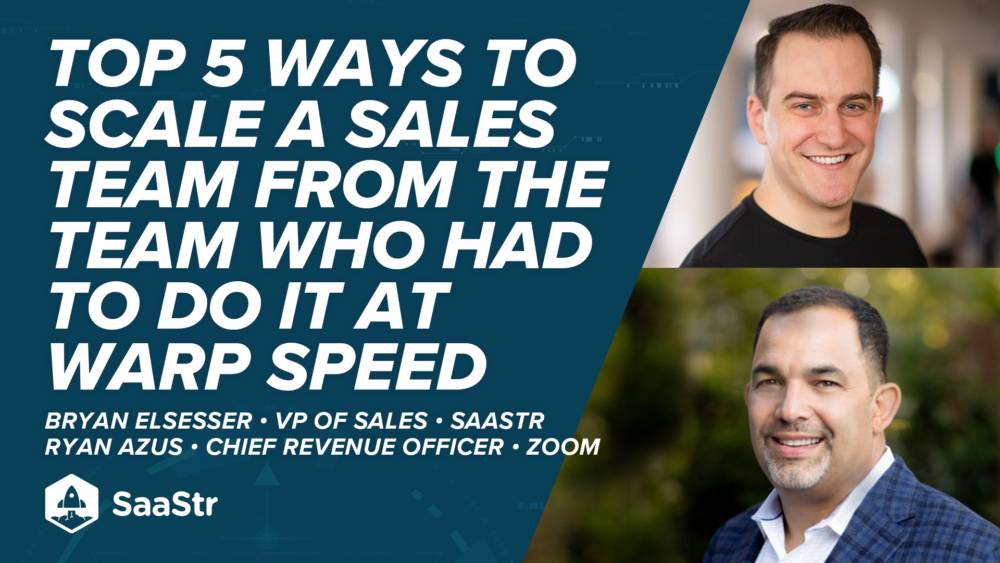
Scaling a SaaS company sounds glamorous until the spreadsheet starts sweating. More customers arrive, more demos get booked, support tickets multiply, sales reps need answers yesterday, and suddenly the “simple” growth plan looks like someone fed a CRM after midnight. That is why the lessons from Zoom’s former Chief Revenue Officer Ryan Azus are still so useful for SaaS founders, revenue leaders, sales managers, and go-to-market teams trying to grow without turning the organization into a very expensive fire drill.
In the SaaStr video discussion, Azus breaks down how Zoom approached sales team scaling during one of the fastest demand surges in modern software history. Zoom’s growth was not just a “more reps, more calls, more coffee” story. It involved channels, partners, remote selling, sales enablement, culture, customer feedback, and the kind of operational discipline that keeps a company moving when demand goes from manageable to “please hold while we invent a new gear.”
This article expands on the five core ideas from the video and connects them to practical SaaS sales strategy: leveraging every channel, building a partner ecosystem, enabling a hybrid salesforce, investing in enablement, and living a strong culture. Whether your company is at $1 million ARR, chasing $100 million ARR, or still trying to convince your first sales hire that the CRM is not optional, these lessons can help you scale smarter.
Why Ryan Azus’s SaaS Sales Lessons Matter
Ryan Azus brought deep communications software experience to Zoom. Before joining Zoom as CRO in 2019, he held major sales leadership roles at RingCentral and Cisco Webex. At Zoom, his responsibilities included sales, customer success, channel, sales operations, enablement, customer support, and solution engineering. In other words, he was not simply running a sales floor; he was helping connect the full revenue engine.
That distinction matters. Modern SaaS sales teams do not scale well when sales is treated like a lonely island with a headset. Growth depends on how marketing creates demand, how product supports adoption, how customer success drives retention, how support protects trust, and how leadership turns lessons from the field into repeatable systems.
Zoom’s story is especially interesting because its product had both product-led growth and enterprise sales characteristics. Individuals and small teams could adopt Zoom easily, while larger organizations needed security reviews, procurement, deployment help, admin controls, integrations, training, and executive confidence. That combination forced Zoom to think beyond one channel or one sales motion.
1. Leverage Every Channel Without Losing the Plot
The first lesson is simple but often misunderstood: use every channel that makes sense for your customer. Not every channel that exists. Not every channel your competitor is bragging about on LinkedIn. Not every channel with a shiny dashboard and a suspiciously cheerful software demo. The right channels depend on your product, customer segment, deal size, buying process, and market maturity.
For SaaS companies, channels may include self-service signups, inbound sales, outbound prospecting, enterprise account executives, customer success expansion, app marketplaces, resellers, referral programs, paid search, content marketing, webinars, communities, events, and strategic alliances. The danger is trying to scale all of them at once before understanding which ones actually convert.
Start with the customer, not the channel
Azus emphasizes asking foundational questions before pushing channel growth: Who is the customer? What problem are they solving? Is the product creating a new category, replacing an existing tool, or expanding an already familiar workflow? Those answers shape the channel strategy.
A self-service channel works beautifully when users understand the problem, can try the product quickly, and experience value without a complex setup. Enterprise sales is more important when the product affects security, compliance, budgets, integrations, or multiple departments. Partner channels shine when customers already rely on trusted consultants, telecom advisors, managed service providers, agencies, or systems integrators.
The best SaaS companies do not treat channels as separate kingdoms. They design a revenue system where online demand, sales conversations, customer success, and partner motions reinforce each other. A prospect might discover the product through content, try it through a free plan, invite colleagues, speak with sales, involve IT, and later expand through customer success. That is not a funnel. That is a buyer journey with more turns than a theme park ride.
Build channel fit by segment
A common SaaS mistake is applying the same sales motion to every account. Small businesses may want speed, transparent pricing, and minimal friction. Mid-market buyers may want ROI clarity and onboarding support. Enterprise customers may need executive alignment, security documentation, procurement help, and a phased rollout plan.
To scale sales teams effectively, define channel roles by segment. Let self-service capture simple demand. Let sales-assisted motions help promising accounts that need guidance. Let enterprise reps focus on strategic opportunities. Let customer success identify expansion signals. Let partners help reach markets where direct sales would be too slow or costly.
When channels are clear, sales productivity improves. Reps stop chasing tiny deals that should close online, and high-intent users stop waiting three days for a callback when they were ready to buy before lunch.
2. Build a Partner Network That Actually Helps Customers
The second scaling principle is partner growth. In the SaaStr discussion, Zoom’s partner ecosystem is described as a major part of its go-to-market expansion, including global system integrators, master agents, value-added resellers, distributors, and service-oriented partners. The key lesson is not simply “get partners.” The lesson is to build the kind of partner network your customers already trust.
Partners can extend reach, localize expertise, increase implementation capacity, and help customers buy with more confidence. In SaaS, especially B2B SaaS, the buyer rarely evaluates software in isolation. They consider existing systems, workflows, budgets, user training, support needs, compliance, and internal politics. A good partner can make the purchase feel less risky.
Different markets need different partners
One of Azus’s most practical points is that partner ecosystems are not universal. What works in the United States may not work in Asia, Europe, or Latin America. Some markets rely heavily on master agents. Others depend more on resellers, consultants, telecom partners, or systems integrators. SaaS leaders who copy a partner model without understanding local buying behavior usually discover that “global strategy” can become “global confusion” very quickly.
Before recruiting partners, map the buying ecosystem. Who influences the customer? Who implements adjacent tools? Who already owns the trusted relationship? Who can support adoption after the contract is signed? Then design partner tiers, incentives, training, co-selling rules, and support systems around real customer needs.
Do not treat partners like a side quest
A partner program cannot scale if it is managed by leftover energy. Partners need onboarding, certification, deal registration, content, pricing clarity, enablement, support, and regular communication. They also need a fair economic reason to care. If your partner portal looks like it was assembled during a power outage, do not be shocked when partners ghost you.
For SaaS companies, a strong partner program should answer five questions: What customer segment does this partner serve? What value does the partner add beyond resale? How will leads and accounts be shared? What training does the partner need to represent the product well? How will success be measured?
When partners are aligned, they become an extension of the revenue team. When they are not aligned, they become a spreadsheet full of logos and wishful thinking.
3. Enable a Hybrid Salesforce Built for Remote and In-Person Selling
The third lesson is enabling a hybrid salesforce. Zoom had to scale sales during a period when remote work became normal almost overnight. For many SaaS companies, hybrid selling is now permanent. Buyers may research online, attend virtual demos, meet sellers in person, review digital business cases, ask questions in Slack communities, and sign contracts without ever shaking hands.
Hybrid sales does not mean “let everyone work anywhere and hope revenue happens.” It requires clarity. Sales leaders need to define metrics, communication norms, coaching routines, deal review processes, knowledge systems, collaboration habits, and culture rituals.
Measure outcomes, not chair occupancy
In a hybrid sales organization, the old visual cues disappear. Managers cannot assume productivity because a rep looks busy at a desk. That is good news, because looking busy has never been the same as selling well. The better approach is to measure pipeline creation, conversion rates, deal velocity, forecast accuracy, customer engagement quality, expansion opportunities, and retention impact.
Hybrid teams need dashboards that show the health of the revenue process, not just activity volume. Calls, emails, and meetings matter, but they are not the whole story. A rep can send 100 emails that achieve nothing except annoying 100 people with impressive efficiency. The real question is whether the team is creating qualified opportunities and helping buyers move forward.
Create a single source of truth
Remote and hybrid teams break down when information lives in too many places. Product updates are in one chat thread. Competitive notes are in someone’s private document. Pricing guidance is in a slide from last quarter. The latest objection handling is trapped inside the brain of a top rep who is currently on vacation and definitely not checking messages.
Scaling requires a central knowledge system. Sales reps should know where to find talk tracks, battlecards, pricing guidance, onboarding materials, case studies, demo flows, security answers, legal templates, and product updates. The easier it is to find accurate information, the faster reps can respond to buyers and the less time managers spend answering the same question with increasingly haunted eyes.
Protect team energy
Sales is emotional work. Wins feel fantastic. Losses feel personal, even when they are not. Hybrid teams need deliberate ways to celebrate progress, share lessons, support new hires, and keep morale from slowly evaporating through the webcam. Recognition, peer coaching, virtual huddles, manager check-ins, and occasional in-person gatherings can help maintain connection.
The point is not to force cheerfulness. The point is to create a team environment where people are informed, supported, and accountable.
4. Invest in Sales Enablement Before Chaos Becomes the Training Program
The fourth lesson is one of the most important: invest in enablement. Sales enablement is the system that turns scattered learning into repeatable performance. It includes onboarding, product training, messaging, competitive intelligence, demo practice, objection handling, customer stories, role plays, manager coaching, content governance, and ongoing education.
In fast-growing SaaS companies, enablement is often treated as something to add later. That is risky. If you wait too long, every new rep learns through folklore. One rep says the product is best for enterprise. Another says it is best for small teams. A third is still using a pitch from two product releases ago. Congratulations, you now have brand inconsistency with a quota.
Turn what works into a system
Azus points to the importance of listening to customers and identifying what is working across the sales floor. The goal is to make winning behaviors repeatable. What questions do top reps ask in discovery? Which demos create the strongest “aha” moment? Which objections appear most often? Which customer stories move deals forward? Which messages work by segment?
Sales enablement should capture those patterns and turn them into practical tools. A playbook should not be a 90-page document that reps open once and then respectfully ignore. It should be built into workflows, reinforced by managers, updated regularly, and connected to measurable outcomes.
Use short learning loops
Zoom’s approach included online learning, short expert sessions, and accessible information banks. That model works because busy sellers need training that fits real life. A 30-minute session on a high-impact topic may be more useful than a four-hour lecture that causes everyone’s soul to quietly leave the meeting.
Effective enablement uses short, focused learning loops: teach the concept, show an example, practice the behavior, coach the rep, measure the result, and refine. Topics might include discovery questions for a specific persona, how to sell into IT, how to explain ROI, how to handle security concerns, how to manage procurement, or how to expand from one team to an enterprise account.
Connect enablement to revenue operations
Enablement becomes more powerful when it is linked with revenue operations. RevOps can identify where deals stall, where conversion drops, which segments perform best, which reps ramp fastest, and which content influences opportunities. Enablement can then focus training on the real bottlenecks instead of guessing.
For example, if discovery-to-demo conversion is strong but proposal-to-close conversion is weak, the team may need stronger business-case training. If new reps create meetings but struggle to qualify, they may need better ICP education. If enterprise deals stall in security review, enablement should work with product, legal, and security teams to create better buyer support materials.
Scaling is not about training more. It is about training the right things at the right time.
5. Live Your Culture and Make It Worth Following
The fifth lesson is culture. Zoom is closely associated with the idea of delivering happiness and caring for customers, teammates, company, community, and self. That may sound soft until you try scaling a sales organization without trust. Then it becomes clear that culture is not wall art. It is the operating system for how people behave when pressure rises.
A strong sales culture does not mean everyone wins every deal or smiles through every forecast call. It means the team has shared standards. People know what good looks like. Managers coach instead of merely inspecting. Reps compete without sabotaging each other. Customer outcomes matter. Leadership recognizes people who make others better, not only those who make the leaderboard sparkle.
Sales culture is not separate from company culture
Sales teams have their own rhythm: quotas, pipeline reviews, end-of-quarter pushes, negotiations, renewals, and the occasional heroic snack drawer. But sales culture should still reflect the broader company culture. If the company claims to be customer-first while the sales team is rewarded for bad-fit deals, the culture is not customer-first. It is commission-first wearing a customer-first hat.
For SaaS companies, culture must support long-term recurring revenue. A bad-fit customer may create short-term ARR but lead to churn, support strain, implementation pain, and reputational damage. A strong culture helps teams prioritize durable growth over vanity wins.
Reward the behaviors you want repeated
Culture scales through recognition, promotion, compensation, stories, and management habits. If leaders celebrate only the biggest closed deal, the team learns that only the finish line matters. If leaders also celebrate clean handoffs, strong discovery, customer advocacy, teamwork, coaching, and expansion support, the team learns that revenue is a company sport.
That does not mean lowering standards. High-performing sales cultures are accountable. They simply understand that sustainable performance comes from disciplined teamwork, not random acts of quota heroism.
How SaaS Leaders Can Apply These Five Lessons Today
Zoom’s growth circumstances were unusual, but the operating lessons are highly practical. Most SaaS companies will not experience a sudden global demand wave of the same scale. That is probably good news for everyone’s blood pressure. But every growing SaaS company eventually faces the same core challenge: how to add customers, people, channels, and complexity without breaking the machine.
The first step is to diagnose your current growth stage. Early-stage companies should focus on customer learning, founder-led sales insights, clear ICP definition, and simple repeatable messaging. Growth-stage companies should formalize roles, channel strategy, sales process, enablement, and RevOps. Later-stage companies should optimize segmentation, partner ecosystems, expansion motions, customer success alignment, and leadership development.
The second step is to decide what should be standardized and what should stay flexible. Discovery structure, CRM hygiene, qualification standards, handoff rules, pricing approvals, and customer feedback loops should be consistent. Individual selling style, relationship building, creative problem-solving, and account strategy should still allow room for judgment.
The third step is to align the entire go-to-market organization. Marketing should know which accounts sales wants. Sales should understand which messages marketing is testing. Product should hear patterns from customer conversations. Customer success should know what promises were made before the deal closed. Support should feed recurring customer issues back into product and enablement.
That alignment is where SaaS scaling becomes powerful. Instead of every team pushing its own cart uphill, the company builds one revenue engine with shared data, shared language, and shared accountability.
Common Mistakes When Scaling SaaS Sales Teams
One of the most common mistakes is hiring too fast before the sales motion is proven. Adding reps to a broken process does not fix the process. It simply makes the broken process louder and more expensive. Before hiring aggressively, leaders should know which customers buy, why they buy, how long deals take, what objections appear, what conversion rates look like, and what support new reps need.
Another mistake is confusing activity with progress. More calls, more emails, and more demos can help, but only if they are aimed at the right buyers with the right message. A sales team can generate enormous activity while quietly building a pipeline full of opportunities that will never close. That is not scale. That is cardio.
A third mistake is neglecting customer success. SaaS revenue is recurring, which means the sale is not the finish line. Retention, adoption, expansion, and customer satisfaction are central to growth. If the sales team closes deals that customer success cannot onboard or support, churn will eventually send leadership a very unpleasant invoice.
A fourth mistake is underinvesting in managers. Frontline managers are the multiplier in a scaling sales team. They coach reps, inspect pipeline, reinforce process, translate strategy, protect culture, and identify talent. Promoting top reps into management without training them is like giving someone a pilot’s hat and wishing the plane good luck.
Additional Experiences and Field Lessons for Scaling SaaS and Sales Teams
In real SaaS growth environments, the theory becomes useful only when it survives messy human behavior. A founder may understand the need for segmentation but still jump into every large deal. A sales leader may believe in enablement but postpone training because the quarter is on fire. A rep may know the CRM matters but still treat it like a decorative database. Scaling requires patience, repetition, and a sense of humor sturdy enough to survive a forecast meeting.
One experience that appears again and again in SaaS teams is the “hero rep problem.” Early growth often depends on one or two exceptional sellers who can close almost anything. They know the product deeply, understand the founder’s vision, and can improvise through objections. That is wonderful until the company assumes the sales process is working for everyone. It may not be. The hero rep may be succeeding because of instinct, experience, or personal credibility that new hires do not yet have. The leadership lesson is to study top performers carefully and extract the behaviors that can be taught. What do they ask? How do they frame urgency? How do they qualify? How do they handle risk? Turn those patterns into enablement before hiring ten more reps and hoping greatness becomes contagious.
Another field lesson is that sales scaling exposes weak positioning. When founders sell, they can explain nuance. When a larger team sells, unclear messaging becomes a tax on every conversation. If reps cannot explain who the product is for, what pain it solves, why it is different, and why now is the time to act, the company will feel friction everywhere. Demos get longer. Discovery gets vague. Proposals get customized beyond reason. Buyers hesitate. The fix is not more pressure on reps; it is sharper positioning and better proof.
Sales teams also learn that onboarding is not a one-week event. It is a ramp system. New hires need product knowledge, market context, buyer personas, competitive understanding, call practice, manager coaching, peer shadowing, and clear milestones. A strong 30-60-90 day plan can prevent the classic “new rep wandering through random documents” experience. Nobody should have to learn pricing policy from a Slack thread written by someone who left six months ago.
Forecasting is another practical challenge. As SaaS teams grow, leaders need a common definition of deal stages. Without strict stage criteria, pipeline reviews become creative writing workshops. One rep marks a deal as late-stage because the buyer smiled during the demo. Another keeps a dead opportunity open because hope is technically not illegal. Clear exit criteria, buyer evidence, next steps, mutual action plans, and close-date discipline help managers forecast with more confidence.
Partner scaling brings its own experiences. Many companies recruit partners enthusiastically but forget to enable them. A partner who does not understand the ICP, product, pricing, implementation path, and support model will not create reliable revenue. The best partner programs feel like a product: easy to understand, easy to activate, easy to measure, and valuable enough that partners want to keep engaging.
Finally, culture becomes more visible as the team grows. In a small team, culture can live through direct relationships. In a larger team, culture must be designed into rituals, management expectations, hiring profiles, promotion criteria, and operating rhythms. The sales team will copy what leadership rewards. If leaders reward teamwork, customer quality, learning, and accountability, the team will move in that direction. If leaders reward shortcuts, the team will find shortcuts with impressive speed.
The biggest experience-based takeaway is this: scaling SaaS sales is not one big decision. It is hundreds of small decisions made consistently. Which customer segment gets focus? Which channel deserves investment? Which rep behavior gets coached? Which customer feedback gets escalated? Which process becomes mandatory? Which cultural value gets defended under pressure? Growth is built in those moments.
Conclusion
The five lessons from Ryan Azus’s discussion with SaaStr are not trendy hacks. They are durable principles for SaaS growth. Leverage the right channels. Build a partner network around customer needs. Enable a hybrid salesforce with clear systems. Invest in sales enablement before inconsistency becomes expensive. Live a culture that supports sustainable performance.
Scaling a SaaS and sales team is never perfectly tidy. There will be messy quarters, surprising customer requests, imperfect forecasts, and at least one spreadsheet that should be quietly retired for the good of humanity. But with the right revenue architecture, customer focus, enablement, partners, and culture, growth becomes more repeatable and less chaotic.
Zoom’s story shows that scale is not just about demand. It is about readiness. When the market creates opportunity, the companies that win are the ones with systems strong enough to absorb growth and human enough to keep customers and teams engaged along the way.
Note: This article is written for educational and editorial publishing purposes. It synthesizes publicly available business lessons and SaaS sales concepts related to Ryan Azus’s Zoom revenue leadership and the SaaStr video topic, without inserting source links into the article body.