

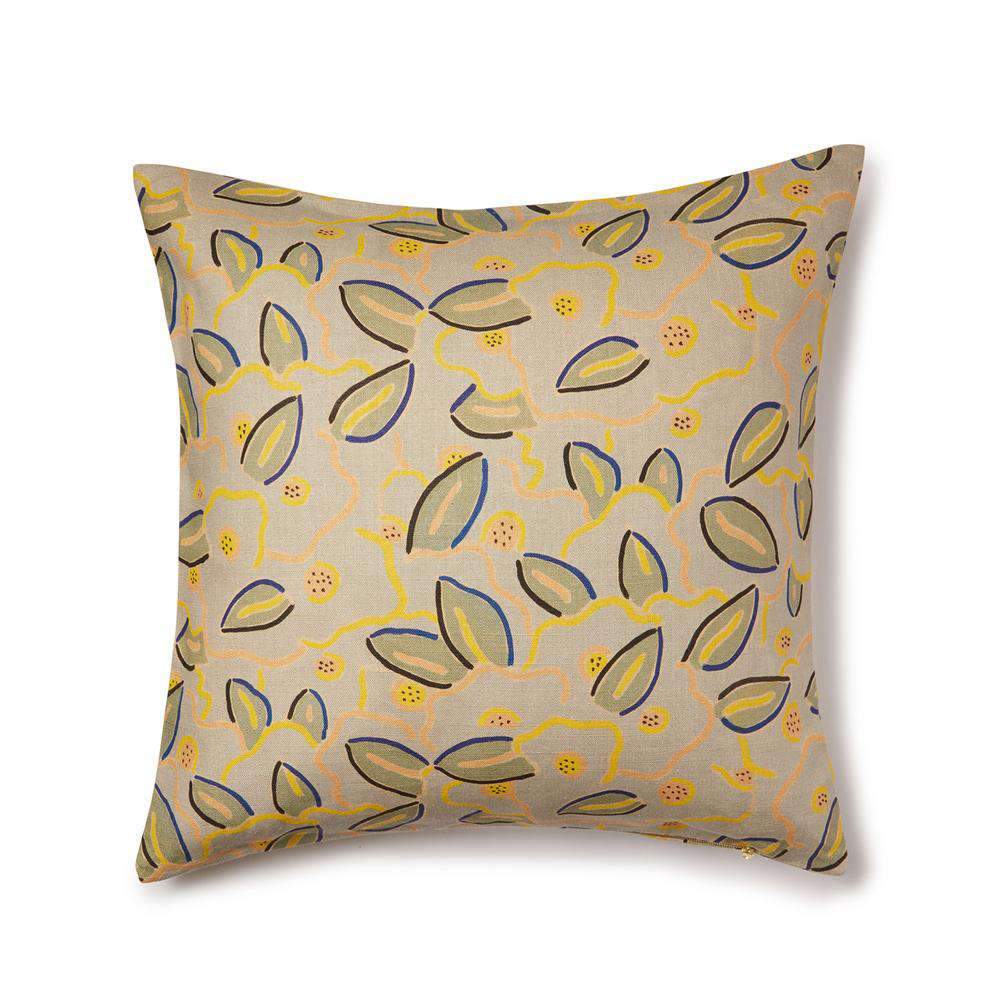
Some decorative pillows sit politely on a sofa and wait to be noticed. Rebecca’s Garden Pillow does not believe in waiting. With sweeping botanical lines, painterly flowers, and a sophisticho somehow knows exactly where the good coffee is kept.
Created through the collaboration between artist Wayne Pate and textile showroom Studio Four NYC, Rebecca’s Garden is more than a conventional floral print. The design began with personal memories, passed through an artist’s sketchbook, and eventually became fabric, wallpaper, and a luxury decorative pillow. The result is a textile that feels expressive without becoming chaotic, nostalgic without looking old-fashioned, and colorful without behaving like a bowl of assorted jelly beans.
This guide examines the pillow’s background, construction, colorways, styling potential, care requirements, and value as a statement piece. It also explores what living with a bold floral pillow can feel like in actual rooms, where furniture is used, coffee is occasionally spilled, and perfectly arranged cushions rarely remain perfectly arranged for long.
What Is Rebecca’s Garden Pillow?
Rebecca’s Garden Pillow is a designer accent pillow featuring a large-scale floral pattern developed by Wayne Pate for Studio Four NYC. The pattern uses relaxed lines and soft, brushlike forms rather than highly detailed botanical illustrations. It resembles a garden remembered through emotion instead of documented with a magnifying glass.
Current versions have been offered as square, 20-by-20-inch pillows made from 100% linen. The print appears on both sides, which is an important distinction in the world of premium decorative cushions. A double-sided design allows the pillow to look finished from every angle instead of revealing a plain reverse the moment someone actually uses the sofa.
A down insert is included with the finished pillow. This gives it a fuller, more flexible shape than many inexpensive polyester-filled alternatives. Down can be fluffed, molded, or gently pressed into a relaxed silhouette, helping the pillow look comfortable rather than rigid.
Rebecca’s Garden Pillow at a Glance
| Designer | Wayne Pate |
|---|---|
| Producer | Studio Four NYC |
| Material | 100% linen |
| Common Current Size | 20 by 20 inches |
| Construction | Double-sided printed cover |
| Insert | Down insert included |
| Style | Painterly, modern botanical floral |
| Typical Positioning | Premium designer home textile |
Earlier editorial coverage documented other dimensions and prices, including a larger 24-inch version. This suggests that the pillow has evolved through different production runs. Buyers should therefore confirm the exact size, insert, price, and availability attached to the colorway they are considering.
The Personal Story Behind the Pattern
The name Rebecca’s Garden refers to Pate’s wife, fashion designer Rebecca Taylor. The pattern was inspired by memories of her at the couple’s bungalow on Shelter Island, New York. That personal origin gives the design an emotional foundation that mass-produced floral prints often lack.
The flowers are not drawn like formal specimens in a botanical textbook. Instead, the design captures the loose rhythm of stems, leaves, blossoms, and movement. It feels like a remembered garden viewed through an open window: recognizable, warm, and slightly dreamlike.
Pate’s broader artistic practice often combines classical references with fresh colors, simplified shapes, collage, and expressive brushwork. Studio Four NYC translates motifs from his paintings, line drawings, and collages into usable fabrics and wall coverings while preserving evidence of the artist’s hand. Rebecca’s Garden demonstrates that approach particularly well.
Why the Hand-Drawn Quality Matters
Perfectly repeated digital patterns can sometimes feel cold because every curve and petal appears mechanically controlled. Rebecca’s Garden retains variations in line weight and shape. Those irregularities create visual energy and help the pillow feel closer to a small artwork than a generic accessory.
The design also benefits from negative space. Although the flowers are large, the composition is not packed with tiny petals competing for attention. Open areas give the eye somewhere to rest, making the pattern easier to combine with stripes, solids, woven textures, and smaller prints.
Why Linen Suits the Rebecca’s Garden Design
Linen is an appropriate material for this pattern because its natural texture reinforces the hand-painted character of the artwork. Unlike a glossy synthetic fabric, linen has subtle surface variations that soften printed color and prevent the pillow from appearing overly polished.
The fabric is also strong enough for decorative use while developing a relaxed appearance over time. Small wrinkles should not automatically be treated as defects. Linen is supposed to look lived in. Attempting to keep it as smooth as laminated office paper is both exhausting and contrary to the material’s personality.
The coordinating Rebecca’s Garden fabric has been produced as a 54-inch-wide linen with a substantial horizontal and vertical repeat. Those dimensions help explain why the flowers appear generous rather than miniature. The same pattern has also been adapted as wallpaper, allowing designers to create rooms in which cushions and walls either coordinate or intentionally echo one another.
Understanding the Rebecca’s Garden Colorways
The collection has appeared in several colorways, including Spring, Sky, Citron, Camellia, and Pumice. Each version preserves the underlying floral drawing but changes the emotional temperature of the pillow.
Spring
Spring is an approachable choice for rooms built around natural wood, warm neutrals, muted greens, and casual upholstery. It can introduce pattern without making the room feel dramatically formal. Try it with an oatmeal sofa, a faded rug, and a ceramic lamp in moss or cream.
Sky
Sky brings a cooler, airier mood. It works especially well in bedrooms, sunrooms, coastal-inspired interiors, or spaces with blue-gray walls. The design can support a calm palette while remaining far more interesting than another plain blue cushion.
Citron
Citron is the extrovert of the family. Yellow-green accents give it energy and make it useful in rooms that need a lively focal point. Pair it with navy, charcoal, chocolate brown, or warm white so that the bright notes have something grounded to play against.
Camellia
Camellia leans into romantic floral color without becoming excessively sweet. It can soften dark furniture, complement rosy textiles, or add warmth to a neutral bedroom. Pairing it with a tailored stripe keeps the arrangement modern.
Pumice
Pumice is a quieter, more mineral-toned interpretation. It suits interiors in which texture matters more than saturated color. Consider it for rooms with plaster walls, pale woods, vintage furniture, woven shades, and understated upholstery.
How to Style Rebecca’s Garden Pillow
Because the print is expressive and relatively large in scale, Rebecca’s Garden Pillow works best as a lead pattern. Rather than surrounding it with several equally dominant florals, allow it to establish the room’s palette and support it with simpler companions.
On a Living Room Sofa
Begin with one Rebecca’s Garden Pillow on each side of a long neutral sofa, or use a single pillow as an asymmetrical focal point. Add solid linen, velvet, or woven cushions that repeat one or two colors from the floral design.
For example, a Sky pillow might sit beside a navy velvet square and a narrow green-and-cream striped lumbar pillow. The floral provides movement, the stripe adds structure, and the solid prevents the sofa from looking like a pattern convention.
On a standard sofa, three to five pillows are generally enough to create depth without requiring guests to excavate a seating area. The exact number should depend on the size and depth of the furniture. Comfort remains part of the assignment.
On a Bed
Rebecca’s Garden can serve as the central decorative pillow in front of sleeping pillows or European shams. Use solid bedding or a subtle stripe so the floral pattern remains visible.
In a queen bedroom, try two large neutral shams at the back, two standard pillows in front, and one Rebecca’s Garden Pillow centered at the finish. This restrained arrangement feels intentional and avoids the nightly ritual of transferring fourteen decorative pillows to a nearby chair.
On an Accent Chair
A single designer floral pillow can completely change a plain armchair. This is one of the easiest ways to use Rebecca’s Garden in a smaller room. The 20-inch square format generally suits a generous lounge chair, although compact chairs may need a smaller cushion to preserve usable seat depth.
Place a Citron version on a navy chair for contrast, a Camellia version on camel leather for warmth, or a Pumice version on cream bouclé for a layered neutral effect.
With Other Patterns
The safest formula is to combine one large organic print, one medium geometric pattern, and one small-scale texture or stripe. Keep at least one color consistent across the group.
Avoid matching every color exactly. A room becomes more convincing when its tones appear related rather than cloned. Slightly faded blues, several greens, or different shades of cream can create depth while maintaining visual unity.
Is Rebecca’s Garden Pillow Worth the Premium Price?
Rebecca’s Garden Pillow occupies the luxury end of the decorative pillow market. Its price reflects the artist collaboration, printed linen, double-sided construction, down insert, and comparatively small-scale designer production.
For shoppers focused primarily on basic comfort, a less expensive pillow will perform the practical job of supporting an elbow. The value of Rebecca’s Garden lies in design authorship and visual impact. It is closer to purchasing a functional textile artwork than buying a generic cushion from a multipack.
The investment makes the most sense when the pillow becomes a central element in the room. One carefully selected designer pillow can influence wall color, throws, lamps, artwork, and surrounding fabrics. In that role, it may contribute more personality than several inexpensive accessories chosen without a shared plan.
Before purchasing, inspect the scale against your furniture, request a fabric sample when possible, and review the return policy. Colors shown on a screen can shift according to display settings, lighting, and photography. Linen may also display natural texture and slight printing variations.
How to Care for a Linen Designer Pillow
Always follow the care instructions supplied with the specific pillow. Printed linen and down inserts may require different cleaning methods, and treating both pieces as though they were an old gym towel is unlikely to end happily.
Routine Maintenance
- Fluff and rotate the pillow regularly to redistribute the down filling.
- Keep it away from prolonged direct sunlight, which may fade printed colors.
- Vacuum the surface gently with an upholstery attachment when dust accumulates.
- Blot spills immediately with a clean, absorbent cloth instead of rubbing them deeper into the fibers.
- Keep food, cosmetics, and uncapped pens away from the pillow whenever practical.
Cleaning the Cover and Insert
Do not assume that a removable linen cover is automatically machine washable. Premium printed textiles may require professional cleaning or cautious spot treatment. Check the sewn-in label or contact the retailer before laundering.
Many down inserts can be washed using cool water and mild detergent, followed by thorough drying on low heat, but the manufacturer’s instructions should take priority. Down must dry completely to avoid clumping, odor, or mildew. Adding dryer balls may help restore loft if the care label permits machine drying.
Extended Experience: What Rebecca’s Garden Pillow Feels Like in a Real Room
The most noticeable experience of introducing Rebecca’s Garden Pillow is not simply that the room gains another floral object. The room gains direction. A plain sofa that previously looked acceptable but anonymous suddenly has a clearer personality. Colors that seemed unrelated begin to feel intentional because the pillow visually connects them.
Imagine a living room with a cream sofa, medium-toned oak flooring, a dark blue cabinet, and several houseplants. Before the pillow arrives, each element works independently. Place a Sky Rebecca’s Garden Pillow in one corner, and the blue cabinet begins to communicate with the sofa. The green leaves in the print acknowledge the plants. The linen surface relates to a woven shade or natural rug. Nothing physically moves, yet the room looks more composed.
The large floral scale also changes how the eye travels around the space. Small accessories tend to create quick visual stops. A broad botanical pattern encourages slower observation. You notice a curved stem, then a flower, then a color repeated in a book jacket or vase across the room. The pillow becomes a bridge rather than an isolated decoration.
There is also a tactile difference. Linen feels dry, textured, and natural compared with slick polyester or plush velvet. It does not necessarily deliver the softest surface in the room, but it contributes authenticity. The included down insert allows the pillow to settle into the sofa instead of remaining shaped like a decorative brick. After someone leans against it, the cover may wrinkle and the filling may shift. A quick fluff restores its form, although a perfectly square silhouette is not really the point.
In a bedroom, the experience is calmer. A single Rebecca’s Garden Pillow placed against neutral bedding can supply enough pattern to make the bed feel finished. During the day it acts as artwork; at night it can be moved to a bench without creating a major relocation project. This balance is valuable for anyone who admires layered designer beds but does not wish to manage a small pillow warehouse twice daily.
The more colorful versions create a different reaction. Citron can wake up a dark room almost immediately. On a charcoal sofa, it adds freshness without requiring new upholstery. Camellia can make a bedroom feel warmer and more romantic, especially beside aged brass, warm white walls, and natural wood. Pumice is quieter, rewarding people who prefer subtle layers over obvious color statements.
The pillow also encourages more thoughtful shopping afterward. Once a distinctive pattern becomes the room’s anchor, random accessories become easier to reject. A new throw either supports the established palette or it does not. A rug either balances the floral scale or competes with it. Surprisingly, one expensive pillow can sometimes prevent five mediocre impulse purchases. It becomes a cheerful little design supervisor sitting on the sofa and silently judging unrelated beige accessories.
Daily use will gradually make the pillow less pristine, but that does not necessarily reduce its appeal. Linen accommodates gentle creasing, while the painterly pattern is forgiving of minor shifts in shape. Rotating the pillow helps both sides wear evenly, and regular fluffing keeps the down insert lively. In homes with pets or young children, placing it on a bedroom chair or less frequently used seat may preserve it better than assigning it to the household’s primary snack zone.
Ultimately, living with Rebecca’s Garden Pillow is an experience of controlled expressiveness. It introduces art, memory, color, and movement without demanding that the entire room become a botanical theme. The pillow works because it feels personal yet adaptable. It can inhabit a polished apartment, a relaxed cottage, a layered traditional house, or a modern room that needs relief from too many straight lines.
Conclusion
Rebecca’s Garden Pillow succeeds because it combines a genuine design story with useful decorative versatility. Wayne Pate’s loose floral drawing gives the textile an artistic identity, while linen construction and a down insert provide texture and dimension. Its colorways can feel calm, romantic, earthy, or energetic depending on the surrounding room.
It is not the least expensive way to place a cushion on a sofa, but basic cushioning is not its primary purpose. Rebecca’s Garden is intended to give a room character. Used as a lead pattern and paired with solids, stripes, natural textures, and carefully chosen colors, it can make an ordinary arrangement look collected rather than merely furnished.
Editorial note: Product dimensions, materials, color availability, prices, stock status, and lead times may change between production runs. Confirm current specifications and care instructions with the retailer before purchasing or cleaning the pillow.