

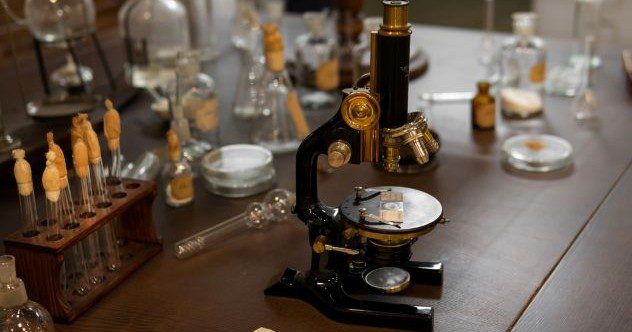
Biology is the story of life trying to understand itself. That sounds poetic, but it is also slightly hilarious when you remember that this story includes monks counting peas, doctors arguing about invisible germs, and scientists getting very excited about molecules shaped like twisted ladders. The history of biology is not one tidy parade of geniuses in lab coats. It is a messy, brilliant, sometimes stubborn adventure filled with microscopes, moldy dishes, garden experiments, sea voyages, and enough “Wait, what?” moments to power a science documentary marathon.
The most pivotal moments in biology changed how humans understand disease, inheritance, evolution, cells, ecosystems, and even our own identity. These discoveries did not just sit politely in textbooks. They transformed medicine, agriculture, public health, biotechnology, conservation, forensic science, and the way we answer the ancient question: What exactly is life doing here?
Below are ten biological breakthroughs that reshaped science. Some opened new worlds. Some rewrote old assumptions. Some made humanity realize that life is far stranger, smaller, older, and more connected than we ever imagined.
1. The Microscope Reveals an Invisible World
Before microscopes, biology was mostly limited to what the human eye could see. People could study plants, animals, bones, organs, and the occasional suspicious-looking pond. But the microscopic world was completely hidden, like nature’s secret basement.
That changed in the 1600s when early microscopists such as Robert Hooke and Antonie van Leeuwenhoek used improved lenses to observe structures no one had seen before. Hooke famously examined cork and described tiny compartments he called “cells.” Van Leeuwenhoek, using powerful single-lens microscopes, observed bacteria, protozoa, sperm cells, blood cells, and other tiny organisms he called “animalcules.” The word sounds cute, but the discovery was seismic.
Suddenly, life was not limited to forests, animals, and human bodies. Life was everywhere: in water, teeth, blood, soil, and spoiled food. The microscope gave biology a new dimension. It eventually helped launch microbiology, cell biology, pathology, and modern medicine. It also gave humans one more reason to brush their teeth, which is a public service science does not get enough credit for.
2. Linnaeus Gives Life a Naming System
Imagine trying to study the natural world without consistent names. One scientist says “wolf,” another says “large northern bite-dog,” and a third says “that rude forest gentleman.” Chaos. Biology needed a filing system, and Carl Linnaeus provided one.
In the 18th century, Linnaeus developed a hierarchical classification system and popularized binomial nomenclature, the two-part Latin naming method still used today. In this system, humans are Homo sapiens, the domestic cat is Felis catus, and the fruit fly, biology’s tiny unpaid intern, is Drosophila melanogaster.
Linnaean taxonomy helped scientists communicate clearly across languages and borders. It organized plants and animals into groups based on shared traits and gave natural history a common vocabulary. Later, evolutionary biology and genetics would revise many classifications, but Linnaeus built the foundation. Without his naming system, biology would be like a library where every book is titled “Interesting Thing I Found Outside.”
3. Cell Theory Defines the Basic Unit of Life
One of biology’s greatest ideas is also one of its most elegant: all living things are made of cells, and cells are the basic units of life. This may sound obvious today because every biology student meets the cell early, usually in a diagram with a nucleus that looks like a fried egg. But in the 1800s, this was revolutionary.
Matthias Schleiden studied plant tissues, Theodor Schwann studied animal tissues, and together their work helped form cell theory. Later, Rudolf Virchow added the crucial idea that cells arise from preexisting cells. That final point helped move biology away from older beliefs about spontaneous generation and toward a more precise understanding of growth, repair, reproduction, and disease.
Cell theory united botany, zoology, medicine, and microscopy under one biological principle. Whether studying a fern, a frog, or a frustrated human checking email at midnight, scientists could now understand life through cellular structure and function. Modern cancer research, immunology, developmental biology, neuroscience, and regenerative medicine all stand on this cellular foundation.
4. Darwin Explains Evolution by Natural Selection
Charles Darwin did not invent the idea that life changes over time, but he gave biology its most powerful explanation for how that change happens. After years of observation, including his famous voyage on the HMS Beagle, Darwin proposed that species evolve through natural selection.
In simple terms, individuals vary, some variations help organisms survive or reproduce, and those helpful traits become more common over generations. Nature, in this view, is not a gentle talent show. It is more like a very slow, extremely high-stakes audition where the prize is having descendants.
Darwin’s 1859 book On the Origin of Species transformed biology. It explained patterns in fossils, anatomy, island species, animal breeding, and geographic distribution. Later genetics would strengthen evolutionary theory by showing how inherited variation works at the molecular level.
Evolution by natural selection became the organizing framework for modern biology. It helps explain antibiotic resistance, viral mutation, biodiversity, conservation challenges, human ancestry, and why peacocks look like they dressed for a royal disco. Biology without evolution is a pile of facts; evolution turns those facts into a story.
5. Mendel Discovers the Rules of Inheritance
Gregor Mendel changed biology with peas. Not lions, not whales, not dramatic thunderstorms over a laboratorypeas. Working in a monastery garden in the 19th century, Mendel crossbred pea plants and carefully tracked traits such as seed shape, seed color, plant height, and flower position.
His experiments showed that heredity is transmitted in discrete units, which we now call genes. He identified patterns of dominant and recessive traits and developed principles that became the foundation of classical genetics. The wild part? His work was largely ignored during his lifetime. Science sometimes has the social awareness of a distracted goldfish.
When Mendel’s findings were rediscovered around 1900, biology gained a mathematical framework for inheritance. Genetics explained how traits move through generations and eventually connected with chromosomes, DNA, evolution, agriculture, and medicine. From breeding disease-resistant crops to understanding inherited disorders, Mendel’s pea plants became one of the most productive gardens in scientific history.
6. Germ Theory Changes Medicine Forever
For much of human history, disease was blamed on bad air, imbalanced humors, curses, moral failure, or whatever theory sounded confident at the time. Germ theory changed that. Scientists such as Louis Pasteur and Robert Koch showed that specific microorganisms can cause specific diseases.
This was not merely a scientific update; it was a medical earthquake. Germ theory helped explain infections, epidemics, wound contamination, food spoilage, and the spread of disease. It led to sterilization, antiseptic surgery, vaccines, pasteurization, public sanitation, and laboratory diagnosis.
Koch’s work on anthrax and tuberculosis helped establish methods for linking microbes to disease. Pasteur’s experiments helped defeat spontaneous generation and supported the idea that microorganisms were active agents, not magical dust with bad intentions. Together, their work transformed hospitals, agriculture, food safety, and public health.
Modern infection control, antibiotics, vaccination programs, and pandemic response all trace part of their logic to germ theory. It also gave humanity a humbling lesson: sometimes the most dangerous enemy is too small to see and absolutely not impressed by your confidence.
7. DNA Is Revealed as the Molecule of Heredity
For decades, scientists knew chromosomes were involved in inheritance, but the identity of the genetic material remained uncertain. Many assumed proteins were the likely candidates because they seemed more chemically complex. DNA looked too simple, like a suspiciously quiet student in the back of class.
Experiments by researchers including Oswald Avery and colleagues helped show that DNA carries hereditary information. Then, in 1953, James Watson and Francis Crick proposed the double helix structure of DNA, building on crucial experimental evidence from Rosalind Franklin, Maurice Wilkins, and others.
The double helix was more than a beautiful structure. It explained how genetic information could be stored, copied, and passed from cell to cell and generation to generation. The pairing of DNA bases suggested a mechanism for replication. Suddenly, heredity had a molecular architecture.
This discovery helped launch molecular biology. It connected genetics, chemistry, evolution, and medicine in a new way. Every modern conversation about genes, mutations, ancestry testing, biotechnology, forensic DNA, and genetic disease owes something to the moment DNA stepped into the spotlight and said, “Yes, I have been running the show.”
8. Scientists Crack the Genetic Code
After the structure of DNA was discovered, a huge question remained: how does a sequence of DNA bases produce a living organism? The answer came through the cracking of the genetic code.
Scientists discovered that sequences of three nucleotides, called codons, correspond to amino acids, the building blocks of proteins. This explained how information stored in DNA could be transcribed into RNA and translated into proteins. Francis Crick’s “central dogma” helped frame the flow of biological information from DNA to RNA to protein.
This breakthrough transformed biology from a descriptive science into an information science. Genes could now be read as instructions, not in a mystical sense, but in a biochemical one. The cell became a living system that stores, copies, edits, and executes molecular information.
Understanding the genetic code opened doors to genetic engineering, biotechnology, synthetic biology, medical genetics, and modern drug development. It also made biology sound a little like computer science, except the computers are wet, self-repairing, and occasionally turn into mushrooms.
9. PCR Makes DNA Easy to Copy
Polymerase chain reaction, better known as PCR, is one of the most important laboratory methods ever invented. Developed by Kary Mullis in the 1980s, PCR allows scientists to make millions or billions of copies of a specific DNA segment from a tiny starting sample.
Before PCR, studying DNA could be slow and difficult. After PCR, genetic analysis became faster, more sensitive, and more practical. PCR became essential in medical diagnostics, forensic science, evolutionary research, infectious disease testing, paternity testing, ancient DNA studies, and countless research labs.
The basic idea is beautifully repetitive: heat DNA to separate its strands, cool it so primers attach, and use DNA polymerase to build new strands. Repeat the cycle, and the target DNA multiplies dramatically. It is basically a molecular photocopier, except instead of jamming paper, it revolutionized biology.
PCR made DNA accessible. It allowed scientists to detect pathogens, identify genetic mutations, analyze crime-scene evidence, and study organisms from tiny or degraded samples. If the double helix gave biology a language, PCR gave scientists a copy machine for reading it at scale.
10. The Genome Era Arrives: Human Genome Project and CRISPR
The Human Genome Project, officially launched in 1990 and completed in 2003, aimed to sequence the human genome. It was one of the most ambitious biological collaborations ever attempted. The project produced a reference sequence covering most of the human genome and promoted rapid public data sharing, which became a model for modern biomedical research.
The impact was enormous. Genome sequencing accelerated disease research, evolutionary studies, ancestry analysis, cancer biology, pharmacogenomics, and personalized medicine. Scientists could now compare genomes, identify disease-associated variants, and study human biology at a scale that once seemed impossible.
Then came CRISPR-Cas9, a genome-editing tool adapted from bacterial immune systems. Researchers can use CRISPR to target and modify specific DNA sequences with remarkable precision. The technology has transformed basic research and opened possibilities for treating genetic diseases, engineering crops, studying development, and building new biological tools.
The genome era changed biology from reading life to editing it. That power comes with ethical responsibilities, especially when human embryos, ecosystems, inherited genetic changes, and unequal access to therapies are involved. The future of biology will not be shaped only by what scientists can do, but by what society decides they should do.
Why These Biological Breakthroughs Still Matter
These pivotal moments in biology are not dusty museum facts. They are active forces in everyday life. When doctors prescribe antibiotics carefully, they are thinking with evolution. When hospitals sterilize equipment, they are respecting germ theory. When farmers grow improved crops, they are using genetics. When a lab runs a DNA test, it is standing on the shoulders of Mendel, Watson, Crick, Franklin, Mullis, and many others.
The most important biological discoveries also changed how humans see themselves. We are not separate from nature. We are cellular organisms shaped by evolution, carrying genomes inherited from ancient ancestors, living in constant interaction with microbes, ecosystems, and other species. Biology has repeatedly humbled us, which is probably healthy. Humans have a habit of assuming we are the main character. Biology keeps reminding us that bacteria had a several-billion-year head start.
These discoveries also show that science is cumulative. No single breakthrough appears from nowhere. The microscope made cell theory possible. Cell theory supported microbiology and pathology. Mendelian genetics eventually merged with Darwinian evolution. DNA structure explained inheritance. PCR and sequencing made molecular biology practical. CRISPR built on decades of microbial genetics and DNA research.
In other words, biology advances like a relay race, except the baton is sometimes a pea plant, sometimes a microscope, and sometimes a freezer full of DNA samples labeled in handwriting only one graduate student can read.
Experiences Related to the 10 Most Pivotal Moments in Biology
One of the best ways to appreciate the most pivotal moments in biology is to notice how often they appear in ordinary life. You do not need to be wearing a lab coat or dramatically holding a test tube toward the light. Biology shows up at breakfast, in the garden, at the doctor’s office, during a walk in the woods, and even when you wonder why your family members all have the same eyebrows.
Think about a simple school microscope experience. A drop of pond water under the lens can turn into a tiny universe. At first, the slide looks boring. Then something darts across the field of view, and suddenly the invisible world becomes personal. That moment echoes Leeuwenhoek’s discovery of microorganisms. It teaches a powerful lesson: reality is bigger than our senses. The eye is useful, but it is not the final judge of what exists.
Gardening gives another everyday connection to biology’s history. Anyone who has grown tomatoes, beans, roses, or peas has seen inheritance at work. Some plants grow taller. Some produce sweeter fruit. Some resist disease better than others. Mendel’s work becomes easier to understand when you see traits appear, disappear, and reappear across generations. A garden is not just a relaxing hobby; it is genetics wearing dirt on its shoes.
Healthcare experiences also reveal the lasting value of these breakthroughs. When a doctor explains that an infection is bacterial rather than viral, germ theory is in the room. When a patient receives a genetic screening test, DNA research is in the room. When a cancer treatment is selected based on tumor mutations, the Human Genome Project is quietly helping behind the scenes. Modern medicine is full of invisible historical fingerprints.
Even recent public health experiences show how biology shapes daily decisions. PCR testing became widely known during infectious disease outbreaks because it can detect tiny amounts of genetic material. Before many people understood the technique, PCR was already a workhorse in labs. Then, almost overnight, it became part of ordinary conversation. Few laboratory methods have gone from specialist vocabulary to dinner-table discussion so quickly.
Evolution, too, is not just a chapter in a textbook. It appears when bacteria become resistant to antibiotics, when viruses change over time, and when conservationists try to protect species in changing environments. Natural selection is not ancient history. It is happening constantly, whether in a hospital ward, a farm field, or a coral reef.
These experiences make biology feel less like memorization and more like a living map. The ten pivotal moments in biology help explain why we wash hands, classify species, study cells, test DNA, track outbreaks, protect biodiversity, and debate the ethics of gene editing. They also make science feel wonderfully human. Behind every discovery were people asking questions, making mistakes, arguing with old ideas, and occasionally getting very excited about peas.
Conclusion
The history of biology is a story of expanding vision. The microscope revealed unseen life. Linnaeus organized nature’s diversity. Cell theory defined life’s basic unit. Darwin explained adaptation and common ancestry. Mendel uncovered inheritance. Germ theory transformed medicine. DNA revealed heredity’s molecular structure. The genetic code explained how cells turn information into life. PCR made DNA easy to study. The Human Genome Project and CRISPR pushed biology into the age of reading and editing genomes.
Together, these breakthroughs changed science and society. They helped humanity understand where we come from, why we get sick, how traits are inherited, how organisms adapt, and how life can be studied at the molecular level. The next pivotal moment in biology may already be forming in a lab, a field station, a hospital, or a student’s curious question. Biology is not finished with surprises. Honestly, it seems to enjoy them.