

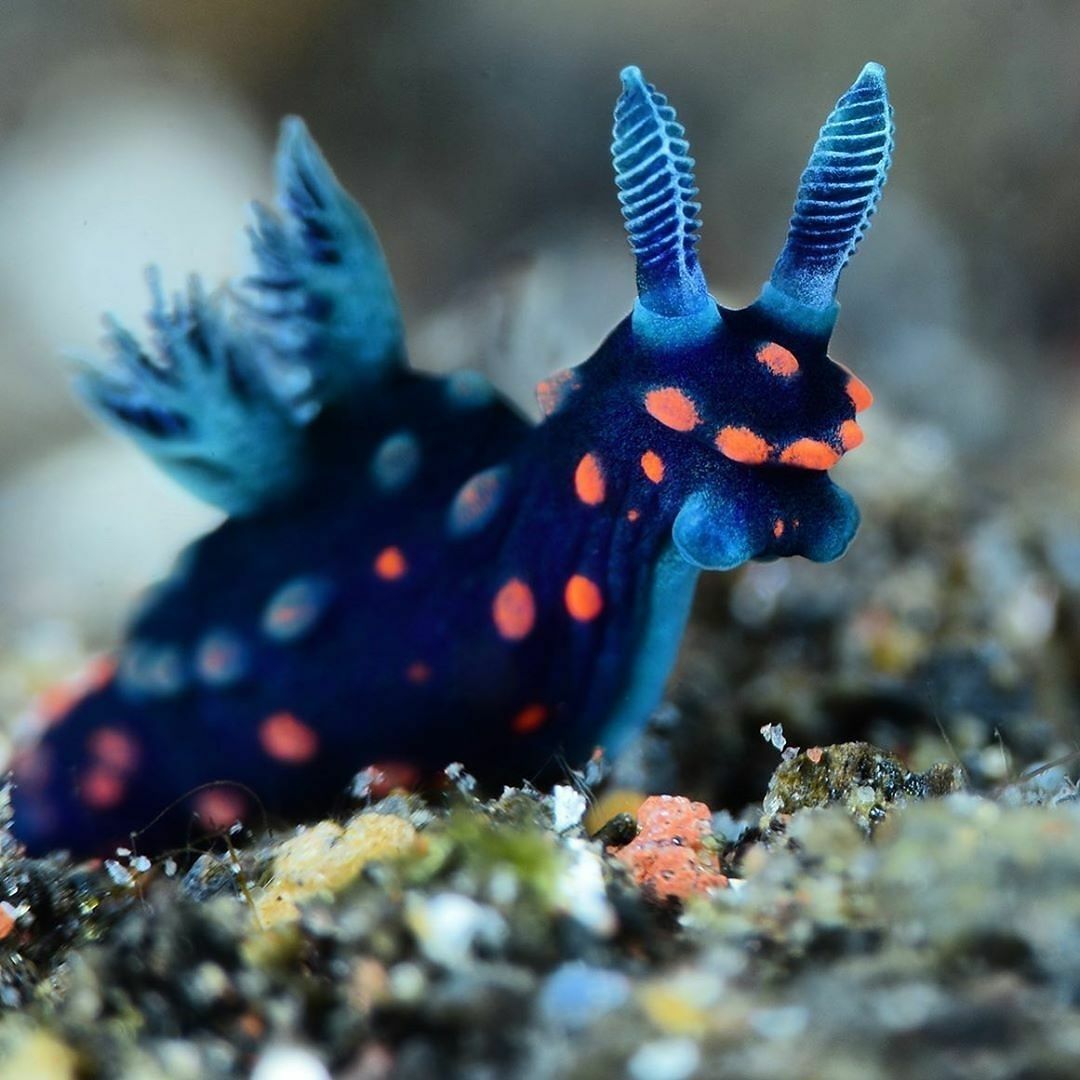
If the ocean had a secret fashion week, nudibranchs would be the tiny runway models arriving late, glowing like neon candy, and somehow stealing every camera in the room. These small, soft-bodied marine mollusks are often called sea slugs, which is technically true but emotionally unfair. “Slug” makes them sound like garden trouble in a trench coat. Nudibranchs are more like living stained glass with antennae.
After scouring the internet, browsing marine science resources, and revisiting the kind of gallery photos that make you say, “Wait, that is a real animal?”, I have one conclusion: nudibranchs deserve a standing ovation. They are colorful, bizarre, clever, delicate, sometimes toxic, occasionally dramatic, and almost always more stylish than anything in my closet.
This guide explores what nudibranchs are, why they look so unreal, how they survive without shells, where to find them, and why underwater photographers love them with the intensity usually reserved for coffee, cats, and perfectly timed Wi-Fi.
What Are Nudibranchs?
Nudibranchs are marine gastropod mollusks related to snails, but unlike many snails, adult nudibranchs do not carry external shells. Their name comes from words meaning “naked gills,” a fitting description because many species breathe through exposed, feathery gills on their backs. That alone makes them sound like tiny ocean poets.
There are more than 3,000 known nudibranch species, and they live in oceans around the world, from tropical coral reefs to cold kelp forests and even deep-sea environments. Most are small, often only a few inches long, but their colors and shapes make them seem larger than life. Some look like flowers. Some look like dragons. Some look like someone dropped a pack of highlighters into the sea and nature said, “Yes, let’s make that crawl.”
Nudibranchs vs. Sea Slugs: Are They the Same?
All nudibranchs are sea slugs, but not all sea slugs are nudibranchs. “Sea slug” is a broad nickname for several types of shell-less or reduced-shell marine gastropods. Nudibranchs are a specific group within that loose sea-slug neighborhood. Think of it this way: all nudibranchs live in the sea-slug apartment building, but they have the penthouse with the dramatic lighting.
Why Are Nudibranchs So Colorful?
The first thing people notice about nudibranchs is their color. Electric blue, lemon yellow, ruby red, lavender, black velvet, hot pink, orange flames, polka dots, zebra stripes, and frilly edges are all fair game. Some species look elegant and minimal, while others look like they were designed during a glitter emergency.
But nudibranch colors are not just decoration. In the ocean, color can be camouflage, warning, mimicry, or all three. Some nudibranchs blend into sponges, corals, or algae. Others display bright warning colors that suggest, “Do not eat me unless you enjoy regret.” This is known as aposematic coloration, and it helps predators learn that certain flashy animals may taste bad, sting, or contain toxins.
Their Beauty Is Also Their Armor
Nudibranchs lost the protective shell their ancestors once had, so they had to get creative. Many species borrow defensive chemicals from the animals they eat. Some feed on sponges and retain unpleasant or toxic compounds. Others eat hydroids, anemones, or other stinging animals and store the stolen defensive cells in their own bodies.
That means a nudibranch is not merely dressed like a warning sign. It may actually be one. Imagine eating spicy wings and then becoming spicy yourself. That is not the precise science, but it is the general mood.
Famous Nudibranch Features You Should Know
Nudibranchs may look like abstract art, but their bodies are full of useful structures. Once you know what to look for, their photos become even more fascinating.
Rhinophores: The Stylish Scent Detectors
The paired structures on a nudibranch’s head are called rhinophores. These help the animal detect chemical signals in the water, which is essential for finding food, mates, and suitable habitat. They often look like tiny feathers, horns, clubs, or antennae. Photographers love sharp rhinophores because they give a nudibranch portrait personality. A fuzzy nudibranch face can still be charming, but crisp rhinophores are the underwater equivalent of perfect eyeliner.
Cerata: Frills With Function
Some nudibranchs, especially aeolid nudibranchs, have finger-like or leaf-like structures called cerata. Cerata can help with breathing, digestion, and defense. In species that steal stinging cells from prey, these structures may store those cells near the tips, turning the nudibranch into a slow-moving, bite-sized security system.
Naked Gills: The Name Tag on Their Back
Many dorid nudibranchs have a plume of exposed gills on their back. These gills can resemble delicate flowers or tiny feather dusters. They are beautiful, functional, and extremely photogenic. If nudibranchs had business cards, the gill plume would be embossed in gold.
What Do Nudibranchs Eat?
Nudibranchs are carnivores, though they are not exactly chasing prey like tiny sharks. Many graze slowly on stationary or slow-moving marine life such as sponges, hydroids, bryozoans, tunicates, anemones, coral polyps, fish eggs, and sometimes other nudibranchs. Yes, the nudibranch world includes cannibals. Cute, colorful, and occasionally rude.
Their diets are often highly specialized. One species may prefer a certain sponge, while another seeks out hydroids or sea squirts. This relationship between nudibranch and prey helps explain why divers find them in very specific microhabitats. If you want to spot a nudibranch, do not simply scan the entire reef like you are looking for your keys. Look for what it eats.
Where Do Nudibranchs Live?
Nudibranchs live in marine environments around the world. They can be found in tide pools, rocky reefs, coral reefs, kelp forests, sandy bottoms, muck-diving sites, and deep-sea habitats. Many are benthic, meaning they crawl along the seafloor or over surfaces such as rocks, algae, sponges, and coral rubble.
Warm, shallow reefs are famous for colorful species, but cold-water regions can be equally impressive. The Pacific Northwest, California coast, Alaska, and other nutrient-rich areas can host large and dazzling nudibranchs. Tropical muck-diving destinations are also beloved because their mixed habitats and rich currents support the prey nudibranchs need.
The Deep-Sea Surprise
For a long time, most people thought of nudibranchs as seafloor animals. Then researchers documented Bathydevius caudactylus, a remarkable deep-sea nudibranch that swims through the midnight zone with a gelatinous hood, paddle-like tail, and bioluminescent glow. It is a reminder that the ocean still has surprises tucked away in the dark, casually reinventing what we thought we knew.
Popular Nudibranchs That Look Too Beautiful to Be Real
There are thousands of species, but a few nudibranchs and nudibranch-like sea slugs have become internet favorites because they look wildly photogenic.
The Blue Dragon
The blue glaucus, often called the blue dragon, floats upside down at the ocean’s surface and feeds on venomous prey such as Portuguese man o’ war. It is tiny, blue, silver, and so dramatic it seems designed by a fantasy illustrator who had just discovered espresso.
The Spanish Dancer
The Spanish dancer is one of the largest and most recognizable nudibranchs. It can swim by undulating its body in a flowing motion that resembles a flamenco dress in water. Its bright red or orange color is not shy. This animal does not enter a room; it arrives with choreography.
Hopkins’ Rose
Hopkins’ rose is a brilliant pink nudibranch seen along parts of the Pacific coast. It looks like a tiny bouquet crawling across the reef. Its vivid color may warn predators that it is not a snack worth sampling.
Opalescent Nudibranch
The opalescent nudibranch is a favorite among divers and tide-pool explorers. With translucent body tones, orange-tipped cerata, and bright accents, it looks delicate but has serious survival tools. It can feed on stinging prey and use those defenses for itself.
Why Underwater Photographers Are Obsessed With Nudibranchs
Nudibranchs are perfect macro photography subjects because they are colorful, textured, and generally slow enough to let photographers compose a shot. “Slow” is important. A dolphin may be glamorous, but it will not wait while you adjust your strobe.
That said, nudibranch photography is not as easy as pointing a camera at a tiny rainbow and calling it art. Many species are small, and underwater conditions add challenges: particles in the water, surge, low visibility, shifting light, and the classic problem of trying to hover gracefully while your fin kicks up sand like an underwater leaf blower.
How to Photograph Nudibranchs Better
The best nudibranch photos usually come from patience, careful buoyancy, and attention to detail. Get low, shoot at eye level when possible, and focus on the rhinophores or gills. A head-on composition can make even a tiny nudibranch look like a sea monster from a very fashionable planet.
Good photographers also respect the animal. Do not move, poke, prod, or reposition nudibranchs for a shot. Their soft bodies are fragile, and they are exactly where they are for a reason. A great photo is never worth stressing wildlife. The ocean is not a studio; it is someone’s home.
Why Nudibranchs Matter
Nudibranchs are more than beautiful subjects for divers, scientists, and marine-life fans. They are part of complex food webs and can reveal information about habitat health, prey availability, water conditions, and biodiversity. Because many species rely on specific prey, changes in the environment can affect where they appear and how abundant they are.
They also matter because they inspire curiosity. Not every person will get excited about a spreadsheet of marine biodiversity data, but show them a hot-pink nudibranch with frilly gills and suddenly they are asking questions. That curiosity can become conservation awareness, and conservation awareness is the gateway drug to caring about reefs, kelp forests, tide pools, clean water, and climate impacts.
Threats Facing Nudibranchs and Their Habitats
Nudibranchs depend on healthy marine ecosystems. Pollution, warming waters, habitat damage, destructive fishing practices, coastal development, and ocean acidification can all affect the environments where they live. Because nudibranchs often depend on specific prey, a disruption to sponges, hydroids, corals, or other invertebrates can ripple through their tiny, colorful world.
The good news is that protecting marine habitats helps nudibranchs along with countless other species. Marine protected areas, responsible diving, reduced plastic pollution, climate action, and stronger ocean conservation policies all contribute to healthier underwater ecosystems. Saving nudibranchs is not just about saving pretty sea slugs. It is about protecting the living neighborhoods that make them possible.
My Gallery-Inspired Experience With Nudibranch Beauty
Looking through nudibranch photos feels different from scrolling through ordinary wildlife pictures. A lion is majestic. A whale is humbling. A nudibranch is the creature that makes you lean toward the screen and whisper, “Excuse me, what exactly am I looking at?” That question is where the fun begins.
In my gallery, the best nudibranch images are not always the sharpest or most technically perfect. Sometimes the memorable ones are the photos where the animal appears like a surprise jewel against a plain background. A small orange-and-white nudibranch on a dark reef can look like a candle flame. A blue-and-yellow species crawling over sponge can look like a comic-book hero on a mission. A black nudibranch with green markings and orange gills can look so stylish it should be charging appearance fees.
The experience of searching for nudibranchs teaches patience. You cannot rush them, and honestly, they are not rushing for you. They move at a pace that makes a sleepy snail look ambitious. At first, that slowness can feel frustrating. Then your eyes adjust. You stop looking for big action and begin noticing tiny dramas: a rhinophore turning into the current, cerata swaying like underwater grass, a gill plume pulsing gently, an egg ribbon curled like delicate ribbon candy.
There is also a special joy in realizing that nudibranchs are not rare jewels locked away in one tropical paradise. They appear in many marine environments, including places that do not look spectacular at first glance. A gray rock, a patch of algae, a sponge-covered ledge, or a silty muck site may hide an animal dressed in colors that would make a coral reef jealous. Nudibranchs reward slow looking. They remind us that the ocean does not reveal all its beauty to people in a hurry.
When reviewing nudibranch photos, I also notice how much personality we project onto them. One appears curious. Another looks grumpy. Another seems ready for a royal portrait. Of course, they are not posing for us; they are feeding, sensing, mating, breathing, and surviving. But their shapes are so expressive that it is hard not to imagine them as tiny characters in a marine fairy tale.
That is why nudibranchs are perfect for internet discovery. They are scientifically fascinating, visually outrageous, and emotionally irresistible. They turn casual viewers into marine-life fans. One minute you are looking at a colorful slug. Ten minutes later, you are reading about stolen stinging cells, chemical defenses, rhinophores, deep-sea bioluminescence, and whether you can become a nudibranch photographer without selling your couch to buy macro gear.
My favorite part of the nudibranch experience is that it changes how you see the ocean. Instead of thinking only about dolphins, sharks, turtles, and whales, you begin to appreciate the small, strange lives happening close to the seafloor. You realize beauty is not always large, loud, or fast. Sometimes it is thumb-sized, shell-less, glowing with impossible color, and crawling slowly across a sponge like it has nowhere better to be.
Conclusion: Small Slugs, Huge Wonder
Nudibranchs prove that nature has a sense of humor, a brilliant color palette, and absolutely no interest in being predictable. These tiny sea slugs are living art, chemical defense experts, specialized predators, macro photography stars, and ambassadors for the hidden beauty of marine life.
Whether you discover them through a dive, a tide pool, a science article, or a gallery full of underwater photos, nudibranchs invite you to slow down and look closer. The reward is a world of delicate gills, flamboyant colors, stolen superpowers, and ocean stories packed into bodies smaller than your thumb. Not bad for an animal that started the day being called a slug.