

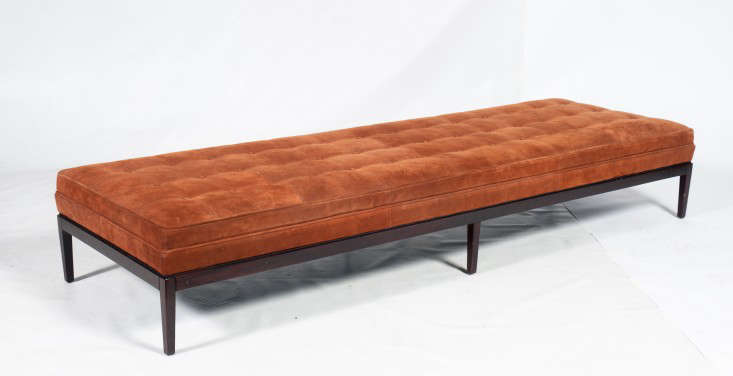
The George Smith Norris Bench is a deceptively simple piece of furniture. Its low rectangular form can finish a bedroom, soften a living room, replace a hard coffee table, hold books and throws, provide occasional seating, or support tired feet after a heroic afternoon of doing very little. That versatility is the main reason the design works.
George Smith describes the Norris as a clean-lined upholstered bench with optional pull-button detailing, suitable for classic and contemporary interiors. Fabrics, finishes, and even dimensions can be customized by consultation, and the design can also be specified for outdoor use.
What Is the George Smith Norris Bench?
The Norris is a broad, backless bench with a cushioned top and a fully upholstered base. It has no arms, exposed apron, or decorative framework to tie it to one period. That restraint allows it to sit comfortably beside a rolled-arm sofa, modern sectional, antique bed, or minimalist console.
The standard model measures approximately 38 centimeters high, 147.5 centimeters wide, and 63.5 centimeters deepabout 15 by 58 by 25 inches. George Smith notes that handmade dimensions can vary by up to 1.5 centimeters and lists roughly 2.5 meters of fabric for the standard bench.
Its 15-inch height is important. The bench sits lower than a typical chair or mudroom seat, so it feels especially natural as a footrest, upholstered coffee-table alternative, or end-of-bed piece. It can serve as occasional seating, but it is not trying to become a dining chair with an identity crisis.
Why the Design Works
It Fills Space Without Blocking the Room
A substantial coffee table can interrupt sightlines between sofas and chairs. The Norris occupies useful horizontal space while remaining visually low. Architectural Digest has featured cushioned benches as effective alternatives to conventional coffee tables, particularly when a room benefits from a softer center.
Its Shape Is Easy to Arrange
The rectangle aligns neatly with sofas and beds, unlike unusually curved ottomans that can turn furniture placement into advanced geometry. Add a stable tray and the Norris can hold drinks or decorative objects. Remove the tray and it becomes a footrest or extra seat within seconds.
Buttoning Changes Its Character
Optional pull-button or pin-tucked detailing adds texture and traditional upholstery character. It looks especially rich in solid velvet, mohair, or plain linen. An unbuttoned top feels quieter and may suit a large-scale pattern better because the design remains uninterrupted.
Craftsmanship and Customization
George Smith began its modern story in 1985 and produces upholstered furniture through master joiners and upholsterers in northern England. The company offers choices in wood color, castors, nailheads, stitching, size, fabric, and other details, as well as reupholstery for existing George Smith pieces.
The brand describes a traditional furniture-making approach involving hardwood frames, coil springs, horsehair, cotton felt, carefully cut covers, and hand stitching. Independent reporting likewise describes responsibly sourced timber, hand-tied springs, natural stuffing, and extensive hand upholstery. Because construction can vary by model, a buyer should request the current Norris specification rather than assume every catalogue piece has an identical interior.
This helps explain the bench’s luxury positioning. Its appeal is not hidden storage, a charging port, or an app that reports when somebody sits down. It is the less flashy promise of proportion, upholstery skill, repairability, and personalization.
Best Places to Use the Norris Bench
In Front of a Sofa
This is arguably its strongest position. Center the bench in front of a sofa, add a firm tray for drinks and remotes, and leave part of the top open for feet. The soft perimeter is friendlier than a hard-edged table in active family rooms, although drinks still need a tray unless “abstract coffee stain” is part of the decorating plan.
At the Foot of a Bed
A bedroom bench creates a landing place for a robe, decorative pillows, folded blankets, or tomorrow’s clothes. Designers often treat the foot of the bed as a secondary focal point rather than leftover space.
At about 58 inches wide, the Norris suits many larger beds, but circulation matters. Mark its footprint with painter’s tape before ordering. A beautiful bench that forces everyone to sidestep around it like a crab is not a design success.
In an Entryway or Dressing Room
An upholstered bench gives a foyer a welcoming anchor and offers a brief place to sit or set down a bag. Home-design publications regularly use benches to combine comfort and function in entryways and mudrooms.
However, the Norris is lower than the 17-to-19-inch range commonly recommended for comfortable mudroom seating. It may be excellent in a refined foyer or dressing room, but anyone who needs an everyday shoe-changing station should test the height first.
In a Library or Beneath a Wide Window
A backless bench can create a useful pause without visually closing a passage. In a library it becomes a flexible reading perch or book-resting surface. Beneath a broad window it provides seating while preserving light and an open view.
Choosing Upholstery
George Smith’s Norris product page has displayed a large fabric selection, including mohair, basket-weave linen, tweed linen, and several velvet families. The company also permits customized combinations of fabrics and finishes.
Mohair
Mohair gives the bench a dense, softly reflective surface. Deep blue, green, rust, tobacco, or burgundy can turn the Norris into a restrained focal point. Shading and movement in the nap are part of the material’s personality, not evidence that the bench is plotting against you.
Linen
Linen suits coastal, country, transitional, and understated modern rooms. Flax, oatmeal, mist, or sand emphasizes the clean silhouette. Pure linen can crease and develop a relaxed appearance, so buyers seeking permanent showroom crispness may prefer a blend or performance textile.
Velvet
Velvet strengthens the visual effect of buttoning and makes saturated colors appear richer. It works particularly well in formal living rooms, bedrooms, and dressing areas. Pet owners should consider how the pile will display fur, pressure marks, and clawing.
Performance or Outdoor Fabric
Stain-resistant upholstery is sensible in family rooms, sunrooms, and entry spaces. Better Homes & Gardens recommends outdoor-friendly or stain-resistant textiles for hard-working mudrooms, while George Smith states that the Norris can be made for outdoor use.
How to Style It
Use restraint. In a living room, one tray with a small vase, coasters, and perhaps a candle is enough. Do not cover the entire bench with objects and then act surprised when nobody can put up their feet.
At the foot of a bed, a folded throw placed slightly off-center usually provides sufficient texture. In an entryway, pair the bench with a large mirror, artwork, or wall hooks. For color, either repeat a tone from the rug or drapery for cohesion, or use a contrasting jewel tone to make the bench the focal point.
Buying Checklist
First decide the bench’s main job: coffee table, footrest, bedroom seat, foyer perch, or decorative accent. That choice determines ideal fabric durability, buttoning, color, and whether an outdoor specification is needed.
Next, tape the full 58-by-25-inch footprint on the floor. Check clearance from the sofa, bed, dresser, doors, and main walking route. Measure entrances, elevators, stairs, and tight turns as well. Furniture-buying guidance from Consumer Reports emphasizes matching upholstered furniture to the available room dimensions.
Finally, request fabric and finish samples and view them in the room during daylight and at night. Ask for written confirmation of dimensions, material composition, cleaning code, construction, production schedule, delivery method, warranty, and any dimensional modification. A “soft gray” sample has been known to reveal secret purple ambitions after sunset.
Care and Maintenance
Follow the care instructions provided for the selected textile. Vacuum gently with an upholstery attachment, including seams and button recesses. Good Housekeeping recommends checking the fabric’s cleaning code, testing products in a hidden area, and blotting spills rather than rubbing them deeper into the material. It also recommends regular vacuuming for frequently used upholstery.
Use a tray under drinks, plants, candles, or anything likely to cause moisture, heat, or wax damage. Limit prolonged direct sunlight if the fabric is prone to fading. Delicate, solvent-only, or heavily soiled upholstery is usually safer in professional hands than under the enthusiastic control of a mystery spray from the kitchen cabinet.
Who Should Buy It?
The George Smith Norris Bench suits buyers who value bespoke upholstery, traditional craft, and adaptable design. It is useful when a room needs a substantial soft element without another full chair or sofa.
It is less appropriate for anyone who needs hidden storage, tall everyday seating, a hard dining surface, immediate mass-market delivery, or a temporary budget solution. This is a considered, long-term furnishing decisionnot the furniture equivalent of buying emergency folding chairs before Thanksgiving dinner.
Final Verdict
The Norris succeeds because it does not overdesign a fundamentally useful object. Its clean rectangle, generous width, customizable upholstery, and optional buttoning allow it to move between traditional and contemporary rooms with unusual ease. Its limitations are clear: it is low, offers no storage or back support, and requires careful measuring and fabric selection. In the right room, however, it can become one of those simple pieces that gets used every day while continuing to look intentional.
Living With a George Smith Norris Bench: An Owner-Style Experience Guide
The first surprise when living with a bench of this size is its visual presence. In photographs, a low upholstered rectangle can seem modest. In a real room, nearly five feet of fabric creates a broad field of color and texture. Neutral linen can calm a scheme by connecting the sofa, rug, and curtains. Green mohair or red velvet may become the first thing everyone notices. Neither result is wrong, but the fabric choice matters more here than it does on a tiny stool. A sample that looked almost anonymous in a showroom may become much more expressive once spread across the bench’s generous surface.
During the first week, the bench’s flexibility quickly becomes obvious. In front of a sofa, it accepts a tray and behaves like a coffee table. Later, the tray moves aside and two people can put up their feet. When guests arrive, it becomes extra seating. Because it has no back, people can approach from either side, which is helpful in open rooms. Longer conversations are more comfortable when guests can turn toward a nearby sofa or chair rather than balancing upright all evening.
At the foot of a bed, the experience is less social but perhaps more habit-forming. Decorative pillows finally have somewhere to go at night. A blanket can be folded instead of dropped on the floor, and shoes can be put on without perching on the mattress edge. Inevitably, the bench may also attract clothes, books, and packages. This is not a flaw in the upholstery; horizontal surfaces simply possess a mysterious gravitational field.
The fabric determines how relaxed ownership feels. A textured mid-tone textile can disguise lint and minor marks. Pale linen looks airy but may inspire stricter household diplomacy around coffee. Dark velvet appears dramatic but can reveal pet hair and shading. Buttoning adds richness, yet the recesses may collect crumbs, making a soft brush or upholstery attachment a useful ally.
Families may appreciate the absence of hard corners when the Norris replaces a rigid coffee table. Still, softness does not make it indestructible. Trays remain important, and children should not treat the top as a trampoline simply because it resembles an elegant launchpad. Pet owners should test fabric samples to see how easily hair releases from the weave.
Over time, a well-chosen Norris can change roles. A living-room ottoman may move to a bedroom; a hallway bench may become dressing-room seating. George Smith’s customization and reupholstery services add to that long-term adaptability.
The most satisfying experience will come from treating the bench as useful furniture, not a precious display object. Sit on it, rest feet on it, place a throw across it, and let it earn its floor space. The goal is not to preserve the Norris in showroom suspense; it is to specify it carefully, maintain it sensibly, and enjoy how often one simple rectangle solves a surprising number of decorating problems.
Editorial note: This article synthesizes verified product information from George Smith with reporting and practical guidance from established furniture, design, buying, and home-care publications, including Architectural Digest, Better Homes & Gardens, ELLE Decor, Good Housekeeping, HGTV, The Spruce, Consumer Reports, The English Home, Design Centre Chelsea Harbour, 1stDibs, and U.S. showroom resources. Specifications, fabrics, prices, and availability can change; confirm current details before ordering.