

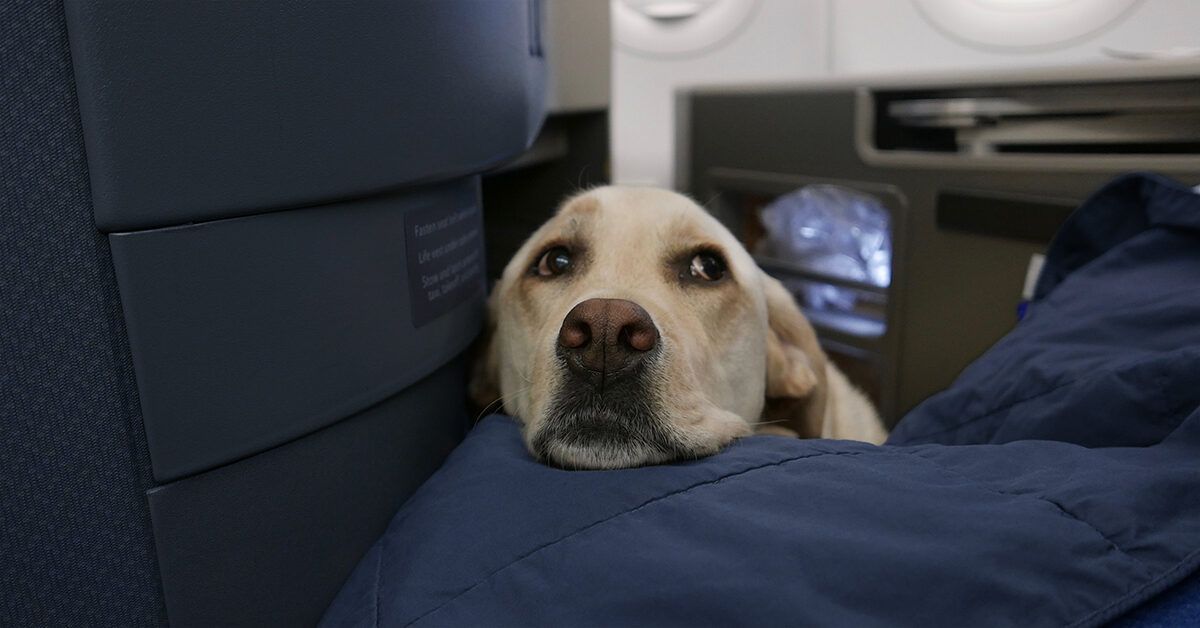
If anxiety has ever turned a grocery run into a boss battle, a crowded elevator into a panic chamber, or a simple walk outside into a full-body nope, you already know this condition is more than “just stress.” For some people, anxiety can be disabling enough to affect work, school, relationships, travel, and everyday independence. That is where a service dog for anxiety may come in.
But let’s clear something up right away: a service dog is not just a very cute sidekick with a vest and excellent vibes. A true service dog is trained to perform specific tasks that help a person with a disability function more safely and independently. In the case of anxiety, that usually means a psychiatric service dog trained to interrupt spiraling behaviors, guide a handler out of overwhelming situations, create physical space in crowds, wake a person from night terrors, remind them to take medication, or respond to a panic episode in a consistent, trained way.
This guide breaks down what a service dog for anxiety really is, who may qualify, how training works, what the law says, and what daily life with one actually looks like. Think of it as the no-fluff, no-fake-registry, no-magic-wand version of the internet’s favorite dog topic.
What Is a Service Dog for Anxiety?
A service dog for anxiety is usually a psychiatric service dog, which means the dog is trained to do work or perform tasks directly related to a mental health disability. That distinction matters. A dog that makes you feel calmer because it is lovable, fluffy, and emotionally gifted is wonderful, but under U.S. public-access law, comfort alone is not enough. The dog must be trained to take a specific action connected to the disability.
Service Dog vs. Emotional Support Animal vs. Therapy Dog
This is where many people get tripped up, usually by social media posts featuring a vest, a dramatic caption, and zero legal accuracy.
- Service dog: Individually trained to perform disability-related tasks. Has broad public-access rights under the ADA.
- Emotional support animal (ESA): Provides comfort through companionship, but is not trained for specific disability-related tasks. ESAs do not have the same public-access rights as service dogs.
- Therapy dog: A well-behaved dog that visits hospitals, schools, nursing homes, or similar settings to help many people. Therapy dogs are not service dogs for one handler.
So if your dog helps you feel better at home, that may be incredibly meaningful, but it does not automatically make the dog a service dog for anxiety. Task training is the dividing line.
Can You Qualify for a Service Dog for Anxiety?
Potentially, yes. The bigger question is not whether you “feel anxious,” because most humans with inboxes do. The real question is whether your anxiety rises to the level of a disability that substantially limits one or more major life activities.
That can include conditions such as generalized anxiety disorder, panic disorder, social anxiety disorder, agoraphobia, PTSD-related anxiety symptoms, or other psychiatric conditions that seriously interfere with daily functioning. If anxiety regularly disrupts your ability to leave home, work, sleep, travel, concentrate, remain safe, or regulate your behavior in public, a psychiatric service dog may be worth discussing with a licensed mental health professional.
Signs a Service Dog Might Be Appropriate
- You experience panic attacks or dissociation that require active interruption.
- You avoid public places because of intense anxiety or overwhelm.
- You struggle with grounding, orientation, or safe exits during episodes.
- You need consistent task-based support, not just companionship.
- Your treatment team believes a dog could support your functioning alongside therapy or medication.
A service dog is not a first-date solution for every anxiety symptom. It is a major lifestyle commitment and usually works best as part of a larger treatment plan, not as a replacement for therapy, medication, coping skills, or medical care.
What Tasks Can a Service Dog for Anxiety Perform?
The best service dog tasks are practical, repeatable, and tailored to the handler’s actual needs. In other words, not “be adorable in a grocery store,” though many dogs clearly overachieve in that department.
Common Psychiatric Service Dog Tasks for Anxiety
- Alerting to rising anxiety: Some dogs are trained to notice changes in breathing, movement, scent, or behavior and cue the handler before a full episode escalates.
- Interrupting panic or repetitive behaviors: The dog may nudge, paw, lick, or place its body against the handler to break a panic cycle or compulsive pattern.
- Deep pressure therapy: A dog may lay across a handler’s lap or torso on cue to provide grounding pressure.
- Guiding to an exit: In crowded or overstimulating environments, the dog may lead the handler toward a safe, calmer space.
- Creating a buffer in public: Some dogs are trained to stand behind or beside the handler to maintain personal space.
- Medication reminders: A dog can be trained to cue a handler at medication time.
- Nightmare interruption: For people with trauma-related symptoms, a dog may wake them from distressing sleep episodes.
- Room checks or safety checks: In select cases, dogs may perform trained environment checks to reduce disabling hypervigilance.
The key is that each task must be taught and reliable. A dog that spontaneously boops your hand when you cry is sweet. A dog trained to interrupt a panic response on cue or before it intensifies is doing service work.
How to Get a Service Dog for Anxiety
There is no single national application, no official government vest dispenser, and no magical website where you upload a selfie and receive a legally blessed Labrador in three business days.
Most people follow one of these paths:
1. Start With Your Treatment Team
Talk to a licensed mental health professional or physician who understands your history. They can help you decide whether a psychiatric service dog makes sense for your level of impairment and whether it fits into your care plan. This step also helps you avoid romanticizing the idea of a service dog when a different support option may be more realistic.
2. Apply to a Reputable Program
Some nonprofit programs place fully trained service dogs or help handlers train their own dogs. Reputable organizations tend to have screening processes, waitlists, training standards, follow-up support, and lots of questions. Annoying? Maybe. Reassuring? Absolutely.
3. Owner-Train With Expert Help
Under the ADA, service dogs do not have to be professionally trained. That means some people train their own dog, often with help from a qualified trainer experienced in psychiatric service work. This route can offer flexibility, but it is not easy. Owner-training requires time, consistency, money, public-access work, and a dog with the right health, temperament, and resilience.
4. Avoid the Internet’s Favorite Scam Trap
There is no federally required service dog certification or registration in the United States. If a company promises “instant legal papers,” “ADA-approved ID cards,” or “official national registration,” keep your wallet in your pocket and your skepticism on a leash. A vest, certificate, badge, or laminated card may look impressive, but they do not create legal status.
What Makes a Good Anxiety Service Dog?
Not every good dog is service-dog material, just like not every person with a PowerPoint is ready to run NASA. A service dog needs the right combination of temperament, health, trainability, and emotional stability.
Strong Candidates Usually Have:
- Calm, steady temperament
- Low reactivity to noise, crowds, and other animals
- Good physical health and stamina
- Interest in working closely with a handler
- Solid obedience foundations
- Ability to recover quickly from stress
Breed matters less than temperament, but some breeds and individual dogs are better suited to public service work than others. Tiny chaos goblins with big feelings may be delightful pets and terrible service prospects. A professional evaluation can save you heartache later.
Training a Service Dog for Anxiety
Training includes much more than “sit,” “stay,” and “please do not lick that stranger.” A service dog must master:
- Basic obedience: Reliable responses around distractions
- Public-access manners: Settling quietly in restaurants, stores, waiting rooms, and transit
- Task training: Disability-specific behaviors performed consistently
- Handler teamwork: The human must learn to cue, reinforce, manage, and advocate for the dog
Training often takes many months and sometimes much longer. Even then, not every dog graduates. Some wash out because public work is too stressful, health issues appear, or the fit simply is not right. That is not failure. That is responsible decision-making.
Your Rights in Public, Housing, and Travel
Public Places
Under the ADA, a trained service dog can generally accompany its handler into places where the public is allowed, including stores, restaurants, hotels, and many other businesses. Staff are limited in what they can ask. If it is not obvious that the dog is a service animal, they may generally ask only whether the dog is required because of a disability and what work or task the dog has been trained to perform.
They cannot require proof of disability, medical records, certification papers, or a dramatic courtroom-style dog performance.
A business may ask a handler to remove a service dog if the dog is out of control and the handler does not regain control, or if the dog is not housebroken. Fear of dogs and allergies generally do not erase service-dog access rights.
Housing
Housing rules are broader than ADA public-access rules. In housing, assistance animals may be considered a reasonable accommodation, which can include service animals and, in some cases, emotional support animals. That means a person may have rights in a rental setting even if the animal is not a service dog under the ADA. Housing requests usually involve documentation and a formal accommodation process.
Air Travel
Flying is its own legal universe. Airlines recognize trained service dogs, but emotional support animals may be treated as pets. Airlines can require behavior standards and may use transportation forms for service-animal travel. Translation: do not show up at the gate with a fake certificate and a dog who thinks the terminal is a trampoline park.
The Real Cost of a Service Dog for Anxiety
A service dog can be life-changing, but it is not low-maintenance. Costs may include professional training, veterinary care, food, grooming, gear, travel, emergency care, and time off for appointments or training sessions. Some nonprofit programs place dogs at no charge, but daily care still belongs to the handler.
You also need emotional bandwidth. On a rough mental health day, the dog still needs exercise, potty breaks, structure, and care. Service dogs are working partners, not furry apps that run on battery-saving mode.
Benefits and Challenges of a Service Dog for Anxiety
Potential Benefits
- Greater independence in public settings
- Earlier interruption of panic or dysregulation
- Improved routine and sense of safety
- Support with grounding and task-based coping
- Increased confidence during travel or social situations
Potential Challenges
- High cost and long training timeline
- Public attention, questions, and occasional ignorance
- Daily responsibility even when symptoms flare
- Need for ongoing training and maintenance
- The possibility that a dog may not be a suitable candidate
For some people, a service dog reduces isolation and expands their world. For others, the responsibility and public visibility may actually increase stress. Honesty matters here. A service dog should make life more functional, not turn every errand into an argument with strangers and an Olympic-level logistics event.
How to Decide Whether a Service Dog for Anxiety Is Right for You
Ask yourself a few blunt but helpful questions:
- Do I need task-based support, or mainly comfort and companionship?
- Can I care for a dog physically, financially, and emotionally every day?
- Would public attention make my anxiety worse?
- Do I have access to professional training support?
- Has my clinician recommended this as part of a broader treatment plan?
If the answers point toward yes, a psychiatric service dog may be worth exploring. If not, that does not mean your needs are less valid. It may simply mean another support tool is a better fit right now, such as therapy, medication, coping-skills training, an ESA in housing, or non-animal accommodations.
Experiences People Commonly Describe With a Service Dog for Anxiety
One of the most striking things people describe is not a dramatic movie moment. It is the return of ordinary life. Someone who once avoided the pharmacy because bright lights, lines, and decision fatigue triggered panic may say the dog helps them notice rising symptoms sooner. A nudge to the hand, pressure across the leg, or a practiced turn toward the exit creates a pause between “I am overwhelmed” and “I am trapped.” That pause can be everything.
Many handlers talk about how the dog becomes part of their routine in a stabilizing way. Mornings are no longer vague, floating disasters. There is a schedule: wake up, feed the dog, go outside, move your body, check medication, start the day. That built-in structure can reduce the chaos that often fuels anxiety. It does not cure the condition, but it can lower the friction of getting through the day.
People also describe the emotional difference between being alone with symptoms and being partnered with a trained dog. During a panic episode, the dog is not panicking too. That sounds simple, but it matters. The dog is steady, predictable, and consistent. When the handler’s brain is throwing metaphorical spaghetti at the walls, the dog is doing the job it was trained to do. There is reassurance in that reliability.
At the same time, handlers often say the experience is not all heartwarming montages and perfect public behavior. Strangers stare. Some ask invasive questions. Others try to pet, whistle at, or distract the dog. A few insist on becoming amateur legal scholars in the cereal aisle. Living with a service dog for anxiety can mean learning to advocate for yourself more directly than you ever wanted to. For some people, that is empowering. For others, it is exhausting.
Another common experience is the complicated emotional shift from “my dog helps me feel better” to “my dog is part of my disability management.” That can be validating and heavy at the same time. Some handlers feel relief because their needs finally make sense. Others feel grief because needing a service dog confirms how much anxiety has changed their life. Both reactions are normal.
Handlers also often say the relationship deepens over time because the work is so collaborative. The dog learns patterns, environments, and cues. The handler learns timing, reinforcement, and trust. In the best cases, that teamwork can expand a person’s world inch by inch: one longer store visit, one flight taken, one classroom attended, one family event survived without leaving early to cry in the car.
Still, the most grounded perspective is usually this: a service dog for anxiety is not a miracle and not a gimmick. It is a skilled working partner. For the right person, that partnership can restore confidence, routine, and access to daily life. For the wrong situation, it can add stress, expense, and pressure. The goal is not to have a service dog because the idea sounds comforting. The goal is to build a life that functions better because the dog performs trained tasks that truly meet your needs.
Final Thoughts
A service dog for anxiety can be an extraordinary support tool when the match is legitimate, the training is real, and the dog is part of a broader plan for mental health care. The best teams are built on clarity, not wishful thinking: a clear diagnosis, clear functional needs, clear tasks, clear training standards, and clear expectations about the work involved.
If you are considering this path, start with professionals who know both disability support and ethical dog training. Ask hard questions. Ignore online registry nonsense. And remember that the goal is not just to have a dog beside you. It is to have a trained partner who helps you move through the world with more safety, more access, and a little less anxiety calling the shots.