

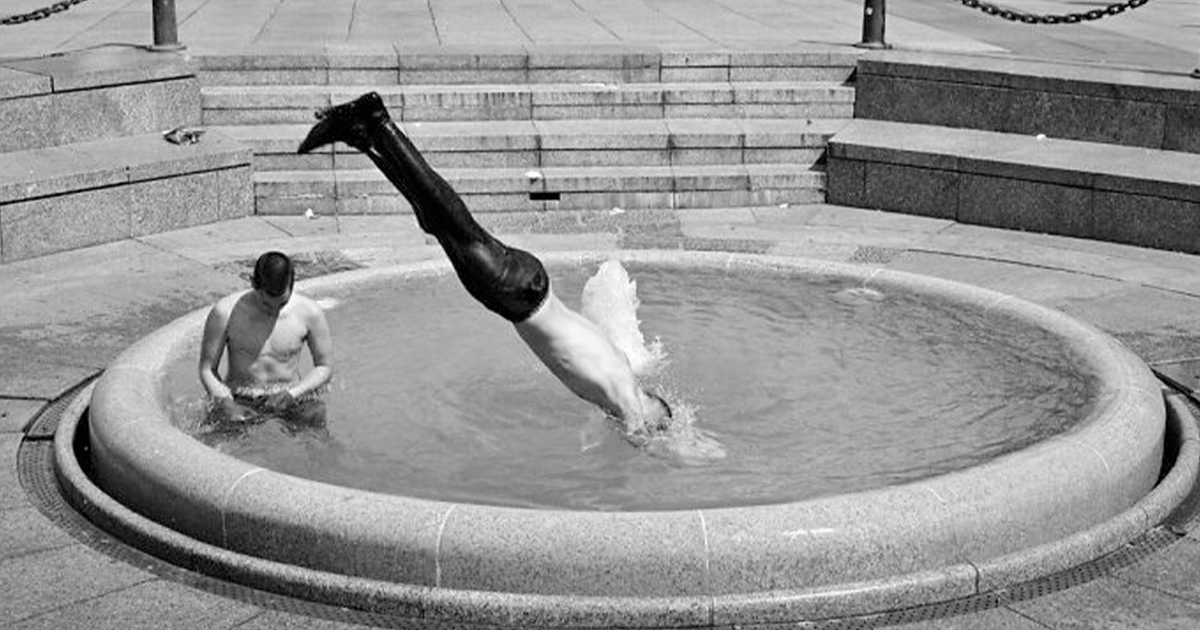
Note: This article is an original, publish-ready commentary inspired by real publicly available information about Mary Crnkovic Pilas and her black-and-white street photography project, The Marvels of Daily Life.
Some photographers chase mountains, sunsets, celebrities, and dramatic skies that look as if nature hired a lighting crew. Mary Crnkovic Pilas does something quieter and, in many ways, more difficult: she walks into ordinary streets and waits for life to reveal its tiny miracles. In The Marvels Of Daily Life Captured In 49 Stunning Photos By Mary Crnkovic Pilas, the magic does not arrive wearing a cape. It appears in a passing glance, a dog with main-character energy, a rainy sidewalk, a shadow that seems to have opinions, or a stranger caught in the middle of a perfectly human moment.
Mary Crnkovic Pilas is a street and documentary photographer based in Zagreb, Croatia, originally from Sydney, Australia. Her work is mostly black and white, a choice that gives her images a timeless quality while pushing the viewer to pay attention to shape, light, emotion, and story. No neon distractions. No “look at my expensive color grading preset” situation. Just people, streets, humor, tenderness, and the delightful weirdness of everyday life.
The title of her project, The Marvels of Daily Life, reflects a philosophy deeply connected to the spirit of classic street photography: the belief that the street can surprise us more than any staged production. Life, it turns out, is the most unpredictable director in the business. It forgets the script, changes the actors, and still somehow delivers a perfect scene right before the shutter clicks.
Who Is Mary Crnkovic Pilas?
Mary Crnkovic Pilas is known for street and documentary photography that celebrates the beauty of ordinary human moments. Before photography became the central language of her creative life, she studied music and French. That detail matters because her photographs often feel rhythmic and lyrical. A good street photo has timing, pause, harmony, and surprise. In Mary’s work, a person crossing a frame can feel like a musical note arriving exactly when it should.
Her rediscovery of photography reportedly became especially meaningful after walking the Camino de Santiago in 2016. That kind of journey can change the way a person sees the world. When you spend long hours walking, your eyes become more patient. You notice shoes, doors, weather, tired smiles, crooked signs, and the comedy of humans trying to look dignified while battling umbrellas. Mary’s later street work carries that walking-based awareness. It feels attentive rather than aggressive, curious rather than intrusive.
Why Daily Life Looks So Powerful Through Her Lens
The phrase “daily life” can sound plain, like something you write on a calendar between “buy milk” and “find out why the Wi-Fi router is blinking like a tiny nightclub.” But in photography, daily life is a gold mine. Streets are full of temporary theater: children inventing games, older people watching the world like seasoned critics, dogs refusing to follow the plot, and strangers accidentally forming visual jokes with signs, windows, or shadows.
Mary’s photos succeed because they do not treat ordinary people as background decoration. They treat them as stories. A person walking alone can suggest reflection. A group gathered in the rain can suggest resilience. A small animal in the frame can completely change the mood from poetic to hilarious. Her images remind us that daily life is not boring; we are often just moving too fast to notice its punchlines.
The Charm Of Black-And-White Street Photography
Black-and-white photography is not simply color photography that forgot to pay the electricity bill. It is a visual language of its own. By removing color, the photographer makes contrast, gesture, expression, and composition do more work. In Mary Crnkovic Pilas’ photography, black and white helps separate the essential from the noisy. The viewer is invited to ask: Where is the light falling? What is the subject feeling? What small visual relationship is happening inside the frame?
This is especially effective in street photography because city life can be visually chaotic. Storefronts, clothing, cars, signs, trash cans, pigeons, and mysterious sidewalk stains all compete for attention. Black and white gives the image a cleaner emotional structure. It turns a busy scene into a readable story. The result can feel cinematic, but not polished into artificial perfection. It still has street dust on its shoes.
Contrast, Shadows, And Human Comedy
Many of Mary’s strongest images appear to rely on the classic ingredients of great monochrome photography: strong contrast, layered shadows, and simple but expressive compositions. The best street photographs often make viewers pause because something in the frame feels both accidental and inevitable. A shadow points toward a subject. A wall becomes a stage. A face appears at just the right angle. A dog enters the scene as if hired by the universe for comic relief.
Humor is one of the most appealing elements in her work. It is not loud, sarcastic, or cruel. It is observational. Her photographs often seem to say, “Look at this tiny absurdity. Isn’t being alive strange and wonderful?” That warmth separates her images from street photography that feels like visual hunting. Mary’s photos feel more like visual listening.
Storytelling: The Heart Of The 49 Stunning Photos
A technically perfect photograph can still be forgettable if it has no emotional spark. Mary has spoken about the importance of a photo telling a story and creating an emotional response. That idea is central to understanding why these 49 photos resonate. They are not merely well-framed urban scenes. They are little open-ended narratives.
One image might suggest loneliness, another mischief, another patience, another ordinary joy. The viewer is not handed a full explanation, and that is part of the pleasure. Street photography works best when it gives us enough information to wonder. Who is that person waiting for? Why is that child looking down? What happened two seconds before the photograph? What happened two seconds after? A good street image is a short story with the first and last paragraphs removed.
Mary’s photographs also show how important emotion is in visual storytelling. A raised hand, a tilted head, a slumped shoulder, or a quick glance can carry more meaning than a long caption. Her frames often feel alive because they catch people between official poses. Nobody is performing for a family portrait. Nobody is trying to look flawless. They are simply existing, which is usually where the real poetry hides.
The Influence Of Robert Doisneau And The Humanist Tradition
Mary’s project title is connected to a quote associated with Robert Doisneau, one of the beloved names in humanist street photography. Doisneau’s influence can be felt in her affection for ordinary people, gentle humor, and unexpected visual pairings. Humanist photography has long been interested in everyday dignity: people at work, children at play, couples in conversation, strangers sharing public space, and the small scenes that reveal social life without needing a grand announcement.
Still, Mary’s work is not a copy of the past. The best influence does not turn an artist into a photocopier with feelings. Instead, it gives the artist a doorway. Mary steps through that doorway with her own rhythm, geography, and emotional instincts. Her Zagreb-based perspective, Australian background, travel experience, and personal eye all shape the final result.
Why Street Photography Still Matters In The Smartphone Age
Today, almost everyone carries a camera. We photograph lunch, pets, receipts, parking spots, and sometimes our own faces from angles that should probably be reviewed by a committee. With so many images flooding the internet, it is fair to ask: why does street photography still matter?
The answer is intention. Street photography is not just taking pictures outside. It is the art of noticing relationships inside a public scene. It asks the photographer to respond quickly, compose thoughtfully, and respect the humanity of the people being photographed. Mary Crnkovic Pilas’ images stand out because they do not feel random. Even when the moment is spontaneous, the seeing is disciplined.
In a world of endless scrolling, her work encourages slower looking. The viewer is invited to stay with an image long enough for the joke, tenderness, or tension to emerge. That is rare. Many digital images shout for attention; Mary’s photographs quietly tap you on the shoulder and say, “You may want to look again.”
Composition Lessons From Mary Crnkovic Pilas’ Work
1. Walk More Than You Shoot
Street photography begins with walking. Mary has emphasized the accessibility of the genre: the street is available as soon as you step outside. You do not need a studio, a model, or a fog machine operated by someone named Chad. You need curiosity, patience, and comfortable shoes.
2. Let The Scene Breathe
Her photographs often allow space around the subject. This helps the environment become part of the story. A wall, window, staircase, or street corner is not just background; it becomes context. The setting tells us where the emotion lives.
3. Watch For Visual Coincidences
Street photography loves coincidence. A person’s gesture may echo a poster behind them. A shadow may mimic a body. A dog may appear to comment on the entire scene with one heroic stare. These little alignments create humor and surprise.
4. Choose Emotion Over Perfection
A perfectly sharp, well-exposed image is nice. But if nothing is happening emotionally, it may remain just that: nice. Mary’s work reminds photographers that feeling matters. A slightly imperfect frame with soul can outlive a flawless frame with no heartbeat.
The Universal Appeal Of Ordinary Moments
One reason The Marvels Of Daily Life connects with viewers is that the subject matter is universal. You do not need to know Zagreb, Sydney, or the exact street where a photo was taken. You recognize the gestures. You know the feeling of waiting, walking, wondering, laughing, or being caught in weather that has clearly chosen violence.
Great street photography makes strangers feel familiar. It collapses distance. A viewer in New York, Chicago, Los Angeles, or a small town in Ohio can look at Mary’s images and understand the human rhythm inside them. The clothes, architecture, and street signs may differ, but the emotions travel well.
Why These 49 Photos Feel Like A Love Letter To Observation
The 49-photo collection is not just a gallery of attractive images. It is a reminder that observation is a creative act. Most people pass through public spaces thinking about errands, messages, bills, snacks, and whether they left the stove on. A street photographer enters the same space and sees a living composition.
Mary Crnkovic Pilas’ work asks us to reclaim that kind of attention. Her images suggest that beauty is not always rare. Sometimes it is frequent but quiet. It waits near bus stops, under umbrellas, beside shop windows, in winter light, and around corners where humans are being deeply, accidentally human.
Experiences Inspired By “The Marvels Of Daily Life”
Spending time with a project like The Marvels Of Daily Life Captured In 49 Stunning Photos By Mary Crnkovic Pilas can change the way you move through your own neighborhood. After looking at images like hers, even a basic walk to buy coffee starts to feel suspiciously full of meaning. A man balancing groceries becomes a study in determination. A child arguing with a balloon becomes high drama. A dog staring through a café window becomes the emotional lead in a movie that absolutely deserves awards.
The biggest experience this kind of photography offers is the return of attention. We often think interesting life happens somewhere else: on vacation, at major events, in dramatic landscapes, or inside carefully planned moments. Mary’s work pushes back against that idea. It says the good stuff is already happening, but it is moving at street speed. Blink and it is gone. Look closely and it becomes art.
For writers, photographers, travelers, and everyday observers, this is a useful lesson. Carrying a camera is helpful, but carrying curiosity is better. You can practice by walking slowly through familiar streets and looking for small relationships: a sign that accidentally comments on a passerby, two strangers mirroring each other’s posture, a patch of light turning a dull wall into a stage, or a quiet face in a noisy place. The goal is not to invade anyone’s privacy or turn every stranger into content. The goal is to notice life with more respect and wonder.
There is also a calming effect in this kind of looking. Daily life can feel repetitive when we move through it on autopilot. But when we begin noticing textures, expressions, weather, and gestures, the routine becomes less flat. A commute becomes a visual essay. A rainy afternoon becomes atmosphere. Even waiting in line becomes slightly less tragic, which is no small achievement.
Mary Crnkovic Pilas’ photographs remind us that the world does not need to be redesigned to become interesting. It needs to be seen. Her black-and-white street photography turns ordinary scenes into emotional evidence: proof that humor, tenderness, loneliness, beauty, and surprise are constantly passing through public life. The marvels are not hidden behind velvet ropes. They are walking past us, carrying umbrellas, chasing buses, feeding pigeons, laughing with friends, and occasionally being upstaged by dogs.
Conclusion
The Marvels Of Daily Life Captured In 49 Stunning Photos By Mary Crnkovic Pilas is a celebration of street photography at its most humane: observant, funny, patient, and emotionally alert. Mary’s work proves that daily life does not need decoration to become memorable. With the right eye, a sidewalk becomes a theater, a shadow becomes a character, and a fleeting gesture becomes a story worth keeping.
Her photographs encourage viewers to slow down and rediscover the visual poetry hiding in plain sight. In a culture obsessed with spectacle, that is a refreshing reminder. The ordinary world is not empty. It is crowded with small miracles. We just have to look before they cross the street and disappear.