

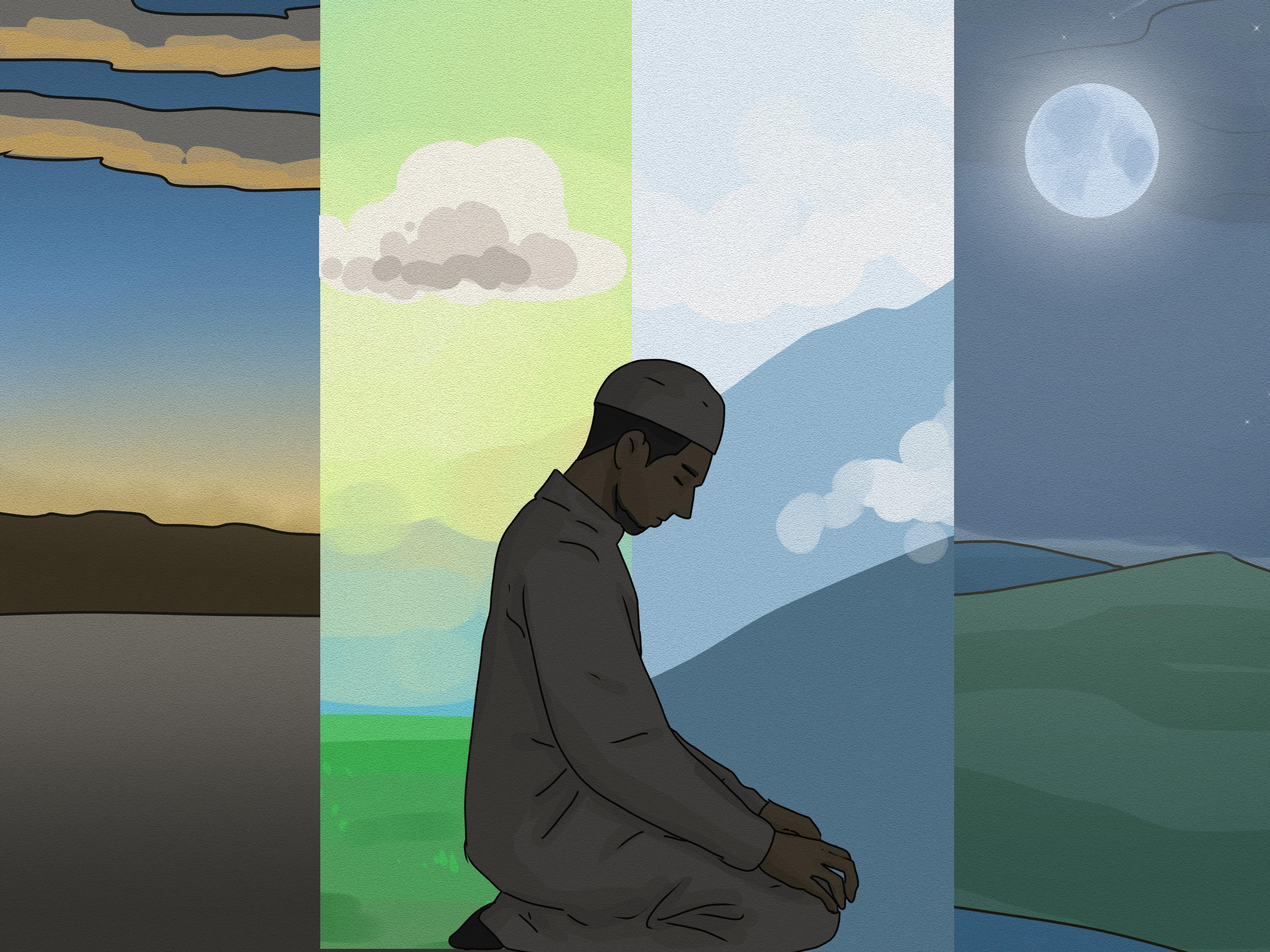
Note: This guide explains Maghrib prayer in a beginner-friendly way based on mainstream Islamic practice. Details may vary slightly by school of thought, local mosque, or teacher, so when in doubt, follow a qualified imam or scholar you trust.
Maghrib prayer has a beautiful kind of urgency. The sun slips below the horizon, the sky starts showing off like it paid for premium lighting, and Muslims around the world pause to pray. It is short, meaningful, and easy to learn once you understand the order. But one question appears again and again, especially for beginners: How many rakats are in the Maghrib prayer?
The simple answer is: Maghrib has 3 obligatory rakats, called fard rakats. Many Muslims also pray 2 Sunnah rakats after Maghrib, and some add 2 optional nafl rakats. So, depending on what you count, Maghrib may be described as 3, 5, or 7 rakats. The key point is that the required part is the 3 fard rakats.
If that sounds like prayer math, do not worry. We are going to make it very clearno calculator, spreadsheet, or spiritual abacus required.
What Is Maghrib Prayer?
Maghrib is the sunset prayer and one of the five daily prayers in Islam. It is performed after the sun has fully set and before the time for Isha begins. Because the window for Maghrib is often shorter than the window for some other prayers, many Muslims try to pray it soon after the adhan, or call to prayer.
The word “Maghrib” is connected to the west and sunset. In daily life, it marks the transition from day to night. Spiritually, it works like a reset button. The workday may be chaotic, dinner may be calling your name, and your phone may be buzzing like it has personal dramabut Maghrib invites you to stop, face the Qibla, and reconnect with Allah.
How Many Rakats Are in Maghrib Prayer?
The Maghrib prayer includes 3 fard rakats. These are the obligatory units of prayer that form the core of Maghrib.
Common Maghrib Rakat Breakdown
- 3 fard rakats: Obligatory and essential for Maghrib.
- 2 Sunnah rakats: Strongly recommended after the fard prayer.
- 2 nafl rakats: Optional extra prayer for additional reward.
That means the most common complete pattern looks like this:
3 fard + 2 Sunnah + 2 nafl = 7 rakats total
However, when someone asks, “How many rakats are in Maghrib?” they usually mean the required prayer. In that case, the answer is 3 rakats.
What Is a Rakat?
A rakat is one complete unit of salah. Each rakat includes standing, recitation, bowing, rising, prostrating, sitting briefly, and prostrating again. Think of a rakat as one full cycle of prayer. It has a beginning, a middle, and an endlike a tiny spiritual workout, except the goal is humility, not abs.
In Maghrib, you perform three of these units. The first two rakats include recitation of Surah Al-Fatihah and another short surah or verses from the Quran. The third rakat usually includes Surah Al-Fatihah only.
When Do You Pray Maghrib?
Maghrib begins immediately after sunset, once the sun has fully disappeared below the horizon. It ends when the time for Isha begins, commonly associated with the disappearance of twilight. Exact prayer times vary depending on location, season, calculation method, and local mosque practice.
Because sunset changes throughout the year, Maghrib time is not fixed on the clock. In summer, it may be later. In winter, it may arrive before your brain has accepted that the day is basically over. The safest habit is to check a reliable prayer timetable, mosque schedule, or prayer app for your city.
How to Pray Maghrib: Step-by-Step Guide
Before beginning, make sure you have wudu, your body and clothing are clean, and you are facing the Qibla. Then make the intention in your heart to pray the 3 fard rakats of Maghrib. You do not need to say the intention out loud; sincerity is not improved by volume.
Step 1: Stand and Begin with Takbir
Stand facing the Qibla. Raise your hands and say “Allahu Akbar”, meaning “Allah is Greater.” This opening takbir begins the prayer. After that, place your right hand over your left while standing.
Step 2: Recite in the First Rakat
In the first rakat, recite the opening supplication if you know it, then seek refuge in Allah and say Bismillah. Recite Surah Al-Fatihah, followed by another short surah or a few verses from the Quran.
In congregational Maghrib, the imam recites aloud in the first two rakats. If you are praying alone, follow what you have learned from your school of thought or teacher regarding audible recitation.
Step 3: Bow in Ruku
Say “Allahu Akbar” and bow. This position is called ruku. Keep your back reasonably straight and place your hands on your knees. During ruku, say:
Subhana Rabbiyal Adheem
This means, “Glory be to my Lord, the Most Great.” Many people say it three times.
Step 4: Stand Up Again
Rise from ruku and say:
Sami Allahu liman hamidah
Then say:
Rabbana wa lakal hamd
This part reminds the worshipper to praise Allah after bowing.
Step 5: Go Down for Sujud
Say “Allahu Akbar” and go into prostration, called sujud. In sujud, the forehead, nose, palms, knees, and toes touch the ground. Say:
Subhana Rabbiyal A’la
This means, “Glory be to my Lord, the Most High.” Again, many people say it three times.
Step 6: Sit Briefly, Then Make a Second Sujud
Say “Allahu Akbar” and sit briefly. Then say “Allahu Akbar” again and perform the second sujud. This completes the main physical sequence of one rakat.
Step 7: Stand for the Second Rakat
Stand up for the second rakat and repeat the same pattern: recite Surah Al-Fatihah and another short surah or verses, then perform ruku, rise, perform two sujud, and sit.
Step 8: Sit for the First Tashahhud
After completing the second rakat, remain sitting and recite the Tashahhud. This is an important sitting portion of the prayer. In a three-rakat prayer like Maghrib, this is not the end yet. It is more like a spiritual checkpoint. You are two-thirds done, but do not start mentally preparing dessert just yet.
Step 9: Stand for the Third Rakat
Say “Allahu Akbar” and stand for the third rakat. In this rakat, recite Surah Al-Fatihah. In common practice, no additional surah is recited after Al-Fatihah in the third rakat of Maghrib.
Then perform ruku, rise, and complete two sujud as before.
Step 10: Final Sitting and Tasleem
After the second sujud of the third rakat, sit for the final Tashahhud. Recite Tashahhud, send blessings upon the Prophet Muhammad, and make dua if you know the supplications.
To end the prayer, turn your head to the right and say:
Assalamu alaikum wa rahmatullah
Then turn your head to the left and say the same. Your 3 fard rakats of Maghrib are complete.
Do You Pray Sunnah After Maghrib?
Yes, many Muslims pray 2 Sunnah rakats after the 3 fard rakats of Maghrib. These Sunnah rakats are highly recommended and are part of the regular voluntary prayers associated with the daily prayers.
The Sunnah prayer after Maghrib is prayed like a normal two-rakat prayer. You make the intention, begin with takbir, pray two rakats, sit for the final Tashahhud, and end with tasleem.
Is There Sunnah Before Maghrib?
Some Muslims may pray optional rakats before Maghrib after the adhan and before the fard prayer, depending on their understanding and local practice. However, the widely emphasized Sunnah connected to Maghrib is the 2 Sunnah rakats after the fard prayer.
For beginners, focus first on learning and preserving the 3 fard rakats. Once that becomes comfortable, add the 2 Sunnah rakats after Maghrib. Build the habit like a sturdy house: foundation first, fancy curtains later.
Common Beginner Mistakes in Maghrib Prayer
Confusing Maghrib with Isha
Maghrib has 3 fard rakats. Isha has 4 fard rakats. Witr is connected with Isha, not Maghrib. If you remember nothing else, remember this: Maghrib is the sunset prayer with 3 fard rakats.
Skipping the First Sitting
Because Maghrib has three rakats, you sit after the second rakat for the first Tashahhud, then stand again for the third rakat. Beginners sometimes forget this because they are used to two-rakat prayers. It happens. Learning salah is a process, not a talent show.
Adding a Surah in the Third Rakat
In common practice, the first two rakats include Surah Al-Fatihah and another surah or verses. The third rakat includes Surah Al-Fatihah only. If you are learning, practice the sequence slowly until it becomes familiar.
Waiting Too Long
Maghrib time is shorter than some other prayer windows. It is best to pray soon after sunset, especially if your schedule is busy. A useful habit is to treat Maghrib like an appointment you would not casually missexcept this appointment does not require parking, paperwork, or awkward small talk.
Tips for Learning Maghrib Prayer
Start by memorizing the structure before trying to perfect every detail. Know that Maghrib is 3 fard rakats. Know when to sit. Know what to recite in each rakat. Then gradually improve pronunciation, focus, and understanding.
If Arabic recitation feels difficult, learn one piece at a time. Start with Surah Al-Fatihah, then short surahs such as Al-Ikhlas, Al-Falaq, or An-Nas. Listen to reliable recitations, repeat slowly, and do not panic if your tongue feels like it joined a gymnastics class. With practice, it becomes easier.
Praying with a congregation can also help. Watching the rhythm of salah at the mosque teaches timing, posture, and flow. If you are nervous, stand near someone who seems calm and knowledgeable. Most mosque communities are used to helping beginners, and no one is keeping score with a clipboard.
Why Maghrib Prayer Matters
Maghrib arrives at a powerful moment in the day. The brightness fades, the evening begins, and life changes pace. In Islamic practice, prayer is not only a ritual action; it is a daily anchor. It reminds Muslims that time belongs to Allah and that every part of the day can become worship.
The timing also teaches discipline. Instead of letting the evening disappear into errands, scrolling, cooking, homework, or television, Maghrib creates a pause. It says: stop, remember Allah, and return to what matters. That pause can change the emotional tone of the whole night.
Real-Life Experiences: Learning Maghrib Prayer One Sunset at a Time
For many beginners, Maghrib is the first prayer that feels truly memorable. Fajr may be a heroic battle with the alarm clock, Dhuhr may arrive during work or school, and Asr can sneak into the afternoon like a quiet deadline. But Maghrib announces itself with the sky. Even people who are still learning prayer times can usually recognize sunset. The world changes color, and the prayer feels naturally attached to that moment.
A common experience for new Muslims is feeling nervous about the number of rakats. Someone may know that prayer is important but still wonder, “Wait, was Maghrib three or four?” That confusion is normal. The five daily prayers each have different numbers of fard rakats: Fajr has 2, Dhuhr has 4, Asr has 4, Maghrib has 3, and Isha has 4. Maghrib stands out because it is the only obligatory daily prayer with three fard rakats. Once beginners notice that, it becomes easier to remember.
Another familiar experience is learning the first sitting. A beginner may finish two rakats, sit for Tashahhud, and then wonder, “Am I done?” Not yet. Maghrib has one more rakat. That little moment of uncertainty is part of the learning curve. Over time, the pattern becomes natural: two rakats, sit, one more rakat, final sitting, tasleem.
Parents often experience Maghrib as a family reset. The house may be loud, dinner may be halfway ready, and one child may be negotiating with a vegetable like a tiny lawyer. Then Maghrib comes in and creates structure. Even if the prayer is short, it can soften the mood of the evening. Children learn by seeing adults pause for salah, and the prayer becomes part of the home’s rhythm.
For students and professionals, Maghrib can be the prayer that saves the evening from becoming one long blur. After classes, meetings, traffic, or errands, sunset prayer offers a clean line between the demands of the day and the quiet of the night. Many people find that praying Maghrib on time helps them become more mindful with the rest of the evening. They eat with more gratitude, study with more calm, or spend time with family without feeling as scattered.
Travelers also remember Maghrib differently. Whether someone is in an airport, on a road trip, or visiting a new city, sunset can feel grounding. You may not know the streets, the restaurant menu, or why the hotel light switches require an engineering degree, but you know Maghrib is three fard rakats. That familiarity brings comfort.
The best experience with Maghrib comes from consistency. You do not need to become perfect overnight. Learn the required rakats first. Add the Sunnah prayer after Maghrib when you can. Improve your recitation slowly. Ask questions without embarrassment. Every practiced sunset becomes part of your growth. And in a world that constantly asks for your attention, Maghrib quietly teaches you to give the best of it back to Allah.
Conclusion
So, how many rakats are in the Maghrib prayer? The required Maghrib prayer has 3 fard rakats. Many Muslims then pray 2 Sunnah rakats afterward, and some add 2 optional nafl rakats, making 7 rakats in a fuller voluntary routine. For beginners, the most important thing is to learn the 3 fard rakats correctly and pray them within the proper time after sunset.
Maghrib may be brief, but it carries deep meaning. It gathers the day, quiets the heart, and reminds the believer that every sunset is an invitation to return to Allah. Learn it step by step, be patient with yourself, and let each evening prayer become a small but steady act of devotion.