

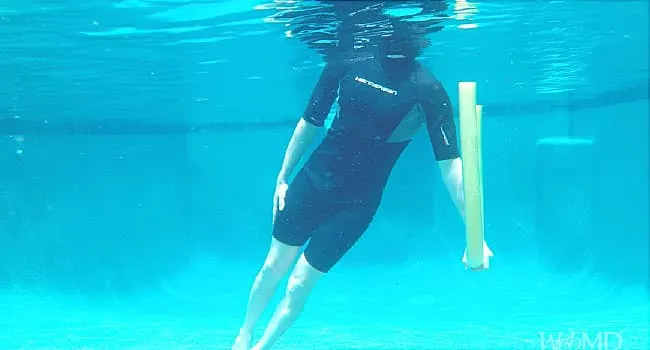
If your back and core had a group chat, it would probably be full of complaints about chairs, slouching, heavy grocery bags, and that one time you “slept funny” and paid for it for three business days. The good news? You do not need to punish your spine with high-impact workouts to build strength. Water exercises can help strengthen back and core muscles while being gentle on joints, supportive for balance, and surprisingly fun. Yes, exercise can happen in a pool without pretending you are training for the Olympics.
Water workouts use buoyancy, resistance, and controlled movement to challenge the muscles that support your spine. The water helps reduce pressure on the body, while still making your muscles work from multiple directions. That means a simple walk across the pool can become a sneaky full-body workout. Your abs, hips, glutes, lower back, and postural muscles all get invited to the party.
This guide explains the best water exercises to strengthen back and core muscles, how to do them safely, how to build a beginner-friendly routine, and what real-life experience often teaches people once they stop fearing the pool and start using it like a floating fitness studio.
Why Water Exercises Are Great for the Back and Core
The back and core work together like a support crew for your spine. The core is not just the visible abdominal muscles. It includes deep stabilizing muscles, obliques, pelvic floor muscles, diaphragm, glutes, and muscles around the hips and spine. When these muscles are weak, stiff, or poorly coordinated, everyday movements such as bending, lifting, twisting, or sitting for long periods can feel harder than they should.
Water exercise is useful because it creates a low-impact environment. In chest-deep water, your body feels lighter, which can reduce stress on the knees, hips, and lower back. At the same time, water naturally resists movement. Push your arm through the water slowly, and it feels easy. Push it quickly, and suddenly the pool becomes a polite but firm personal trainer.
Water Supports the Body
Buoyancy helps support body weight, making movements feel smoother and less jarring. This is especially helpful for people who feel uncomfortable with land-based workouts, are returning to exercise after a break, or have joint stiffness. The pool gives you room to move without the same pounding sensation that can come with running, jumping, or certain gym workouts.
Water Adds Resistance From Every Direction
Unlike a dumbbell, which usually pulls in one direction, water resists motion in many directions. When you walk, twist, kick, or press through water, your core muscles must stabilize your trunk. This makes water exercises excellent for improving balance, posture, and spinal support.
Water Encourages Better Control
Because movements are slower in water, you have more time to notice your posture. You can practice keeping your ribs stacked over your hips, your shoulders relaxed, and your abdominal muscles gently engaged. In other words, the pool gives your body a chance to learn better movement patterns without yelling at you. Very generous of the pool.
Who Can Benefit From Water Exercises?
Water exercises to strengthen back and core muscles can benefit many people, including beginners, older adults, office workers, recreational athletes, and people who want a joint-friendly fitness option. They may also be helpful for people who feel nervous about traditional strength training or who need a gradual return to movement.
However, water exercise is not a replacement for medical care. If you have severe back pain, pain after a fall or accident, fever, new bowel or bladder problems, unexplained weight loss, numbness, weakness, or pain traveling down the leg, talk with a healthcare professional before starting. A pool can do many things, but it is not a magic doctor in liquid form.
Getting Started: Pool Setup and Safety Tips
Before jumping into a water workout, choose a safe environment. A pool with waist-deep to chest-deep water is ideal for most beginner exercises. The water should be deep enough to reduce impact but shallow enough that you can stand comfortably.
Helpful Equipment
- Water shoes: Improve traction and make pool walking more stable.
- Pool noodle: Adds buoyancy and support for balance drills.
- Kickboard: Helps with floating, bracing, and controlled leg movements.
- Aqua dumbbells or hand paddles: Increase resistance for upper-body and core work.
- Flotation belt: Useful for deep-water jogging or exercises where your feet do not touch the floor.
Form Rules That Matter
Good form matters in water just as much as it does on land. Stand tall, keep your shoulders relaxed, and avoid leaning too far forward. Lightly tighten your abdominal muscles as if you are preparing for a gentle cough. Your spine should feel long, not stiff. Think “proud posture,” not “military statue.”
Move slowly at first. If you create waves big enough to concern nearby swimmers, you may be working too aggressively. Start with controlled movements, then increase speed or resistance as your strength improves.
Best Water Exercises to Strengthen Back and Core Muscles
The following exercises target the core, lower back, hips, glutes, and posture muscles. You can combine them into a full pool workout or choose a few based on your comfort level.
1. Water Walking
Water walking is the perfect starting point. It may look simple, but your core works constantly to keep your body upright against the resistance of the water.
How to do it: Stand in waist-deep or chest-deep water. Walk forward across the pool with your heel touching down first, then roll through the foot. Swing your arms naturally. Keep your chest lifted and your abdominal muscles lightly engaged.
Try this: Walk forward for 2 minutes, backward for 1 minute, and sideways for 1 minute in each direction. Repeat 2 to 3 rounds.
Muscles worked: Abdominals, spinal stabilizers, glutes, hips, legs, and shoulders.
2. Backward Water Walking
Backward walking wakes up the glutes, hamstrings, and postural muscles. It also challenges coordination, which is a polite way of saying your brain may need a moment to stop asking, “Why are we doing this?”
How to do it: Stand tall in waist-deep water. Step backward slowly, placing the ball of your foot down first, then the heel. Keep your steps controlled and avoid arching your lower back.
Tip: Use the pool wall for support if needed. Focus on smooth movement, not speed.
3. Standing Knee Lifts
Knee lifts strengthen the hip flexors and abdominal muscles while improving balance. The core has to stabilize your trunk every time one foot leaves the pool floor.
How to do it: Stand in chest-deep water. Lift your right knee toward your chest without rounding your back. Lower it slowly, then repeat with the left knee.
Reps: Do 10 to 15 repetitions per side.
Make it harder: Hold foam dumbbells under the water or perform the movement without touching the pool wall.
4. Pool Marching
Pool marching is like water walking’s energetic cousin. It increases heart rate while building core control.
How to do it: Stand tall and march in place. Lift one knee at a time while pumping your arms through the water. Keep your torso upright and avoid leaning backward.
Duration: Start with 30 seconds, rest, then repeat for 3 to 5 rounds.
5. Side Leg Lifts
Side leg lifts target the outer hips and glute muscles, which help stabilize the pelvis and support the lower back.
How to do it: Stand near the pool wall and hold it lightly with one hand. Keeping your torso tall, lift one leg out to the side. Keep the toes pointing forward and avoid tilting your body. Lower slowly.
Reps: Do 10 to 12 repetitions per side.
Form cue: Imagine your upper body is a lighthouse. Your leg moves, but the lighthouse does not wobble dramatically in the ocean breeze.
6. Standing Hip Extensions
This exercise strengthens the glutes and lower-back support muscles. Strong glutes reduce the workload on the lower back during walking, lifting, and climbing stairs.
How to do it: Stand facing the pool wall. Hold the edge lightly. Keeping your knee mostly straight, move one leg backward without arching your back. Squeeze the glute, then return to the starting position.
Reps: Do 10 to 15 repetitions per side.
7. Water Bicycle
The water bicycle challenges the abdominals, hip flexors, and coordination. It can be done with your back against the pool wall or using a pool noodle for support.
How to do it: Lean back against the wall or sit supported on a pool noodle. Lift both feet and pedal as if riding a bicycle. Keep your belly gently engaged and avoid shrugging your shoulders.
Duration: Try 20 to 30 seconds at a time for 3 rounds.
8. Pool Noodle Plank
A noodle plank trains the deep core muscles without requiring you to get down on the floor. Your abs must work to keep the noodle from floating away like it has better plans.
How to do it: Hold a pool noodle with both hands in front of your chest. Push it down under the water until your arms are straight. Lean slightly forward into a plank-like position while keeping your body long. Hold, then return.
Hold: Start with 10 to 20 seconds. Repeat 3 to 5 times.
Make it easier: Keep the noodle closer to your body. Make it harder by extending it farther away.
9. Standing Water Twists
Rotational strength matters for daily life. Reaching into the back seat of the car, turning to grab a towel, or twisting while carrying laundry all require controlled rotation.
How to do it: Stand with feet shoulder-width apart in chest-deep water. Hold a kickboard or foam dumbbell in front of you. Slowly rotate your torso to the right, then to the left. Keep your hips mostly forward and move from the ribs and upper trunk.
Reps: Do 8 to 12 controlled twists per side.
10. Wall Push-Off Glides
This movement strengthens the core and encourages a long, aligned spine. It is also the closest many adults get to feeling like a graceful dolphin, so enjoy the moment.
How to do it: Stand facing away from the pool wall with both feet against the wall. Gently push off into a streamlined glide, arms extended in front or by your sides. Keep your core engaged and your body straight.
Reps: Do 5 to 8 glides, resting between each one.
Safety note: Only do this if you are comfortable in the water and have enough space.
11. Deep-Water Jogging
Deep-water jogging is excellent for building endurance and core strength without impact. A flotation belt is helpful because it lets you maintain upright posture while your legs move freely.
How to do it: In deep water, jog in place or travel slowly across the pool. Keep your spine tall, drive your knees comfortably, and pump your arms.
Duration: Start with 1-minute intervals and build gradually.
12. Kickboard Press-Downs
This exercise looks innocent until your core realizes the kickboard is trying to pop back up. That upward force trains the abdominals, shoulders, and stabilizers.
How to do it: Hold a kickboard flat on the surface of the water. Press it down toward your thighs while keeping your ribs down and spine neutral. Slowly let it rise back up.
Reps: Do 8 to 12 repetitions.
A Beginner-Friendly Water Workout for Back and Core Strength
Use this routine 2 to 3 times per week. Keep the intensity moderate, especially at first. Your goal is to leave the pool feeling better, not to exit like a dramatic sea creature crawling onto land for the first time.
Warm-Up: 5 Minutes
- Water walking: 2 minutes
- Backward walking: 1 minute
- Side steps: 1 minute each direction
Main Set: 15 to 25 Minutes
- Standing knee lifts: 10 reps per side
- Side leg lifts: 10 reps per side
- Hip extensions: 10 reps per side
- Pool noodle plank: 3 holds of 15 seconds
- Standing water twists: 10 reps per side
- Pool marching: 3 rounds of 30 seconds
Cool Down: 5 Minutes
- Slow water walking: 3 minutes
- Gentle calf, hip, and chest stretches at the pool wall
- Relaxed breathing while standing tall
How Often Should You Do Water Exercises?
For general health, adults are commonly encouraged to aim for regular aerobic activity and muscle-strengthening exercise during the week. Water workouts can contribute to both goals. A practical starting plan is 20 to 30 minutes per session, 2 to 3 times per week. As your body adapts, you can increase duration, add resistance tools, or move faster through the water.
Progress should feel gradual. Mild muscle fatigue is normal. Sharp pain, numbness, dizziness, or worsening back symptoms are not “just part of the journey.” They are signs to stop and check in with a healthcare professional.
Common Mistakes to Avoid
Mistake 1: Leaning Forward Too Much
Many people lean forward during pool walking or marching. This reduces core engagement and can strain the lower back. Keep your head over your shoulders and your shoulders over your hips.
Mistake 2: Moving Too Fast Too Soon
Water resistance increases when you move faster. That is great once you are ready, but beginners should start slowly. Controlled movement builds better strength than frantic splashing. The goal is fitness, not creating a small indoor weather event.
Mistake 3: Forgetting to Breathe
Core engagement does not mean holding your breath. Breathe steadily during each exercise. A strong core should support movement, not turn your face the color of a tomato at a barbecue.
Mistake 4: Ignoring the Hips and Glutes
The lower back often works too hard when the hips and glutes are weak. Include hip extensions, side leg lifts, and water walking variations to build a stronger support system around the pelvis.
How Water Exercises Support Better Posture
Posture is not about forcing yourself to sit stiffly all day. It is about having enough strength, mobility, and body awareness to hold comfortable positions and move efficiently. Water exercises encourage upright alignment because the core must respond to small waves, shifting pressure, and resistance.
Exercises like water walking, noodle planks, standing twists, and knee lifts train your body to stabilize while moving. Over time, this may make it easier to sit, stand, lift, and walk with less strain. Your body learns that the core is not just for crunches; it is your built-in support belt, minus the awkward Velcro.
Can Water Exercises Help With Back Pain?
Water exercise may help some people with back discomfort by making movement more tolerable. The pool reduces impact, allows gentle range of motion, and provides resistance for strengthening. For people with chronic or recurring back pain, supervised aquatic therapy may be especially useful because exercises can be customized by a physical therapist.
That said, back pain has many causes. Muscle strain, disc problems, arthritis, nerve irritation, posture habits, stress, and poor movement patterns can all play a role. If pain is persistent, intense, or spreading into the legs, it is best to get professional guidance rather than guessing your way through it with a pool noodle and optimism.
Experience-Based Tips: What People Learn From Water Exercises
One of the most common experiences with water exercises is surprise. People often step into the pool expecting an easy workout and step out realizing their core has been quietly negotiating a contract dispute. Because water reduces impact, the workout may feel gentle during the session. Later, you may notice that your hips, abdominal muscles, and upper back did more work than expected.
Another lesson is that confidence grows quickly. On land, some people feel nervous about losing balance during single-leg exercises or side steps. In the water, balance practice feels safer because the pool provides support. If you wobble, the water catches you. It is like having a spotter who is very calm and covers the entire room.
Many beginners also discover that posture improves when they slow down. The pool naturally rewards control. If you rush, you create drag and lose alignment. If you move with patience, you feel the core muscles switch on. Water walking becomes less about crossing the pool and more about noticing how your feet, hips, ribs, and shoulders work together.
People returning to exercise after a long break often appreciate that water workouts do not feel intimidating. There are no mirrors, no clanking weights, and no need to understand complicated machines. You can begin with walking, marching, knee lifts, and gentle twists. Small progress counts. Five minutes can become ten. Ten can become twenty. Eventually, the pool becomes less like “rehab energy” and more like a reliable strength routine.
Another real-world benefit is consistency. The best workout is not always the hardest one; it is the one you can repeat. Water exercise feels enjoyable for many people because it is cooler, smoother, and easier on the joints. When movement feels good, people are more likely to keep doing it. Consistency is where strength actually comes from. One heroic workout followed by three weeks of couch recovery is not a plan; it is a dramatic mini-series.
People also learn that the core is more than the front of the stomach. After several sessions, they may feel muscles around the waist, hips, glutes, and mid-back working. This is a good thing. A strong back depends on a team of muscles, not one superstar. Water exercises help train that team through walking, twisting, pressing, balancing, and stabilizing.
Finally, many people notice that water exercise improves body awareness. You start to feel when you are leaning too far forward, arching the lower back, or letting one hip drop. The water gives instant feedback. It pushes back when you push, supports you when you need help, and challenges you when you increase speed. It is gentle, but it is not lazy. In fact, water may be the most polite resistance trainer you will ever meet.
Final Thoughts
Water exercises to strengthen back and core muscles are practical, joint-friendly, and adaptable for many fitness levels. They use the natural support and resistance of water to train the muscles that help stabilize the spine, improve posture, support balance, and make everyday movement feel easier.
Start with simple exercises such as water walking, knee lifts, side leg lifts, hip extensions, noodle planks, and standing twists. Focus on form, breathe steadily, and progress slowly. If you have ongoing pain or a medical condition, work with a healthcare professional or physical therapist for a personalized plan.
Your back and core do a lot for you every day. Give them a workout environment that supports them back. And if that environment happens to include a pool, a noodle, and the occasional splashy moment of humility, even better.