

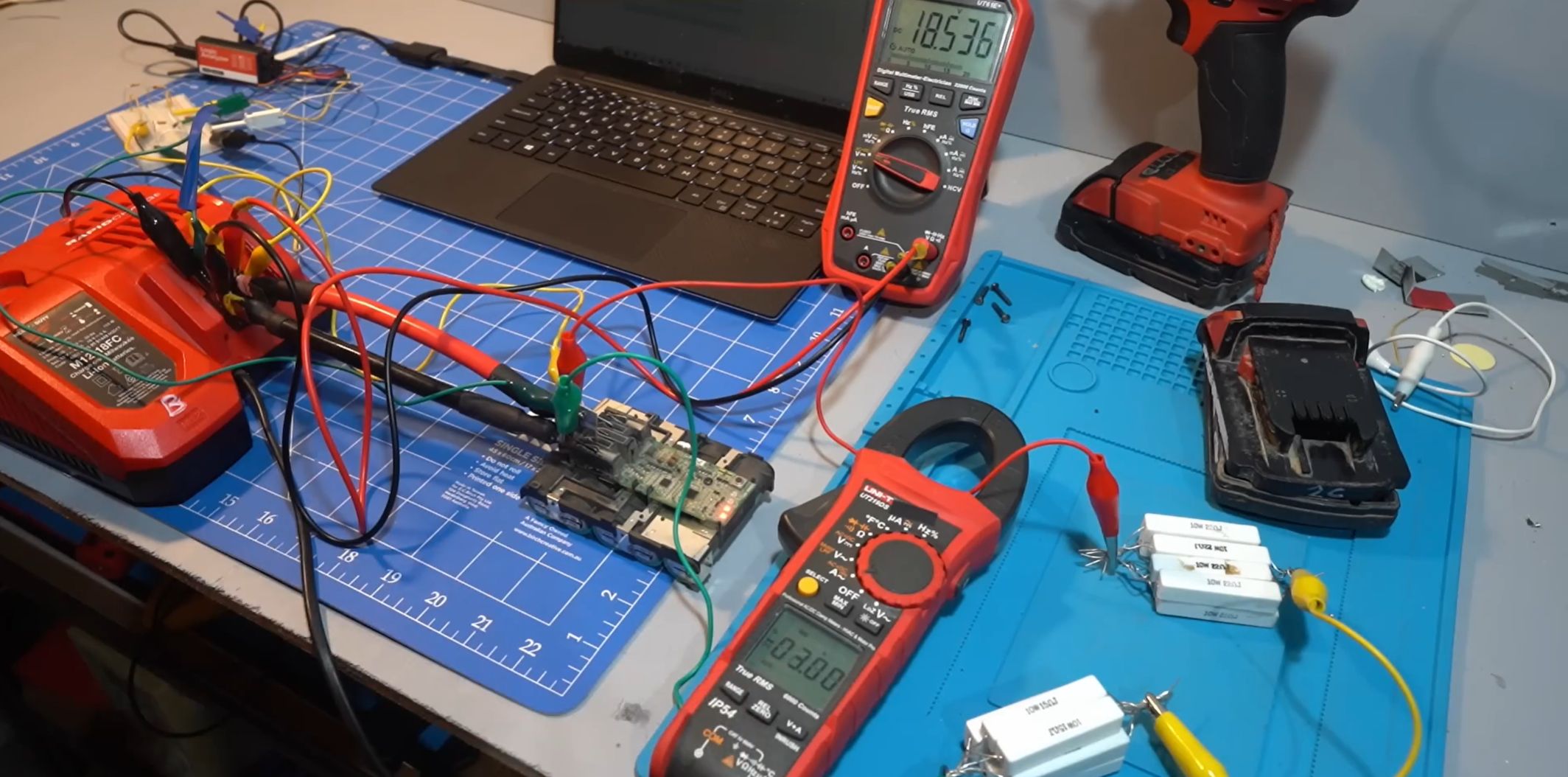
Some people open a power-tool battery and see a plastic brick full of expensive danger. Others see a mystery novel with copper traces, tiny chips, and just enough electrical attitude to ruin your afternoon. The Milwaukee M18 Redlink Protocol sits in that second category: a hidden conversation between battery, charger, and tool that helps decide when power flows, how fast charging happens, and when the system should politely say, “Nope, not today.”
Reverse-engineering the Milwaukee M18 Redlink Protocol is not about turning a cordless drill into a sci-fi prop, defeating safety protections, or making suspicious adapters from parts found in a junk drawer next to old pizza coupons. At its best, it is a careful study of how modern cordless ecosystems manage lithium-ion power. It combines embedded electronics, battery management, communication signals, product safety, and the eternal maker question: “What is this thing saying when nobody is supposed to be listening?”
Milwaukee’s M18 platform is popular because it gives tradespeople a broad family of cordless tools powered by 18-volt-class lithium-ion packs. REDLINK Intelligence is Milwaukee’s name for the electronics that allow the battery, tool, and charger to communicate. The company describes this communication as a way to improve performance, protect against overloads, monitor cell voltage and temperature, and help extend battery life. In plain English, REDLINK is the responsible adult in the room, which is useful because lithium-ion cells are energetic little rectangles that should not be managed by vibes alone.
What Is the Milwaukee M18 Redlink Protocol?
The Milwaukee M18 Redlink Protocol refers to the communication used inside the M18 battery system. Public reverse-engineering discussions have focused on the data exchanged between M18 batteries, chargers, and tools. The system is not publicly documented like USB, I2C, or CAN bus, so researchers use observation, measurement, and controlled experiments to infer how it works.
At a high level, the protocol appears to support identity, status, and safety-related communication. A charger needs to know whether a pack is present, what condition it is in, whether it is too hot or too cold, and how charging should proceed. A tool may need to know whether the battery can safely deliver power under load. A battery pack, meanwhile, needs to protect its cells from over-discharge, overcurrent, overheating, and other forms of electrical bad manners.
That is where the protocol becomes interesting. A cordless tool battery is not simply a bucket of electrons. It is a managed energy system. Inside the pack are cells, sensors, protection circuitry, balancing components, and a battery management system, often shortened to BMS. The pack may report information, respond to requests, and refuse unsafe behavior. This is why the battery has more terminals than just positive and negative. Those extra connections are not decorative. They are the whisper network.
Why Reverse-engineer It?
There are several legitimate reasons to study the Milwaukee M18 battery communication protocol. Repair technicians want to understand fault behavior. Engineers want to learn how commercial battery systems handle safety. Makers want to build diagnostic tools that reveal pack health without guessing. Educators want real-world examples of embedded systems that are more exciting than blinking an LED for the 400th time.
Public interest grew after maker and repair communities began documenting parts of the protocol using non-invasive tools such as logic analyzers. Hackaday covered Tool Scientist’s exploration of the Redlink communication, which brought the topic to a wider audience of hardware hackers. A public GitHub project also exists for efforts to reverse the Milwaukee M18 battery communication protocol, showing that this is not just one curious person in a garage surrounded by torx bits and caffeine.
The appeal is easy to understand. Unlike a purely academic protocol, this one lives in tough jobsite hardware. It has to survive vibration, dust, heat, cold, fast discharge, fast charging, and users who treat tools with the gentle tenderness usually reserved for airport luggage. Studying it shows how embedded intelligence moves from fancy devices into rugged everyday equipment.
REDLINK Intelligence: Marketing Name, Real Engineering
Product names can sound dramatic. REDLINK Intelligence sounds like something a superhero team uses to coordinate orbital lasers. But underneath the branding is a practical engineering concept: total system communication. Milwaukee describes REDLINK and REDLINK PLUS as electronics that coordinate between battery, tool, and charger to optimize performance and protection.
That matters because power tools are brutal electrical loads. A grinder, impact wrench, circular saw, or hammer drill can demand high current in short bursts. The battery must provide power without letting cells sag too far, heat too much, or age prematurely. The charger must refill the pack quickly without cooking it like a gas-station burrito. The tool must deliver torque and speed while respecting the battery’s limits.
Communication is the glue. A basic battery could rely on fixed thermal switches and simple voltage thresholds. A smarter system can adapt. It can look at pack temperature, charge state, cell condition, and tool demand. That is the promise of REDLINK: not magic, but feedback.
What Reverse-engineers Usually Look For
When researchers study a proprietary battery protocol, they usually start with observation rather than interference. The safest approach is to watch a normal battery and charger do normal things. A logic analyzer can capture changes on communication lines while the pack is inserted, charged, removed, or placed under load. Oscilloscopes help reveal voltage levels, timing, and signal shape. Multimeters confirm basic electrical behavior. Patience confirms whether the researcher is emotionally prepared for tiny waveforms that look like digital ants marching across the screen.
Common questions include:
- Which contacts carry power, ground, temperature sensing, or data?
- Does the communication look like serial data, pulse timing, or another signaling method?
- Does the charger ask questions, or does the battery announce status?
- Are there repeated messages during charging?
- Do different pack sizes or generations report different information?
- How does the system behave when the battery is warm, cold, discharged, or fully charged?
Public discussion around M18 Redlink has suggested relatively simple serial-style communication in some contexts, with a small set of repeated messages. That does not mean the entire ecosystem is simple. It only means that the visible exchange captured in a specific test may be simpler than expected. Proprietary systems often hide complexity in state machines, thresholds, timing rules, firmware behavior, and model-specific variations.
Battery, Charger, Tool: The Three-way Conversation
The Battery Pack
The battery pack is the most important voice in the system because it knows the condition of the cells. It may track voltage, temperature, charge state, and historical behavior. In a well-designed system, the battery does not blindly hand over power just because something asked nicely. It behaves more like a cautious gatekeeper.
The Charger
The charger has one job that sounds simple but is not: put energy back into the pack safely and efficiently. Lithium-ion charging requires controlled current and voltage, plus temperature awareness. Charging too aggressively when cells are cold, hot, damaged, or imbalanced can reduce life or create hazards. REDLINK communication allows the charger to respond to the pack instead of using a one-size-fits-all routine.
The Tool
The tool is the hungry one. It wants current, and it wants it now. A brushless M18 FUEL tool may also contain its own electronics that coordinate motor control, overload protection, and performance. When the tool communicates with the battery, it can respect limits and deliver more consistent output. This is why modern cordless tools feel less like simple switches and more like compact power systems wearing work boots.
Why Lithium-ion Safety Shapes the Protocol
Any serious article about reverse-engineering power-tool batteries needs a safety paragraph, and not the boring kind you skip before assembling Swedish furniture. Lithium-ion cells store a lot of energy in a small space. If abused, shorted, punctured, overheated, overcharged, or charged under the wrong conditions, they can fail dramatically. “Dramatically” is engineer-speak for “you will suddenly remember where the fire extinguisher is.”
Battery management systems exist because chemistry has rules. Temperature matters. Current matters. Cell balance matters. State of charge matters. A smart battery protocol is not merely a lock-in mechanism, even if brand ecosystems do encourage brand loyalty. It is also a safety layer. The same communication that makes third-party compatibility difficult can help prevent charging mistakes and tool overloads.
That is why reverse-engineering should be approached as documentation and analysis, not as an invitation to bypass protections. The goal should be to understand how the system protects itself, not to trick it into doing unsafe work. A battery pack is not a puzzle box with candy inside. It is a controlled energy device.
Specific Examples of What Can Be Learned
A careful reverse-engineering project can reveal several useful patterns without publishing dangerous instructions. For example, researchers may discover that the charger begins with a wake-up sequence when a battery is inserted. They may observe that communication changes once charging begins. They may compare messages from compact packs, high-output packs, and newer FORGE packs to see how product generations differ.
Another example is diagnostic behavior. A battery that refuses to charge may not be “dead” in the simple sense. It may be reporting a temperature condition, cell imbalance, low-voltage state, or internal fault. A diagnostic reader, if designed responsibly, could help owners understand whether a pack should be recycled, serviced through proper channels, or simply allowed to cool down. That kind of tool would be genuinely useful. It would turn mysterious blinking lights into meaningful information, which is basically therapy for anyone who owns too many chargers.
Reverse-engineering can also teach good design habits. Milwaukee’s ecosystem shows the value of coordinating the whole system. A charger, battery, and tool are not isolated parts; they form a network. That lesson applies beyond power tools. E-bikes, drones, portable power stations, robotics, and electric lawn equipment all depend on communication between energy storage and load.
The Legal and Ethical Side
Reverse-engineering occupies a careful space. Studying signals for interoperability, repair, education, or security research can be legitimate, but selling unsafe adapters, counterfeiting batteries, defeating protections, or misrepresenting compatible products is a very different story. The ethical line is not hard to see if you are looking at it with both eyes open.
A responsible researcher avoids publishing instructions that encourage unsafe charging, over-discharge, counterfeit authentication, or bypassing thermal limits. They label findings clearly, explain uncertainty, and keep tests controlled. They do not claim universal compatibility from one captured trace. They also remember that tool batteries are used by real people in real workplaces, not only by hobbyists at a bench.
Good reverse-engineering improves understanding. Bad reverse-engineering creates smoke. The difference is usually discipline.
How the Milwaukee M18 Redlink Protocol Fits the Bigger Trend
The Milwaukee M18 Redlink Protocol is part of a larger shift in power tools. Cordless platforms are no longer just motors and batteries. They are embedded systems. Brushless motors require controllers. Batteries require management. Chargers require firmware. Tool-tracking systems add wireless connectivity. The jobsite is becoming a network of rugged computers that happen to cut, drill, grind, and occasionally fall off ladders.
This trend has benefits. Users get better runtime, faster charging, overload protection, and more consistent performance. Manufacturers get tighter quality control and ecosystem compatibility. Repair communities get new puzzles. Everyone gets more firmware.
The downside is opacity. When a system becomes smarter, it can also become harder to repair, diagnose, or adapt. A battery that once needed a voltmeter may now need protocol knowledge. That is why public technical discussion matters. It helps bridge the gap between black-box products and informed users.
What Not to Do
Do not short battery terminals “just for a second.” Do not charge lithium-ion packs with random bench supplies unless you truly understand the chemistry, limits, and protection requirements. Do not assume that an adapter is safe because it fits mechanically. Do not bypass thermal sensors. Do not treat a damaged pack like a science project unless your science project is titled “How I Met the Fire Department.”
Also, do not assume every M18 pack behaves the same. Battery generations differ. Compact packs, high-output packs, and newer high-performance packs may use different cells, firmware, or protection behavior. Chargers also differ. Standard, rapid, and super chargers may communicate and charge differently. Reverse-engineering one setup gives a clue, not a constitution.
Experiences and Practical Reflections: What This Topic Teaches
Spending time with the Milwaukee M18 Redlink Protocol as a topic changes the way you look at cordless tools. Before studying it, a battery pack feels like an accessory. Afterward, it feels like a small industrial computer that happens to have a lot of stored energy and a rugged red shell. You stop seeing the charger lights as simple indicators and start imagining a conversation underneath: pack inserted, temperature checked, voltage considered, status accepted, charging allowed.
The most interesting experience is realizing how much engineering is hidden behind ordinary convenience. A contractor may slap an M18 pack onto a saw at 7:00 a.m., cut lumber all morning, toss the pack onto a charger at lunch, and never think about cell balancing, thermal curves, data lines, or current limits. That is the point of good design. The intelligence disappears into the workflow. Reverse-engineering brings it back into view, like lifting the hood on a car and remembering that transportation is actually thousands of controlled explosions wearing cup holders.
Another lesson is humility. Proprietary protocols rarely reveal themselves in one glorious “aha” moment. More often, they unfold through repetition. You capture a trace. You label a packet. You realize your label is wrong. You capture again. You compare another battery. You discover that a message changes only after the charger warms the pack or after the state of charge crosses a threshold. It is detective work, except the suspect is a waveform and it refuses to answer questions in complete sentences.
There is also a strong appreciation for safety. The deeper you go into battery communication, the less appealing shortcuts become. The protocol is not just a gatekeeping trick; it is part of the safety architecture. A proper charger does not merely shove electrons into a pack. It negotiates with the battery’s condition. A proper tool does not merely drain cells until they beg for mercy. It responds to limits. Once you understand that, bypass culture starts to look less clever and more like removing the brakes from a truck because you enjoy “performance.”
For makers, this topic is a perfect training ground in disciplined curiosity. You can learn signal capture, embedded protocol analysis, product architecture, and lithium-ion safety without needing to publish dangerous hacks. You can build models, diagrams, educational explanations, or diagnostic concepts. You can compare how tool ecosystems handle communication and why interoperability is difficult. You can even become the kind of person who says “battery telemetry” at parties, though results may vary socially.
For repair-minded users, the experience is equally valuable. A failed pack is not always a simple failed pack. It may be locked out because of voltage, temperature, imbalance, history, or internal protection logic. Understanding that encourages better decisions: check warranty status, use official service routes, recycle damaged packs, avoid counterfeit batteries, and respect the charger’s warnings. The blinking light that once seemed annoying becomes a message. Possibly a vague message, but still better than silence.
For writers and SEO publishers, the Milwaukee M18 Redlink Protocol is a rich subject because it connects several audiences. Tool owners care about reliability. Engineers care about communication. Makers care about reverse-engineering. Safety professionals care about lithium-ion behavior. Right-to-repair readers care about transparency. That combination gives the topic real depth. It is not just “someone decoded a battery.” It is a window into how modern tools are becoming intelligent systems.
The biggest takeaway is that reverse-engineering is most valuable when it increases respect for the thing being studied. The Milwaukee M18 Redlink Protocol is not merely an obstacle between a hobbyist and a hack. It is part of a carefully designed system that manages power, performance, compatibility, and safety. Understanding it can make people better engineers, better repairers, and better users. It can also make them slightly more likely to stare thoughtfully at a battery charger while waiting for coffee, which is a small price to pay for knowledge.
Conclusion
Reverse-engineering the Milwaukee M18 Redlink Protocol reveals how far cordless tools have evolved. The battery is not passive. The charger is not dumb. The tool is not just a motor with a trigger. Together, they form a coordinated electronic system designed to deliver high power while managing risk.
The public research around M18 Redlink shows why embedded communication matters in everyday equipment. It also shows why responsible reverse-engineering is important. When done carefully, it helps users understand repair, diagnostics, safety, and design. When done recklessly, it can turn lithium-ion packs into expensive smoke machines with poor customer reviews.
The smartest takeaway is simple: study the protocol, respect the chemistry, and admire the engineering. Milwaukee’s M18 ecosystem may wear a rugged jobsite shell, but inside it is a quiet digital conversation keeping everything from getting too hot, too low, too overloaded, or too exciting in the wrong way.
Note: This article is based on publicly available information from manufacturer materials, maker-community research, reverse-engineering discussions, repair-oriented resources, battery-safety guidance, and power-tool technical coverage. It is written for education and analysis, not for bypassing safety protections or modifying battery systems in unsafe ways.