

Note: This article is written for web publication and synthesizes public online discussion themes with real-world bystander safety guidance. Examples are generalized and rewritten to avoid copying personal posts while preserving the core topic.
When “Hey, I Know You!” Becomes a Safety Plan
Every once in a while, the internet takes a break from arguing about pineapple on pizza and accidentally reminds us that people can be decent. That is exactly what happened when men in an online community discussed a simple but serious question: what would you do if a woman walked up and said, “Pretend we’re friends. I’m being followed”?
The answers were not just heartwarming. They were practical, quick-thinking, and surprisingly useful. Men described pretending to be brothers, old classmates, cousins, coworkers, concert buddies, and even fake boyfriends for a few minutes so a woman could escape unwanted attention. In many stories, nobody needed to throw a punch, deliver a movie-monologue threat, or dramatically slide across a car hood. The “hero move” was often much simpler: make eye contact, play along, stay calm, and create a safe exit.
That is why this topic struck such a nerve. It shows the power of bystander intervention, especially the kind that does not escalate the situation. A stranger pretending to be a friend may sound like a tiny social trick, but in the right moment, it can interrupt harassment, confuse a stalker, and give someone enough breathing room to get away.
Why Women Ask Strangers To Pretend They Know Them
For many women, public safety involves a constant mental checklist. Is someone walking too close? Did that person turn when I turned? Is the bar crowded enough? Where is the exit? Is my phone charged? Is that group safe enough to approach? It is exhausting, and unlike a bad haircut, it cannot be fixed with a hat.
Public harassment can happen in bars, parking lots, train stations, stores, sidewalks, campuses, rideshares, gyms, and concerts. Sometimes it looks like staring. Sometimes it looks like following. Sometimes it starts as “friendly conversation” and turns into pressure, insults, blocking someone’s path, or refusing to take no for an answer.
In those situations, directly confronting the person causing fear may not feel safe. A woman may not want to say, “Stop following me,” because the person may deny it, get louder, or become more aggressive. Asking a nearby man, couple, employee, or group to pretend they know her can be a safer shortcut. It changes the social scene instantly. Suddenly, she is not isolated. Suddenly, the person following her has witnesses. Suddenly, the target is part of a group.
What the 30 Stories Had in Common
The online stories varied, but the pattern was clear: quick cooperation mattered more than perfect acting. The men who helped did not ask for a full explanation before responding. They noticed fear, accepted the cue, and played the role.
1. The “Old Friend” Move
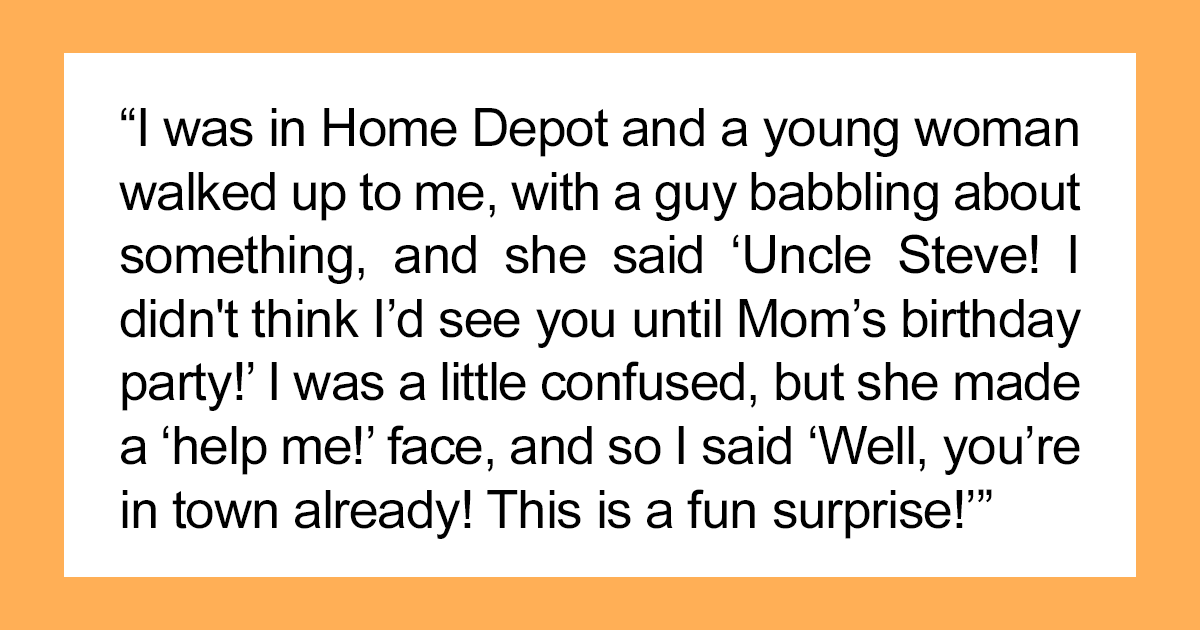
One of the most common responses was simple: “Oh my gosh, there you are!” A woman would approach a stranger and act as if they had known each other for years. The man would immediately match the energy, ask how she had been, or say the group had been waiting for her. This kind of distraction works because it does not announce the danger. It simply rewrites the scene.
2. The “That’s My Sister” Move
Several men described turning the woman into a sister, cousin, or close family friend. That approach can work because it gives the interaction a believable structure. If a suspicious person asks questions, the helper can keep things casual: “Yeah, she’s with us.” No drama. No chest-thumping. Just enough confidence to make the harasser reconsider.
3. The “Join Our Group” Move
In bars, restaurants, and concerts, men often pulled the woman into a group of friends. This is especially useful because groups are harder to intimidate than individuals. A woman can sit down, blend in, text a friend, call a rideshare, find security, or wait until the person leaves.
4. The “Employee With a Backbone” Move
Some of the strongest stories involved workers at stores, bars, and transit stations. Employees can sometimes do what a random stranger cannot: ask the person to leave, call security, offer a back exit, or let someone wait indoors. A cashier, bartender, bouncer, server, librarian, or shop worker can become the difference between panic and safety.
5. The “No Big Speech” Move
The best helpers did not make the situation about themselves. They did not demand praise, flirt afterward, or turn the rescue into an audition for “America’s Next Top Nice Guy.” They helped, checked whether she needed anything else, and let her leave with dignity. That last part matters.
The Psychology Behind Pretending To Be Friends
Pretending to know someone is a form of indirect bystander intervention. Instead of confronting the harasser head-on, the helper distracts, delays, or changes the environment. This can reduce the risk of escalation while still supporting the person in danger.
In safety training, one widely used model is the “5Ds”: distract, delegate, document, delay, and direct. Pretending to be friends fits mainly under “distract.” The helper interrupts the situation with a normal-looking social interaction. A fake reunion, a casual “come sit with us,” or a loud “we’ve been looking for you” can break the momentum of harassment without announcing, “I am now intervening in a threatening incident,” which is not exactly a sentence that improves the vibe.
There is also a social proof effect. Harassers often rely on isolation, ambiguity, and silence. If nobody reacts, they may feel emboldened. When someone steps in, even subtly, the situation changes. The person being targeted receives support, and the person causing harm realizes there are witnesses.
How To Help Without Making Things Worse
Wanting to help is good. Helping safely is better. If someone approaches you and asks you to pretend you know them, your first job is not to interrogate them like a detective in a beige trench coat. Your first job is to create safety.
Stay Calm and Play Along
Respond as if the request makes total sense. Smile, wave, and say something natural: “There you are,” “We saved you a seat,” or “Come on, everyone’s over here.” The more normal you make it look, the easier it is for the person to blend in.
Do Not Touch Without Consent
Some stories included hugs or putting an arm around someone’s shoulder, but that should never be automatic. Fear does not erase boundaries. A safer option is to gesture toward your table, walk beside them, or say, “Do you want to stand with us?” Let them decide how close they want to be.
Ask Quiet, Useful Questions
Once there is distance, ask practical questions: “Do you want me to call someone?” “Do you need security?” “Do you want to wait here?” “Is there a friend nearby?” Keep questions simple. This is not the time for a TED Talk on urban safety.
Delegate When Needed
If the person following her remains nearby, involve someone with authority. That might be a bartender, store manager, security guard, transit worker, police officer, or event staff member. Delegation is especially important if the person appears intoxicated, aggressive, or unwilling to leave.
Do Not Chase the Harasser
It may feel satisfying to imagine sprinting after the creep like a low-budget superhero, but chasing can escalate danger. The priority is the safety of the person being targeted. Stay with her if she wants support, move to a safer place, and get help from trained staff or authorities if necessary.
Why This Topic Resonates So Strongly Online
The reason these 30 stories spread so widely is not just because they are wholesome. They reveal a truth many women already know: safety often depends on whether surrounding people are willing to notice and respond.
For men reading these stories, the lesson is not “women need you to rescue them.” The better lesson is “you can be useful without making yourself the main character.” A few seconds of awareness can give someone options. A believable fake friendship can stop a frightening situation from getting worse. A calm presence can matter more than a dramatic confrontation.
For women, the stories validate a survival strategy many already use. Women often approach other women, couples, families, employees, or groups when they feel unsafe. The online discussion simply highlighted that many men are also willing to help when they understand what is happening and receive a clear cue.
The Difference Between Protective and Possessive
There is an important line here. Helping someone should never become controlling them. Pretending to be a friend is protective when it gives the woman more freedom, not when it replaces one uncomfortable situation with another.
A good helper does not demand her number afterward. He does not joke that she “owes him.” He does not follow her after she says she is okay. He does not turn a frightening moment into a flirting opportunity. The gold standard is simple: help, respect, and release.
That is what made many of the online stories so refreshing. The men did not describe themselves as warriors saving helpless strangers. They described small moments of social cooperation. Someone needed help. They helped. Then everyone went back to their lives, ideally with slightly more faith in humanity and slightly less faith in creepy men who lurk near wine racks.
Practical Scripts People Can Use
Sometimes people freeze because they do not know what to say. Having a few scripts ready can make intervention easier.
If Someone Approaches You for Help
- “Hey! We were just talking about you. Come sit down.”
- “There you are. We’re heading out in a minute.”
- “Of course, stand with us as long as you need.”
- “Do you want me to get staff or security?”
- “Do you want me to walk with you to a safer spot?”
If You Notice Someone Looks Uncomfortable
- “Hey, do you know where the restroom is?”
- “Sorry to interrupt, but your friends are looking for you.”
- “Do you want to come join our table?”
- “Are you okay, or do you need help?”
- “I’m going to grab an employee. Stay here if you want.”
The goal is not to perform Shakespeare. The goal is to interrupt the pressure and offer an exit. If your acting is terrible, congratulations: you are still probably helping.
What These Stories Teach Men
Men who want to be allies do not need to memorize a 600-page handbook. They can start with three habits: notice, believe, and act safely.
Notice when someone looks trapped in a conversation, keeps scanning the room, moves away but is followed, or gives a stranger that wide-eyed “please understand the assignment” look. Believe the fear instead of questioning whether it is “really that bad.” Act in a way that prioritizes the person’s comfort and safety.
The most effective men in these stories understood that the situation was not about proving masculinity. It was about reducing risk. They became boring, reliable cover. In a world full of people trying to be interesting, being safely boring can be a public service.
What These Stories Teach Everyone Else
Although the viral discussion focused on men protecting women, this is not only a men’s issue. Anyone can be a helpful bystander. Women help other women this way all the time. Couples can help. Groups can help. Employees can help. Friends can help. Even a socially awkward person with a tote bag full of snacks can help. Possibly especially that person.
The broader lesson is that communities become safer when people treat discomfort as information. If someone looks scared, it is okay to check in. If someone asks for help, it is okay to act first and ask details later. If a situation feels wrong, it is okay to interrupt it with a harmless distraction.
Additional Experiences Related to the Topic
One common experience involves nightlife settings, where noise, alcohol, and crowded rooms can make boundaries harder to read. A woman may be trying to end a conversation politely while the man talking to her keeps leaning closer, buying unwanted drinks, or blocking her path. In that setting, a helper pretending to be a friend can create an easy exit: “We’re going outside,” “Your ride is here,” or “Come help us pick a song.” The beauty of this tactic is that it does not require the woman to explain herself to the person making her uncomfortable. She can simply leave.
Another experience happens in transit spaces. Trains, buses, stations, and parking garages can feel especially stressful because people are moving, waiting, and often alone. If someone is being followed, sitting near a safe-looking group or approaching a staff member can make a huge difference. A stranger who says, “Sit here, we’ll ride with you until your stop,” offers more than companionship. They offer witnesses, time, and a plan.
Retail stores also show up in many stories because they are public, lit, and staffed. A woman who feels unsafe may duck into a store not because she needs shampoo, but because shampoo aisles are less terrifying than empty sidewalks. Employees who understand this can quietly help by letting someone wait near the counter, calling a manager, or making sure the follower leaves first. Sometimes the safest sentence is not dramatic at all: “You can stay here as long as you need.”
Concerts and festivals create another version of the same problem. Big crowds can make it easy for someone to lose friends and hard to shake off unwanted attention. In these moments, pretending to be part of a group can be powerful. A quick “You found us!” can pull someone into safety without drawing attention. If needed, the group can move toward security, a medical tent, or a more open area.
Campus experiences are also common. Students may walk between buildings at night, attend parties, study late, or wait alone for rides. A classmate or stranger who notices someone being followed can offer to walk in the same direction, call campus security, or wait until a rideshare arrives. The key is to offer options, not pressure. “Do you want company?” is better than “I’m walking you home whether you like it or not.” Again, protection should increase someone’s control, not take it away.
There are also everyday micro-moments: a woman at a gas station pretending to know the person at the next pump, someone in a grocery store joining a family in line, a runner asking another pedestrian to pause with her, or a customer at a coffee shop moving tables to avoid a man who will not stop staring. These moments may look small from the outside, but fear compresses time. A minute of support can feel enormous.
The best experiences share the same emotional ending: relief. Not romance. Not applause. Relief. The woman gets to breathe. The helper gets to know they did the right thing. The person causing fear loses access to an isolated target. That is the quiet power of pretending to be friends. It is not a grand solution to harassment, but it is a practical tool anyone can use when the moment calls for it.
Conclusion: Small Acts Can Change the Ending
The stories of men pretending to be friends with women in danger are popular because they are simple, human, and actionable. They do not require superpowers. They require attention, empathy, and the willingness to look a little silly for someone else’s safety.
When a woman says, “Pretend we’re friends,” she is not asking for a performance review. She is asking for a bridge out of a threatening moment. The best response is calm cooperation: play along, create distance, offer choices, involve help if needed, and respect her boundaries afterward.
In a better world, women would not need fake friends to move safely through public spaces. Until then, being the person who says “There you are!” at exactly the right moment is a pretty solid use of your social skills. Even if your improv is terrible.